
The “Electric-Biology” duo

electric.jpg

Two old pals, once classmates at Minami-Oei Primary School in Osaka city of Japan, never would have dreamt that they will jointly work to develop a commercially successful disinfectant six decades later. One of them, Sunao Kubota, became a physician and professor of General Surgery in St. Marianna University School of Medicine, and the second, Nobuyuki Yamaji, became an electro physicist with Kyoto University.

Yamaji was working on the implications of electric shock or lightning on plants and mammalian tissues, and Kubota was busy with his surgical work, trying to find a solution for his skin-allergy to alcohol. It was a casual meet-up in their native town a decade ago when they got to know each other’s work, with Yamaji describing to Kubota how plants and mammalian tissues secrete a unique layer of fluid after getting hit by lightning or electric current. Yamaji wasn’t sure of the significance of that layer of fluid, but as an electro physicist, he was thinking that the tissues might produce the secretions to neutralize the effects of the electric current. However, Kubota went back to his office and started analyzing of the ingredients of the secretion.

Eureka! One morning Yamaji got a call from Kubota saying that the significance of the secretion might be to prevent the entry of pathogens through the dehiscence made by the exit or entry of the electricity. For the next 10 years, Yamaji and Kubota worked to isolate the ingredients of the secretion, one of which was a form of citric acid, an ingredient of several food additives.

As their novel molecule could kill pathogens, Kubota didn’t have to depend on alcohol-based hand disinfectants when entering the ICU, and beyond that they have now made a multipurpose, alcohol-free product that can not only cleanse the hands, but also disinfect clinics, isolation units, operating rooms, etc. When they found out that their product could effectively destroy the influenza viruses (including the avian flu strain H5NI), they convinced the Japan Railways to spray their product inside the coaches of the trains during flu seasons. Today, a Japanese multinational company is selling their product with a brand name “Clinister” all over the world.

Kubota, a retired professor of general surgery, and Yamaji, a retired scientist, have become partners in a new business, which possesses the IP rights of their inventions. They have outsourced the manufacturing of their product to a pharma partner, and the exporting is done by a trading company. They have joined with companies in Asia for packing their products, and now are looking forward to a worldwide blast.

As I was reading the story on synthetic biology of Ham Smith and Clyde Hutchinson, I was reminded of Kubota and Yamaji.

I decided to give the title “Electric Biology” to this post about two septuagenarians who found a solution in biology from an original research on electric shock and lightning.

Though their association is from childhood, what has opened this new product to the world was their open-ness to discuss with each other their professional issues, even though they work in separate specialties.

Out-of-the box ideas and solutions are possible only when you share your problems with people out of your specialty; when you do so, solutions will pour in.
Samuel JK Abraham

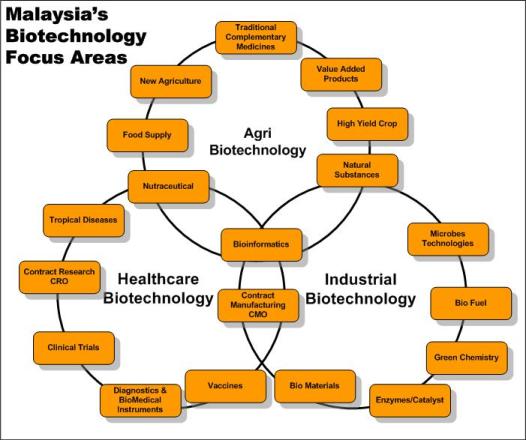
Malaysian BIONEXUS incentives

malaysia.jpeg

As we started our work in Japan in 2000 on nano-scaffolds for corneal limbal stem cells (jointly with a group of polymer scientists headed by Yuichi Mori), the very first strategic move was to start collaborating in India, for two reasons. One was we needed a solution for treatable corneal epithelial damage-related blindness, and the other was the availability of qualified and skilled corneal surgeons.

The next move was to have a technology transfer tie with Malaysia, simply because the local investors there were willing to invest their hard-earned money in a biotech venture focused on a personalized immune-cell-based cancer treatment protocol that has been a medical treatment procedure in Japan since the late ’90s.

I was wondering what makes these investors come forward to invest in such ventures, and a brief exploration lead me to the incentives the Malaysian Biotech Corporation uses to attract investors and technocrats from near and far.

Imagine a government body that offers:

• An exemption from tax on 100% statutory income for 10 years from the day your company starts earning statutory income.

• A concessionary tax rate of 20% for another five years.

• Exemption of import duty and sales tax on raw materials, machinery, equipment and their components.

• Double deduction on expenditure incurred for R&D and that for the promotion of exports.

• 100% ownership and freedom to bring in knowledge workers from overseas.

• Exemption of stamp duty and real property gain tax within a period of five years until 31 December 2011, when undertaking a merger or acquisition with a biotech company.

• Tax deduction equivalent to the total investment made in seed capital or early stage financing when a company or individual invests in your company.

• Industrial Building Allowance to be claimed over 10 years with effect from 2 September 2006, on buildings used solely for the purpose of biotech-qualifying activities

• Tax exemption on dividends distributed to your company.

All this is part of what is called “Bionexus” status, as described by the Malaysian Biotech Corp. What’s been the impact?

• As of 6th May 2011, 188 biotech companies have been awarded the Bionexus status.

• Total investment has been 1.96 Billion RM (about US$600 million).

• Among the 188, close to 50% companies have started making profits.

• Five companies are now listed on international and local stock exchanges with market capitalization totaling close to RM1 billion (US$300 million)

One of the major difficulties companies with bionexus status face is the initial seed money for start ups, which the government is trying to address by various means.

Those who have biotech products and services for the South and Southeast Asian market (for which Malaysia can be good hub) with a technical team ready to move to Malaysia in place, should consider applying for the “Bionexus” incentives.

(The author is one of the directors of VisionTec Sdn Bhd, Malaysia. References for this post can be found here and here.)

Samuel JK Abraham

Virtual Professorship at Work; the SMART Initiative

SMART2.jpg

The days when the physical presence of a professional in the place of work or a meeting was mandatory are gradually becoming extinct, in the same mode that Brachiosaurus faded from planet Earth. Communication technologies have revolutionized the way meetings happen, and there isn’t the need to always physically gather at one place. If meetings can be made virtual, deals struck and businesses flourish without the need for physical presence and proximity, why can’t ideas ignite minds across the biotech world, and why can’t researchers be tracked in remote control?

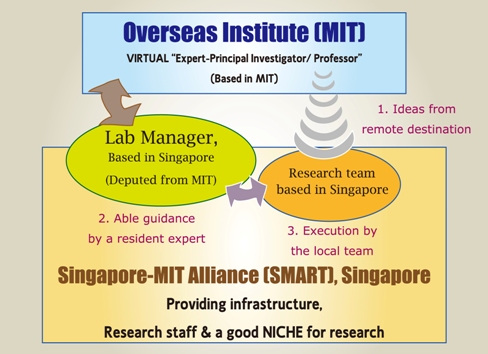
The Singapore-Massachusetts Institute of Technology Alliance for Research and Technology (SMART) has taken a smart decision in that direction, which I would equate to a “virtual professorship.”

Last year when I dropped in at SMART to meet a friend of mine, I found publications co-authored by faculty from MIT and by SMART, and I came across a lab-manager who had just come from MIT, where he oversaw the work done by Singapore-resident scholars.

SMART has produced a good infrastructure and has gathered many able hands and minds, but its novel system allowing the contribution of ideas and expertise by senior faculty without being physically present. In SMART, the virtual professor from another institute provides “idea-protocol & expertise,” which enlightens the researchers in a remote destination, who share the authorship, patents and other fruits of their joint work.

The physical space is of course important, as there are indispensable components such as the clusters of idea-igniting faculty assisted by a team of researchers, fuelled by the funding agencies and the strategic investors with exit plans after commercialization. There are difficulties, though, such as the delay in arrival of the materials for research or some expats who prefer to have shorter duration of stay.

Still, this novel initiative is worth being studied by new or would-be institution builders, as things have fallen in place fairly well, and in three years the SMART Bio-SYM team has published 45 papers and has 7 patents to their credit. Plus, one company is to be launched for commercializing a cancer drug screening application!

Samuel JK Abraham

Tomorrow is still one day late!

In the past two decades, India has positioned itself as a major Information Technology (IT) service provider to the world. I would like to share my perspectives as an Indian national, living in Japan for the past 18 years, being a clinician and also involved in stem cell research. I have a stake in a biotech (BT) organization, and I’ve been watching the trend of IT vs BT in India. I would say India has a long way to go in making breakthroughs in BT. People might have thought the boom of IT will be followed by that of BT, but I guess that is wrong.

First, the IT products are for a vast array of day-to-day life activities, starting with maintenance of accounts in a small shop to running inventory in a big business to patient records in a hospital.  These products don’t require stringent approvals. BT, however, is in various avenues, starting with food industry and moving to liquor and medicines. And cell-based products or vaccines need to go through a series of stringent processes of safety and efficacy testing, including clinical trials. Approvals here take time, and therefore failures could also be many. This makes only those who are prepared for long battles be the survivors in the BT field. In IT, a simple idea that simplifies the remote-control operation of a computer or similar household device could be a breakthrough, straight away.

Secondly, the number of middle-level jobs are many in IT, whereas BT needs a few brilliant minds to trigger innovation, which have to be proved as a concept. Even then, an acceptable product comes only after long incubation periods, and that may not create many middle-level jobs. This has made the younger generation of workers prefer IT over BT in India, evidenced by the number of institutes and aspiring graduate students in IT field vs BT.

Thirdly, BT requires several core essentials, such as original technologies in materials, processes and methodologies, which take decades to develop. On these pillars, subsequent product development processes are built. Going by the number of original publications, patents and projects of research that have been accomplished in India, our path to original and successful BT products is obviously longer than the accomplished nations, who have started their ground work several decades ago.

One needs to accept the difference in the fabric of these two fields, which makes them a world apart. To achieve and accomplish in BT, one needs a long-term vision and strategies, rather than short-term goals and expectations. India needs perseverance on carefully planned work protocols, rather than giving up easily when research fails, and it needs professionals driven by passion, rather than pressure. But we should start all this today, as tomorrow is one day late.

Samuel JK Abraham