Why Every Life Science CEO Needs a Leadership Coach

table4

{credit}Emily Winiker{/credit}

The biggest graduation for an academic researcher comes without diplomas or Latin superlatives, caps or gowns. It’s the leap from academia to business, the shepherding of our beloved ideas and inventions out of the known world of the lab and into the strange land of the marketplace.

It’s a bigger jump than any researcher imagines. When my co-founder Sarindr (we call him “Ik” for short) and I graduated our bone-growth technology from a Columbia University lab to a startup company, we realized lab reports don’t translate easily to investor pitch decks, and hiring a lab assistant from within your university department does not prepare you to build a cohesive company staff. We knew how to respond to the requests of an academic lab director, but that does not equate to answering to the FDA.

In short: A science project does not a science business make.

That’s why I sought the guidance of leadership coach. I had discovered the benefits of coaching when I was a TED Fellow (through their SupporTED program) and transitioning my role from academic postdoc to EpiBone CEO. My coach, Mark Capellino, helped me find my best professional self, one session at a time, through self-examination, skill and connections to outside resources. I started to see clearly the overlaps (and gaps) between my dreams and my skills, to answer the essential question: “What kind of CEO do you want to be?” and then enact my answer.

I knew this kind of expert guidance was indispensable for EpiBone—not only for Ik and me, but for staff at every level. A startup company is strong and nimble only when every teammate gets the support they need to do their best work. When obstacles arise within the team, the right coach can teach you to solve thorny social dynamics and smooth communications. As you increase the trust in the organization, you increase speed and efficiency.

Ik and I wanted a New York-based coach who could embed with our team, and someone with the experience to guide us without getting dogmatic. We found Lori Dernavich, who has advised and coached a host of ex-academics before us. Lori, who previously worked as a high-tech recruiter and psychotherapist, specializes in leadership coaching at growth-stage startups.

I am happy now to be able to say something radical: every single person who joins EpiBone is supported with one-on-one coaching. Besides coaching founders, Lori provides three to five sessions for every employee who is new or in a new role, plus monthly sessions for each manager. While her individual conversations are confidential, her wisdom and observations about the company overall help me keep EpiBone thriving—to grow a strong business while growing strong bone.

I recently got Lori to go on the record about why every biotech startup founder needs a leadership coach. Here are highlights of our conversation.

* * *

NINA: Lots of life-science executives come from academia. We’re in a new world here, but we’re smart people. Leadership coaching is not remedial. If you just got into the Olympics, wouldn’t the expectation be that you would need an Olympic coach?

LORI: Yes. You hear all the time from investors that they invest in the people. They want someone with a lot of passion, resilience, grit, empathy—meaning they can really work with other people. But VCs don’t often put their money where their mouth is. They often only call me when there’s a problem, when damage has been done. Founders need someone to have their back as they’re leading and growing a team.

When everyone’s a scientist, there’s little understanding of what’s coming next, or even what questions to ask in building a company. You can do it by trial and error, but startups have just a couple chances to make things work. It’s better to make fewer mistakes, or to recover from mistakes faster.

With founders coming out of the sciences, there’s a natural desire to learn. You’re brilliant at what you do, but you’re willing to learn what you don’t know. I love that.

Skills for the Science CEO

NINA: I see the need for this in the life sciences only growing. The trend in the past 10 years is of Big Pharma getting their R&D off their balance sheets by buying startups. That has pushed people like me and Ik into the position of leading emerging R&D groups.

If our last graduation was out of the lab into our own space, and from having government funds to angel funds, now we’re graduating from pre-clinical into clinical, and we’re transitioning from angel investors to VC investors. So I want to proactively address the pitfalls that many startups face, to be sure we address our blind spots in business building. Why would someone in my position seek out a science-leadership coach rather than a VC entrepreneur-in-residence (EIR) or simply a lot of deep reading?

LORI: Lots of people I meet wonder about this. The answer is that a leadership coach—and, ideally, the startup leader—are after something deeper. An EIR is a subject-matter expert in science, operations, sales, or finance, but they usually don’t specialize in coaching or the human dynamics of organizational growth. A leadership coach works with startups on their day-to-day interpersonal issues and in the development of leadership skills needed to scale. Not only for the founders, but for employees at all levels (a.k.a. your future leaders). Plus, there are going to be some things you don’t want to take to your VC, like those moments of self-doubt and uncertainty that visit every founder. You can Google how to be a better leader all you want, but that’s not the same as having a coach there to be your mirror, to show you your blind spots. Blind spots are called blind spots because you can’t see them.

NINA: I’ve found, too, that those more visible skills are easy to commodify. The value of good leadership is in the subtler skill sets. There’s a huge upside for people who recognize that. So as a founder, you have to ask yourself who are you going to bare your soul to, because you have to if you’re really going to do this work.

LORI: Right. What’s needed in all startups are basics like hiring the right people, leading meetings well, articulating the big picture. Communicating everything, a lot. And delegating. Delegating is huge. This is my baby; how do I let it go, so that other brilliant people can take pieces of it?

In life sciences specifically, founders are going into an environment that’s far more collaborative than academia. Scientists can be more introverted than those in high tech, so communication is also a challenge. How do you focus on other people? How do you turn your language into something that someone on the outside can understand?

This is not soft stuff. It’s the team and the people that make your business. The quote-unquote softer skills are some of the hardest ones to learn.

NINA: It’s the same with hiring. We may have had experiences as grad students working with undergrads in the lab, and we’ve trained them on the thing we want them to do. So, we think we’re good at hiring, but we’re not. We may be good at testing for skills. We don’t realize that we should also be interviewing for flexibility, adaptability.

And we think we’re good at communication because we deliver a paper presentation twice a year. But we’re not. In a way, we’re being tricked. We think it’s the quality of the idea that carries the day and that we’re on an infinite timeline to get the right answer. In reality, by the time you figure that out the world has changed. We have to learn the 80/20 rule for startups, where the need for speed means you can sacrifice some accuracy. What’s the 80% correct answer that I can get to in 20% of the time? Because making an imperfect decision quicker is more important than making the absolutely correct decision too late. That’s the biggest shift.

Growing Leaders at Every Level

NINA: Lori, you led hiring and on-boarding workshops for our whole staff to help us figure out how to bring new employees into the company, in deeper ways than the standard paperwork. You helped us tailor our process to our company’s character. We got a chance to think tangibly about how to make sure we’re hiring the right people, what is our philosophy, what is the cost of getting it wrong. That was valuable. Instead of “the company culture is what it is because there’s only five of us and we’re all in the same room together,” now we’re 20 people, and you need to starting naming and codifying things to be sure they continue to live. You can’t just rely on osmosis and chance and serendipity.

LORI: That’s true. Plus, people tend to feel more engaged and motivated if they have ownership. It shouldn’t just be for hiring managers to define our values. Anyone who is going to be working with new hires should understand what are you looking for. You don’t have to be managing somebody to be a leader. You should all have leadership skills and be able to come up with different solutions.

Cultivating Culture

LORI: Compared to solo academic work, building a company culture is completely different. As a startup, you have to define that from the get-go: What are our values? And then you have to live out those values in every area and action of the business.

NINA: Yes. I’ve learned that every single thing you do is actually two things: you are transacting business and you are also demonstrating through your actions the norms through which your business should be conducted.

When you’re growing bone cells, you can’t have cell culture medium that’s undefined. The reason it’s called cell culture is you’re trying to create an environment that works for your cells. What are the key ingredients that you need to make the cells not just survive but thrive, to foster attachment, proliferation, differentiation, collaboration? If we have this idea down pat when we’re thinking about how to encourage cells to grow, how do we apply that thinking to our company?


Nina Tandon

Collaborate, not compete

my-best-friend-1370977-639x495Collaboration seems to be the last thing on the mind of bioentrepreneurs. This is based on personal experience as well as feedback from my fellow entrepreneur friends. It is quite disappointing and interesting as the same time, as to why most prefer to compete, and not collaborate.

Historically and traditionally, ecosystems can be built and nurtured by collaborating and not by competing. It is human nature to compete, but the urge to win comes along with jealousy and ego. This can hinder progress of a project that is aimed toward a noble and useful cause.

In 2015, the Alzheimer’s Drug Discovery Foundation (ADDF) and Pfizer’s Centers for Therapeutic Innovation (CTI) announced a collaboration to advance new small-molecule drugs for Alzheimer’s disease and related dementias. Also recently, 500 Startups, a venture capital seed fund, and Echelon, a global series of tech events by e27, have decided to collaborate to showcase Southeast Asia startup ecosystem to corporates. I think this is a brilliant partnership and will definitely help the startup ecosystem in SE Asia and the rest of the world.

Human culture is to celebrate and elevate an individual; this undermines the value of collaboration. Everyone is in it for the money (a fact of life), but this can also be achieved by effective partnership and working together.

Being a two-time entrepreneur, I am not surprised anymore when collaborations do not go through and the entrepreneur on the other side does not understand what he/she is missing out on. For example, if you are a founder of a biotech startup that works on solutions for diagnosis of cardiac failure and your friend has a social enterprise that works in rural areas to make sure people have a healthy heart, would you collaborate with them? Why would you turn down such a request?

The up side of collaboration is new innovations, new product development, expanding the market, enhancing customer satisfaction and a wider network. Collaboration does have its downsides, such as control issues, insecurities and group dynamics. But looking at the positives, it seems it is more effective and beneficial to collaborate than to do your own thing.

There has been a debate as to whether corporates should collaborate with startups, to scale and succeed together. This equation has many factors to consider, but should work if the vision is similar for both the corporate and the startup. They can learn from each other by working together and creating mutual benefits. Startups always take more risks with disruption, things get done faster due to lenient regulations and they like being associated with big corporates.

Sandhya Sriram

To MBA or not to MBA: is that the question?

shells-1193518-640x480

There are many types of leaders, many ways to lead.

“What kind of CEO do you want to be?” That question still rings in my head.

It came after a meeting with a CEO that I’d attended with my dad, one in a string of meetings to match small biotech and health tech companies with potential investors.

My dad, an investor, was letting me flex some muscle. I had hopped straight from earning a PhD in biomedical engineering to consulting at McKinsey – and now, I knew just the questions to ask: if it was a cell therapy or biologic, I’d hammer them on manufacturing or the regulatory process. If it were a device, I’d ask about IP or competition.

Over time, I noticed a pattern in the answers. If the CEO were, say, an MD, he or she would demonstrate less fluency with the financials. And if it were a lawyer at the helm, I’d note the micro-stuttering of a person for whom technology was a “second language” – in other words, someone who’d been taught (rather than having developed) the technology’s mechanism of action.

What I was intuiting from those meetings, it turns out, was the weak spot common to any technologically-based venture: the gap between technology and management, between science and business. This is a language barrier as formidable as any other. Like the gaps between other spoken languages, it blocks understanding within biotech companies, impedes their progress, and is difficult to overcome. Indeed, the deeper a company’s chasm, the more reluctant my dad was to invest.

Continue reading

Biotech investment panorama in Chile

In bloom.

In bloom.

The “Chilecon Valley” bubble is a weird one. Four years ago, people wrinkled their nose at you when you called yourself an entrepreneur. Today, they treat you like a rockstar and maybe even throw money at your face – especially if you’re a foreign entrepreneur coming to the country. There is an oversupply of tools, help and attention directed at entrepreneurs in Chile just now, which should seem like good news. The bad news? We are getting far too comfortable with all these entities babying us, and once the bubble bursts (if indeed it does) we will be left with nothing – because we have not built any sustainable structure.

Continue reading

Chile’s Austral Incuba


valdivia_la_nube

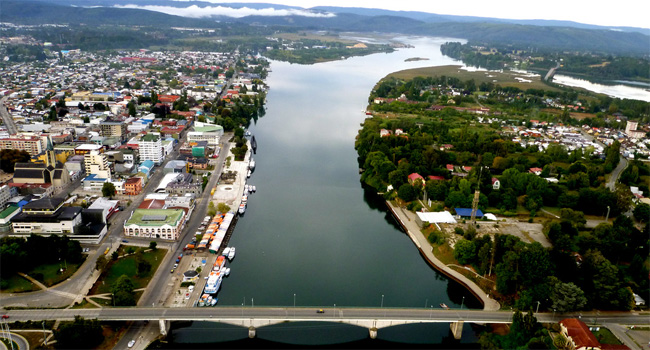
Rio Valdivia, cutting through Valdivia, Chile.

Or, why hatch a biotech business?

There are around 20 business incubators in Chile, and for the last couple of years they have been getting kind of a bad reputation. Their main job is to take government grants (usually seed funds) and allocate them to different projects that they scout through competitions and direct application. Many of these incubators base their business models on taking a percentage of their startups’ sales for up to 5 years, or equity up to 7% to be cashed out in 5 years, or a combination of both. Considering this timeline, it will probably come as no surprise that most business incubators here avoid biotech projects like the plague.

Which is why the case of Austral Incuba, arguably the only business incubator to focus in biotech in all of Chile, is so special. How have they managed to survive while competing with IT-based incubators with shorter timelines, lower risks and less capital-intensive projects?

Macarena Sáez, Austral Incuba’s CEO, tells me the choice to focus on bio-based projects was a conscious one, made about six years ago (the incubator has been in existence 11 years). Like every other incubator, they started working with the inevitable app and website groups, and all the projects that make you go “why are you wasting your brainpower in this,” (my words, not hers) until they realized that most of those entrepreneurs seemed much more interested in bettering the state of their personal finances than the state of their country.

But Austral Incuba was different from the start. It is located in Valdivia, a city more than 800 km away from Santiago, the country’s capital, and is housed within Universidad Austral de Chile. The university’s motto, “knowledge and nature,” reflects its environment (it is smack in the middle of forests and rivers) and their academic focus. Their most prestigious Master’s program, in human-scale development and ecological economy, is actually dictated by Manfred Max Nef, who was awarded the Right Livelihood Award in 1982. The downside is that not only is Valdivia far away from Santiago (we are talking a 12-hour bus ride at least), but also the city’s GDP is roughly 4 times smaller than that of Santiago, and still has grave illiteracy and poverty issues. So if incubating a business “from the end of the world,” as we ourselves refer to Chile, seemed hard, trying to do that from the south of said end-of-the-world sounds impossible.

ok3-1030x773

The Austral Incuba team.

“It feels like our very own crusade,” says Macarena. “We know the conditions are unfavorable and yet we choose high-risk projects such as biotech-related ones, because those are the ones that actually respond to what we see in our environment. The impact you can have while developing bio-based projects is infinitely bigger than your classic app or website, and can actually take responsibility for what is happening in our local area, both socially and environmentally speaking.”

Even the entrepreneurs there are different. They bring premises from their scientific disciplines to their startup work. They don’t just want to make a sustainable product; they want to work in creating a sustainable economy, capable of regenerating their local environment and society.

It’s not all butterflies and rainbows, though. The “diva scientist syndrome,” as I like to call it, is quite real and can be a huge impediment to the development of a project. As Macarena puts it, “We understand that you rule the lab but that does not mean you rule the world!” Which is to say that these entrepreneurs might know everything about their science, but sometimes have no idea what a value proposition is. A scientist’s ego might be one of the worst obstacles when becoming entrepreneurs – they can be un-coachable and deaf to feedback. In Chile this “diva scientist” attitude can become even worse when combined with the “rockstar entrepreneur” vibe we all seem to be getting secondhand from Silicon Valley. There are so many entities here that exist solely to serve the entrepreneur, including throwing money at them, that we haven’t been able to create a proper VC structure. This also has hurt the development of the entrepreneurs. We get money all the time, but we don’t get the smarts that should come with it – which is precisely what Austral and other business incubators are trying to solve.

Luckily, Macarena says that trait is more common in an older generation of entrepreneurs and not as prevalent in the younger crops. And it’s these younger ones that have proved themselves worthy of Austral’s help, over and over. “One of our entrepreneurs relocated from Santiago and practically revived a small town that had been left down on its luck by employing tens of people that had been left unemployed after the closing of a local industry. Another is obsessed with creating added value to local industry’s waste, and is now exporting his products to the US and Europe – all while making the region cleaner and greener,” she says.

The experience Austral has had with these entrepreneurs reaffirms their belief that there’s a certain common trait to all scientific entrepreneurs: a spirit of collaboration. “During our first 5 years we witnessed the non-necessity of collaborating that traditional startups put in place through constant outsourcing and extreme secretiveness,” Macarena says. “Bioentrepreneurs are radically different. They are aware of social pain, and that pushes them towards collaboration as a tool to improve social conditions around them.”

Emilia Diaz

Made in Chile

newspaper-1173913-640x480Chile has this bad habit of being in the news solely for terrible reasons. Take September 2015: an 8.4 earthquake hits the country and is followed by around a thousand aftershocks. But among the pictures of fallen houses and coastal damages and the half-sad, half-numb resignation that proceeds them there was good news: the apparition of an innocuous and universal cancer drug, made in Chile. This is the promise of Andes Biotechnologies, a Chilean biotech company whose invention has just been cleared by the FDA for clinical trials in the US.

The FDA granted approval on September 13th for the start of US-based clinical trials on Andes Biotechnologies’ cancer drug. The product has been tested in animal models, specifically mice and monkeys, where the treatment has proven both universal and innocuous.

Sounds too good to be true? Too unlikely?

It’s actually even more so.

According to a 2014 study published by the Tufts Center for the Study of Drug Development, the average R&D cost of developing a new drug is $1.4 billion. Even if this figure might be overinflated, as stated by The Economist, the minimum amount is considered to be around half a billion. Not exactly what you can invest in a country where the total investment, both public and private, totals less than 70 billion.

And yet, Andes not only developed what could potentially be a hit in the battle against cancer: it even managed to run the whole development process in Chile and with only Chilean investors.

You read that correctly. With only 31 people in their team today, Andes Biotechnologies’ drug is the first biomedical development that has been invented, developed and financed in Chile, while also being cleared for clinical trials in the US. Even now, when these trials abroad are about to start, they will be spearheaded by chilenos.

The technology’s development started around the year 2000, when Dr. Luis Burzio, one of Andes’ main researchers, discovered a new family of RNAs while conducting research on spermatogenesis. These RNAs, of mitochondrial origin, sparked the researchers’ interest and after many tests proved to be a promising universal target for both cancer treatment and diagnosis. On 2009 Burzio was joined by Dr. Pablo Valenzuela, who in 2002 was awarded the Chilean National Award in Applied Sciences and Technologies and also happens to be the inventor of the world’s first recombinant vaccine (against hepatitis B virus), and by Arturo Yudelevich, co-founder of one of the biggest biomedical companies in Chile, to found Andes Biotechnologies.

Since its founding, the company has obtained 29 patents worldwide, and has become a standard for biotechnology innovation in the country. The company’s success in recent years has, in my opinion, played a major role in inspiring new developments, technologies and yes, new entrepreneurs as well. Innovation in biomedicine, and entrepreneurship in general at this point, tend to be presented as a club you are only granted access to if you had the good luck of being born or based in the US or Europe. As an aspiring biotech student seven years ago, I couldn’t name even one Chilean company that had made it there, in that faraway place where success happened.

Now that the glass ceiling has been broken there is no way back. Companies like Andes will help ensure that Chilean biotech is finally recognized as a force to be reckoned with. The new crop of entrepreneurs that my generation brings will gladly course through the path this development has cemented for us. Knowing now that something as difficult and unlikely to succeed can undergo preclinical development in our country, we have no excuse not to try.

Hopefully this will be the news you will hear now. Not about the earthquakes and the occasional wine review or football match, but around the new inventions and advances in biomedicine created within our borders. We cannot write a full newspaper yet, but we do have the first headline:

The rise of a universal drug against cancer seems to be closer each day – and it’s made in Chile.

Andes_peeps

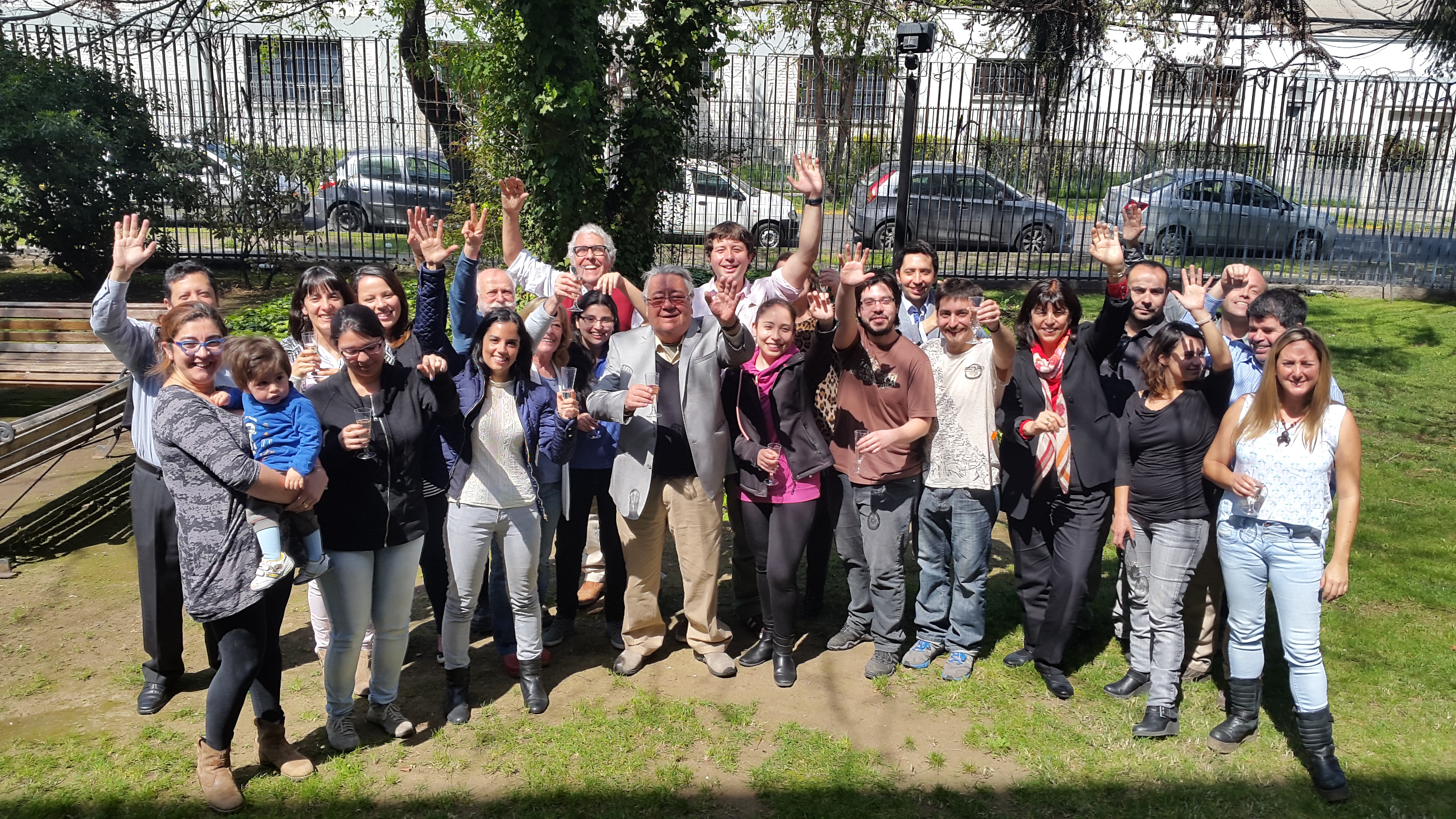
The team at Andes celebrates FDA clearance for clinical trials.

Emilia Diaz

Fueling Australian biotechs

fuelWe’ve blogged here and here on the Australian biotech scene. In this post, we’re going to look at collaborations and finance.

Australia is strong, scientifically. The quality of its research is well above the world average and just below the average European citation rate. The country has sharp science and international academic connections. Specifically, Australia has strong links with the UK and the US, due to a common language and also because of the tie with the Commonwealth. China is also a big collaborator.

A common language is not enough, however. Australia suffers from geographical isolation and some members of Australian biotech firms travel every three months.

Large multinational companies as partners (or investors) help bring validation to Australian biotechs, just as they do elsewhere in the world, but Australian companies often accept unfavorable terms because they need a global brand and wide distribution. While CEOs often realize they need to reach global markets, they sometimes do not appreciate which product is likely to succeed globally (though this has been somewhat alleviated in recent years by an influx of senior executives from the US or the UK, or from Australians returning from abroad). Collaborations are helpful for Australian biotechs to get drugs through the FDA, and many companies decide to open an office in the US to generate US-derived data for the FDA, as well as for access to the US capital markets.

Financing

Finance is, of course, of critical importance to young companies, and there are interesting facets of the Australian financial ecosystem.

Angel investors. In Australia, biotech angels tend to be people with backgrounds in the biosciences, and they guide and help the firms they invest in. The association of individual angels, BioAngels, tends not to invest in drug development due to the high cost, but to focus on devices and diagnostics. They invest around A$60,000-A$250,000 per company. In general, they select opportunities that can scale up 7–30 times in 5–7 years so that the few that succeed will provide good returns overall. As elsewhere, angels do not look kindly on VCs, who tend to bring in shareholding agreements that override the angels’ earlier agreements with the company, not to mention dilute initial investors down to small percentages of ownership.

Venture capital. Table 1 has a list of active Australian VCs. Australia also had the Pooled Development Fund, a venture capital fund that invested in enterprises valued at less than $50 million. Although new registrations under this program are no longer possible, income obtained by holding, or disposing of, shares in this fund is tax-exempt. Also, in recent years, Australian VCs have syndicated with US VCs to increase the size of their funds.

Earlier in the Australian industry’s history, a company might conduct an IPO, raise $10 million and have a valuation of $20-$30 million. Things have improved somewhat. In 2013, for example, stem cell company Regeneus raised A$10.5 million in its IPO, giving it a market cap of around A$46 million. It’s a sign of maturity that there are much fewer listings on the ASX today.

Table 1. Major VCs that have invested in the bio-medical sector in Australia.

Bioscience Managers
Brandon Capital Partners
GBS Venture Partners
Innovation Capital Associates
NBC Capital
OneVentures
QIC Bio Ventures
Starfish Ventures
Terra Rossa Capital
Uniseed
Yuuwa Capital

Source: Australian Private Equity & Venture Capital Guide.

Up next: clinical trials and Australia’s unique skillset

Szymon Jarosławski and Gayatri Saberwal

Acknowledgments

This article is based on interviews with 14 senior people in, or associated with, companies in Australia, whose comments have been edited for clarity and brevity. We are extremely grateful to the interviewees, who gave freely of their time and their insights.  This work was supported by a grant to GS from the Institut Merieux, France. SJ was supported by France Volontaires, France. Neither organization played any specific role in this study.

Australia’s government and biotech

topIn our last blog post, we laid out the Australian biotech foundation and a few of its shortcomings. Here we focus on what it has done well.

Certainly biotechs can be built successfully in Australia. One company (Acrux) grew from a $20 million market cap to $500 million over 15 years, and another (Mesoblast) grew to be worth $2 billion. Australia is doing many things right.

Partially this is because the government has played its role well. Initially Australia’s government looked at biotech as a lucrative export opportunity, and it put in place a grant system and tax benefits for anyone investing in high-risk start-ups. For instance, companies with less than $20 million in turnover yearly can get a 45% tax refund on eligible R&D expenditures (more information here).

Some of the other government initiatives have been the Innovation Investment Fund (IIF), since closed; the Innovation Investment Fund-Follow-on (IIFF), also closed, and the Early Stage Venture Capital Limited Partnerships, which offer tax breaks for limited partners. Pre-Seed plans helped create the first batch of biotech entrepreneurs, and today the government still strives to make things easy – it can take just minutes and less than $1,000 to do the paperwork to set up a firm.

The government has also invested large sums in infrastructure made available to the public on a fee-for-service basis. The National Collaborative Research Infrastructure Strategy (NCRIS) program provided $542 million from 2004 to 2011 for subsidizing infrastructure in private drug discovery firms and contract research organizations (CROs). NCRIS has in some cases subsidized the cost of installing/purchasing advanced biotech infrastructure in private CROs or R&D biotechs with a CRO wing.

State governments have also helped to create a few clusters. In Melbourne, for instance, the government of Victoria has supported the development of The Walter and Eliza Hall Institute of Medical Research, Burnet Institute, The University of Melbourne, Monash University, Royal Melbourne Hospital and the Royal Children’s Hospital – many of which are in close proximity to each other. Clusters allow companies to share facilities and draw a better hiring pool. Clusters also help promote collaborations, and sometimes consortia formed in a cluster may earn state government funding.

Australia has a unique system of about 60–70 public collaborative research centres. Called the Cooperative Research Centres (CRC) program, it supports end-user-driven research collaborations to address major challenges facing Australia. The CRC Program links researchers with industry to focus R&D efforts on progress towards utilisation and commercialization. In 2014–15, there were 35 CRCs in a range of areas such as healthcare, natural hazards management and the aerospace industry.

Most biotech start-ups originate from these centres, meaning the spin offs have essentially been financed by public universities. There is no regulation on who owns an invention – the scientist, their department or their organization – and thus the company founder and inventor have been able to own IP rights rather cheaply. This has changed, with most universities adopting the equal splitting of IP rights among 3 parties: the research organization, the relevant department and the inventor scientist.

Thus, some 75% of the companies that are on the stock market are university spin-offs. Yet, partnering with the institution that spun out a company is the most common collaboration for a start-up, because the university expects that money will be pumped back to it through fee-for-service work from the spinout. This is often the cheapest way to get things done for a startup, but it is hardly ideal, as academic scientists often do not feel comfortable working in a fee-for-service arrangement and being told what they should do, nor do they understand the pressure of time and the corporate work culture.

Next post: Finance

Szymon Jarosławski and Gayatri Saberwal

Acknowledgments

This article is based on interviews with 14 senior people in, or associated with, companies in Australia, whose comments have been edited for clarity and brevity. We are extremely grateful to the interviewees, who gave freely of their time and their insights.  This work was supported by a grant to GS from the Institut Merieux, France. SJ was supported by France Volontaires, France. Neither organization played any specific role in this study.