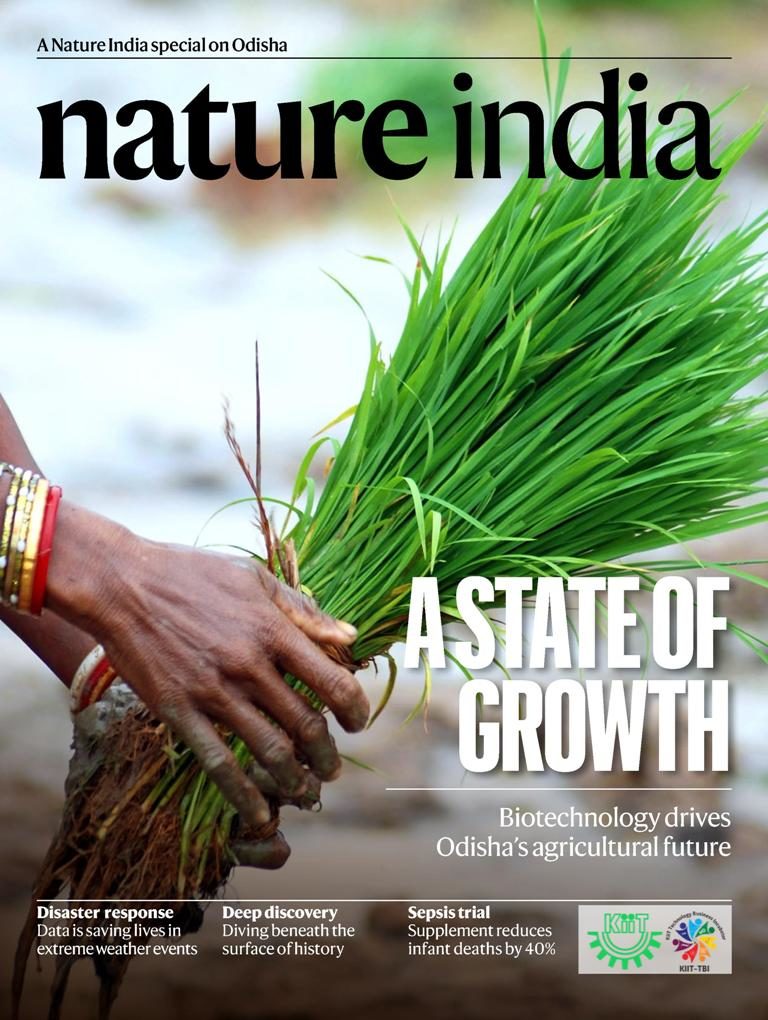
Nature India spotlights Odisha

A state known for its heritage, culture and disaster management, and as an emerging hub of scholarship and research, Odisha is making its mark. This special issue captures the aspirations of and challenges for the eastern Indian state in becoming the next national science hub.

Odisha is home to a number of large national institutes and laboratories – the Indian Institute of Technology, the Institute of Life Sciences, the Institute of Minerals and Material Technology, the Regional Medical Research Centre, the National Institute of Science Education and Research, National Rice Research Institute, the Central Institute of Freshwater Aquaculture and the All India Institute of Medical Sciences. The state government-run Utkal University and the Orissa University of Agriculture and Technology in capital Bhubaneswar add to its scholarly might. Private education conglomerates such as the Kalinga Institute of Industrial Technology University and the L V Prasad Eye Institute are helping produce a sizeable scientific workforce.

The entrepreneurship and innovation scene is warming up with a number of technology business incubators setting up shop in the state. A biotechnology cluster is also on the cards. The Odisha special issue takes a close look at this growth of innovation and technology in the state’s science.

Odisha’s 460km coastline and a hot, humid agro-climate, have endowed it with rich fisheries and paddy cultivation resources. The state’s scientific legacy in both aquaculture and rice research have benefitted from these. We examine the results of years of rice and fish breeding that Odisha has gifted to the world. The state’s proximity to the Bay of Bengal and high summer temperatures have also brought severe cyclones, floods and heat waves. We investigate how Odisha is setting an example in using science and technology to cope with such extreme weather phenomena.

Odisha’s rich culture and history draws international attention. Its many temples, monuments, ancient palm leaf manuscripts, paintings, and excavations are keenly researched by archaeologists, leading to innovative conservation methods to preserve Odisha’s past.

We analyse the traditional and modern methods being deployed by scientists, and focus on another rich historical source – shipwrecks – revealing fascinating stories of historic naval wars off the coast of Odisha.

India’s science and technology is well entrenched in metro areas, with institute clusters like those in Bengaluru, Hyderabad, Mumbai, Pune, the national capital region of Delhi, and Kolkata. Smaller, second-tier cities like Bhubaneswar are gearing up to the cluster approach, and are poised to contribute to the research and innovation scene. The Odisha special issue is an attempt to shine a light on one such state. In the near future, Nature India’s regional spotlights will chronicle more such emerging hubs of science in the country.

The Nature India special issue on Odisha is free to download here.
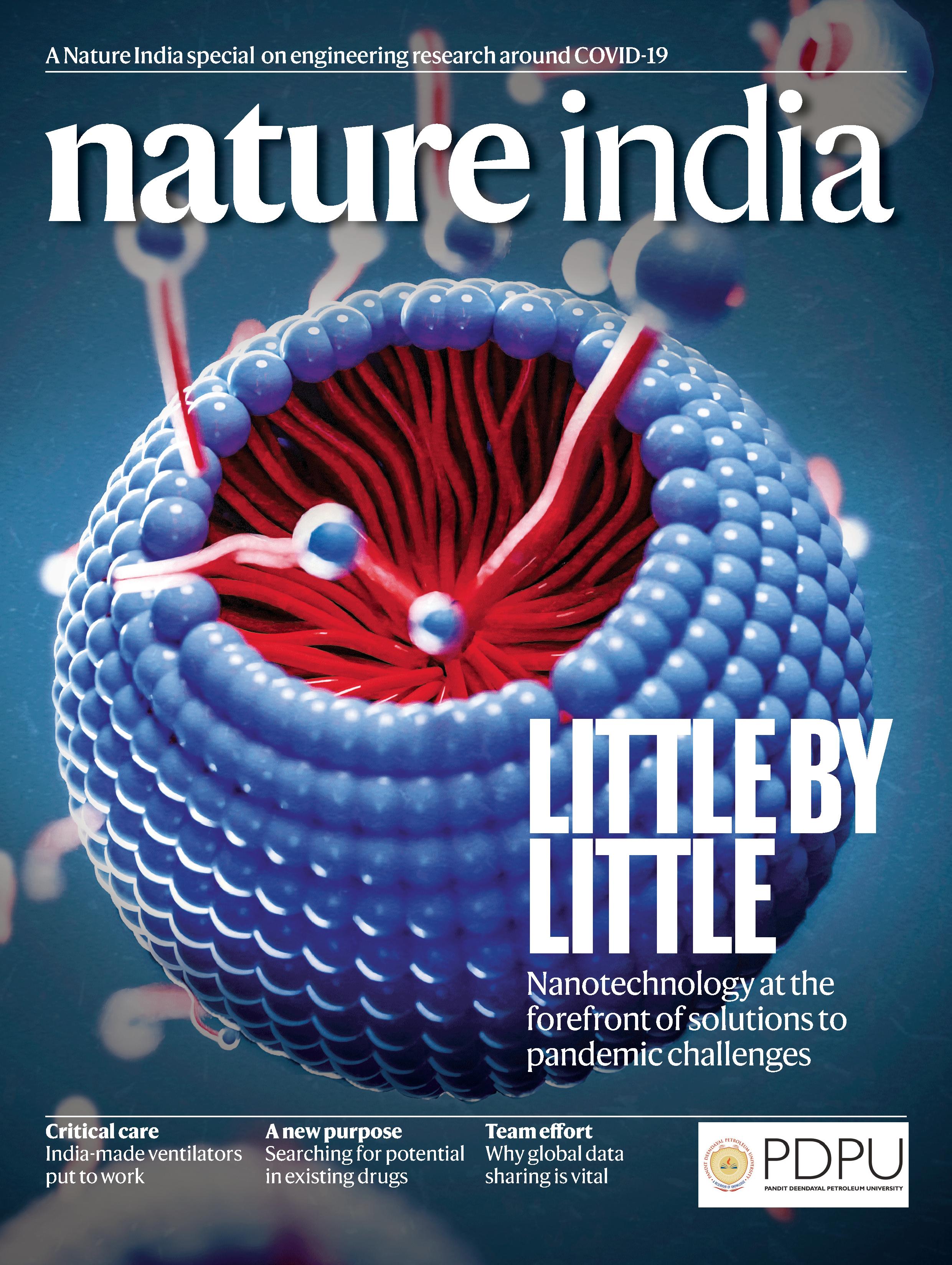
NI Special Issue on COVID-19 Engineering Solutions is out

Cover illustration: Youssef A Khalil

Very early on it became clear that the COVID-19 pandemic was not just a challenge for scientists and medical professionals. Almost a year into the coronavirus’s rampage across the world, there’s no doubt about the long-term impact that SARS-CoV-2 will continue to have on every facet of human life — from healthcare to education, social interaction, businesses, environmental concerns, and political processes.

India’s large population, governance, and creaky healthcare infrastructure have traditionally hampered the quick and smooth roll out of public health interventions. With this pandemic, it wasn’t any different. Nature India covered the evolution of the crisis from several angles, going beyond the strict remit of science. Our coverage embraced a new normal in these unprece­dented times. We looked at the physical and biological aspects of the virus extensively, and also published stories of how India, with its 1.2 billion-strong population, was responding to the health emergency. This resulted in Nature India’s first special issue on the COVID-19 crisis, published in June 2020.

Coping with a major public health catastrophe lies not just in vaccines and treatments, but also technologies that the world’s scientists quickly geared up to invent or repurpose. Within months of the novel coronavirus’ spread we saw the development of new ventilators, rapid antigen tests, personal protection equipment, and sanitization apparatus.

Nature India’s second COVID-19 special, focuses on such engineering and technology solu­tions being tested and deployed. We take a look at front-runners in nanomaterial design that are helping advanced antiviral and antibacterial therapies; the state-of-the-art in critical care ventilators and how in-silico docking studies are bringing new drug molecules.

The issue presents a selection of commentaries published in various Nature research journals highlighting the use of artificial intelligence tools and machine learning in scaling approaches for data, model and code sharing, and in adapting results to local conditions. Nanotechnology is offering hope in antimicrobial and antiviral formulations, and highly sensitive biosensors and detection platforms.

We ask whether nanoscientists can take better advantage of technology and automation in their laboratories to reveal new information about COVID-19. A host of reverse-engineered commercial medical equipment and devices for healthcare workers have flooded the market. While these ‘low-tech’ solutions are welcome for resource poor countries such as India, we argue that for real impact, they must affiliate to approved designs. We also shine a light on pandemic-fighting photonics tools (X-ray imaging and ultraviolet sterilization), the strengths and ethical questions around smartphone surveillance of the pandemic, and discuss why it is important for governments to implement public health measures aided by technology.

At the end of a trying year, we hope these new perspectives bring additional hope in efforts to tame the novel coronavirus.

The Nature India COVID-19 Engineering Solutions special issue is free to download here.

Nature India special issue on COVID-19 is out

For most of us, 2020 will be marked as the year of great imponderables. We seem to know as much about the new coronavirus SARS-CoV-2 and its effects on the human body and societies at large, as we don’t. Ever since the virus broke out, ‘uncertainty’ is one of the most commonly used words in conversation, news reportage and emails.

Across the globe, very few lives have been untouched by the direct or indirect effects of the novel coronavirus. China, the most populous nation on Earth, bore its brunt as the virus jumped into human populations in the country’s Hubei province in late 2019. Though China reacted quickly to contain it, the contagion had spread via international travellers.

India, the world’s second most populous nation, reported the first case of the novel coronavirus on 30 January 2020. The number of people becoming infected by the virus began to rise quickly, prompting the government to impose a two-month complete shutdown of the country – the longest ever in its history.

An enormous population, a weak healthcare system, and traditionally meagre investments in scientific research and development meant there was enough reason to worry. However, the severe economic and social fallouts, like elsewhere in the world, forced the government to allow a regulated easing out of lockdown.

Nature India started reporting on COVID-19 in India from the outset. As the pandemic began unsettling every facet of life from healthcare to education and community life to businesses, our coverage embraced a new normal, going beyond pure science to a parallel reflection of its links with society, culture and life.

Nature India’s special issue on COVID-19, therefore, seeks to consider answers from the future. In a rapidly evolving pandemic, some of the articles in this special issue bear a time stamp. However, they will hopefully remain relevant for a long time to come as chronicles of the biggest human crisis any of us has faced in our lifetimes.

As we scrutinize India’s response to the mammoth healthcare challenge, we also look at vaccines and drugs being tested across the world in a hope to arrest the respiratory infection. We dive into the science of how the immune system responds to the virus and question if submitting genome sequences to global repositories at record speeds makes any sense without accompanying patient data. We explore how the packaging of the future would look like, and explain how to care for the elderly and critically ill in times when hospitals are struggling to accommodate COVID-19 patients.

Everyone has a COVID-19 story to tell. We feature some extraordinary everyday stories — a doctor on the frontline handling COVID-19 patients in a Delhi hospital, a scientist in the southern state of Kerala who hasn’t been able to start her dream laboratory due to the lockdown, and an Arctic explorer who endured months of darkness and isolation in the north pole before coming back to a world struck by a new virus.

This special issue also features the story of Ayurveda, and why it is time for India to apply scientific rigour to the study of the ancient system of medicine. We talk of the importance of socially influential groups, scientists, and religious leaders, in spreading the right messages and scotching misinformation in a public health emergency.
In many countries including India, the pandemic is testing the limits of science and of human perseverance. It is taking a toll on our mental health – how we live, work and communicate are set to change for a long time to come.

Science will hopefully find a solution to this unprecedented human suffering soon.

[Download the Nature India special issue “COVID-19 Crisis” free here.]

(For Nature India’s continuing coverage on the the novel coronavirus and COVID-19 crisis, please visit our special page.)

Nature India Special Issue on ‘Grand Challenges’

coverAs part of Nature India’s 10th anniversary celebrations, we produced a special issue on ‘Grand Challenges’. (Download your free copy here.)

India is headed towards an astonishing population surge. With 1.34 billion people recorded in early 2018, the country is estimated to add another 100 million by 2024 overtaking China, currently the most populous nation in the world. Therefore, her daunting demographics are integral to any discussion around the challenges faced by India.

The mammoth population coupled with limited resources, and growing urbanization and energy needs are important factors behind many socio-economic issues. Be it poverty, healthcare delivery, literacy, pollution or waste management — each of India’s problems can be directly linked to and are intensified by its teeming millions.

Some of the most pressing challenges raised by a large population are in the public healthcare, energy and sanitation sectors. Successive Indian governments have made tremendous efforts to meet public needs and expectations. However, health concerns such as tuberculosis, maternal and infant mortality, vector- and water borne-diseases, malnutrition, hygiene and sanitation remain major problems.

03The Nature India special issue on Grand Challenges takes a closer look at some of these hazards, which are experienced across the developing world. What are the grand challenges for the country’s 1.3 billion people? Can science help find solutions to some of the public health problems? Can innovation provide long-term answers?

Through in-depth commentaries by subject experts, this special issue looks at the state of affairs in malaria
management, maternal and child health, malnutrition and tuberculosis. It also looks at the science-led innovations and solutions already on offer. In a reprint section, we compile some recent articles from across Nature Research publications that highlight the grand challenges and research-based solutions that India and the rest of the developing world have adopted.

The volume also features a special photo section curated from top entries to the 2017 Nature India photo competition, themed ‘Grand Challenges’. These pictures are compelling visual narratives of some deeply moving and familiar circumstances.

With examples and case studies of evidence-based solutions, the Nature India special issue on Grand Challenges hopes to be an enlightening read for scientists, policy-makers, business leaders, and societies across the developing world.


Nature India Special Issue: Oral Health Inequalities and Health Systems in Asia-Pacific

coverNature India is releasing a very timely special issue today in collaboration with knowledge partners University of Adelaide. The special issue on ‘Oral Health Inequalities and Health Systems in Asia-Pacific’ is a ready reckoner of the state of affairs and trends in oral health inequalities in the region. The issue hopes to be of great value to the region’s policy makers, health professionals, the oral health industry and general public.

The special issue has 12 articles and an editorial by the who’s who of oral health research in the region. The authors of these articles are senior academic or policy personnel, who in their own right have made a significant contribution to oral health research both globally and in the Asia-Pacific Region.

Here’s a brief summary of the special issue:

This special issue is a unique effort to address key challenges facing oral health inequalities and health systems in the Asia-Pacific region. A group of experts and leaders have authored pieces to strengthen the “call for action”. Based on the London Charter for Oral Health Inequalities, the special issue stresses the importance of advocacy on oral health inequalities in the region. The issue calls for an agenda further to strengthen essential aspects of health systems, such as dental workforce, service delivery, organisation of care, health financing, governance and leadership.

Asia-Pacific is home to about half of the world’s population. It is a diverse community with deep historical roots, comprising of 38 countries. Health is an intrinsic aspect of economic development in the region, and central towards achieving the global Sustainable Development Goals. Oral health is essentially the health of the mouth and adjacent structures.

Tooth decay, gum disease and tooth loss rank among the most common diseases (or conditions) in the world. The cost of treating oral diseases are high and occupy a large proportion of the overall expenditure on health. For example, direct treatment costs due to oral diseases were estimated at US$298 billion a year globally, corresponding to an average of 4.7% of the global health expenditure. Even though oral diseases are preventable, oral health is a neglected component of health and oral health care is given low priority in most heath care systems. There is an urgency for collaborative efforts among researchers, policymakers, public health practitioners, clinical teams and public, so as to improve oral health in the Asia-Pacific.

You can download the special issue here.

Nature India special volume on 30 years of DBT

DBT 30 years volumeOne of the key government departments of India credited with heralding the era of adventure and entrepreneurship in the country’s science – the Department of Biotechnology (DBT) – is entering its youthful years. Thirty, as they say, is the new twenty.

In these three eventful decades, DBT’s achievements have been many, in terms of the science it has enabled, the policies it has introduced, as well as the linkages it has established across disciplines and countries. DBT’s many forays into biological sciences education and its societal contributions have also bolstered its position as a formidable science-faring body in the country – as a confident young global icon who looks to the future, armed with a dynamic policy framework, the spirit of adventure and ample room for self-criticism.

Nature India is happy to be associated with DBT at this historic time of transition, a time when India’s science is making waves globally. This  special volume (freely downloadable from the Special Issues section of Nature India) marking DBT’s 30 years was released today. The volume features commentaries from leading names in biological sciences in India and across the world. The milestones of DBT have been highlighted in a commentary ‘The changing face of biological sciences in India’ and a short note ‘Three decades of biotech solutions’ by two of the many visionary past leaders of the department. DBT’s present chief outlines the vision for the future in an interview titled ‘As India’s economy grows, we will have more support for science’.

The articles compiled in this issue range from looking at the state of basic biotech research in the health sector (malaria, TB, allied microbes and stem cells) to green medicine and frugal medical innovations; from biosafety of India’s laboratories to the looming debate over genetically modified crops; and from biodiversity to big data.

The future of science and science-led entrepreneurship lies in an interdisciplinary, global approach; in frugal
innovations; in providing local solutions to the world’s problems. DBT, which has been playing the catalyst in all these areas successfully, now has an enviable 30-year benefit of hindsight to reflect upon and open newer doors to newer challenges.

As media partner, Nature India, a showcase of India’s science, is proud to collaborate with DBT in its newest mission of disseminating science better. It would be a mission well accomplished if the youth of this country gets back to thinking that ‘science is cool’.

Nature India Special Issue: Proteomics Research in India

proteomics_research_in-india_coverNature India is happy to announce the launch of the much-awaited Special Issue on “Proteomics Research in India“. Nature India has published the freely downloadable issue with support from the Department of Biosciences and Bioengineering, Indian Institute of Technology Bombay (IITB).

When Nature published a cover article last year on the human proteome – more than a decade after publication of the draft human genome sequence – it was a moment of joy and pride for proteomics scientists in India. The country had missed the genomics bus earlier but a Bangalore-based group more than made up for the missed opportunity by identifying 17, 294 protein-coding genes and providing evidence of tissue- and cell-restricted proteins through expression profiling1.

The same issue of Nature carried another important paper which gave assembled protein evidence for 18,097 genes in ProteomicsDB and highlighted the utility of the data2.

Proteomics has witnessed a boom globally in the last decade, but the India story is especially stunning. “The success in Indian proteomics is mixed,” says John Yates, American chemist and professor of chemical biology at The Scripps Research Institute in La Jolla, California. “Some are doing very well, but others are struggling. I think success revolves around people who have come back to India after working in major proteomics laboratories in the West,” says Yates, best known for the development of the SEQUEST algorithm for automated peptide sequencing and Multidimensional Protein Identification Technology (MudPIT).

According to Pierre Legrain, past President of the Human Proteome Organisation (HUPO), the Indian proteomics community will continue to contribute more in the future, through a network of “talented postdocs and PhD students sent worldwide and coming back to their country developing their own teams and projects.” “The Indian community was very well represented in Human Proteome Project from the inception. We now see many more, younger scientists playing an important role,” he adds.

One challenge, Yates points out, that India needs to take care of is patchy infrastructure. “Funding agencies are providing money to buy the necessary mass spectrometers but having the skill sets and experience in the methods and protocols is also important. The spotty infrastructure in some places is a problem as mass spectrometers are sophisticated electronic equipment and they do not like dirty or spotty electrical power.” It will be helpful if people trained in this start new labs in other places in India. “If funding agencies in India are serious about proteomics they should provide fellowships for research fellows to train in high profile labs in the West to learn with the provision they come back to India,” he remarks.

India is perched on the edge of a remarkable evolution in proteomic science. “India’s proteomic scientists are first rate. The national growth in therapeutics, especially therapeutic proteins, is stimulating the growth of proteomic skills and applications,” says Catherine Fenselau, founding president of the US-HUPO and a professor in department of chemistry and biochemistry at the University of Maryland. “My only concern is about the selection and admission of graduate students – several young people have told me that they had to work as low-paid technicians for four or five years before they could hope to be admitted to a Ph.D. program,” she says.

There are challenges galore in a country always trying to make ends meet with its shoestring research and development funding. Nature India takes this opportunity to capture India’s big bang achievements in global proteomics research following the draft of the human proteome maps.

This special issue seeks to analyse the trends and roadblocks in India’s research scene, the problems scientists face in translating research from bench to the bedside and some key lessons this country has learnt while looking at proteomics in the context of social innovation. The Nature India Special Issue on “Proteomics Research in India” also aims to be a compendium for researchers anywhere with its listing of e-learning initiatives, next generation proteomics tools and tips on how to analyse large datasets to detect scientifically significant events. The issue also talks about the proteomics databases and repositories across the world and looks closely at the trends in cancer, malaria and plants proteomics.

References

  1. Kim, M. et al. A draft map of the human proteome. Nature. 509, 575-581 (2014).
  2. Wilhelm, M. et al. Mass-spectrometry-based draft of the human proteome. Nature. 509, 582-587 (2014).