Serious entertainment: What scientists can learn from stand-up comics

When he’s not studying virus evolution, Tufts Postdoc Ravi Subramanian has another life as a comedy writer. He thinks scientists could learn something from stand-ups about how to engage an audience.  A guest post as part of our #reachingoutsci series. 
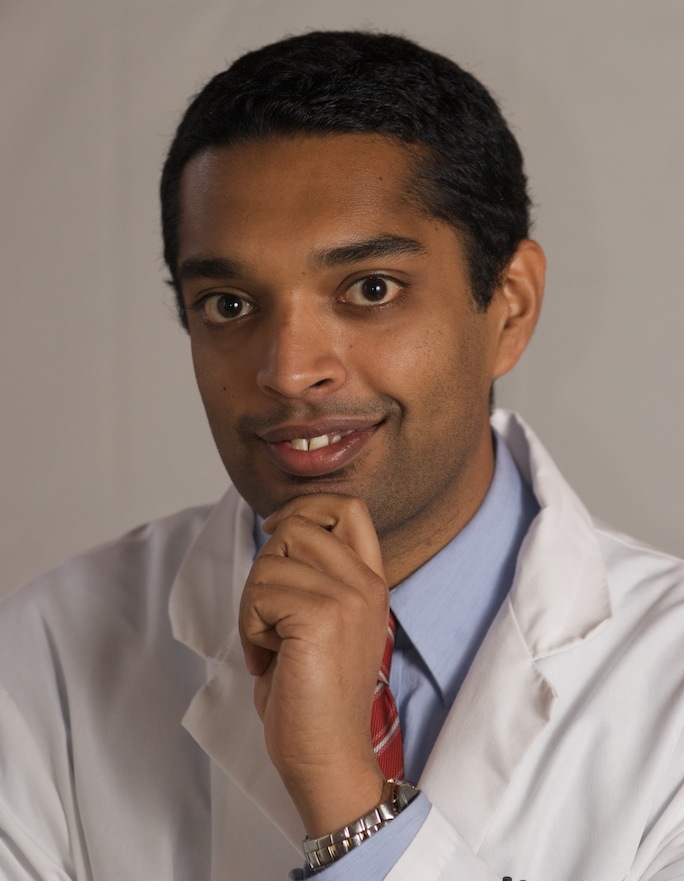
Nothing irks me more than seeing a lousy presentation. When people go to see a science talk, they want to learn and become engaged.

But, the standard biology lecture is this – a presenter gives 10 minutes of background and then spends 30-40 minutes blasting through 150 pictures of Western blots. After an obligatory 5 minutes of questions only one question remains: What was the point of all that?

We as humans love stories, but scientists are not good at telling them.  I understand that science is difficult, and asking scientists to also be entertainers is a bit much.  However, we should consider the possibility that our inability to entertain and engage non-experts is linked with the decreased funding over the last 30 years.

I don’t think that we as scientists really appreciate what our job is. Those who run labs think, “I have to get grants”, while post-docs, graduate students, or technicians think, “I need to get results so my advisor can get grants.” This should not be the motivation of scientists. Instead, the principal reason we do science should be to communicate science to people.

I have many friends who are comedians, and they talk about economy of words, something lacking in most scientific talks. If you can’t explain what the data on your slide is in a few sentences, your audience probably won’t understand it. Scientists need to understand that data serves to tell a story, not the other way around.

We need to start considering scientific talks as performance art.  The best talks I’ve seen are narratives of the pursuit of knowledge.  Good speakers don’t need to justify what they study; their research should be intrinsically interesting. I recently saw a fascinating talk about the relationships between parasitic wasps and aphids; not once was it mentioned that aphids are a major agricultural pest, as it had nothing to do with the story.

Also important: humor. All too often, scientists try to prove themselves as “serious researchers”, which leads to dry, boring talks. You’re not expected to be a stand-up comedian, but it wouldn’t hurt to laugh at yourself or provide humor in the talk.  Studies have shown that humor enhances knowledge retention, and if you’re going over complicated data, perhaps a joke about how the staining pattern of an antibody in a cell looking like a smiley face might help the audience appreciate your research better.

We need to to engage non-experts. People scoff at research focusing on fruit flies, yet much of our understanding of DNA has come from fruit fly genetics.  These non-experts will listen to our talks and just lose interest and not appreciate the value of the research that is taking place.  Perhaps the Ph.D.’s we’re making who can’t get jobs in academia or can start working on making science entertaining?  Bright minds are fascinated by how the world works, so it’s appalling that we’re not able to get more investment in what we’re doing.  I believe better scientific storytelling is the key.

Science Online New York (SoNYC) encourages audience participation in the discussion of how science is carried out and communicated online. This is one of a series of posts tied into  June’s event which looks at how scientists reach out of the ivory tower, communicating science to the public.

After a short search, MIT provost L. Rafael Reif named to replace President Susan Hockfield

With the foggy Boston skyline as a backdrop, Massachusetts Institute of Technology provost L. Rafael Reif held court with the press on Wednesday morning for the official announcement of his selection as the school’s new president. The Venezuelan native will take over from Susan Hockfield, the school’s first female president and the first biomedical researcher to head the school.  An electrical engineer, Reif was appointed to the job of Provost in 2005 by Hockfield and will become president in July.

MIT’s official release here.

A full text of Reif’s comments.

The Boston Globe reports: Continue reading

Open access and criminal minds: Boston events this week

A pick of events for this week. See calendar for details.

Monday

“Does mandating free online access to papers resulting from federally funded research violate the Copyright Act or treaty obligations? “ Find out Monday when Mark Seeley, VP and General Counsel of Elsevier, and Peter Suber, of the Berkman Center for Internet and Society meet to discuss the issue. They promise to cover open access mandates including the pending Federal Research Public Access Act, as well as the National Institutes of Health Public Access Policy. Click here for the live webcast from Harvard.

Tuesday

Frances Chew, Professor of Ecology at Tufts University The Cambridge Entomological Club speaks on the return of the mustard white butterfly, which had been endangered by “serial invasions of garlic mustard, parasitoid biological control agents for the related cabbage white butterfly, and other exotic plant species.”  The threatened butterfly is now poised to recover, “an unintended consequence of recent species introductions.”

Wednesday

Seeing the forest AND the trees: Modeling ecosystem climate.  Harvard post doc Naomi Marcil Levine will describe an model that identifies “ecological mechanisms that provide tropical forests with resiliency to changes in climate.”

Thursday

Four experts — including  defense lawyer F. Lee Baily and former Harvard provost Stephen Hyman —  discuss “Neuroscience and the Criminal Mind” at the Starr Center in Boston.


Getting Brainy in Boston: Neuroscience news and Twitter, Facebook. Meetup lists

Lots of recent neuronews out of Boston so we’ve put together a Boston Neuroscience Twitter list, including local players, with a few national Tweeps of interest.

Summary: MIT’s Picower Institute for Learning and Memory prepares for its upcoming conference on, “New Insights on Early Life Stress and Mental Health” and two neuroscience imaging papers of note came out of Boston this week.

NPR compared the images to a map of Manhattan, while here at Nature, we likened it to a scaffold.

The researchers imaged cubes of the brain a couple of millimeters across in living humans and half a millimeter across in dead animals from four other primate species. They used a technique called diffusion spectrum magnetic resonance imaging, which traces the path of axons by analyzing the flow of water through the brain.

  • MGH radiologists also contributed to another neuroscience imaging paper – like the first, published in Science – this one compared their imaging results to, “a human brain atlas based solely on genetically informative data….” Using a data-driven, fuzzy clustering technique with magnetic resonance imaging data from 406 twins, they parceled cortical surface area into genetic subdivisions, creating a human brain atlas based solely on genetic information.

Jérémie Cabessa  of the Umass Computer Science Department, writes in the journal Neural Computation. A Umass press release quotes her saying that her  a computing system is “modeled on the brain.” Here’s the abstract:

In classical computation, rational- and real-weighted recurrent neural networks were shown to be respectively equivalent to and strictly more powerful than the standard Turing machine model. Here, we study the computational power of recurrent neural networks in a more biologically oriented computational framework, capturing the aspects of sequential interactivity and persistence of memory. In this context, we prove that so-called interactive rational- and real-weighted neural networks show the same computational powers as interactive Turing machines and interactive Turing machines with advice, respectively. A mathematical characterization of each of these computational powers is also provided. It follows from these results that interactive real-weighted neural networks can perform uncountably many more translations of information than interactive Turing machines, making them capable of super-Turing capabilities.

For more on neuroscience in Boston we have listed the latest seminars below:

  •  Harvard
  • Tufts The Department of Neuroscience coordinates neuroscience educational and research programs within the Sackler School of Biomedical Sciences and the Tufts University School of Medicine
  • The Boston Action Club “presents a forum of interactive meetings on movement neuroscience for researchers in the Boston area. The series of talks is interdisciplinary bringing together presenters and audience from such disparate fields as Biology, Mechanical and Electrical Engineering, Physical Therapy and Rehabilitation Science, Psychology and Cognitive Science, Physics, and Kinesiology. The presentations are held in a highly interactive style, followed by more interactions in social gatherings.”

On Facebook:

On Yahoo; Neurotalks

Meetups: Link here for the list or go straight to the  “Neurosceince and Ssociety “ meetup page.


Sense About Science: Boston area researchers get media training

After attending a media training session organized by the MIT student group, Luke E. Stoeckel, PhD, Director of Clinical Neuroscience and Staff Training at MGH-Harvard Center for Addiction Medicine, decided to look at ways to publicize his work.

According to Dr. Stoeckel:

“The Standing Up for Science media workshop, organized by Sense About Science as part of the Cambridge Science Festival, inspired me to think creatively about how to take advantage of social networking tools, such as this Nature blog, to help push science forward by sharing my enthusiasm for science with a wider audience, inspiring the next generation of young scientists to take risks in their work, and advocating for the responsible communication of scientific information.”

The workshop promises to offer “practical guidance for early career researchers to get their voices heard in debates about science; how to respond to bad science when you see it; and top tips for if you come face-to-face with a journalist.”

The next Standing up for Science media workshop takes place on April 24th at the Broad Institute, Cambridge, MA. Apply now to Leonor Sierra  and see the flyer (pdf). for details.

The program joins Harvard’s “Science in the News”   in the effort to explain current scientific topics to non-scientists.

Dr. Stoeckel offers this guest post on his efforts after attending a Standing up for Science Media workshop :

This past week, research groups funded by the National Institute of Drug Abuse were brought together via a web conference to exchange ideas centered on an emerging brain imaging technology known as real time functional magnetic resonance imaging (fMRI), a promising new tool helping scientists understand brain function in order to develop novel, personalized treatment approaches for disorders involving the brain and behavior, such as addiction.

Addiction has been called the No.1 public health problem in the U.S. One of the defining features of addiction is the loss of control of drug use despite serious consequences. Addictive substances ruin lives by hijacking brain circuits that have evolved to help us meet our survival goals – the needs for food, companionship, and shelter. In addition, these potent substances change these same brain circuits until the pursuit of healthy goals like spending time with family are replaced by compulsions to use addictive substances.

Neurofeedback is a training method in which people are given information about their own brain activity to assist them to learn conscious control of this activity. Our team of clinicians, neuroscientists, computer programmers, and engineers led by Dr. Eden Evins from the Massachusetts General Hospital and Harvard Medical School and Dr. John Gabrieli from the Massachusetts Institute of Technology is one group using real time fMRI-based neurofeedback to determine whether we can help people learn to improve control over their own brain in order to empower these individuals to take back control of the compulsive urges to use drugs that are ruining their lives.

We are in the beginning stages of this research, but the exciting ideas and early findings shared at last week’s NIDA-sponsored web conference are cause for optimism that this area of research will improve our understanding of brain mechanisms underlying addiction and, potentially, will lead to novel therapies for effectively treating this brain disease. This past week’s web conference was also an example of how advances in social networking technologies are revolutionizing how scientific information is exchanged. This has the potential for accelerating scientific advancement, which will be critical for tackling the most complex scientific challenges facing us today.

A couple additional examples of how I was inspired by the Standing up for Science Media workshop include (1) participating in a conference called ‘Hacking Medicine’. This event brought together a group of entrepreneurs and clinicians to tackle large problems in medicine. It was important to advocate for the responsible translation and application of science as the conference centered on a competition to create a product to solve a big problem in the healthcare system by bringing together individuals from diverse backgrounds in science, engineering, healthcare, and business. (2) After the Standing up for Science workshop, a group of members from the conference had our first meeting to put together an article focusing on the challenges we see in translating functional neuroimaging findings from the fields of cognitive neuroscience to application in the typical clinic. We are using social networking tools such as Google docs, Mendeley, etc. to share and grow ideas.

Boston study: Many household and beauty products contain suspect chemicals

Ruthann Rudel walks up to the shelf in a Cambridge Rite Aid pharmacy and picks up an “Arm and Hammer Essential Naturals” deodorant stick .  The bright yellow package has jaunty lettering and a green leaf on the label and announces that it offers “Aluminum Free — Paraben Free Natural Protection.”

Tinker Ready photo

Ruthann Rudel

But, Rendel – a scientist who studies chemicals in everyday products– said she checked the ingredients before buying it and was surprised to find triclosan.

“It’s way worse than paraben,” she said of the antibacterial additive. Triclosan is a hormone mimic under review by the FDA, which reports that it improves some products but offers little improvement over conventional soaps and body washes.

Rudel is part of a team that has been looking much more systematically into the presence of suspect or untested additives and ingredients in everyday products. In a peer-reviewed paper published today in the journal “Environmental Health Perspective,’’ she and her fellow researchers from the Silent Spring Institute in Newton report that tests of everyday household products found traces of 55 different hormone disruptors, as well as chemicals linked to asthma, many not listed on the label.

And, they didn’t  just stick to the shampoos, sunscreens and cat litter in CVS. They also had a shopping trip at Whole Foods and tested what one might expect to be bonefide natural products. Of the 44 “alternative” products they tested, 32 included their target chemicals. All of the “conventional products” had some of the target chemicals.

“It is impossible to control exposure to them,” Rudel said. “Everyone is exposed.”

They looked at 50 different product types, including make-up, sunscreen, wet mops, perfume, vinyl shower curtains, hand sanitizer, diapers and glass cleaner.

At the Whole Foods store next door to the CVS, lotions and shampoos have names like “Nature’s Gate” and products come with a label that promises “the safest, most natural body care product.”

“Even if you pick these alternatives, you are still going to be exposed to a pretty large number of our target chemicals,” Rudel said.

Still, more than fifteen years after the book Our Stolen Future laid out the possible risks of hormone mimicking chemicals, the impact on human health remains unclear.  Animal studies link the substances with breast cancer; data from humans is harder to come by.

“Most of these endocrine disruptors are very, very difficult to study in humans,” Rudel said.  “There are so many different chemicals, we don’t know how to measure all the exposures, we don’t’ know how to add them up or which ones are acting together.”

Tinker Ready photoIt may be years before the full impact of hormone disruptors is well understood. In the meantime, Rudel thinks that some people may not want to take their chances. There are ways to avoid them – by using soap and water instead of chemical cleaners. And in some cases, like triclosan, they don’t offer much of a benefit, so it won’t be much of a loss.

The abstract concludes: “Common products contain complex mixtures of EDCs (endocrine disrupting compounds) and asthma-related compounds. Toxicological studies of these mixtures are needed to understand their biological activity.

For epidemiology, findings raise cautions about potential confounding from co-occurring chemicals and misclassification due to variability in product composition. It appears that consumers can avoid some target chemicals—synthetic fragrances, BPA, and regulated active ingredients—using purchasing criteria. More complete labeling would enable consumers to avoid the rest rest.”

At some point, the impact on human health will be clearer, Rudel said.

“Scientists are working hard to understand what endocrine-disrupting chemical we need to be concerned about.”

Endocrine Disruptors and Asthma-AssociatedChemicals in Consumer Products

Robin E. Dodson, Marcia Nishioka, Laurel J. Standley, Laura J. Perovich, Julia Green Brody, Ruthann A. Rudel

https://dx.doi.org/10.1289/ehp.1104052

Online 8 March 2012

Boston science museum’s gecko exhibit touches on debate over exotic pets

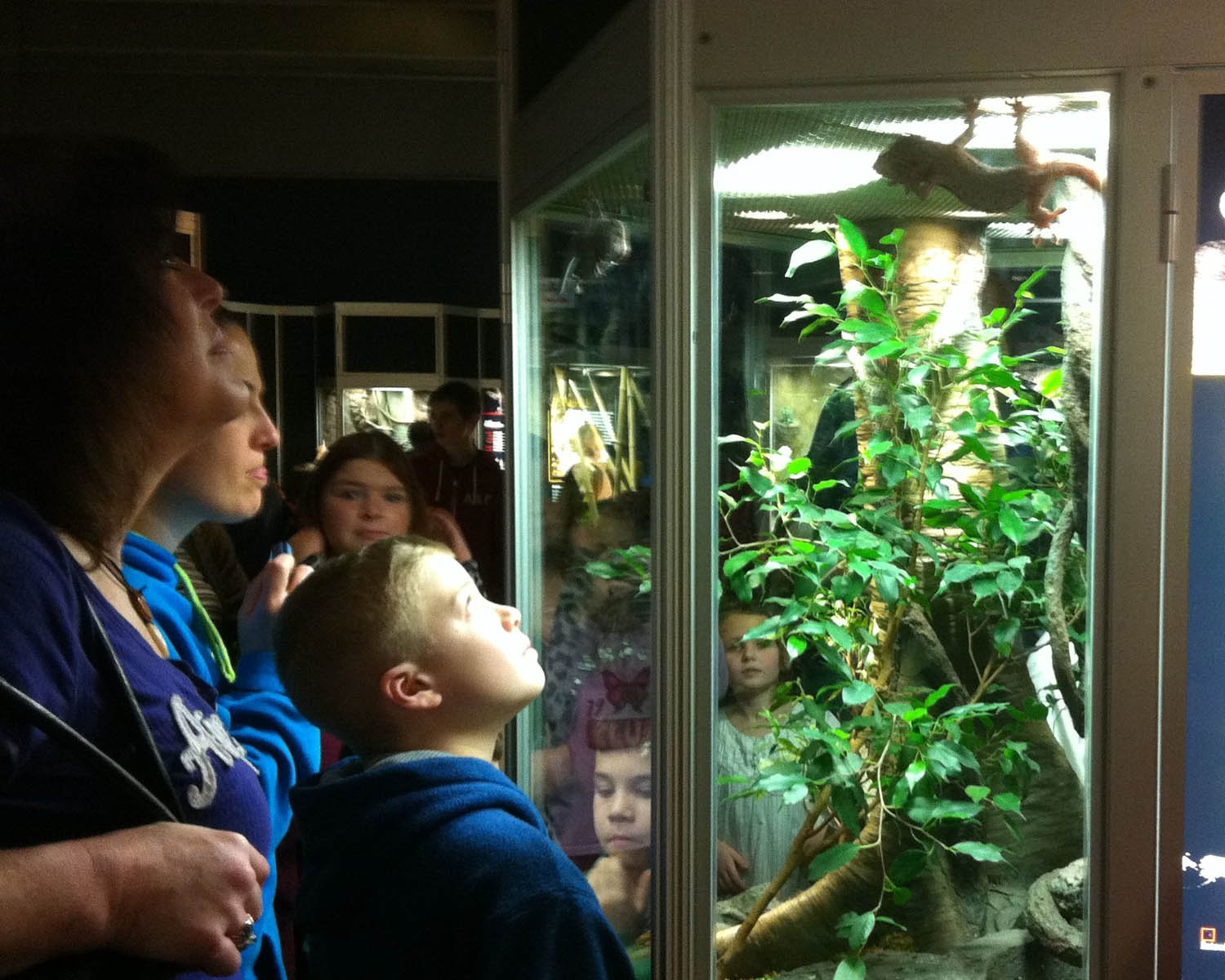
     Last week, during the school vacation, the gecko exhibit at the Museum of Science Boston was mobbed. Kids nosed up to the terrariums to see the nimble lizards scale the glass. They learned that geckos do not have sticky feet. Instead, tiny toepad hairs allow geckos to climb walls through phenomenon called frictional adhesion.

     What exhibit visitors didn’t learn is that some people think it is a bad idea to keep geckos and other so-called “exotic” animals as pets. That’s not a notion shared by the exhibit’s sponsor — a local pet shop specializing in snakes and lizards.

    “Geckos – Tails to Toepads” runs until mid-May and features more than 60 lizards from all over the world including the Giant Leaf tails gecko, the Albino gecko the leopard gecko and of course, the animated Geico gecko.

    In addition to serving as chirping pests and museum exhibits, geckos are popular pets. Biologist, breeder and exhibit sponsor Stephen Ayer runs Winchester store called Jabberwock that “is dedicated to providing top quality healthy, captive bred reptiles and amphibians,” according to the store website.

    While conservation-minded science museums and lizard breeders like Ayer share an appreciation for wildlife, they can clash when it come to the capture and breeding of exotic animals as pets. The list of so-called exotic animals under scrutiny includes bears, panthers, as well as some iguanas, chameleons and pythons.

    Groups from the Humane Society to People for Ethical Treatment of Animals oppose the sale of wild animals as pets. And in January, the U.S. Fish and Wildlife Service to banned the sale of the Burmese python and several other snakes, which have become a major problem in Florida. They are considered invasive in the Everglades, where according to the USFWS, the Burmese python has established breeding grounds and is feeding on endangered storks and rodents.

    While he doesn’t deal in Burmese pythons, Ayer was quoted in the Winchester Patch news story opposing the ban. He said snake breeders and businesses like his should not be blamed for the problems in Florida.

            Ayer argues that the ban is based on “fear and not in science…The idea that these snakes, particularly the Burmese python, could be invasive outside southern Florida is biologically impossible, he wrote in an email responding to questions from “Nature Boston.”  

            The snakes could not survive through the winter, he said, adding: “It would be irresponsible to suggest that they are a threat to the environment here, or in most of the US.”

    And, he argued that some breeders are protecting native species.  Development is threatening the natural habitat of the New Caledonian Giant Gecko (Rhacodactylus leachianus) and breeders are helping preserve them, according to Ayer.  

            Breeders don’t want to see animals become invasive, he said. But Ayer sees the ban as “part of a bigger effort to criminalize keeping exotic pets.” 

          A spokesman for the Museum of Science declined to comment on Ayer’s positions.

       The exhibit was put together by Pennsylvania reptile zoo, and Aaron M. Bauer the director of the graduate biology program at Villanova University in Pennsylvania, was a scientific consultant.  He said that the interests of breeders and owners can conflict with conservation efforts.

            “Although most breeders and python owners are undoubtedly conscientious and would not release pythons in the Everglades, such laws at least provide some sort of restriction on the free and unregulated movement of possible invasives around the country,” he wrote in an email.

            He suggested regulators concluded that the “cost to the business of breeders is outweighed by the possible good of limiting invasive species… I don’t think that this is intended as an anti-herpetoculturalist measure.”

NatNews: Q & A w/ MIT’s Nancy Hopkins

Nature News offers a Q & A interview with  MIT’s Nancy Hopkins. See our report on her recent speech here and a video of another below.

What motivated the landmark 1999 study that you championed on gender bias at MIT?

It was a final straw. At age 50, after 20 years as a scientist, I found that it was impossible for me to get the supplies and lab space I needed to do my work. I thought, ‘I’m not going to tolerate this any more’. I told another woman, and she said she was experiencing the same thing. We talked to other women scientists at MIT and realized that we were all hitting the same roadblocks.

What was the reception like from your male colleagues when you began to speak out?
It was not too good. Some in my department were downright hostile and that was a problem for me. But suddenly I had eight women and four men on the study committee, and also Robert Birgeneau, then dean of science, whom I could actually talk to about this.

Reports like this often fall on deaf ears. What made the difference here?
We put in a huge amount of work, 5 years, just to try and understand the scope of the problem, before we wrote the report. The internal report on which the 1999 report was based was very long, and detailed enough that if you were a scientist and read it, you could see how what was happening to us would make your life as a scientist very hard. It was also a miracle that Charles Vest [then president of MIT] realized that there was a problem and was willing to publicly endorse the report.

Lander in the Times, Broad in the Globe

The NY Times offers a flattering story about Eric Lander in this week’s science section. Read the Globe’s January story on the limits of research at the Broad Institute for a little perspective.

From the Times:

His Ph.D. is in pure mathematics, in a subfield so esoteric and specialized that even if someone gets a great result, it can be appreciated by only a few dozen people in the entire world. But he left that world behind and, with no formal training, entered another: the world of molecular biology, medicine and genomics.

As founding director of the Broad Institute of Harvard and M.I.T., he heads a biology empire and raises money from billionaires. He also teaches freshman biology (a course he never took) at M.I.T., advises President Obama on science and runs a lab.

Eric Lander — as a friend, Prof. David Botstein of Princeton, put it — knows how to spot and seize an opportunity when one arises. And he has another quality, says his high school friend Paul Zeitz: bravery combined with optimism.