From despair to repair: Empowering communities to restore their oceans

Dr Ayana Elizabeth Johnson with Barbuda Prime Minister, Baldwin Spencer.

Dr Ayana Elizabeth Johnson with then Antigua and Barbuda Prime Minister, Baldwin Spencer. (Image: Waitt Institute)

Dr. Ayana Elizabeth Johnson is a marine biologist and Executive Director of the Waitt Institute. Johnson’s mission is to collect, create, actualize and amplify the best ideas in ocean conservation. Her work has been featured in the New York Times, on her blog for National Geographic, in The Atlantic, and elsewhere. She holds a Ph.D. from Scripps Institution of Oceanography, a BA from Harvard University in Environmental Science and Public Policy, and has worked on ocean policy at both the National Oceanic and Atmospheric Administration (NOAA) and the Environmental Protection Agency (EPA). You can find her talking oceans on Twitter @ayanaeliza

“People used to talk about the size of the fish they caught vertically,” says a perspicacious 15-year-old Curaçaoan holding his hands off the ground at head height. “But now we show fish size horizontally.” As the young man lowers his hands at shoulder width apart to demonstrate this, it is strikingly clear the great fishing catches of old have all but gone in the southern Caribbean Sea.

The vibrantly scenic shores and glistening beaches of this bustling island are in stark contrast with the rather gloomier outlook of the once thriving Caribbean ecosystems that supported local fisheries. Speak to any of the older residents or fishermen on Curaçao and they’ll swear by the unprecedented changes they’ve seen in their oceans in the last half century.

This is a familiar picture across the Caribbean, which is suffering from the same threats of overfishing, climate change, pollution and habitat loss, seen worldwide. In August 2014, the National Oceanic and Atmospheric Administration (NOAA) listed 20 species of coral as threatened under the Endangered Species Act, including five Caribbean species. Projected impacts of global warming and ocean acidification motivated this action, but as marine biologist Ayana Elizabeth Johnson eloquently writes in a New York Times op-ed: “climate change really is only half the story.”

Johnson’s encounter with the young Curaçaoan and his jarringly precocious words struck a chord with her eight years ago, in the midst of her PhD research. Focusing on fisheries management and ecology in the southern Caribbean, she interviewed more than 400 fishermen, scuba divers, and locals in Curaçao and Bonaire, to inquire what major changes they had seen in their oceans.

“It is critical to understand what local people see as the threats to the ocean, as the perceived problems have a huge influence on what the perceived solutions should be,” says Johnson. “Often scientists’ outside perspective can be very different to the local one – and this can lead to disconnect when discussing sustainable policy and solutions.”
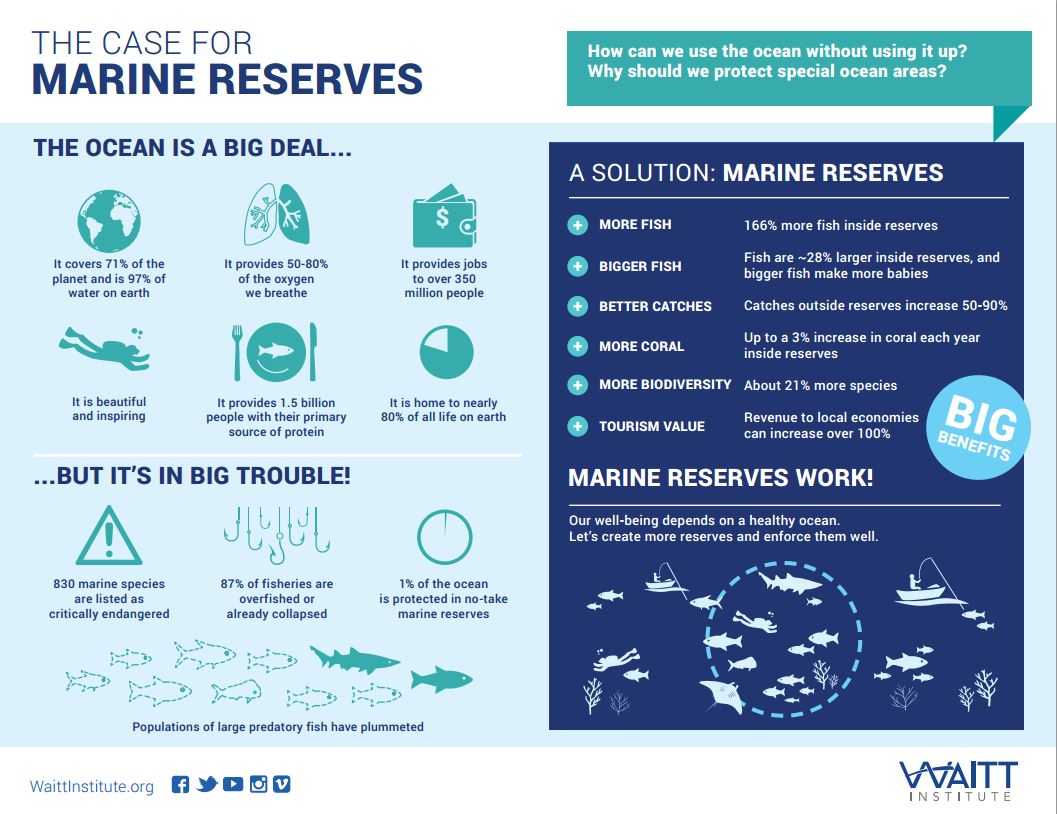
Continue reading

Enhancing our knowledge of regulatory evolution

Stark

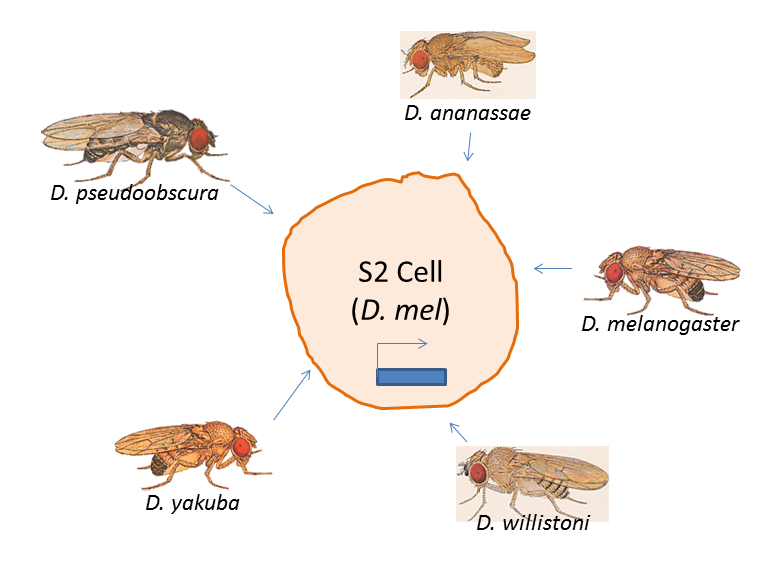
Fly illustrations from The University of Texas Publication No. 4313: April 1, 1943 and The University of Texas Publication No. 4445: December 1, 1944

A paper published online this week in Nature Genetics mapped the enhancer regions of 5 fruit fly species to better understand the evolution of regulatory DNA. 

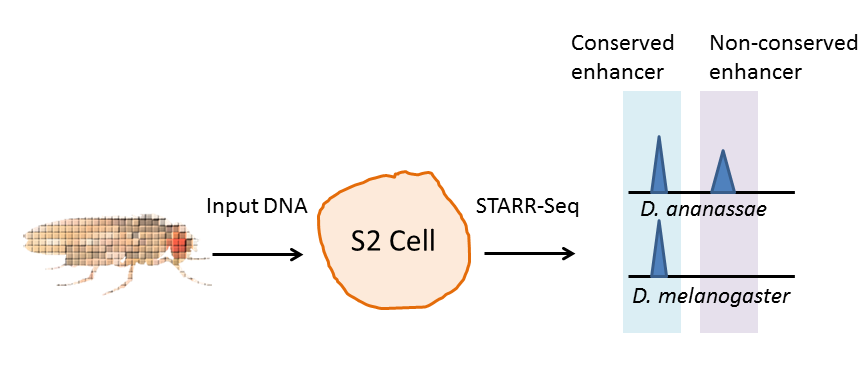
Alexander Stark and colleagues used a recently-developed method, called STARR-Seq, to find which Drosophila melanogaster enhancer elements were still functional in the different fly species. Basically, you chop up your input DNA, put the fragments into a vector with an open reading frame preceding it (so your input DNA can act as an enhancer, if it so chooses) and then toss it into some cultured cells.

In this case, the cells used were Drosophila melanogaster S2 cells. Keeping the cell line constant ensured that any differences seen in the expression levels of the ORFs + enhancers would be due to cis changes and not trans ones (like different transcription factors).

After expressing the constructs in S2 cells, you sequence the transcripts and compare them to the input and to the genomic sequence of the reference species, D. melanogaster. Interestingly, the authors found a pretty high proportion of enhancer elements are conserved between species. Between D. melanogaster and it’s closest relative used in the study, D. yakuba (only 11 million years diverged), 58% of the D. melanogaster elements were conserved. Between the most distant relatives (D. mel and D. willistoni), 34% were conserved. Now, they may just look like flies to you and me, but those two species are about as distantly related as you and I are from lizards.

Another key finding was that even over relatively short evolutionary time, hundreds of new enhancers can appear, right out of the blue. DNA sequences that had previously done nothing (or at least, done something completely different) were transformed into working enhancers. Between D. mel and D. yakD. mel gained 525 enhancers, while its yellower relative gained 472.

STARR

As for losses, the authors estimated that every 10 million years, about 4% of enhancers lose their activity. This rate of gain and loss of enhancer elements is probably faster than was previously thought. The authors speculate that the rates are likely to be much higher in mammals. Another example of why regulatory DNA is so important to the evolution of gene expression and function.

World Wildlife Fund’s Dr Brendan Fisher on improving fish diversity and conservation agriculture in Mozambique

Dr. Brendan Fisher is a research scientist at the World Wildlife Fund. His research and fieldwork lie at the nexus of conservation, development, and natural resource economics. Brendan is the author of over 50 peer-reviewed articles on topics such as poverty, human welfare, ecosystem services and biological conservation, and the co-author of two books, Valuing Ecosystem Services (Earthscan, London, 2008) and A Field Guide to Economics for Conservationists (Forthcoming, Roberts and Company). 

He is a Fellow of the Gund Institute at the University of Vermont and a Fellow at the Centre for Social and Economic Research on the Global Environment (CSERGE) at the University of East Anglia.  He was recently a Rockefeller Bellagio Fellow working on relationships between the ecological conditions of coastal regions, gender inequality and childhood health.  When he’s not working he spends most of his time hiking, skiing, and enjoying the Vermont outdoors with his wife and three children.

Continue reading

South Korea aims to be second nation to engage in ‘scientific’ whaling

South Korea has announced that it hopes to launch a programme of ‘scientific’ whaling, a development that would make it the second such country to engage in the practice alongside Japan.

The South Korean delegation to the 64th conference of the International Whaling Commission (IWC), now meeting in Panama, said on Wednesday that the move is necessary to assess the size of the populations of minke whales off the Korean coast.

“Since 2001, the Korean government has been conducting a non-lethal sighting survey of the whale population to assess the status of the stock in Korean waters,” Joon-Suk Kang, the head of the delegation told the meeting in a prepared address. “But it has turned out that this survey alone cannot identify the different whale stocks and has delayed the proper assessment of the resources.”

Seoul says that it cannot correctly identify the feeding habits of the animals or the impact of the whale population on fisheries.

The delegation did not state how many whales it aimed to catch, but its research programme will investigate minke whales migrating off the Korean peninsula. One of the populations of minke whales in the region comes from the depleted ‘J-stock’.

State signatories to the International Convention for the Regulation of Whaling do not need permission from the ICW to begin scientific whaling, and the ICW is in any case a voluntary organization. The move can be taken unilaterally, although Seoul said that any such whaling will not be launched before the country’s research plan had been considered by the IWC’s scientific committee.

Anti-whaling groups question the scientific legitimacy of such whaling and accuse Japan of using the scientific whaling loophole in the convention as a cover for a commercial hunt. Continue reading

Boston science museum’s gecko exhibit touches on debate over exotic pets

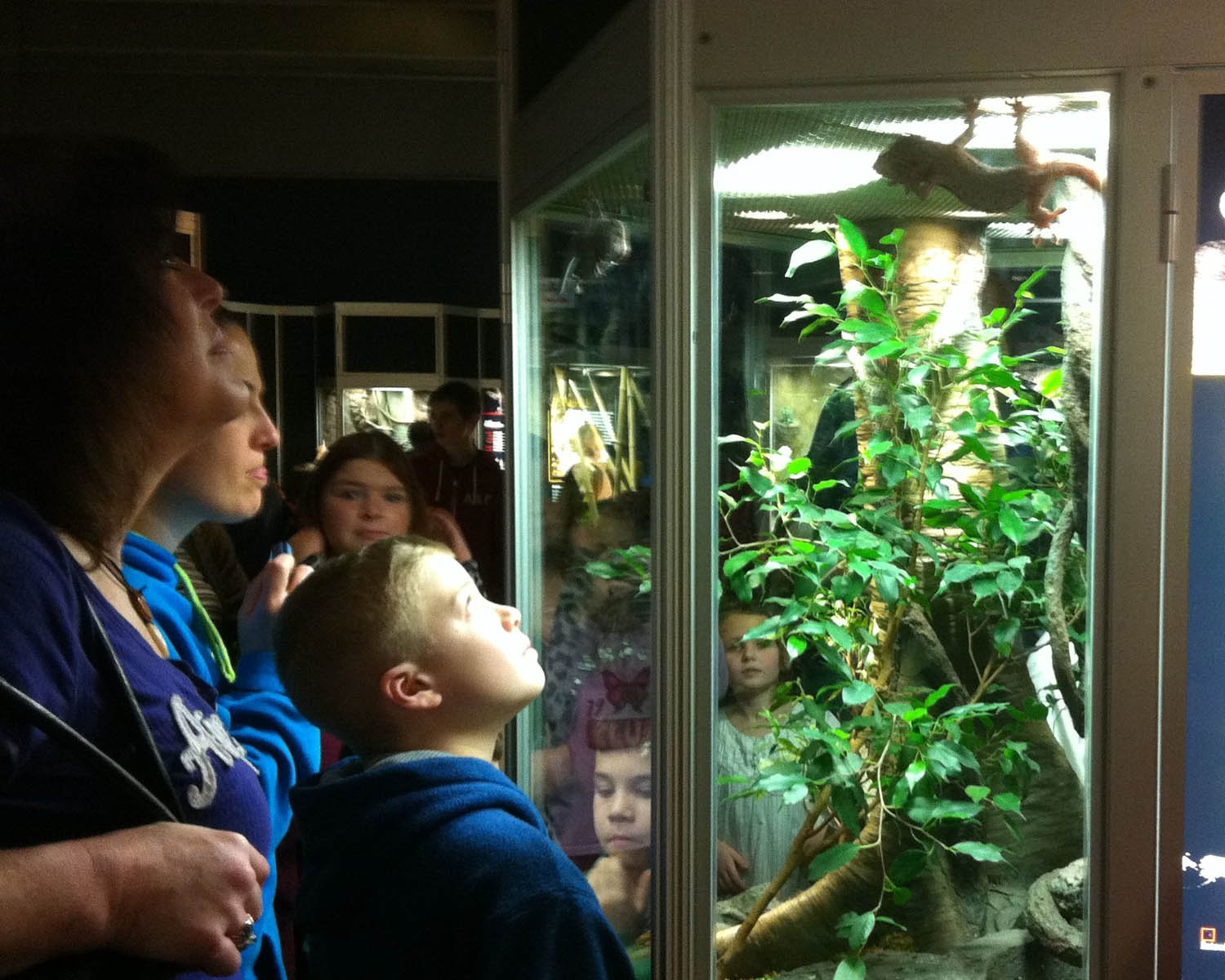
     Last week, during the school vacation, the gecko exhibit at the Museum of Science Boston was mobbed. Kids nosed up to the terrariums to see the nimble lizards scale the glass. They learned that geckos do not have sticky feet. Instead, tiny toepad hairs allow geckos to climb walls through phenomenon called frictional adhesion.

     What exhibit visitors didn’t learn is that some people think it is a bad idea to keep geckos and other so-called “exotic” animals as pets. That’s not a notion shared by the exhibit’s sponsor — a local pet shop specializing in snakes and lizards.

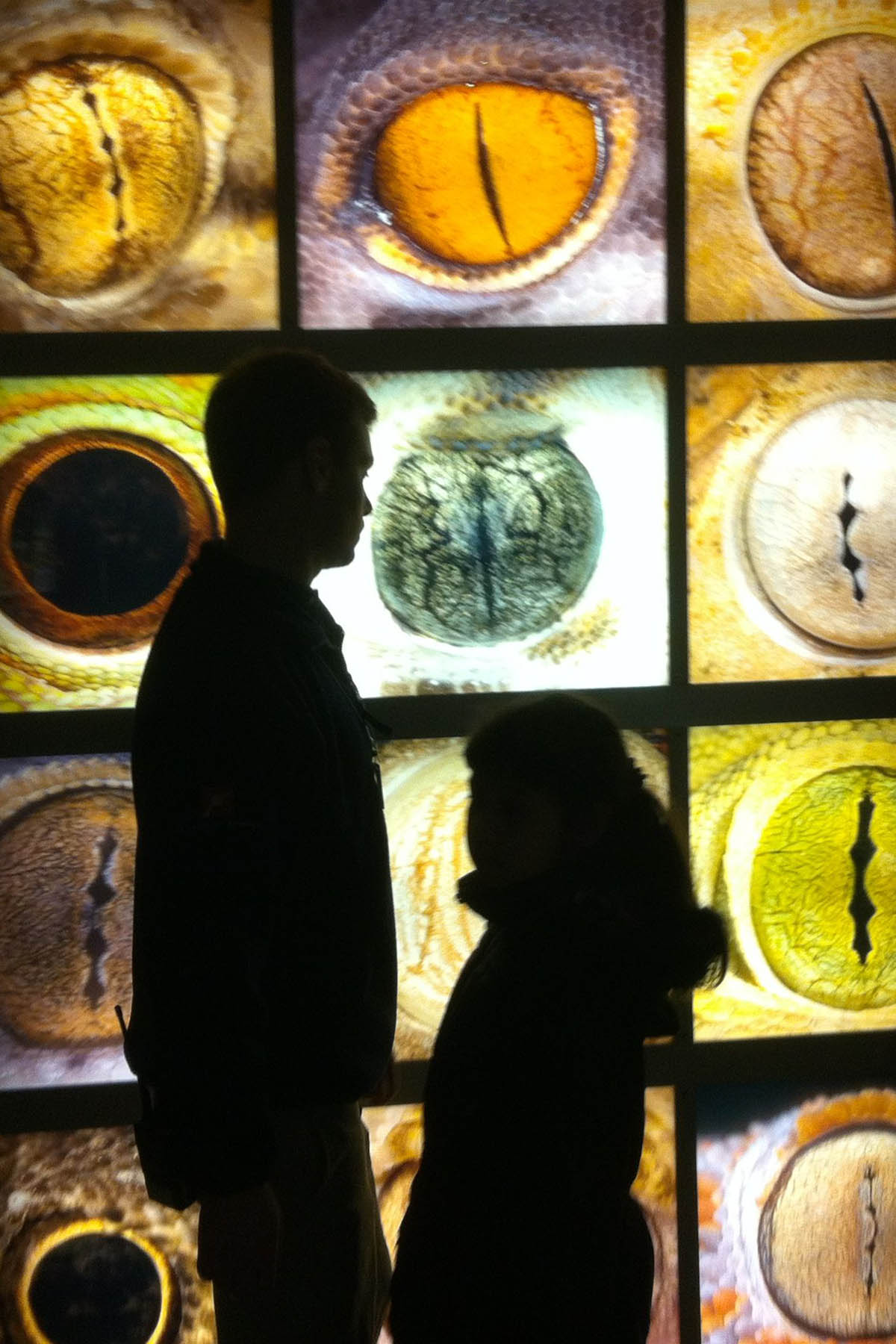
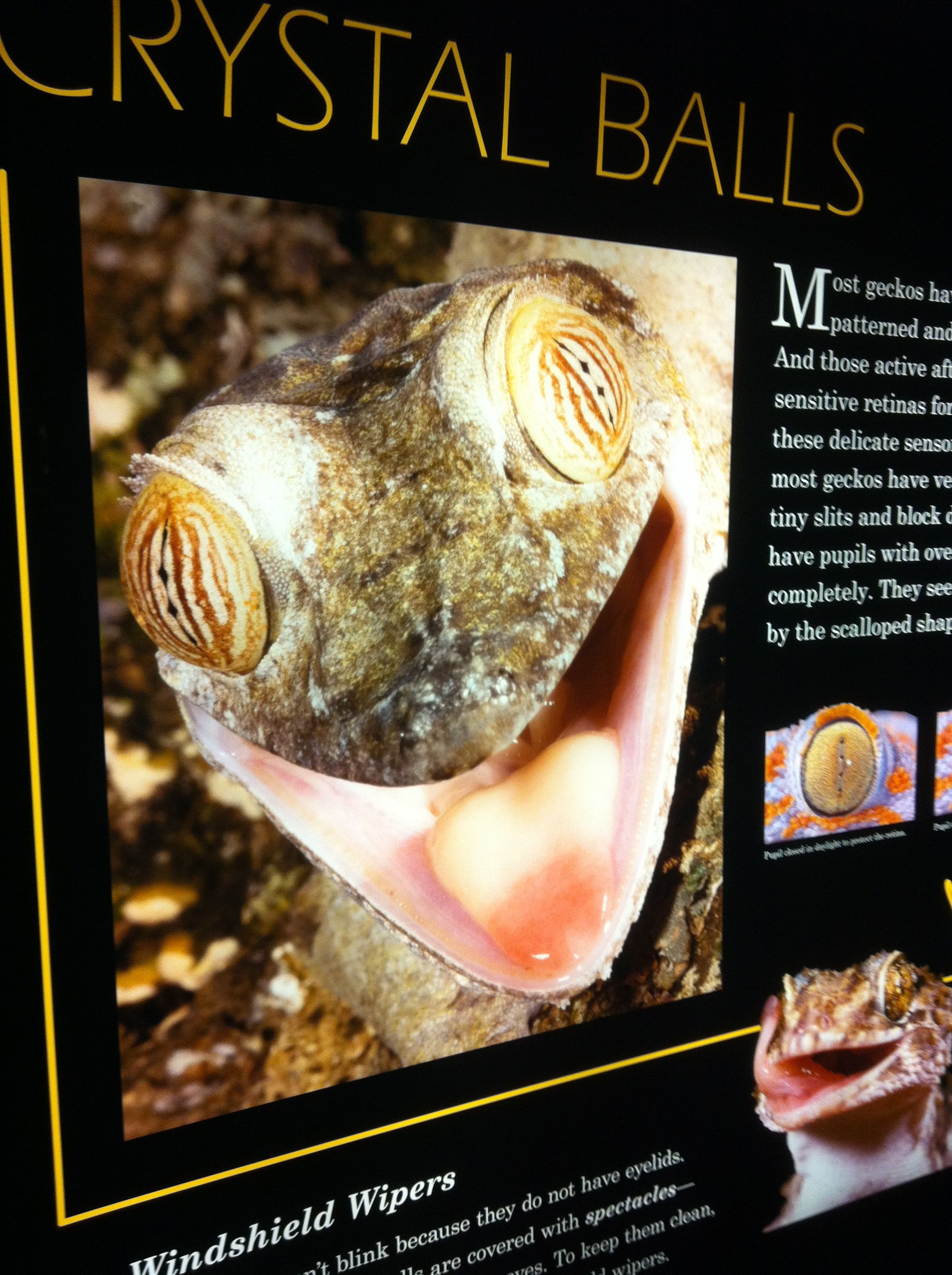
    “Geckos – Tails to Toepads” runs until mid-May and features more than 60 lizards from all over the world including the Giant Leaf tails gecko, the Albino gecko the leopard gecko and of course, the animated Geico gecko.

    In addition to serving as chirping pests and museum exhibits, geckos are popular pets. Biologist, breeder and exhibit sponsor Stephen Ayer runs Winchester store called Jabberwock that “is dedicated to providing top quality healthy, captive bred reptiles and amphibians,” according to the store website.

    While conservation-minded science museums and lizard breeders like Ayer share an appreciation for wildlife, they can clash when it come to the capture and breeding of exotic animals as pets. The list of so-called exotic animals under scrutiny includes bears, panthers, as well as some iguanas, chameleons and pythons.

    Groups from the Humane Society to People for Ethical Treatment of Animals oppose the sale of wild animals as pets. And in January, the U.S. Fish and Wildlife Service to banned the sale of the Burmese python and several other snakes, which have become a major problem in Florida. They are considered invasive in the Everglades, where according to the USFWS, the Burmese python has established breeding grounds and is feeding on endangered storks and rodents.

    While he doesn’t deal in Burmese pythons, Ayer was quoted in the Winchester Patch news story opposing the ban. He said snake breeders and businesses like his should not be blamed for the problems in Florida.

            Ayer argues that the ban is based on “fear and not in science…The idea that these snakes, particularly the Burmese python, could be invasive outside southern Florida is biologically impossible, he wrote in an email responding to questions from “Nature Boston.”  

            The snakes could not survive through the winter, he said, adding: “It would be irresponsible to suggest that they are a threat to the environment here, or in most of the US.”

    And, he argued that some breeders are protecting native species.  Development is threatening the natural habitat of the New Caledonian Giant Gecko (Rhacodactylus leachianus) and breeders are helping preserve them, according to Ayer.  

            Breeders don’t want to see animals become invasive, he said. But Ayer sees the ban as “part of a bigger effort to criminalize keeping exotic pets.” 

          A spokesman for the Museum of Science declined to comment on Ayer’s positions.

       The exhibit was put together by Pennsylvania reptile zoo, and Aaron M. Bauer the director of the graduate biology program at Villanova University in Pennsylvania, was a scientific consultant.  He said that the interests of breeders and owners can conflict with conservation efforts.

            “Although most breeders and python owners are undoubtedly conscientious and would not release pythons in the Everglades, such laws at least provide some sort of restriction on the free and unregulated movement of possible invasives around the country,” he wrote in an email.

            He suggested regulators concluded that the “cost to the business of breeders is outweighed by the possible good of limiting invasive species… I don’t think that this is intended as an anti-herpetoculturalist measure.”