The real climate debate

Young scientists on the ground at Lindau share their thoughts on scientists’ place in the climate change debate

In the scientific community, the big question is not whether action on climate change is required, but what form it should take and the part that scientists should play, says the recent Nature Outlook on Climate Change. Three early-career researchers share their thoughts on the current state on climate action worldwide and the place of science in society.

You can find the full Nature Outlook on Climate change here.

Julie Fenton

Julia Nimke/Lindau Nobel Laureate Meetings

Graduate student, Pennsylvania State University, USA

It’s hard for scientists to make definitive statements about the ‘truth’. Just as we don’t believe exactly the same things as we did 50 years ago, we expect our understanding of the things we’re learning now will change over time.

It doesn’t mean our current understanding should be dismissed as incomplete, but it can be a challenge to communicate this concept to non-scientists. It’s become evident that my communication skills are something I have to invest time in. It’s too easy to forget that we have a broader responsibility to the public. In my experience, public engagement is not a routine part of academic training. Every scientist can start by talking with people they know in their everyday lives. That’s not hard. Continue reading

Lindau cubed: Nerd heaven redux and the importance of standing up for science

Alaina G Levine blogs from “Nerd Heaven,” aka The Lindau Nobel Laureate Meeting.

The 67th Lindau Nobel Laureate Meeting

The 67th Lindau Nobel Laureate Meeting{credit} Julia Nimke/Lindau Nobel Laureate Meetings Opening Ceremony{/credit}

What exactly is this Nerd Heaven, as I love to refer to it? It’s a conference where you’ll find only just a legion of Nobel Laureates (around 30) mingling with 400 or so young scientists from like 80 countries across the non-flat Earth. The official name for this geeky conference is the Lindau Nobel Laureates Meeting and it is an annual affair that takes place in Lindau, Germany. Each year it focuses on a different subject and this year its concentration is on chemistry. Continue reading

Marketing yourself, politics and post-truth

Successful marketing can land you your dream job, but does this really mean you are the best person for the role?

Achieving your dream job is always going to be a bit of a challenge. You may have a great degree, and maybe relevant experience, but getting your potential employer to believe you are absolutely the right person for the job means marketing yourself correctly. This can be tricky, particularly if you are starting off new in a field with no established reputation behind you.

Continue reading

Securing workplace rights for scientists in the age of Trump

Unions could be the best way to protect scientific jobs in uncertain times, says union president Anke Schennink.

In the wake of Donald Trump’s election, the scientific community is on edge. The future of federal science funding remains unclear, campus inclusivity is under threat, immigration policy is in disarray, and entire academic fields – such as climate change research – fear the worst.

2017-03-24 SF Barg Action pic

UC Postdocs in solidarity at UCSF on a day of bargaining.

Continue reading

Development and debate about the March for Science

The March for Science’s date has been set for April 22nd. Nicole Forrester speaks to scientists planning to take part.

It’s fair to say the scientific community is spending a lot of time talking about the March for Science, due to take place on April 22, 2017. While organizers are preparing for events in Washington, D.C. and satellite locations around the world, scientists are evaluating their roles in politics and public outreach. I reached out to scientists and science supporters to discuss the march and the impact of recent political decisions on science, scientific policy, and our careers as scientists.

According to their website, the March for Science was founded as “a celebration of our passion for science and a call to support and safeguard the scientific community.” For many scientists, though, it’s about supporting the scientific process itself and advocating for its importance. Joel Sachs, an Associate Professor of Biology at the University of California, Riverside, says, “Science is just a way of learning about the world and is incredibly important to make predictions about what’s going to happen in the future — in terms of our climate, disease, and how to manage crops and livestock.

{credit} Bill McKibben/ Twitter: https://twitter.com/billmckibben/status/808791393569243140?lang=en{/credit}

Continue reading

The postdoc series: What comes next?

A postdoc sets you up for a variety of careers, including academia, editing, working in industry, core laboratories and more.

cross-roads

{credit}Ratch/Shutterstock{/credit}

The obvious path for many people doing a postdoc is to look for a more permanent academic position as a tenure-track professor. But it isn’t the only one! There are plenty of other things a postdoc can do. Here are just a few examples.

For those who have the want, determination, and, let’s face it, a bit of luck, working as an academic professor can be worth the battle. Dr Esther Bullitt is currently going through her application to become a tenure-track professor. “There were biological questions that I wanted to pursue, and having the independence to do so was absolutely compelling,” she says. One of the challenges that she faces in her application is to make sure that she stands out from the rest of the crowd. “There are many excellent scientists working on many interesting questions, so you need to demonstrate a broad set of skills that go beyond a great project and a well-developed plan for the science.” To be promoted to professor, Bullitt says that postdocs need a well-documented track record in: funding; publishing your research; being nationally and internationally recognized as an expert in your field; giving invited seminars; teaching; university committee work. “Probably in about that order,” she adds. Continue reading

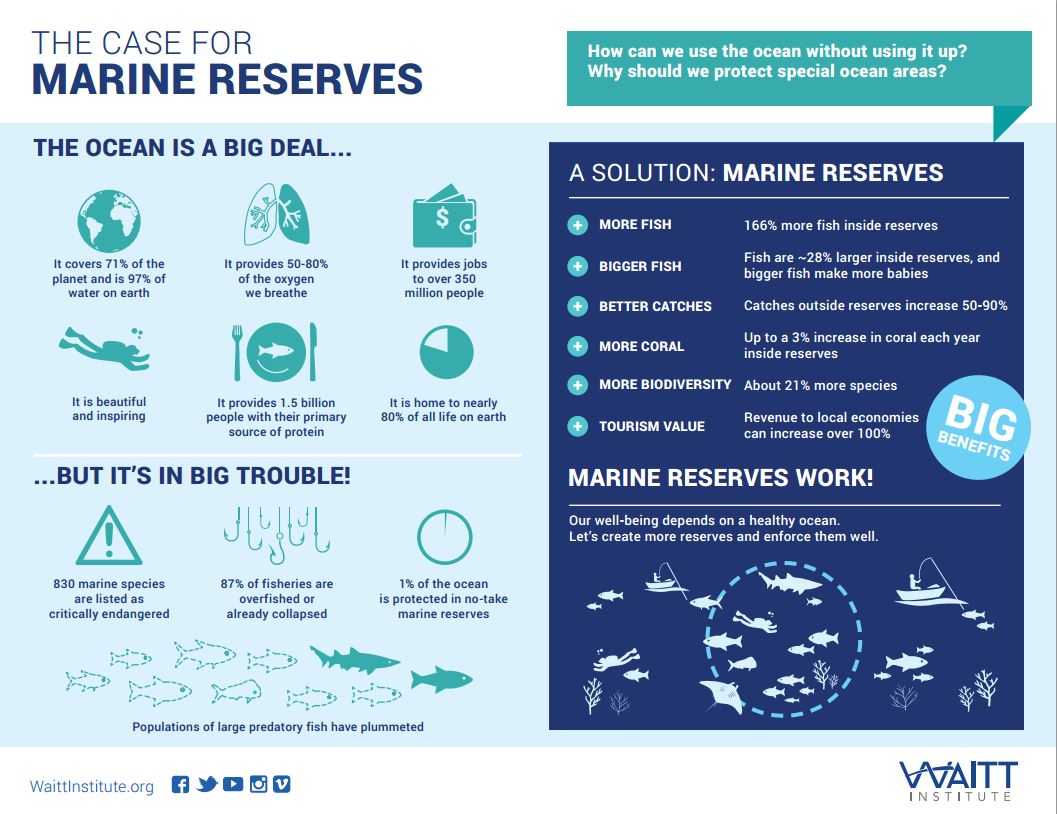
From despair to repair: Empowering communities to restore their oceans

Dr Ayana Elizabeth Johnson with Barbuda Prime Minister, Baldwin Spencer.

Dr Ayana Elizabeth Johnson with then Antigua and Barbuda Prime Minister, Baldwin Spencer. (Image: Waitt Institute)

Dr. Ayana Elizabeth Johnson is a marine biologist and Executive Director of the Waitt Institute. Johnson’s mission is to collect, create, actualize and amplify the best ideas in ocean conservation. Her work has been featured in the New York Times, on her blog for National Geographic, in The Atlantic, and elsewhere. She holds a Ph.D. from Scripps Institution of Oceanography, a BA from Harvard University in Environmental Science and Public Policy, and has worked on ocean policy at both the National Oceanic and Atmospheric Administration (NOAA) and the Environmental Protection Agency (EPA). You can find her talking oceans on Twitter @ayanaeliza

“People used to talk about the size of the fish they caught vertically,” says a perspicacious 15-year-old Curaçaoan holding his hands off the ground at head height. “But now we show fish size horizontally.” As the young man lowers his hands at shoulder width apart to demonstrate this, it is strikingly clear the great fishing catches of old have all but gone in the southern Caribbean Sea.

The vibrantly scenic shores and glistening beaches of this bustling island are in stark contrast with the rather gloomier outlook of the once thriving Caribbean ecosystems that supported local fisheries. Speak to any of the older residents or fishermen on Curaçao and they’ll swear by the unprecedented changes they’ve seen in their oceans in the last half century.

This is a familiar picture across the Caribbean, which is suffering from the same threats of overfishing, climate change, pollution and habitat loss, seen worldwide. In August 2014, the National Oceanic and Atmospheric Administration (NOAA) listed 20 species of coral as threatened under the Endangered Species Act, including five Caribbean species. Projected impacts of global warming and ocean acidification motivated this action, but as marine biologist Ayana Elizabeth Johnson eloquently writes in a New York Times op-ed: “climate change really is only half the story.”

Johnson’s encounter with the young Curaçaoan and his jarringly precocious words struck a chord with her eight years ago, in the midst of her PhD research. Focusing on fisheries management and ecology in the southern Caribbean, she interviewed more than 400 fishermen, scuba divers, and locals in Curaçao and Bonaire, to inquire what major changes they had seen in their oceans.

“It is critical to understand what local people see as the threats to the ocean, as the perceived problems have a huge influence on what the perceived solutions should be,” says Johnson. “Often scientists’ outside perspective can be very different to the local one – and this can lead to disconnect when discussing sustainable policy and solutions.”

Continue reading

Climate change policy: What’s new for Asia?

CDKN-IPCC-Whats-in-it-for-South-Asia-AR5_Page_01At a workshop discussing what the take homes for  Asian countries might be from the latest assessment report of the Intergovernmental Panel on Climate Change (IPCC) — AR5 — it was pointed out that there wasn’t enough science coming out of developing countries to feed the database on emissions or warming in the larger climate change debate. Local scientists need to conduct more climate change related experiments, write more scientific papers and bolster regional science  in order to make a case for these developing countries in the international discourse on climate change.

“We also need more authors from the developing world to participate in writing the chapters for the IPCC reports,” says Jonathan Lynn, Head of Communication at the IPCC. Lynn says though there is substantial science emanating from India now, some other small Asian countries such as Indonesia lag far behind. The IPCC collates scientific data from across the world to make predictions for future scenarios with the help of scientists, economists, policy makers and government representatives. Most of the work done by scientists in this process is voluntary and not paid for. Developing country scientists, who also do consultancy work for a living, would expect such work to pay off for their time — this could be one of the reasons why not many developing country scientists are interested in the job, Lynn says.

The IPCC assessment reports try to turn all available scientific evidence into something that would make sense to policy makers and businesses — therefore, the authors have explained the science at hand this time in terms of “risk management” parameters. “And since there are questions of ethics and equity involved in this highly political debate, we now have philosophers in the IPCC team to make sure those aspects are taken care of,” Lynn says.

Joyashree Roy, an economist from the Jadavpur University in Kolkata is the lead author of the industry chapter in IPCC’s assessment report five. She says Asia needs to urgently decouple the high energy sector from emissions. “Almost 44 per cent of the global emissions are from the energy and industry sectors of China and India — there lies an opportunity for south Asia. Can we think of a low emission-high energy scenario?”

Roy says population and economic growth are responsible for the surge in energy demand as well as emissions in south Asia.

Another IPCC author Navroz Dubash from New Delhi-based thinktank Centre for Policy Research points to an inherent dichotomy in the report — the number of countries which have adopted mitigation strategies or have a national action plan for climate change has gone up many times, especially in Asia post-2005. Simultaneously, the emission rates of Asia have zoomed and the world as a whole is hurtling at great speed into a carbon-based future. How is that possible, you wonder. “Well, there have been a slew of national policies in the last few years but they will take around 3-4 years to bear fruit. The more optimistic outlook would be to review the scenario in a couple of years and see if these policies have led to significant action,” he says.

Dubash says India will also benefit from the new stand of IPCC where ‘co-benefits’ of climate-friendly policies are being seen in new light. Earlier, IPCC talked of climate change mitigation plans as the main goal with parameters such as development or health as co-benefits. “The idea now is that the concept of co-benefits could work both ways, meaning if a development project brings in climate change mitigation as a spin-off, it should be totally acceptable. This concept is at the core of India’s national plan and now IPCC has sanctified it — so there’s a huge opportunity.”

According to A R Paneerselvan, advisor to the executive director of Panos South Asia, an organisation informing public and policy debates on environment issues, there are talks of a south Asian intiative for climate related insurance. The insurance would cover farmers against any vulnerability stemming from climate change. The initiative is still at a nascent stage and there’s pressure from the cash crop sector in south Asian countries to make a case for climate-related insurance, he says.

As for IPCC’s fifth assessment report and what’s in it South Asia, London-based Climate and Development Network brought out a good primer that explains just this. The Intergovernmental Panel on Climate Change (IPCC) chairperson Rajendra Kumar Pachauri also spoke about what it means for India at an outreach programme in New Delhi today.

New agricultural trends to feed the world

This is a guest blogpost by Youssef Mansour, a young researcher currently interning at Nature Middle East.
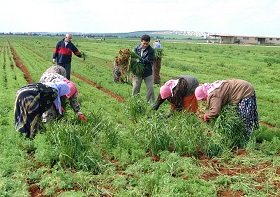
Scientists are struggling to come up with new technologies to feed ever increasing populations around the world.

Scientists are struggling to come up with new technologies to feed ever increasing populations around the world.{credit}ICARDA{/credit}

The agriculture sector needs to double food production by 2050 to meet growing global populations – a tremendous feat considering the challenges posed by climate change, water shortage and how the increase in farming land is not catching up with demand. That’s why scientists are up to their ears looking for ways to sustainably increase production of crops capable of withstanding different environmental stresses.

At the BioVision Alexandria 2014 meeting last week, a group of leading agriculture scientists showcased new trends in agriculture that attempt to address the rising food needs of the next 100 years.

Classic approaches aimed at producing stress-resistant crops such as breeding programmes and genetic engineering “have not yielded the results that people had hoped over the years” says Rusty Rodriguez, CEO of Adaptive Symbiotic Technologies, a biotechnology company focused on agriculture research. These approaches are reductionist and focus on plants only, ignoring the fact that all plant and animal life partner with microorganisms for mutual benefit, he says.

Rodriguez introduced a new trend named symbiogenics, a technology that harnesses the impact that fungi that inhabit plants internally have on their ability to tolerate stresses.

In an experiment back in 2002, he found that symbiotic plants with a particular fungus close to a hot spring at Yellowstone National Park could tolerate temperatures up to 65°C. Neither the fungus nor the plant could withstand such high temperatures alone, but they developed a heat resistance when they partner up.

The Middle East is one of the most water insecure regions in the world, with water availability per person averaging 1,200m3 per person per year – less than a fifth of the global availability per person. Additionally, it is expected to heat up faster than most other regions, with an expected 6°C increase by the end of the century over the Levant region. The region faces numerous challenges for food security, such as the lack of investment in agricultural research and development, inadequate policies and the lack of social and economic stability in the region, points out Mahmoud Solh, director-general of ICARDA.

“We have seen people working on very important things but separate from one another. It seems to me that the problems are so severe [in the Middle East], that this is the perfect location to look at the convergence of these technologies,” says Rodriguez. “We [can] use engineering to get the plant to talk to us. Then we use microorganisms, maybe some genetic engineering, maybe some synthetic biology to modulate what’s going on inside the plant, so when it tells us something is wrong, we know how to fix it.”

Other approaches

A major goal of modern agriculture is to be able to bring across the symbiotic nitrogen fixing bacteria associated with legumes to cereals such as maize, wheat and rice.

This would optimize the use of nitrogen for increasing crop production while decreasing the exposure of the environment and humans to synthetic fertilizers.

Experiments conducted by Edward Cocking, director of the Centre for Crop Nitrogen Fixation at Nottingham University, have shown that introducing a low number of a non-nodulating nitrogen fixing bacteria called Gluconacetobacter diazotrophicus has been found to significantly inhabit the root meristem and exhibited “progressive systemic plant colonization”.

The bacteria, which localizes in vesicles in the cytoplasm of plant roots and shoots, were found to express nitrogenase genes that produce enzymes responsible for formation of ammonia from hydrogen and nitrogen gas. Presently, work is geared towards determining how far these non-nodular bacteria can fix nitrogen in cereals. Field studies run under various environmental conditions would then show how much synthetic nitrogen fertilizers could be lifted.

Separately, a different approach that was pieced together in the 1980s in Madagascar by Henri de Laulanié increases rice productivity by modifying farming techniques to decrease agrochemical inputs and increase yield from the same genetic variants, explains Norman Uphoff, professor of Government and International Agriculture at Cornell University

The System of rice intensification (SRI) is emerging as a new paradigm for sustainable intensification of various crops, and many farmers in developing countries are already spearheading a movement to apply the same practices to other crops.

In the Middle East, “there is no silver bullet that will be able to solve the problems of dry areas,” Solh says. He believes an integration of strategies that optimizes the use of natural resources and utilizes genetically-modified crops, as well as the implementation of policies that promote sustainable agriculture, is the way forward.