The real climate debate

Young scientists on the ground at Lindau share their thoughts on scientists’ place in the climate change debate

In the scientific community, the big question is not whether action on climate change is required, but what form it should take and the part that scientists should play, says the recent Nature Outlook on Climate Change. Three early-career researchers share their thoughts on the current state on climate action worldwide and the place of science in society.

You can find the full Nature Outlook on Climate change here.

Julie Fenton

Julia Nimke/Lindau Nobel Laureate Meetings

Graduate student, Pennsylvania State University, USA

It’s hard for scientists to make definitive statements about the ‘truth’. Just as we don’t believe exactly the same things as we did 50 years ago, we expect our understanding of the things we’re learning now will change over time.

It doesn’t mean our current understanding should be dismissed as incomplete, but it can be a challenge to communicate this concept to non-scientists. It’s become evident that my communication skills are something I have to invest time in. It’s too easy to forget that we have a broader responsibility to the public. In my experience, public engagement is not a routine part of academic training. Every scientist can start by talking with people they know in their everyday lives. That’s not hard. Continue reading

What I learnt from researching in Germany

Mit Bhavsar shares his thoughts on working in the German scientific environment

I’ve always been fascinated with medical research, which brought me from Ahmedabad, India, to Frankfurt (via Aachen, Düsseldorf and Göttingen) to pursue a Masters and a PhD in neuroscience. Germany boasts an excellent research ecosystem across the private and public sectors, with strong collaboration between each. Consequently, there are attractive career opportunities for local and international researchers, especially in a world where two of the west’s other major research hubs – the UK and the US – appear to be trending against science, evidence, and intellectualism. Having spent seven years here, this is what you need to know about research in Germany.

biomedical research-smaller

Credit: Getty/Andrew Brookes

Continue reading

A week in the life of a tenured professor

A Chinese scientist considers the new responsibilities that come with his role

This piece was cross posted with Nature Asia. You can read the Chinese version here.

Guest contributor Chenggang Yan

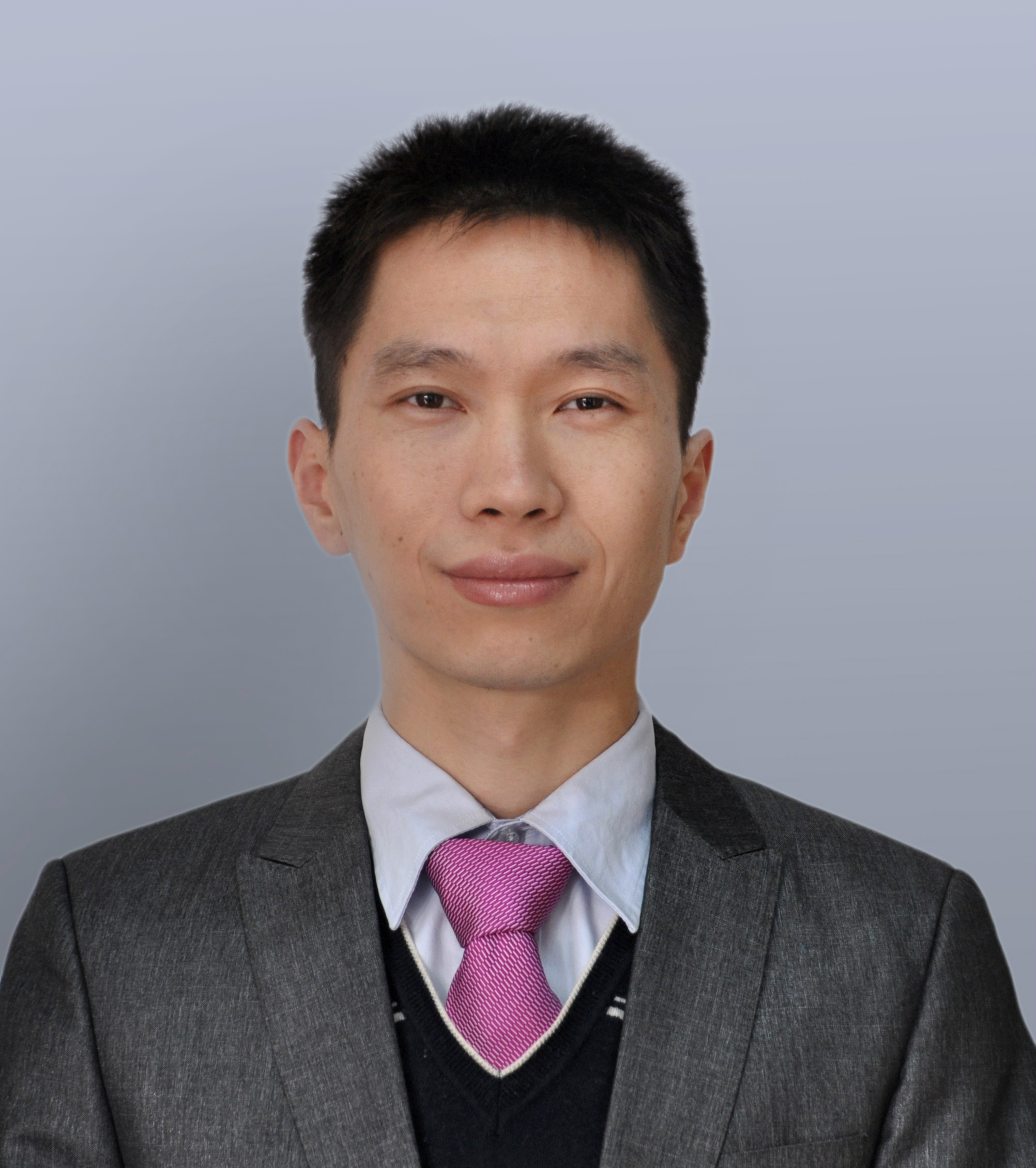
I’ve spent ten years of my life in research. In those ten years, I’ve never been completely overwhelmed until I accepted a professorship at Hangzhou Dianzi University. Just like many other young scholars, I’m working hard to win a good reputation with my research. I went into science because – like many others – I wanted to do meaningful work, lead a new era, and benefit humanity in some way. But recently I’m finding that’s just not what I spend my time doing.

DSC_0001 op1-smaller

{credit}Chenggang Yan{/credit}

Continue reading

A Tale of Two Labs – Our Academic Journeys in China and in the USA

The journeys of two professors show how to survive and thrive in the different academic systems of the US and China.

Guest contributors Zhiyong Jason Ren and Defeng Xing

Once upon a time, we worked in the same lab. Ten years later, we both lead big research labs – in Boulder, USA, and Harbin, China. We have similar backgrounds and research interests, but our journeys were very different. After reading Turning Point: Chinese Science in Transition and Nature’s How to build a better Ph.D, we want to share our stories with young researchers in the hope it might help them navigate their own science adventure.

How did we start?
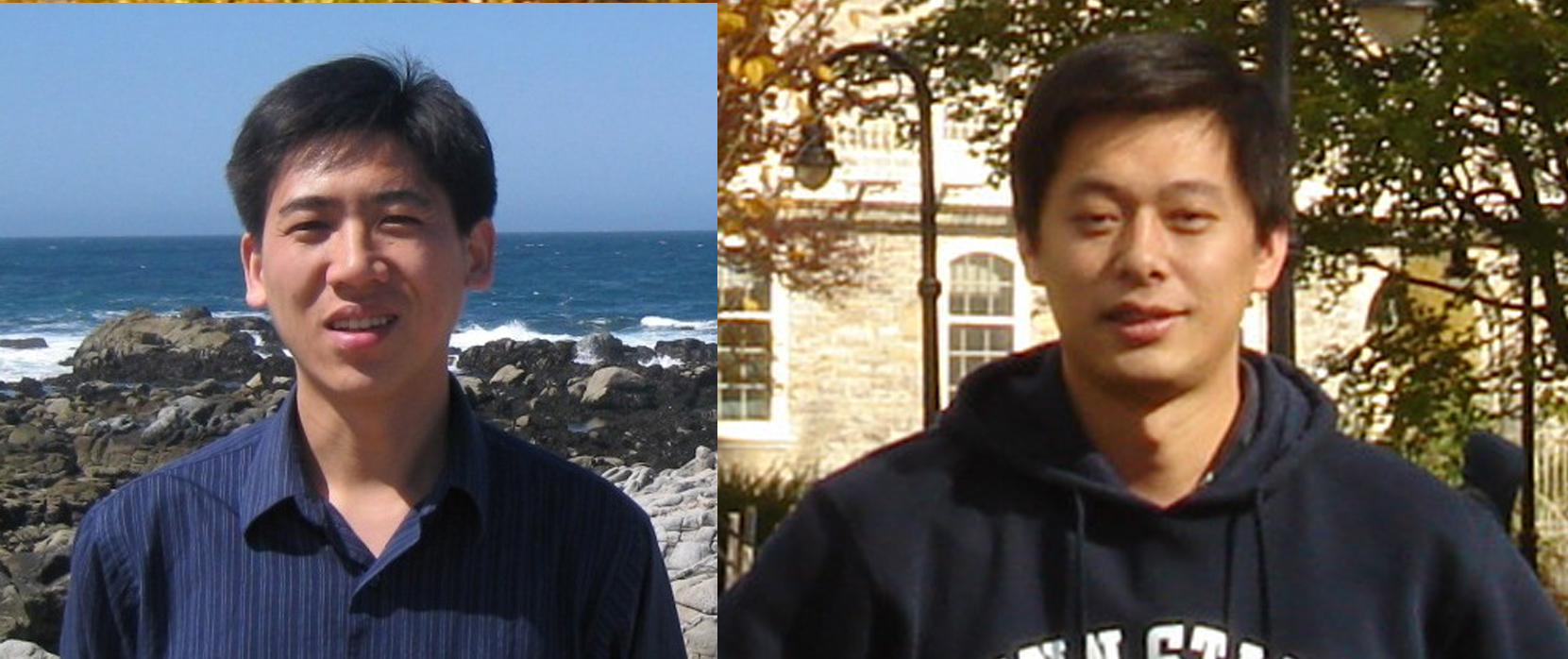
It was 2006 when we first met at Penn State and became lab mates and close friends. When it became time to decide on a career path, Ren chose to become an assistant professor in the U.S., while Xing returned to his Alma Mater in China. In an “ever-lasting” U.S. tenure track system, Ren was handed a well-structured guideline for new principal investigators (PIs), while Xing got a pile of applications on his desk, so he could recruit from various young talent programs.

Ren (L) and Xing (R) in 2006

For Ren, winning the position meant he started the job as decision-making group leader, though he didn’t receive much training.  For Xing, it meant joining a big group with an established platform and shifting gradually from a team player to team lead. Continue reading

Careers in academia: Different options

The traditional career path in academia isn’t the only option available for scientists, say panelists at the 2015 Naturejobs Career Expo in London.

Guest contributor Gaia Donati

Careers-in-acdemia-NJCE15-naturejobs-blog

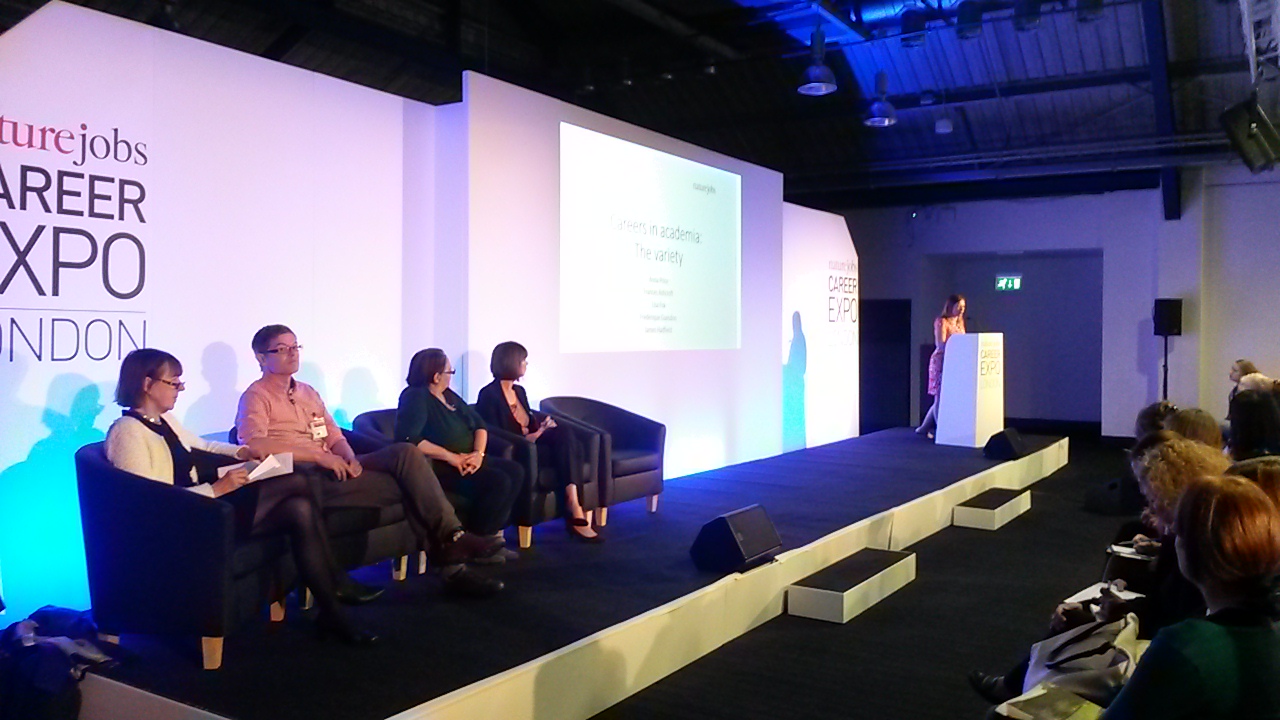
L-R: Frances Ashcroft, James Hadfield, Frederique Guesdon, Lisa Fox and Anna Price. {credit}Image credit: Julie Gould{/credit}

Are you close to finishing your degree, and tempted by the academic environment you came to know well? If yes, then you’re in good company: according to the Vitae Careers in Research survey from 2015, 77% of researchers in the UK aspire to a position in academia, and 60%  expect to find an academic job. However, the Royal Society estimates that only 3.5% of PhD graduates land a permanent position as researchers or lecturers. But all hope isn’t lost: alternative options for those wishing to stay in academia exist, as panelists discussed at the Naturejobs Career Expo in London on Friday 18 September 2015.

The panel offered a refreshing perspective on some options that allow scientists to maintain the link with academic research without facing years of potential postdoctoral insecurity. Dr Anna Price, chair of the panel, left academic research because she lacked a specific question to answer as a scientist. As the head of Researcher Development at Queen Mary University of London, she now works with researchers on planning their careers and honing their transferable skills. Price is well aware that academia is a competitive sector; for this reason, and from her own career development perspective, she introduced four panelists to talk about traditional academic positions as well as roles at the crossing between research and management. Continue reading

#ScientistOnTheMove: March 2015

In March 2015 scientists have been moving across oceans and into industry.

robin-mcgregor-naturejobs-scientistonthemove

{credit}Robin McGregor{/credit}

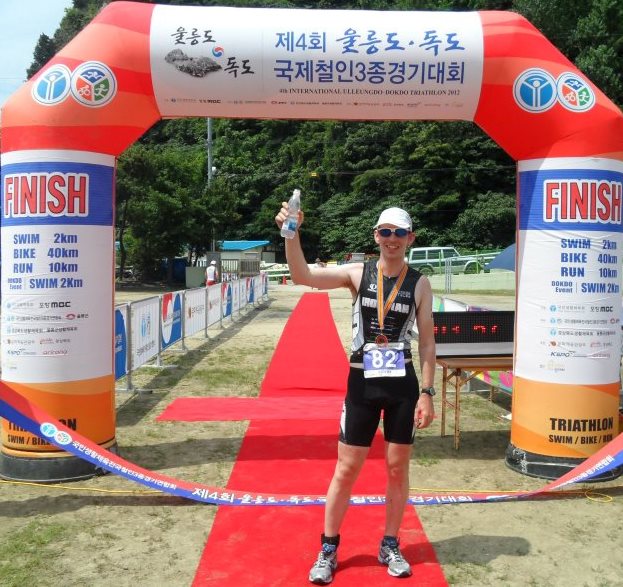
Robin McGregor worked as a Research Fellow at the University of Auckland in New Zealand on a portfolio of projects related to nutrition and healthy ageing. “I set up clinical trials in middle-aged men to assess post-prandial changes in muscle protein synthesis in response to different dairy formulations,” he says. But being in a small country with only eight universities means that options are limited. Although he had a fixed term contract and had plans to stay, “there was no opportunity to move to a permanent university position. So if I wanted to persue a career in research I’d have to look elsewhere.” So he did. His previous experience as a postdoc in Korea meant that he could work with connections he had made, and eventually accepted a job with a well funded research group at Inje University in South Korea. But making a move like that doesn’t come without its challenges. “Rarely are you offered any help towards relocation expenses as an early career researcher,” he says. “The practicalities of setting up new research studies are always difficult in a new country and more so when you’re not fluent in the local language.” Despite the challenges, McGregor started his new role as a Research Professor in the Cardiovascular and Metabolic Disease research centre, in the College of Medicine in March. “I’m enjoying the new challenge as there are many exciting opportunities here particularly as a foreign researcher to get involved in a wide variety of projects,” he says. Continue reading

Science blogging

The challenges of science blogging for established professors and young PhD students.

Naturejobs-podcastUpdate 18/9/2014: This article originally incorrectly stated that Professor Jon Butterworth is a theoretical physicist. In fact, he is an experimental physicist. The text has now been corrected.

Whether you’re a PhD student or an established professor, being able to communicate your research is an important part of your career development. You will, at some point, have to persuade that funding body to give you some money, or that supervisory committee to grant you that PhD. Other times, you might have to work with politicians and the media to help them access your research. All these conversations, whether oral or in writing, require good communication skills.

Many of these will be done in a written format and blogging can be a great way to practice those writing skills.

Suzi Gage is writing up her PhD thesis. Three years ago, this was a gargantuan challenge that she was unsure of how to tackle. To prepare, she started blogging. “I really feel like the blogging has helped so much. When I sit down at a blank page, I know that I can write 1000 words. They might not be good words, but I know that I can turn them into something better.” Now she’s a well-established, award-winning science blogger, writing about epidemiology on Sifting the evidence, hosted by the Guardian.

Professor Jon Butterworth is an established experimental physicist, splitting his time between the Large Hadron Collider in Geneva and teaching at UCL. He blogs at Life and physics, also hosted by the Guardian. “We wanted to share the excitement of the thing [LHC].”

Continue reading