The real climate debate

Young scientists on the ground at Lindau share their thoughts on scientists’ place in the climate change debate

In the scientific community, the big question is not whether action on climate change is required, but what form it should take and the part that scientists should play, says the recent Nature Outlook on Climate Change. Three early-career researchers share their thoughts on the current state on climate action worldwide and the place of science in society.

You can find the full Nature Outlook on Climate change here.

Julie Fenton

Julia Nimke/Lindau Nobel Laureate Meetings

Graduate student, Pennsylvania State University, USA

It’s hard for scientists to make definitive statements about the ‘truth’. Just as we don’t believe exactly the same things as we did 50 years ago, we expect our understanding of the things we’re learning now will change over time.

It doesn’t mean our current understanding should be dismissed as incomplete, but it can be a challenge to communicate this concept to non-scientists. It’s become evident that my communication skills are something I have to invest time in. It’s too easy to forget that we have a broader responsibility to the public. In my experience, public engagement is not a routine part of academic training. Every scientist can start by talking with people they know in their everyday lives. That’s not hard. Continue reading

A science masterclass

Young researchers discuss science and careers with Nobel laureates at the 2015 Lindau Nobel meeting.

Image credit: Sam Falconer

Every year, Nobel laureates and young researchers come together in Lindau, Germany. It’s a unique opportunity to glean some advice for a successful career in science. The 2015 meeting cast a spotlight on super-resolution microscopy, as discussed in depth in the Nature Outlook: Science Masterclass, as well as fields as diverse as memory formation and the Higgs boson.

The first meeting was held in 1951, just two years before Francis Crick and James Watson revealed their structure of DNA. Since then, Nobel laureates from all walks of science have graced the small island with their presence, and 2015 was no different.

Elizabeth Blackburn, who shared the 2009 Nobel Prize in Physiology or Medicine with Carol Greider and Jack Szostak for their work on telomeres, was one of only three female laureates to attend the meeting. Other attendees included Richard Roberts (shared the 1993 Nobel Prize in Physiology or Medicine with Phillip Sharp for their discoveries of split genes), Francois Englert (shared the 2013 Nobel Prize in Physics with Peter Higgs for the theoretical discovery of a mechanism that gives mass to subatomic particles), Bruce Beutler (shared one half of the 2011 Nobel Prize in Physiology or Medicine with Jules Hoffmann for their work on the activation of innate immunity) and Susumu Tonegawa (winner of the Nobel Prize in Physiology or Medicine in 1987 for unlocking the genetic secrets behind antibodies’ diverse structures).

This particular Nature Outlook was supplemented with a series of videos highlighting some of the scientists’ work. On the blog, we’ve shown Saul Perlmutter’s work on the expanding universe, Stefan Hell’s work on breaking the diffraction barrier, Robert Wilson’s work on the cosmic microwave background and an insight into Elizabeth Blackburns interest in telomeres.

But of particular interest to the Naturejobs blog are three short videos that discuss certain elements of careers in science. Equal opportunities: Women in science, explores laureate Ada Yonath’s career, and why the gender gap in science persists. Young scientists also came together to discuss whose responsibility it is to disseminate science and finally, what does an early career scientist’s future look like, given the uncertainty in the job market?

Further reading/listening from the Naturejobs blog:

Podcast with Martin Chalfie, Venki Ramakrishnan and Arieh Warshel, on what it takes to be hired into their labs.

Podcast: Academia to industry, and back again, with Eric Betzig

Mentoring: A perspective from Nobel laureates

Mentoring: Before they were laureates

Mentoring: Where do laureates go for advice?

Lessons from a laureate

Turning art to science: A focus on lung cancer

The fine art of representing complex science in illustrations and images can often be tasking to the most adept artists and designers. First there is the brainstorming process, then the pages and pages of sketches and templates, and then the small matter of aligning those thoughts and ideas with those of the editor.

This is a situation very familiar to UK illustrator, Russell Cobb, whose work has been much coveted by national publications and featured across the world. Cobb, this month, took on the challenge of designing the front cover of the Nature Outlook on lung cancer working alongside supplement editor, Herb Brody and the Outlook team.

Here Cobb and Brody talk through how their initial designs and thoughts evolved into the final cover seen below. Read the full Outlook supported by Cancer Research UK and Boehringer Ingelheim here.

Continue reading

The Dominant Malignancy: Lung Cancer

Lung cancer is the leading cause of cancer mortality. In some countries, incidence rates are dropping but survival rates for those with the disease remain low.

A special supplement published in Nature today explores the current risks, therapies and causes of lung cancer.

The Nature Outlook on lung cancer, supported by Cancer Research UK and Boehringer Ingelheim, contains commentaries, features and articles on topics including: the risks and costs associated with lung-cancer screening, therapies targeted at the specific genetics of a patient’s lung cancer, air pollution risks and key lung-cancer mutations in non-smokers.

Here is a snapshot of the striking graphics that can be found in the supplement.

For more graphics, features and information, click through to read the free-to-access Outlook.

Continue reading

The big issues affecting lung cancer worldwide

This blog has been produced in collaboration with Cancer Research UK.

Lung cancer is the biggest cancer killer – both here in the UK and globally.

And although the UK has seen signs of improvement – lung cancer rates in men have dropped by 50 per cent in the last four decades – a huge burden still looms. Over the last 40 years, the number of women being diagnosed with the disease has increased by 75 per cent, largely mirroring trends in smoking from decades ago.

To highlight this continuing challenge, Cancer Research UK has teamed up with Nature, which today publishes a series of articles that touch on some key areas for lung cancer – from research to prevention – from across the globe.

Here’s a summary of what to expect from the Nature Outlook on lung cancer.

The dominant malignancy

In the first article, Eric Bender explores global statistics for lung cancer, including the impact of smoking in the UK, and the worrying rise in men smoking in China. Cancer Research UK’s graphic below shows how lung cancer rates follow the pattern of smoking rates in the UK.

Read more


Risk factors: Estimated causes of lung cancer in Britain, 2014. Most cases of lung cancer are attributable to smoking, and so could be prevented.

Risk factors: Estimated causes of lung cancer in Britain, 2014. Most cases of lung cancer are attributable to smoking, and so could be prevented.

Continue reading

What motivates you as a scientist?

To tie in with the latest Nature Outlook, Lenses on Biology, the Nature Communities team asked five biological scientists at different stages of their education or careers to tell their personal stories in a guest blog post. Each scientist studies, works or has an interest in one of the five research fields featured in Lenses on Biology ― cancer, stem cells, synthetic biology, ocean health and climate change ― and they share what motivates them in their chosen subject. You can read their stories below, and discuss your own motivations here or on the posts in question.

Communities Happenings – 28th November

Scientific events in Boston

Boston blogger, Tinker Ready, has been alerting those in the area to a jam-packed week of scientific events and you can keep updated on the latest events by checking out her calendar. This week, she will be focusing her blogging efforts on viruses and she’ll be heading over to the AIDS @ 30 event. Do let us know if you plan to attend any of these events, or if there is anything missing from the calendar.

Don’t forget that we’ve also created Google Calendars for some of the other major science cities: Paris, London and Cambridge in the UK and DC, NYC and San Francisco in the US. Below you can find links to all of the Google Calendars we have put together:

Please do let us know if you can see any important omissions, or if you would like to contribute to any of the calendars.

SONYC!

Join us on Thursday December 8th, in person at Rockefeller University from 7pm EST, or online via our Livestream channel for the seventh SONYC! The topic for discussion will be, Matching medium and messengers to meet the masses.

Reaching an audience that’s already interested in science is relatively straightforward; however, reaching a broader audience can be challenging. Attracting and maintaining an audience outside the core of science enthusiasts requires a carefully crafted match of the medium and messenger. This SONYC will consider when and how scientists and science communicators should seek to highlight science issues to the general public? Should we be ready to respond and correct public misunderstandings or attempt to influence science policy? What material can be handled through social media and what requires a more involved form of engagement, such as a science festival?

The event is free to attend with an opportunity to meet the panellists and other attendees afterwards. If you’d like to follow the vocal online discussion, keep an eye on the #sonyc hashtag or check back here for our write-up and Storify of the online conversations. Do continue to check the official Twitter account for more information.

FameLab

FameLab, set up in 2005 by Cheltenham Science Festival, is the international competition for science communicators and this week the London heats have begun! Kings College London is the venue for the heats, with a winner and a wildcard from each heat making the final next Wednesday. Over the next few days, Nature Network London will feature interviews with the winners and wildcards. First up is wildcard and Imperial PhD student, Edward Yoxall:

How did you become interested in communication and have you ever done anything like this before?

I’ve never done anything like FameLab, but I guess I’ve always enjoyed being on stage. Gives you such a rush! I’ve been working for the BBC on the ‘Bang Goes the Theory’ roadshow as a science demonstrator, so that’s been pretty good practice for speaking in front of crowds. It’s also been good at making me pitch at the right level – finding the balance between complexity and simplicity is definitely one of the hardest parts of the job.

Do keep an eye on the London blog for the remaining interviews.

Nature Outlook: Allergies

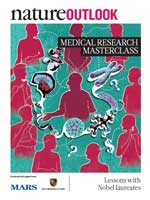
The increased prevalence of allergies and asthma, especially in the developed world, has raised the stakes in the quest for prevention and cure. In light of this, the latest Nature Outlook supplement is all about allergies. Nature Network blogger Paige Brown features in the supplement with her article, Atopy: Marching with allergies, where she details her lifelong struggles with allergic disorders and hyper-reactivity:

My mother, herself allergy-prone, remembers my inflamed and itchy skin lesions in infancy. These are classic symptoms of atopic eczema, better known in the United States as atopic dermatitis. Then, in my toddler years, as my father recounts, I started to show “this peculiar reaction” around animals, scratching at my throat as my eyes went red, watery and swollen. These typical symptoms of allergic rhinitis, or hay fever, owe their origins to human immune-system responses to specific protein allergens, for example those found in animal dander:

You can read the whole, free supplement here.
cover.jpg

#Scitweetups

Science Tweetups are a great way to meet local scientists and science communicators for an evening of chitchat in the pub. There are now regular tweetups in NYC ( #NYCscitweetup, ) Cambridge, UK ( #camscitweetup ) and Washington DC (#DCscitweetup. )

The sixth #NYCSciTweetup is on Thursday 1st December at the Peculier Pub. Join in from 6.30pm onwards.

On the other side of the Atlantic, there is also a pre-Xmas #ukscitweetup in London; here’s the doodle poll where you can vote for your preferred dates. To find out who else is attending, watch the #ukscitweetup hashtag on Twitter.

It is question time

This week NatureNews have been asking via their brand new Facebook page, “Who owns your lab notebook?” In response to a legal dispute about missing notebooks in Nevada, some have wondered whether most working scientists even know who technically owns their lab notebooks. So, for the working scientists out there, is it clear that the research notes you take generally belong to the institution you work for? You can respond to their FB poll here and make sure you “like” them to keep updated on the latest news.

For those interested in Nature’s other social media presences, we also have a Twitter list cataloguing all of our NPG Twitter accounts and we also have a Google + circle featuring all the NPG Google+ pages. This circle will be continuously updated as and when accounts are created.