Conversations with the Countess: Lindau: A Nerd Heaven of Nobels and Nobles

Alaina G. Levine was live from the Lindau conference

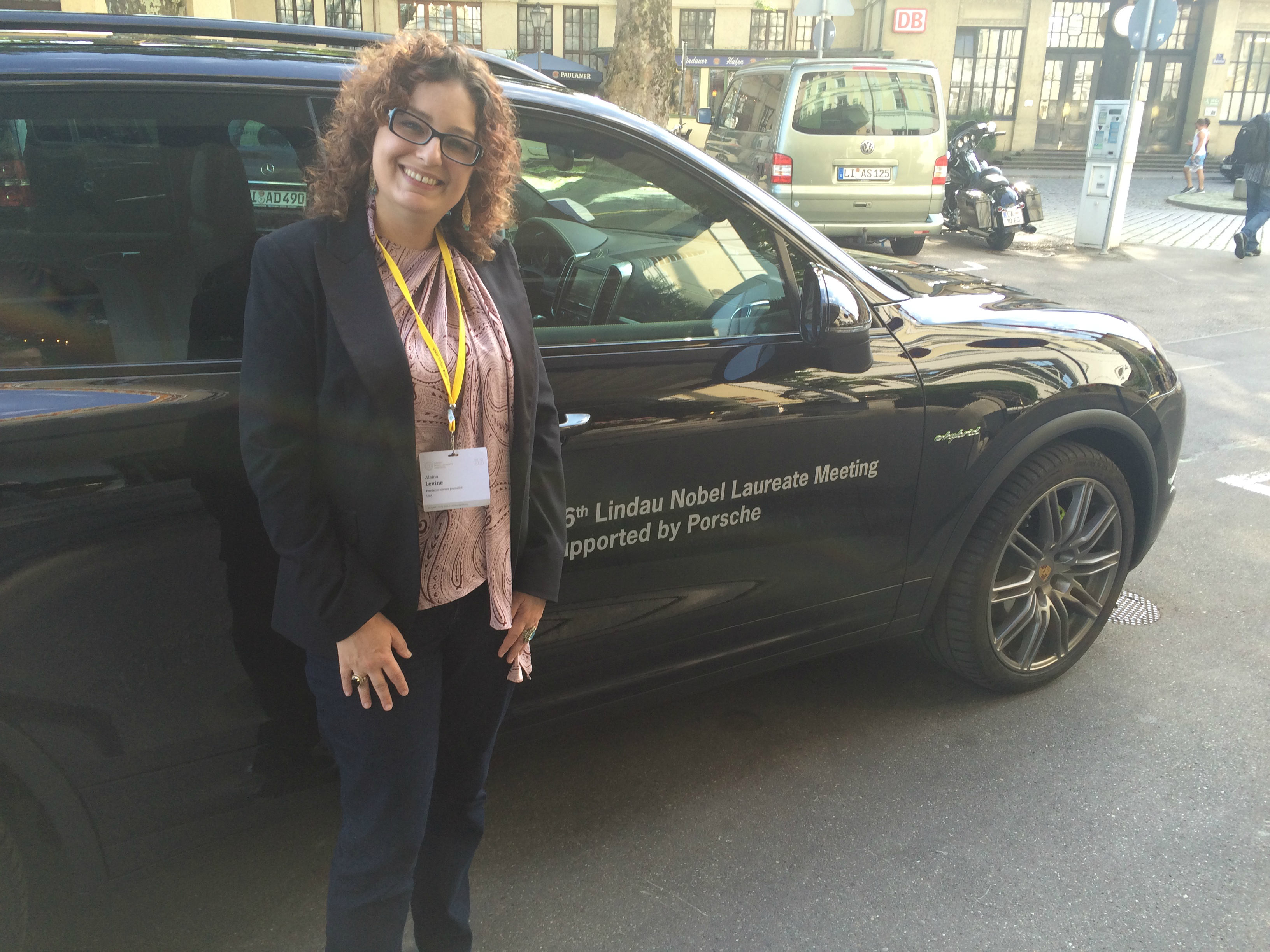
My week at Lindau, #NerdHeaven, was in a word, sublime. I can’t tell you how much I enjoyed speaking with all the different people it draws, including Nobel Laureates, early career scientists, journalists, and representatives from foundations and governments the world over. I learned so much about so many different areas of science and society. I gained so much from the experience. And now that it has come to a close, I feel like crying in my streuselkuchen.

Alaina at Lindau

Nevertheless, it’s over, and I’m left to is relive some of the best moments. Continue reading

Finding job satisfaction in venture philanthropy

Multiple informational interviews can bring great insights into possible careers, says Arie Meir.

arie_meir-naturejobs-blogAfter earning his degree in biophysics at Berkeley, Arie Meir took an engineering internship at Google. But he didn’t want to stay on that path. Here, he explains how informational interviewing led him to an intriguing position and helped him ace interviews.

Click here to read how Meir gained skills and career exposure in graduate school.

Tell me about your job.

I work for the philanthropic arm of Google; I help evaluate grant proposals from a technology standpoint. Our work is at the nexus of technology and impact. I work with social entrepreneurs and academic faculty to understand the state of the research in a field, like 3D printing for affordable prosthetics. I review funding opportunities and think ‘How is this game-changing and scalable?’ and ‘What are the risks?’ and ‘How would the world be different in five years if we fund this?’ Continue reading

Communities Happenings – 20th February

Communities Happenings is a weekly post with news of interest to NPG’s online communities. The aim is to provide this info in one handy summary. Listings include tweetups and conferences which we’re attending and/or organising as well as new online tools, products or cool videos. We also occasionally flag up NPG special offers and competitions plus updates about NPG social media activities such as new accounts you might want to follow. Do let us know what you find most useful!

Social Media SoNYC

On Thursday, the eagerly awaited 9th SoNYC event took place, a super social media week special event at the American Museum of Natural History!  The topic for discussion was, “Beyond a Trend: Enhancing Science Communication with Social Media.“ The panel included:

– American Museum of Natural History educators who are developing a “tool kit” of mobile apps, websites and more to help middle school students collect, share and present data on urban biodiversity

– Ben Lillie, the co-organizer of The Story Collider, which tells science stories by combining verbal narratives with podcasts, Twitter and an online magazine

– Matt Danzico, a BBC journalist who conducted a 365-day blog experiment called “The Time Hack” looking at how we perceive time

– Carl Zimmer, a science journalist whose latest book, Science Ink: Tattoos of the Science Obsessed, is based on feedback he received on his Discover Magazine blog when he asked the question: are scientists hiding tattoos of their science?

– Moderator: Jennifer Kingson, day assignment editor, Science Department, The New York Times

You can catch up on the discussion via the recording of the livestream or read our summary post which includes a Storify of the online conversations.

The next SoNYC takes place on Tuesday 20th March when we’ll be discussing “Keeping the research record straight” with Retraction Watch blogger, Ivan Oransky as well as John Krueger of the Office of Research Integrity and Liz Williams, Executive Editor of the Journal of Cell Biology. If you’re in NYC and would like to attend, you can sign up here or watch our livestream if you can’t make it in person.

Guest posts and interviews 

To complement this month’s SoNYC event we ran a series of guest posts, recounting experiences where social media has been a key part of an education project. You can find our introductory post here, including a presentation by Christie Wilcox on Science and the Public: Why Every Lab Should Tweet

To start the discussions, Dr Alan Cann from Leicester University gave us an academic’s viewpoint on how social media can be used as part of the curriculum. His post considers how the effects of social media usage can be measured and what the future holds for such technology. Next we heard from Ben Lillie, co-founder of The Story Collider,who discussed the ways social media can also be used to tell a science story. Finally we interviewed Allie Wilkinson, creator of the “This is what a scientist looks like” initiative:

 “This is what a scientist looks like.” Developed by science writer and multimedia specialist Allie Wilkinson, the concept is simple, a Tumblr blog which collates pictures of scientists from all walks of life. Allie explains, “there is no cookie-cutter mold of what a scientist looks like. A scientist can look like you, or can look like me.”

The project aims to challenge the stereotypical view of a scientist, “there is no rule that scientists can’t be multidimensional and can’t have fun.

Continue to the post to find out how the project aims to challenge the stereotypical view of a scientist.

Social media 

To tie in with our social media extravaganza, our hub bloggers also joined the discussion. Tinker Ready, our Boston blogger, interviewed Joi Ito, Internet pioneer and head of the MIT Media Lab, on science, social networking and “the shape of ideas.”

In a conversation earlier this week, he offered a hypothetical example of how emerging tools are creating new ways to analyze information generated by online networks. Take data from the history of books, together with trends from search queries and Twitter and connect it all to scientific references, he said.

“Then we get these really rich data sets with which we can understand… the shape of ideas within the context of society.”

He also offered a very concrete example. This spring’s Research Update session – usually open only to the Media Lab’s corporate and philanthropic sponsors — will become a Tweet-up. For the first time, most of the previously private sessions will be live streamed and the lab will solicit input through Twitter.

“The more you get your ideas out there, the more likely you’ll find people to collaborate with,” Ito said.

Continue to Tinker’s post to hear more from Joi Ito.

Joanna Scott, our London blogger, interviewed Jack Ashby, Manager of the Grant Museum of Zoology at UCL, about QRator, the pioneering project the Grant Museum is working on to allow the public to engage with museum collections by contributing their own interpretations:
QRator is a project that allows our visitors to get involved in conversations about the way that museums like ours operate and the role of science in society today. In the Museum are ten iPads which each pose a broad question linked to a changing display of specimens. We are really interested in what our visitors think about some of the challenges that managing a natural history collection brings up, and other issues in the life sciences. They change periodically, but at the moment our current questions include “Is it ever acceptable for museums to lie?”, “Is domestication ethical?”, “Should human and animal remains be treated differently in museums like this?” and “What makes an animal British?”

Do you think social media is going to be very important to museums and outreach departments of universities in the future? Feel free to leave your thoughts in the comment thread. 

Nature Education Launches Interactive Biology Textbook

Nature Education, the educational division of Nature Publishing Group, announced this week the worldwide release of Principles of Biology, a $49 interactive university-level biology textbook:

Principles of Biology is a “born digital” textbook, with all materials designed specifically for consumption by students via browsers on desktops, laptops, tablets, and smartphones. Each of the 196 modules in the text is a self-contained learning experience, integrating text, images, interactives, and continual assessment, which feeds an automatic gradebook through which instructors can track student progress. Instructors can customize Principles of Biology to meet their curriculum by rearranging modules, turning sections within modules on and off, adding their own material, and integrating the textbook into their campus learning management system. In addition to accessing all materials online, students can download a Desktop Edition for use when not connected to the internet as well as printable versions of each module.

Principles of Biology follows the successful launch by Nature Education in 2009 of Scitable, a collaborative online learning space for individual life science students now used in more than 180 countries. You can find out more about this in the official press release. 

Google + 

This week the Nature Blogs Google+  page reached the 1,000 circles milestone. Thanks to everyone who is circling us!

Don’t forget that you can find other NPG journals and products on Google+.  See our circle featuring all the NPG Google+ pages. This circle will be continuously updated as and when accounts are created.


The AAAS meeting in Vancouver

The AAAS annual meeting has been taking place in Vancouver since last Wednesday, comprising of a mix of plenary talks, smaller discussions and exhibits. You can read Paige Brown’s Storify summary of Saturday night’s “Science is not enough” plenary featuring Hans Rosling and discussing the challenges of science communication.

Some upcoming events in Cambridge, UK.

Two dates for your calendars if you’re in or around Cambridge, UK.  March 2nd is when the next #camscitweetup will take place in The Empress pub. A chance to meet others interested in science for an evening of relaxed chatting, everyone is welcome to join in.

April sees the return of SciBarCamb – an unconference for scientists and technologists, taking place on the evening of Friday 20th April and all day on Saturday 21st. The earlybird tickets have now sold out, but there’s another chance to reserve your place from 10am on February 29th.  If you’d like to find out more about the event, read what co-organiser, Eva Amsen has to say about it.

 

February’s SoNYC: On Science and Social Media – An Academic’s Viewpoint

Science Online NYC (SoNYC) is a monthly discussion series held in New York City where invited panellists talk about a particular topic related to how science is carried out and communicated online. For this month’s SoNYC we’ve teamed up with the American Museum of Natural History (AMNH) for a special event for Social Media Week. We’re looking at how social media can be used to communicate science, with the intention of concentrating on how the experiences can have educational value. More details of this month’s SoNYC can be found here.

To complement the event, we’re running a series of guest posts, recounting experiences where social media has been a key part of an education project. To start the discussions, Dr Alan Cann from Leicester University gives an academic’s viewpoint on how social media can be used as part of the curriculum. His post considers how the effects of social media usage can be measured and what the future holds for such technology. 

One of the best things about working at a medical school is that we have lots of students and lots of technology, so three years ago we ran a student through our most powerful NMR machine, and this is what we saw:

Attention!
Image Source

Just in case you’ve had a sense of humour bypass, or my Ethics Committee is reading this, we didn’t really – this was one of those Photoshop experiments 😉

Nevertheless, institutional eLearning tools cannot effectively compete with the current generation of social networks for student attention. Yet there are good reasons for educators not to compete online with the attractions of alcohol and sex. In general terms, attention online is in short supply and although we know that Facebook can be a positive tool for education in some circumstances [1], I prefer to sidestep the complications of predominantly social spaces in order to provide some distinction. I try to foster the use of social tools for academic and professional development.

Dissatisfied with the lack of “social” in institutional tools such as virtual learning environments (VLEs), I started down a more outward looking path some years ago. Students log into the university VLE which acts an authentication hub, confirming their identities and providing us with a secure channel for information such as course marks, which, under the terms of the UK Data Protection Act, cannot be trusted to public sites. The university login provides us with an administrative layer but the interaction, and arguably the learning, takes place elsewhere. Although students may download PowerPoint presentations from the VLE, higher thought processes such as analysis and evaluation are associated with actions such as reading current content from RSS feeds on Google Reader and discussing the relevance of shared items to taught courses on Google+. Vital to this approach is the incorporation of student peer networks to amplify staff input [2].

Initially, I focussed on a range of social tools designed to foster student interactions. These included social bookmarking sites such as delicious, social citation tools such as CiteULike and wikis such as WetPaint and Wikispaces. Students were assessed on their use of these sites, but when assessment ceased, we found that very few students continued to use the tools. Some sort of social glue was required to maintain the enthusiasm. Our initial tool-based personal learning environment (PLE) concept rapidly turned into a people-based personal learning network (PLN) approach. As with all effective education, conceptual frameworks, in this case provided by a peer group rather than solely by teaching staff, win out over content alone.

A people-centred approach to peer learning, where academics assume the role of content curator, mentor, and technical support, places communication as a crucial requirement for success. This explains the failure of our initial tool-based approach to encourage students to curate their own information. In comparison with conventional tagging formats, the “just-in-time” attention management of activity stream architecture, where attention is continually refocused by active items returning to the top of the page, provides the reinforcement needed for continued use. Activity streams and the crowd wisdom of a peer network are at the centre of my approach to online learning. All this might seem like dry, academic posturing – but don’t say that to Facebook and Google, who have spent the last three years betting the farm on activity stream architecture.  Starting with the highly influential but now moribund Friendfeed, we were able to demonstrate the effectiveness of this approach in terms of monitoring student engagement [3]. Students engaged in peer to peer discussions around shared resources and personal reflection on their own learning. The patterns of online activity were mapped using graphical tools and were used to inform staff how to guide individual students. Our statistical analysis showed that student contributions to the network could be used to discern student engagement with education in a way which give a far richer picture of online activity than traditional summary statistics such as course or exam marks.

Six months ago, concerned about the sustainability of FriendFeed, I switched our student network to the newly available Google+, and have not looked back. Google+ is conveniently linked to other tools that students use on our course (Google Documents for collaborative writing, Google Reader for RSS feeds), and has fine-grained privacy controls based on the idea of sharing content with user-defined Circles (see: here), which gives users confidence about sharing thoughts and content online. Google+ has proved to be an effective and engaging tool for student feedback [4].  We are currently analysing the structure of student networks on Google+ and looking in depth at usage patterns. If you’re interested in finding our more about this, follow me on Google+ where I post regular updates about my research.

What does the future hold? As connectivity continues to improve, undoubtedly massive open online courses (MOOCs) such as the recent Stanford AI class will keep growing, but the notion that universities will be swept away by organizations such as Udacity and Kahn Academy and abandon qualifications from ancient institutions in favour of free badges and Klout scores is as fanciful now as it was on the barricades of 1968. Eventually our sleeping educational leviathans will rouse themselves and stumble towards the sunlight uplands of enlightenment. Unless Google gets there first of course.

Alan Cann is a senior lecturer in the School of Biological Sciences at the University of Leicester. His interests are science education and exploiting emerging social technologies to enhance the student experience and maximise student and researcher development. He is the author of two highly successful textbooks, has served on the editorial boards of several scientific journals, is creator of MicrobiologyBytes.com, and is Internet Consulting Editor of the Annals of Botany. He has worked as a consultant for numerous educational and scientific institutions, and has published extensively in the area of educational research. More information 


References 

[1] (Junco, R. (2012) The relationship between frequency of Facebook use, participation in Facebook activities, and student engagement (Computers & Education 58(1): 162-171)

[2] (Cann, A.J. & Badge, J. (2011) Reflective Social Portfolios for Feedback and Peer Mentoring. Leicester Research Archive)

[3] (Badge, J.L., Saunders, N.F.W. & Cann, A.J.(2012) Beyond marks: new tools to visualise student engagement via social networks. Research in Learning Technology 20: 16283)

[4] (Cann, A.J. (2012) An efficient and effective system for interactive student feedback using Google+ to enhance an institutional virtual learning environment. Leicester Research Archive)

Communities Happenings – 28th November

Scientific events in Boston

Boston blogger, Tinker Ready, has been alerting those in the area to a jam-packed week of scientific events and you can keep updated on the latest events by checking out her calendar. This week, she will be focusing her blogging efforts on viruses and she’ll be heading over to the AIDS @ 30 event. Do let us know if you plan to attend any of these events, or if there is anything missing from the calendar.

Don’t forget that we’ve also created Google Calendars for some of the other major science cities: Paris, London and Cambridge in the UK and DC, NYC and San Francisco in the US. Below you can find links to all of the Google Calendars we have put together:

Please do let us know if you can see any important omissions, or if you would like to contribute to any of the calendars.

SONYC!

Join us on Thursday December 8th, in person at Rockefeller University from 7pm EST, or online via our Livestream channel for the seventh SONYC! The topic for discussion will be, Matching medium and messengers to meet the masses.

Reaching an audience that’s already interested in science is relatively straightforward; however, reaching a broader audience can be challenging. Attracting and maintaining an audience outside the core of science enthusiasts requires a carefully crafted match of the medium and messenger. This SONYC will consider when and how scientists and science communicators should seek to highlight science issues to the general public? Should we be ready to respond and correct public misunderstandings or attempt to influence science policy? What material can be handled through social media and what requires a more involved form of engagement, such as a science festival?

The event is free to attend with an opportunity to meet the panellists and other attendees afterwards. If you’d like to follow the vocal online discussion, keep an eye on the #sonyc hashtag or check back here for our write-up and Storify of the online conversations. Do continue to check the official Twitter account for more information.

FameLab

FameLab, set up in 2005 by Cheltenham Science Festival, is the international competition for science communicators and this week the London heats have begun! Kings College London is the venue for the heats, with a winner and a wildcard from each heat making the final next Wednesday. Over the next few days, Nature Network London will feature interviews with the winners and wildcards. First up is wildcard and Imperial PhD student, Edward Yoxall:

How did you become interested in communication and have you ever done anything like this before?

I’ve never done anything like FameLab, but I guess I’ve always enjoyed being on stage. Gives you such a rush! I’ve been working for the BBC on the ‘Bang Goes the Theory’ roadshow as a science demonstrator, so that’s been pretty good practice for speaking in front of crowds. It’s also been good at making me pitch at the right level – finding the balance between complexity and simplicity is definitely one of the hardest parts of the job.

Do keep an eye on the London blog for the remaining interviews.

Nature Outlook: Allergies

The increased prevalence of allergies and asthma, especially in the developed world, has raised the stakes in the quest for prevention and cure. In light of this, the latest Nature Outlook supplement is all about allergies. Nature Network blogger Paige Brown features in the supplement with her article, Atopy: Marching with allergies, where she details her lifelong struggles with allergic disorders and hyper-reactivity:

My mother, herself allergy-prone, remembers my inflamed and itchy skin lesions in infancy. These are classic symptoms of atopic eczema, better known in the United States as atopic dermatitis. Then, in my toddler years, as my father recounts, I started to show “this peculiar reaction” around animals, scratching at my throat as my eyes went red, watery and swollen. These typical symptoms of allergic rhinitis, or hay fever, owe their origins to human immune-system responses to specific protein allergens, for example those found in animal dander:

You can read the whole, free supplement here.

cover.jpg

#Scitweetups

Science Tweetups are a great way to meet local scientists and science communicators for an evening of chitchat in the pub. There are now regular tweetups in NYC ( #NYCscitweetup, ) Cambridge, UK ( #camscitweetup ) and Washington DC (#DCscitweetup. )

The sixth #NYCSciTweetup is on Thursday 1st December at the Peculier Pub. Join in from 6.30pm onwards.

On the other side of the Atlantic, there is also a pre-Xmas #ukscitweetup in London; here’s the doodle poll where you can vote for your preferred dates. To find out who else is attending, watch the #ukscitweetup hashtag on Twitter.

It is question time

This week NatureNews have been asking via their brand new Facebook page, “Who owns your lab notebook?” In response to a legal dispute about missing notebooks in Nevada, some have wondered whether most working scientists even know who technically owns their lab notebooks. So, for the working scientists out there, is it clear that the research notes you take generally belong to the institution you work for? You can respond to their FB poll here and make sure you “like” them to keep updated on the latest news.

For those interested in Nature’s other social media presences, we also have a Twitter list cataloguing all of our NPG Twitter accounts and we also have a Google + circle featuring all the NPG Google+ pages. This circle will be continuously updated as and when accounts are created.

Communities Happenings – 17th November

Welcome to the blogosphere

new blog image.jpg

We would like to wish a warm welcome to a new blog which began on the Scitable blogging network this week. The Promethean Cell will track ongoing issues and research in the regenerative medicine fields and will occasionally be interspersed with anecdotes from a fledgling postdoc’s career. Ada Ao, a postdoctoral research fellow at Vanderbilt University, explains more about her new blog:

Now that I’ve declaimed from my soapbox, what exactly will I blog about? The possibilities are endless. Recent discoveries in the stem cell field are incredibly exciting. This blog will encompass issues like basic biology, opinions and views, and where we may go next in terms of applicable therapeutics. I’m really aiming to put together the “big picture”.

We urge you to check it out and do feel free to send Ada a tweet; she’s @adaaocom on Twitter, with any feedback or suggestions.

On Nature Network we would also like to welcome post-doc student Ivana Gadjanski whose new blog, My Metacognitive Oasis began this week. Her very first post discusses how she Zigs and Zags through her scientific career:

I still remember the feeling I had immediately after obtaining my PhD degree. It was a mixture of relief, accomplishment and somehow emptiness. And one question kept popping in to my mind. What now?

You can follow her story in her blog and please feel free to join in the discussion.

Neuroblogging

Neuroscience 2011 has been this year’s major event for neuroscientists from around the globe. Organised by the Society for Neuroscience (SfN), the event took place from November 12th – 16th, in Washington, DC. To tie in with this, some of the attendees have been sharing their observations from the event in an exclusive series of guest posts on NPG’s Neuroscience blog, Action Potential.

We’ve created two round-ups of the blogging coverage; part 1 here and part 2 In addition, Action Potential’s editor, Noah Gray, has created a Google + circle listing the guest bloggers and you can also follow the hashtag #NPGsfn11 on Twitter to share in the discussion. Do let is know if you have any feedback.

SONYC!

The details of December’s Science Online NYC (#SoNYC) event were announced this week. Please join us on Thursday December 8th, in person at Rockefeller University from 7pm EST, or online via our Livestream channel to discuss, Matching medium and messengers to meet the masses.

Reaching an audience that’s already interested in science is a relatively easy thing to do. Reaching a broader audience, however, can be a serious challenge. Attracting and maintaining an audience outside the core of science enthusiasts requires a carefully crafted match of the medium and messenger. When and how should scientists and science communicators seek to highlight science issues to the general public? Should we be ready to respond and correct public misunderstandings or attempt to influence science policy? What material can be handled through social media, and what requires a more involved form of engagement, such as a science festival?

This month’s panel has experience communicating with everyone from young kids to policymakers, and will discuss what they’ve learned about using different spokespeople and platforms to get their message out. The panel includes:

Darlene Cavalier: The woman behind the Science Cheerleaders

Jamie Vernon: A science policy analyst

Molly Webster: The lead producer for live programming at the World Science Festival.

Kevin Zelnio: The webmaster for the Deep Sea News and a freelance writer.

The event is free to attend with an opportunity to meet the panellists and other attendees afterwards. If you’d like to follow the vocal online discussion (we average around 600 tweets per SoNYC event), keep an eye on the #sonyc hashtag or check back here for our write-up and Storify of the online conversations. Do also keep an eye on the official Twitter account for more details.

Tweetups

Science Tweetups provide an excellent opportunity to meet local scientists and science communicators for an evening of chatting in the pub. For those interested in the next #camscitweet, this will be held next week on Thursday 24th November in the Kingston Arms pub. Join in from 6:30pm and anyone is welcome!

For those on the other side of the Atlantic, keep an eye on the #DCscitweetup and #NYCscitweetup hashtags for information on future events.

Twitter and Google+

This week has seen the launch of another NPG journal account on Twitter, Nature Reviews Molecular Cell Biology who are tweeting as @NatRevMCB

You can also find a full Twitter list of NPG journals and products here.

Last week Google+ launched pages and several NPG journals and products have already created their own. See our circle featuring all the NPG Google+ pages. This circle will be continuously updated as and when accounts are created.

Science Calendars

Yesterday we alerted you to the latest scientific calendar in our series, Science Events in Paris. The calendar is moderated by MyScienceWork, an open access scientific research network.

There’s always an interesting science event taking place and to help with diary planning, we’ve created Google Calendars for some of the other major science cities: London and Cambridge in the UK and NYC, Boston and San Francisco in the US. Below you can find links to all of the Google Calendars we have put together:

Please do let us know if you can see any important omissions.

Geography Is Social

nicola.bmp

This week’s guest blogger is Nicola Osborne, a Social Media Officer for EDINA, a JISC National Data Centre based at the University of Edinburgh. Nicola began her career investigating “Y2K” for BP but, whilst studying engineering, she became more interested in writing and running review websites. After graduating Nicola joined the Edinburgh University Library then moved on to SUNCAT where she worked with library catalogue data and trialled various social media tools to promote the service. She was appointed to her current innovative role in 2009. Nicola Osborne is a regular speaker on social media, an organiser for the annual Repository Fringe events and regularly blogs on social media events, possibilities and issues for higher and further education.

I have the rather unusual job title of Social Media Officer for EDINA and I’ve been asked to explain what I do, though I should probably start by saying that my work varies hugely from day to day and week to week depending on the projects I’m working with, the events that are coming up, and the new technologies that have appeared lately (right now Google+ and Klout are the hot topics).

The largest part of my role is to work with colleagues across EDINA projects and services to encourage and support the use of social media and related communications technologies. We run services including Digimap, an online mapping and spatial data service including Ordnance Survey data; and JISC MediaHub, a huge resource of images, video and sound; and SUNCAT, the UK Serials Union Catalogue. I help my colleagues think about how we can engage our user communities through social media – whether by including sharing elements or social media-like features in an interface or through sharing training materials on YouTube or providing updates and alerts via blogs and twitter. I also help to manage the in-house blogs platform and authored the EDINA Social Media Guidelines which we have had a fantastic response to since we released them under Creative Commons license in January 2011. Acting as a social media “evangelist” is not only my passion but an official part of my job description so a significant part of my role is speaking, writing and running training events where I enthusiastically share new possibilities and best practice for using social media in the education sector.

At the moment I am also part of the team running the JISC GECO – Geo Engagement and Community Outreach – project. We are working with 12 JISC-funded geo projects across the UK to make connections between the use of geo information and “non-traditional” users, which tends to mean those outside of geography, geosciences or earth sciences. We are using “geo” in a very broad way so we would mean anything geographic, geospatial, geo-referenced, or anything where location and/or physical context is important. We are trying to build new connections between those who have expertise, experience and resources to share, those that are interested in using geo, and those who bring new perspectives on geo and on how geo data or tools could be used.

The diversity of projects and disciplines that interact with geo is so broad that GECO is proving to be a constantly challenging and inspiring project. Those projects we are working with include several elearning projects: GeoSciTeach is creating a phone app for teachers leading science fieldwork; JISC G3 are developing approaches to teach geographic concepts to non geographers; and ELOGeo are developing an e-learning framework for materials on open data, open source and open standards around geospatial information.

Many of our projects are exploring existing data: geoCrimeData project is looking at the relationship between location and crime statistics; U.Geo is investigating material held in the UK Data Archive to identify those with location information and potential for use as georeferenced data; PELAGIOS is applying the extremely modern concept of Linked Open Data to expose, share and combine online resources about the very ancient world; IGIBS is working with researchers in the Dyfi Biosphere (a UNESCO designated area of outstanding diversity of environment, culture, language, etc.) to create a tool that combines research data with authoritative maps and allows that work to become more visible and sharable between researchers; and the Halogen 2 project team are enhancing their existing cross-disciplinary History, Archeology, Linguistics, Onomastics and Genetics database.

Screenshots.bmp

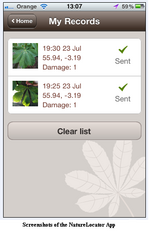
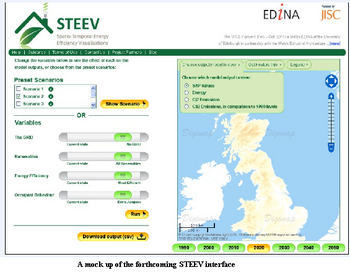
We are also working with the NatureLocator project who have created a curiously addictive phone app that lets you record the location and level of damage to horse chestnut trees which will help track the spread of the leaf minor moth; xEvents, who are creating a tool to build, share and map academic events; STEEV, a project to enable you to time travel through of historical energy efficiency data right through to future predictions. And, last but by no means least, the GEMMA project (which has a particularly fetching gerbil logo) is building a series of mapping applications and tools that can be combined and adapted so that any web user can make a map no matter how much or little that individual knows about mapping.

Steev.bmp

Most of these projects are reaching out far beyond traditional academic communities and all reach beyond traditional geo communities. Communicating with these audiences can be challenging, particularly for those used to working mainly with other specialists in their field. We are helping the projects find each other and related projects both within and outside of academia, and we are helping them to reach out with the broader community around their work. My main responsibility has been to help the project teams communicate what they are doing through their blogs. Some of the project teams include experienced bloggers but some of our researchers and developers are entirely new to sharing their work in such an informal and public space and we’ve been delighted to support them to become confident and talented bloggers.

In addition to the project blog we directly communicate key developments and announcements about these projects through a central JISC GECO blog and on Twitter as @jiscGECO. We are trying to highlight the connections between all manner of geo ideas, projects, concepts, tools and sites so we tend to share rather quirky finds in these spaces and always welcome comments, suggestions and guest posts. We will be running a number of events over the coming months and we will be amplifying these through liveblogging, tweeting and, where possible, videoing key content. We also have a mailing list to encourage broad discussion around geo – we do a lot of matchmaking between different people and communities and we want to help raise awareness of the ubiquity and importance that geo plays in everyday work and lives.

Our main focus at the moment is the organisation of an Open Source Geo and Health event (Twitter hashtag #GECOhealth ) which we will be running in Edinburgh on Tuesday 9th August. We have worked with the ELOGeo project at Nottingham University, the British Computing Society, Edinburgh Napier University and geo enthusiasts at the Edinburgh College of Art to create a fantastic programme exploring the intersections between geo and many aspects of health practice, theory, trends, policy, and we hope this will trigger some really interesting discussions and relationships that will continue long after the project comes to an end.

All The Old Showstoppers

Now is the time of the month when I have to look at “the numbers” to see how things are going on Nature Protocols and Protocol Exchange. Since I was doing that anyway I thought I’d share some with you. The thing that most intrigues me is what brings people to the sites; what questions are they trying to answer? Well here are the top 20 search terms that resulted in people coming to Nature Protocols and Protocol Exchange in the last month (linked to the Protocols I imagine they found helpful).

Nature Protocols

  1. nature protocols
  2. nature protocol
  3. multiplex pcr
  4. “clonogenic assay “:https://www.nature.com/nprot/journal/v1/n5/abs/nprot.2006.339.html
  5. overlap extension pcr
  6. blue native page
  7. inverse pcr
  8. rolling circle amplification
  9. pyrosequencing
  10. pulsed field gel electrophoresis
  11. site directed mutagenesis
  12. scratch assay
  13. circular dichroism
  14. srb assay
  15. overlap pcr
  16. touchdown pcr
  17. trail making test
  18. cell culture
  19. chromatin immunoprecipitation
  20. qpcr

Not so informative really apart from showing that a lot of people need help with their PCR. I’m also surprised that there is so much interest in circular dichroism. But those looking for information are very persistent as the page I assume they are coming to (Using Circular Dichroism Spectra to Estimate Protein Secondary Structure) was on the third page of Google’s search results.

How about the Protocol Exchange:

  1. itraq
  2. transwell migration assay
  3. barnes maze
  4. kaiser test
  5. nature protocols
  6. neurosphere
  7. neurosphere assay
  8. slic cloning
  9. fluorescent in situ hybridization protocol
  10. dpph assay protocol
  11. immunofluorescence protocol
  12. chip assay
  13. nature protocol exchange
  14. transient transfection
  15. transwell assay
  16. in utero electroporation
  17. neurospheres
  18. protocol exchange
  19. purify protein complex
  20. fluorescence in situ hybridization protocol

That’s a much more diverse list of searches. But there certainly is a desire to know about iTRAQ (which stands for isobaric peptide Tags for Relative and Absolute Quantification if you were in any doubt), and the Protocol Quantitative analysis of protein expression using iTRAQ and mass spectrometry by Ry Y Tweedie-Cullen & Magdalena Livingstone-Zatchej will hopefully have satisfied them.