The leaky pipeline: Thank putdowns, slights

Searches for the reasons behind the ‘leaky pipeline’—the structural failures, such as equal representation, that drive women out of science, technology, engineering and maths (STEM)—often focus on large-scale problems such as work-family or work-life balance. But insidious psychological strikes also contribute to the outflow.

A study involving interviews and online posts of 28 women in the later stages of PhD studies in engineering and physical sciences in the United States, published 31 January in the journal Social Sciences, revealed many day-to-day slights that left them feeling alienated and undervalued. Some said they were contemplating leaving research as a result. “There’s a culture in male-dominated environments,” says Bianca Bernstein, a co-author of the study and a psychologist at Arizona State University in Tempe. “Some women feel it’s not for them.”

Even though they were already deep into their PhD studies, 12 of the 28 women indicated that they didn’t want to pursue research careers. Five cited personal or work-life balance reasons, but six chalked up their decision to change course to the workplace environment and culture, including two who specifically expressed a desire to escape a male-dominated field. Hypothetically, Bernstein says, more women would finish graduate school and remain in research careers if the gender balance wasn’t already so skewed, but noted that any such scenario is difficult to test.

The interviews and posts, which took place over seven months, highlighted many of the positive aspects of the scientific life, including feelings of accomplishment and mastery. But the women in the study also reported “frequent” instances of feeling ignored, dismissed or excluded. One woman reported that a male colleague reacted rudely when she won a scholarship. “He blamed it on the fact that I was a woman and that they probably gave me a scholarship to fulfill a quota,” she said in an interview as part of the study.

The women reported that they were disproportionately asked to perform “women’s work” such as cleaning up the lab or performing clerical duties. “We’ve been hearing that complaint for decades now,” says Bernstein, who is also a principal investigator with the US National Science Foundation’s CareerWISE programme, a coaching initiative for graduate-level women in science and engineering. “It’s surprising that it hasn’t changed.”

A few women reported unwanted sexual advances in the workplace. Bernstein notes that the interviews and posts tracked only study subjects’ recent experiences, not everything that had ever happened with them during their graduate programme. Also, the interviews and posts took place before the rise of the #metoo movement, so women may have been more reluctant to report such events than they would be today.

Kevin Miller, a researcher with the American Association of University Women based in Washington DC, says that even seemingly minor grievances can add up. “Women in STEM have to fight an uphill battle that starts when they are girls and their interest in the sciences may be discouraged or ignored,” he says. “The experiences described in this study show that women face bias both subtle and overt as well as systemic factors that make them more likely to exit STEM fields.”


Chris Woolston is a freelance writer in Billings, Montana.


Suggested reading:

Technology: Women are alienated

Academic housekeeping: Women’s work?

Men are more likely to be hired

The struggles of female and underrepresented scientists

Initiatives to increase diversity among faculty members—particularly in science, technology, engineering and maths (STEM)—have prompted efforts to track university recruitment and retention of women and underrepresented minorities (URM). Three new US studies shed light on the issues, including salary and publication rates.

nj7668-489a-i1

Continue reading

How to escape a ‘paint-by-numbers’ career

Academia trains us to follow pre-defined paths when planning our careers, but the most exciting and rewarding careers are designed by their owners. If you’re willing to take some risk and create your own design, you can have a more exciting career than you ever imagined.

By David M. Giltner, PhD, Founder of TurningScience

If you’re like me, you entered university with a plan: to follow a career path that many had followed before. This is common, because school trains us to follow directions. Earning a degree involves predefined steps:

‘Complete this application adequately, and we will admit you.’

‘Answer this list of questions correctly, and you will pass the test.’

‘Pass this list of classes, and we will give you a degree.’

It’s natural to continue looking for a path to follow after graduation, but, in my view, that’s not how the most exciting careers are built. I’ve found my own way, founded a company, and enjoyed an immensely rewarding career along the way.

Career-path-decisions-naturejobs-blog-small

{credit}iStock{/credit}

Continue reading

Reflections on the L’Oreal-UNESCO For Women in Science program

Muireann Irish on celebrating diversity in science

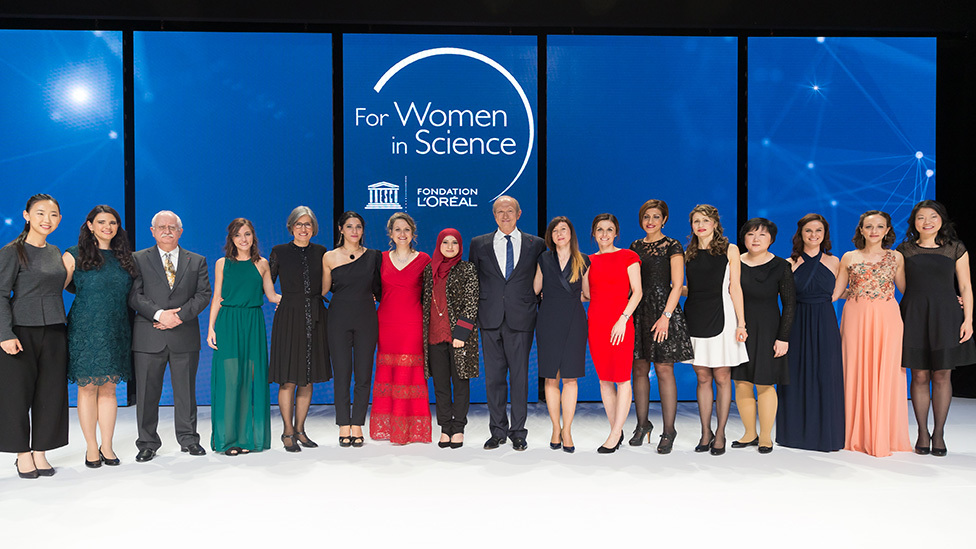
Springtime in Paris seems a fitting backdrop for any awards ceremony but particularly so in the case of the L’Oréal-UNESCO For Women in Science program. I recently had the honour of attending the 2017 International Awards along with 14 other early career researchers from around the globe, as part of the L’Oréal-UNESCO International Rising Talents Fellowship.

FWIS IRT ceremony 2017 Continue reading

Visual experiments straddling art and science

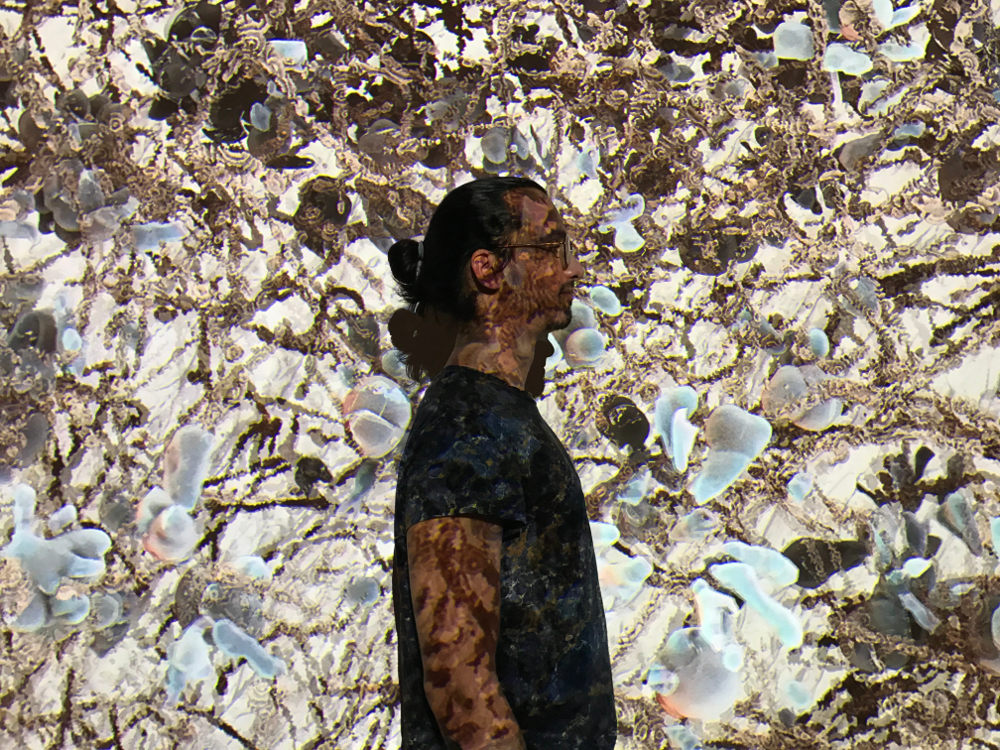
Filmmaker Markos Kay.

Filmmaker Markos Kay.{credit}courtesy of Eliza McNitt{/credit}

Digital artist and director Markos Kay pioneers at visualising the unvisualisable.

“Art and science are drivers of cultures,” says Kay, who visited the Middle East for the first time last month to exhibit a new film called ‘Quantum Fluctuations: Experiments in Flux’ at the Imagine Science Film Festival in Abu Dhabi. “I want to challenge our ideas of how our knowledge of reality is formed.”

He is perhaps best known for a generative short called The Flow (2011), which was featured in an episode of the TV hit series Breaking Bad.

The Flow takes its audience inside a proton, with the aid of simulation software and algorithms, to see a dramatically-visualised interplay of quarks and electrons, resulting in nuclei and atoms. “I was really frustrated that nobody is trying to visualise all this in a more accurate way, so I tried to make my own film. I wanted to show people how complex this stuff is,” he says.

Kay’s work explores and abstracts the complex worlds of molecular biology and particle physics, be it through presenting a different way of observing cells or using the visual language of a microscope to give life to an organic process. “The desire of an artist to find ways to interpret and observe the world is similar to a scientist’s,” he says of his own experiments.

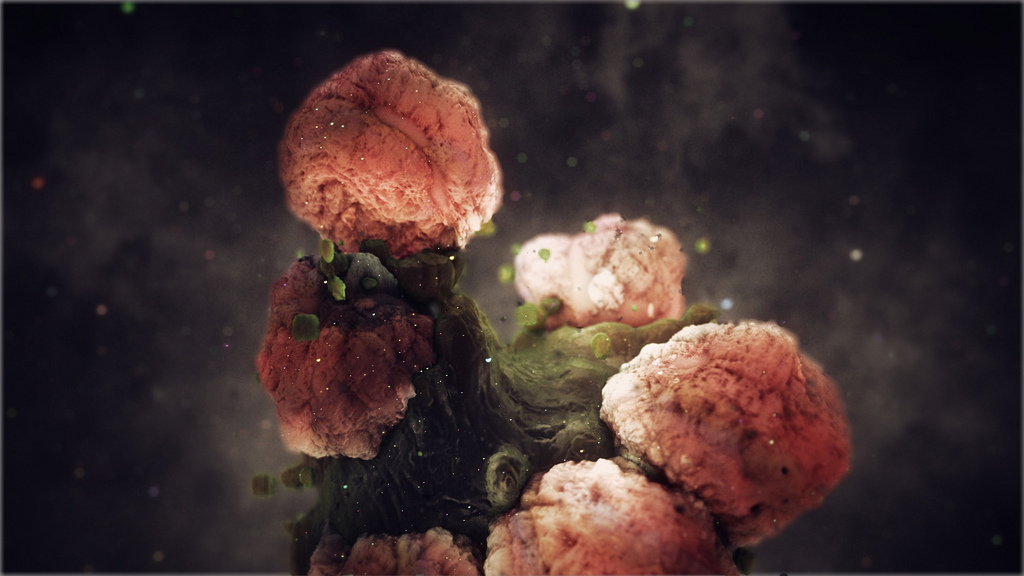
A still from Quantum Fluctuations.

A still from Quantum Fluctuations.{credit}Markos Kay{/credit}

His films are usually filled with detail and movement, and often feature scores of orchestral sounds or a generative, organic soundscape created by algorithm-based software.

His new film, ‘Quantum Fluctuations’, for instance, meditates on the transient nature of the quantum world which, he says, is impossible to observe directly. The film re-imagines the complex interactions of elementary particles as they collide inside the Large Hadron Collider at CERN –– and it’s all presented against a musical backdrop that is designed by Kay himself. Through striking computer-generated imagery, we can see interactions that occur in the background of a collision; for example, particle showers that erupt from proton beams colliding, giving birth to composite particles that eventually decay.

“Since the time of Heisenberg, it’s been almost impossible to visualise these events and simulations. It felt like a challenge,” Kay says. The film was produced by experimental design studio Epoche.io and will be part of an art and science documentary called “Sense of beauty” that focuses on CERN’s particle physics and that will be released later this year.

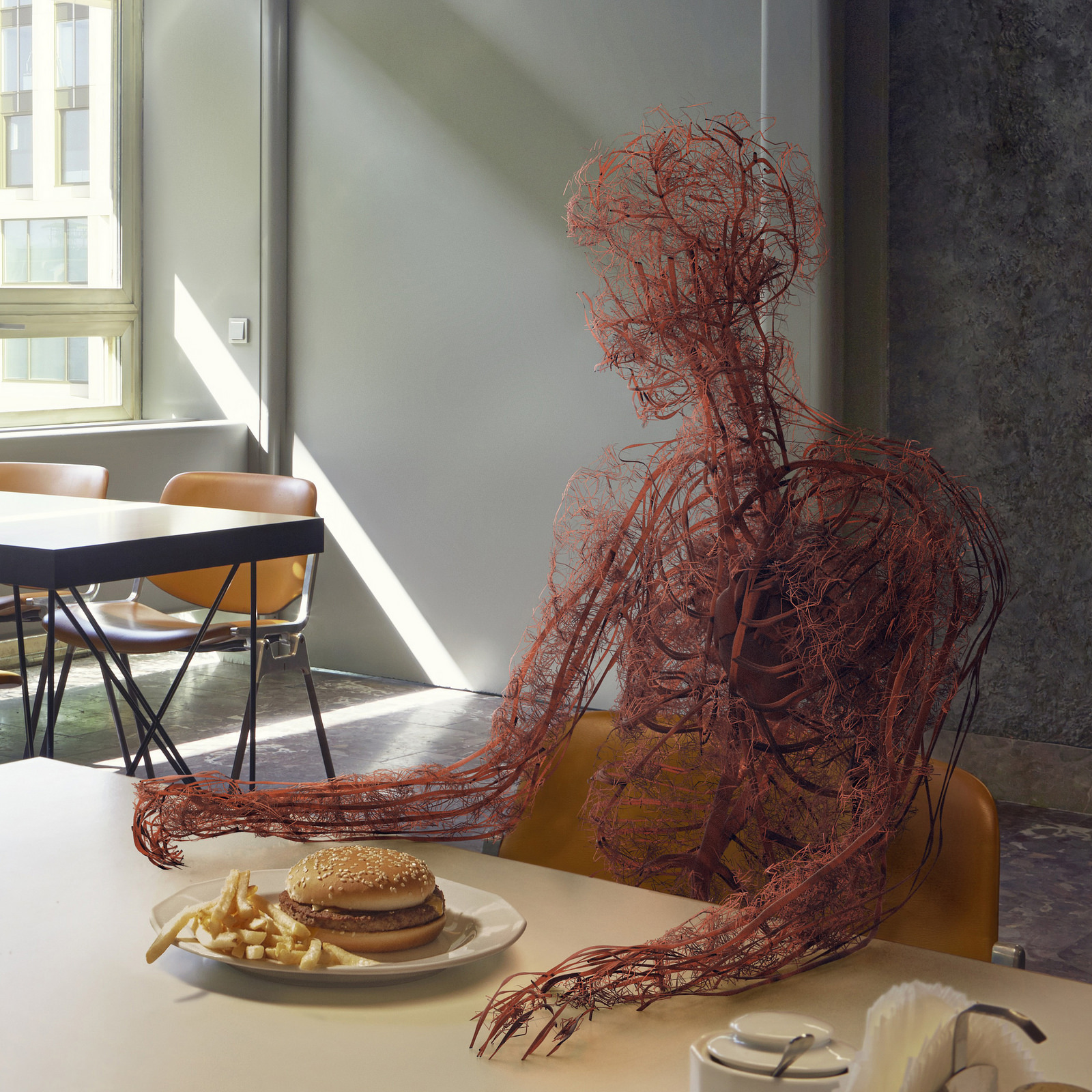
His latest project Humans After all, in collaboration with photographer Jan Kriwol depicts people in the context of everyday life through their circulatory systems. The project that showcases its subjects – humans stripped down to blood vessels and neural circuits – in an urban setting is meant to highlight the fragility and vitality of the human body.

“Through my work, I try to create immersive environments so that people can feel they’re entering a distant world.”

Humans Afterall.

Humans Afterall.{credit}Markos Kay / Jan Kriwol{/credit}

A look out to a dark Universe: Three young scientists share their thoughts

Young scientists from Nature’s Outlook on the dark Universe share their views on dark matter, gravitational waves, and dark energy.

You can find the full Outlook, covering the Lindau conference, Nobel prize winners, and Q&As with George Smoot and Brian Schmidt, here.

WEB_Astronomy-sky_65870

Continue reading

Ain’t no stopping them now

Unstoppable by lead, undetectable above ground, undividable by modern physics; neutrinos are messengers from the very centre of the sun. Art McDonald, co-recipient of the 2015 Nobel Prize in physics, describes the puzzle of detecting neutrinos and the discovery that they change flavour on their journey to earth.


Suggested posts

Tick tock cold cold clock

No such animal

Big box small box light-filled box

Lindau: Return to Nerd Heaven: Physics is like the Godfather and this is good

Alaina G. Levine is live from the Lindau Conference

As I mentioned yesterday, even after I switched my major to mathematics from physics and astronomy, I couldn’t quite turn my back on this field. I’ve come to realise that there is a specific reason for this, and I think you’ll agree: Physics is like The Godfather – once you’re in, you can’t get out. Our knowledge of the universe, from the yotta to atto, is all tied to physics. Our entire existence is described by physics. You can’t get more powerful than that. So clearly, it’s is an entrancing field, and like the Godfather, there is literally no way to escape – you’ll die a member of La Famiglia de Fisica.

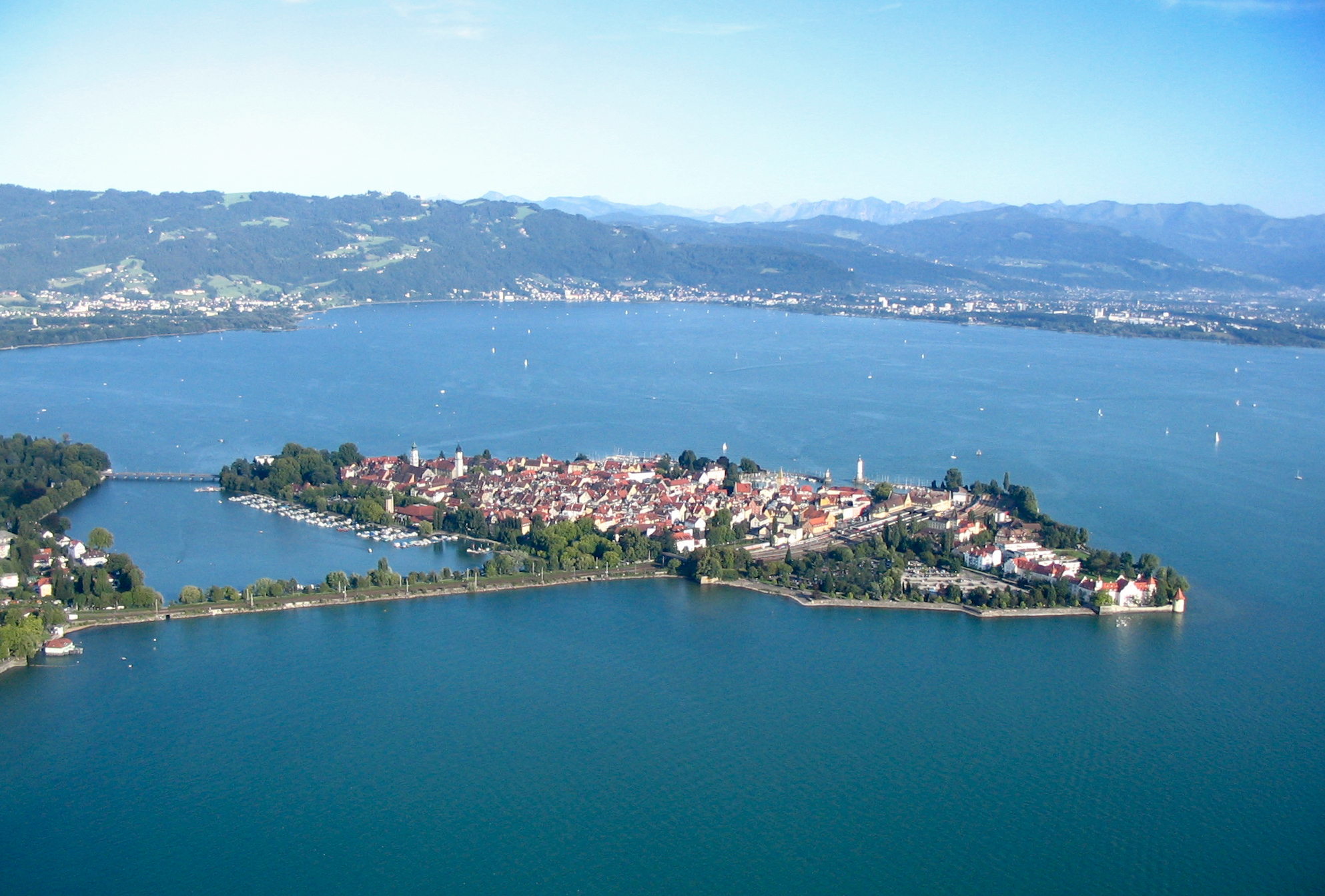
Lindau Island. Credit: CC-BY Edda Praefcke

Continue reading