Ain’t no stopping them now

Unstoppable by lead, undetectable above ground, undividable by modern physics; neutrinos are messengers from the very centre of the sun. Art McDonald, co-recipient of the 2015 Nobel Prize in physics, describes the puzzle of detecting neutrinos and the discovery that they change flavour on their journey to earth.


Suggested posts

Tick tock cold cold clock

No such animal

Big box small box light-filled box

Leaders of faster-than-light neutrino team resign

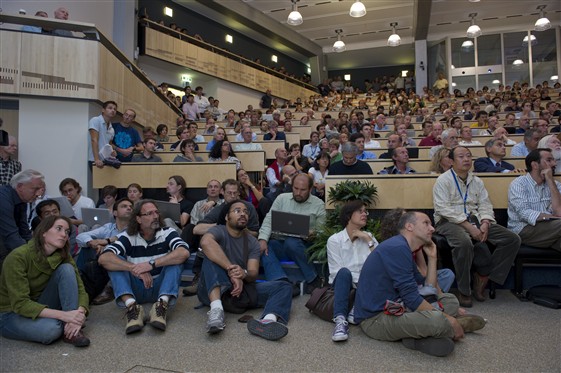
A month after revealing errors in their high-profile claim that subatomic neutrinos had been clocked traveling faster than the speed of light, two leaders of the Italian OPERA collaboration have resigned. Both spokesman Antonio Ereditato of the University of Bern in Switzerland and physics coordinator Dario Autiero of Lyon’s Institute of Nuclear Physics in France, who presented the stunning result in September 2011 to a packed auditorium at CERN (pictured), sent out resignations today.

Autiero says that both men have been concerned about the existence of a large split within OPERA’s 170-strong collaboration, and want to make way for an alternative leadership that can provide more unity. Ereditato, reached by phone, says firmly, “my comment is no comment.”

OPERA had clocked neutrinos traveling 730 kilometres from CERN near Geneva, Switzerland, to Gran Sasso National Laboratory near L’Aquila, Italy, finding that they arrived 60 nanoseconds faster than a light beam would do. This seemed to conflict with Einstein’s Special Theory of Relativity, which bans faster-than-light travel. But a subsequent investigation of the experiment’s systematics revealed a troublesome cable and timing device that cast doubt on the certainty of the result. OPERA still plans to repeat its measurement in May with the goal of quantifying the effect of its errors.

Autiero denied that he was stepping down because of mistakes in the measurement, saying that the discovery of an unknown systematic error is an inevitable hazard for any scientist doing a precision measurement. “In science you cannot pretend to be the owner of any absolute truth,” he says. Instead, he says that he and Ereditato felt that tensions that had always existed within OPERA were becoming impossible to bridge. He acknowledges that these were exacerbated by the publication of the provocative result, with some complaining from the beginning that the findings were likely to be wrong. He also agrees that the spectacular degree of media attention has brought pressure to bear. Despite the fact that OPERA itself never claimed to overturn Einstein’s theory, keeping its claims narrowly to the report of an anomalous measurement, many newspapers depicted it that way. ‘They played with the sensationalism of the story,” he says.

Yves Declais, also of Lyon’s Institute of Nuclear Physics in France, who was spokesman of OPERA from 2002 to 2008, says that OPERA has always been difficult to lead. There are cultural splits between the Italians and Northern Europeans, and a lot of personality conflicts that make it hard to have a quiet scientific discussion, he says. He believes that part of the problem is that the leaders are elected by a collaboration board of 20–30 people, consisting of one person from each participating institution, and not by the whole collaboration, so many do not feel it is truly representative.

Ereditato’s resignation was first reported by Reuters. His and Autiero’s resignations were unexpected, and Autiero suggests that it may take some weeks for OPERA to elect successors.

Update: Physics World reports that the resignations followed a vote of ‘no confidence’, which, although it did not carry with enough votes to require a change of leadership, made clear that the majority of researchers in the collaboration were no longer supportive.

Update 31 March: Antonio Ereditato has issued a lengthy public statement, echoing Autiero’s account of the resignation, and again taking a swipe at the media for, he says, sensationalizing the result and putting pressure on the collaboration. He says he did everything he could to dissipate tensions in the project, but when these turned into open criticism, “I felt that the time had come for me to tender my resignation in order to foster a new, more widely-shared consensus.”

Image: Dario Autiero’s September 2011 Seminar/CERN

Best of Nature Network, nature.com blogs and Scitable: 10 – 16 March

GrrlScientist reviews Nature Education’s new introductory biology textbook, Principles of Biology, which she says is affordable, lightweight and never goes out of date:

The presentation of the book is obviously designed with teaching in mind; it presents specific concepts along with the best information supporting those concepts. Although written with college and university students in mind, the explanatory text is sleek enough that at least some high school students could also use this book in their courses (refer to the sample objectives page screen shot for an idea of the writing style).
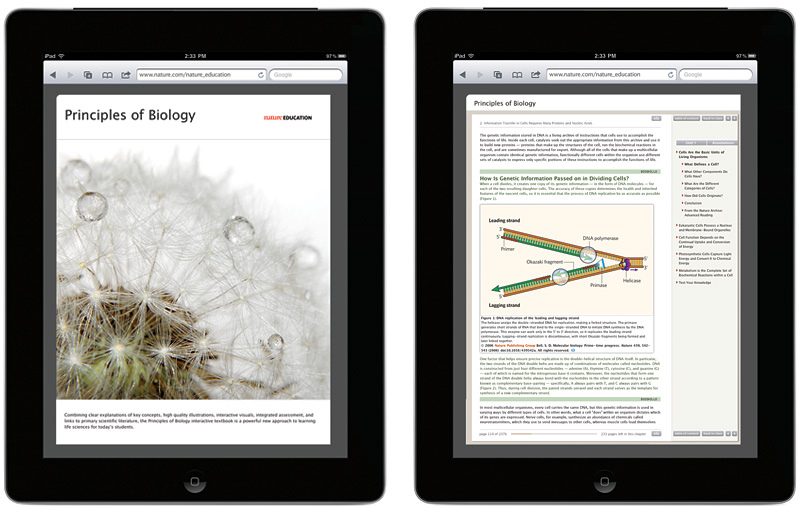
Learn more about Principles of Biology in the official press release.

Scientists and Journalists

On Tuesday night, the Royal Institution, London hosted an event where the topic for debate was  Scientists and journalists need different things from science. Curated by the Guardian’s Alok Jha and chaired by Dr Alice Bell, the panel included: Dr Chris Chambers from the University of Cardiff’s School of Psychology, Dr Ananyo Bhattacharya, Chief Online Editor of Nature, freelance science journalist and blogger, Ed Yong, and the Head of the UK’s Science Media Centre, Fiona Fox.  London blogger, Joanna Scott, summarises the event in her post:

Alok proposed that there are good scientists, good journalists and a genuine desire to communicate science to the public but in many cases, good communication isn’t happening. Why not, and what can scientists and journalists do to improve the situation? The debate is not new – amongst many others, panelist Ananyo Bhattacharya last year wrote a series of three blog posts on the nature of science journalism and the distinction from science communication – and tonight’s event was specifically designed to get past theoretical, and often unproductive argument, and towards a set of practical actions which might be genuinely useful in changing things.

In Joanna’s summary you can also find a Storify collating the online debate. Continuing this theme, Nature Network’s newest blogger, Peter Etchells, offers a few of his thoughts about the event in his post, Science journalism: time to move the debate on:

3) Watch the neighbourhood Or in other words, if you see something that’s dodgy, DO SOMETHING ABOUT IT. Could. Not. Agree. More.

It might be that something’s been misreported, or it might be that the science itself is a bit dodgy. Either way, say something – write a letter, comment, write a blog post. Anything that can engage with the guilty parties and sort it out.

You can find more of his thoughts in the summary and make sure you subscribe to his new blog, Counterbalanced.

Social media

As an extension to the discussion above, this week’s Soapbox Science post is by Matt Shipman and is the final instalment to his series, “The Promise & Pitfalls of Public Outreach.” In the previous two posts Matt talked about how scientists can work with reporters, public information officers and others to disseminate information about their research to a non-expert audience. But the advent of blogs and social media has given researchers the ability to cut out the middle man entirely and speak directly to the public:

The one cardinal rule for scientists who blog is (or should be) this: do not regurgitate your papers as blog posts. If you’re simply going to paste your abstract into your blog, what’s the point? You need to bring something new to the table. And there are a lot of ways to do that.

If you want to reach the broadest possible audience, it’s always good to write for your blog in conversational language. Write as if you are writing for your mom (assuming your mom is not also a biochemist). A casual writing style can make even the most arcane subjects seem approachable. If you dive right into a subject using professional jargon, a lay audience will have no idea what you’re talking about – and you’ve lost them.

Do join in the online conversation and leave your comments in the thread.

CINDI

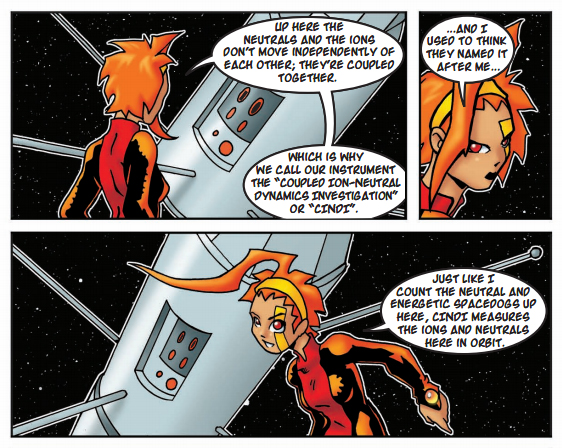
Laura Nielsen, a Frontier Scientist, has been reporting from the AGU Exploration Station in San Francisco, an annual free science event for families and teachers where kids can get hands-on science. Here she met science superhero, Cindi, the Android Space Girl, a real life comic character, who helps to engage children in creative ways. Laura explains that Cindi and her comics go a long way towards helping curiosity and imagination in children flourish:
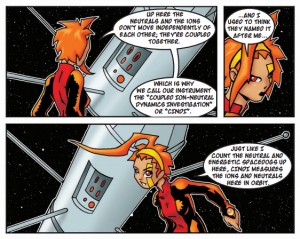
CINDI IN SPACE with artwork by Erik Levold — NASA: CINDI Small Explorer Mission: Story by Dr. Mary Urquhart and Dr. Marc Hairston

You can find the free, complete comics online, as well as educational materials to aid in lesson plans. According to NASA, the third instalment of the Cindi series, Cindi in the Solar Wind, is upcoming. Find out more about this initiative in Laura’s post.

I’m an Engineer, Get me Out of Here!

This week marked the official start of I’m an Engineer, Get me Out of Here! an engineering enrichment and engagement activity funded by a grant from the Royal Academy of Engineering. The event is a spin-off of the exceedingly popular, I’m a Scientist, Get me Out of Here!an X-factor style competition in which high-school students get to interact with scientists online. Nature Network blogger, Paige Brown, will be participating as an Engineer in the Health Zone this year, she provides more details:

You can visit my I’m an Engineer profile and check out recent questions that students have asked and that myself and the other Health Zone engineers have answered here. If you’d like to add to my answers, or correct my science, please leave a comment on this blog post referencing the original question. I will also be posting my answers to select questions on Twitter @FromTheLabBench.

 

Keep an eye on her blog for further updates.

 Sparks fly over graphene energy device

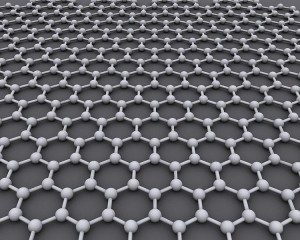
The astonishing claim that graphene can draw on ambient thermal energy to generate electrical current has been attracting scepticism from some materials scientists, revealsEdwin Cartlidgein the News blog. Edwin explains that graphene is a one-atom-thick layer of carbon which has exceptional electrical, thermal and mechanical properties, and has become the ‘buzz material’ du jour:
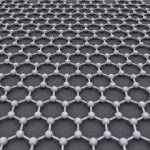
Now, Zihan Xu of the Hong Kong Polytechnic University and colleagues have made what they describe as a ‘graphene battery’ by placing a sheet of graphene about 50mm2 onto a silicon substrate, attaching gold and silver electrodes to its ends, and then immersing it in a solution of copper chloride. The device generated a voltage of around 0.35V for some 25 days; six of them in series could power a light-emitting diode.

So where does the voltage come from? You can find out more in the post. If you want to learn more about graphene, this is the focus of the latest Nature Outlook, so do check it out.

Pashmina Goat

Subhra Priyadarshini reveals in the Indigenus blog that after the controversy surrounding the claim over the world’s first buffalo clone three ago, Indian scientists claimed this week to have cloned world’s first pashmina goat. This, they say, was done using an indigenously-developed technique. Subhra elaborates:

The cloned female pashmina kid was born on March 9, 2012, according to reports. The scientists used somatic cells from the ear of a goat to produce the clone. The healthy baby is reportedly under medical observation. The World Bank-funded project was a collaboration between Srinagar-based Sher-e-Kashmir University of Agricultural Sciences and Technology (SKUSAT) and National Dairy Research Institute, Karnal (NDRI).

Continue to the post to find out more.

Neutrinos transmit message through solid rock
Geoffrey Brumfiel explains in the News blog that physicists have successfully transmitted a message from a particle accelerator to an underground detector using neutrinos:

First there was the telegraph, then there was the wireless radio, fibre optics and now… neutrinos? Yes, the scions of physics have successfully transmitted a message from a particle accelerator to an underground detector using the ghostly particles.

Unfortunately, this newest medium is completely useless (for now, anyway).

Find out more in the post.

Resting state’ brain 

Brain scans mapping differences in how brain regions communicate while people lie in an imaging machine, are providing a possible new way to diagnose attention disorders, explains Rebecca Hersher in the Spoonful of Medicine blog. She links out to a video where Michael Milham, of the Child Mind Institute in New York, talks about the work being done on so-called ‘resting state’ brain scans and explains how they are expanding the field of functional MRI:

For more, check out Nature Medicine’s  news feature on the clinical utility of resting state fMRI from the March 2012 issue of Nature Medicine.

The Brain As A Network

Scitable’s blogger Dave Deriso in his latest post, The Brain As A Network, reveals that by studying the brain as a network, it helps to give additional insights to the analysis of neurological dysfunction:

Composed of over 1013 neurons, the human brain has been said to have more synapses than stars in the universe. How do you begin to understand all the madness compressed into the three pound ball of flesh? I have no idea, and I don’t trust anyone who claims to know either. However, there are some clever approaches to chipping away at the problem.

At the systems-level, the brain distributes computation over multiple regions. A good analogy is a peer-to-peer network that distributes number crunching across multiple computers, where each computer is specialized to perform some specific aspect of the computation. Abstract this by simply calling the computers “nodes” (which can represent anything, for example, brain regions) and the connections “edges,” and viola! you have reached the entry point of network theory, which is a quantitative and visual approach to understanding how nodes relate to one another and how networks function as a whole.

Figure: Network Graphs, (Left) Undirected cyclic graph, (Right) Undirected acyclic graph viewed as a tree. 

Finally

Viktor Poor’scartoon shows you an important property of thiol-group containing compounds:

Neutrino oscillations measured with record precision

An elusive parameter quantifying the rate of oscillation of ghostly subatomic neutrinos from one type to another has been measured with precision for the first time.

In a paper released online on 8 March, the Daya Bay Reactor Neutrino Experiment in southern China reports a measurement of the disappearance of antineutrinos produced in the world’s fifth-largest nuclear power plant as they travelled about a kilometre between two sets of three 20-tonne, fluid-filled detectors. It finds that a parameter known as sin2(2θ13) is 0.092. Physicists had speculated that the quantity, the last of three ‘mixing angles’ that quantify rates of neutrino oscillation to be measured precisely, might be as low as zero. That would have made several future neutrino experiments that plan to compare the oscillation rates of neutrinos to those of antineutrinos virtually impossible to carry out; the positive result suggests that those are on firm territory to proceed.

“It’s a happy surprise,” says William Edwards of Lawrence Berkeley National Lab in California, who is the US project and operations manager for the experiment.

In 2011, measurements by the Japanese T2K neutrino experiment, by MINOS at Fermilab in Illinois and by the French reactor experiment Double Chooz, had all pointed to a non-zero value of the last mixing angle, but did so without reaching statistical significance.  The Daya Bay measurement “is a perfect confirmation and a beautiful result,” says Herve de Kerret of Paris 7 University.

Future planned experiments, including NOvA (NuMI Off-Axis Electron-Neutrino Appearance Experiment) at Fermilab, will compare the oscillations of neutrinos to those of antineutrinos in a bid to discover whether matter and antimatter behave in the same way. A finding that they do not — termed a violation of charge–parity (CP) asymmetry — might help to explain why there is so much more matter than antimatter in our universe. “Now we know this is non-zero we can go forward and hunt for CP violation,” says Kam-Biu Luk of Lawrence Berkeley National Lab, who is co-spokesman for the experiment.

The relatively large value of sin2(2θ13) has led the US Department of Energy (DOE), in its 2013 budget request to Congress, to speculate that NOvA might be able to resolve outstanding questions in neutrino physics. That might remove the need for a future, more ambitious neutrino experiment known as the Long Baseline Neutrino Experiment (LBNE), which will send a neutrino beam more than 1,000 kilometres across the United States to compare the rates of neutrino and antineutrino oscillations. A decision on whether LBNE will go ahead is expected from the DOE later this year. Milind Diwan, co-spokesman for LBNE, says that the ability to cast light on CP violation is independent of the value of  sin2(2θ13) — provided the parameter is not zero — and a large baseline experiment such as LBNE will be needed to measure it.

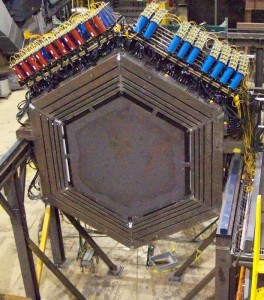
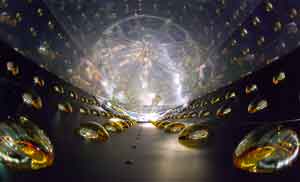
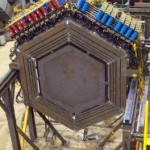
Photo: Photomultiplier tubes line a detector chamber at the Daya Bay Reactor Neutrino Experiment in Guangdong province, China. (Roy Kaltschmidt, Lawrence Berkeley National Laboratory)

 Corrected 9 March: this news blog has been updated to reflect the fact that the content of the detectors is liquid scintillator, not water.

Faster-than-light neutrino measurement has two possible errors

The OPERA collaboration, which made headlines in September with the revolutionary claim to have clocked neutrinos travelling faster than the speed of light, has identified two possible sources of error in its experiment. If true, its result would have violated Einstein’s Special Theory of Relativity, a cornerstone of modern physics.

OPERA had collected data suggesting that neutrinos generated at CERN near Geneva, Switzerland, and sent 730 kilometres to its detector at Gran Sasso National Laboratory in Italy were arriving 60 nanoseconds faster than a light beam would take to travel the same distance. Many physicists were skeptical but the measurement seemed to have been done carefully and reached a statistically significant level.

But according to a statement OPERA began circulating today, two possible problems have now been found with its set-up. As many physicists had speculated might be the case, both are related to the experiment’s pioneering use of Global Positioning System (GPS) signals to synchronize atomic clocks at each end of its neutrino beam. First, the passage of time on the clocks between the arrival of the synchronizing signal has to be interpolated, and OPERA now says that this may not have been done correctly. Second, there was a possible faulty connection between the GPS signal and the OPERA master clock.

An anonymously sourced account on Science Insider today broke the news that OPERA may have made a mistake. That report says that the faulty connection can account exactly for the 60-nanosecond effect. OPERA’s official statement stops short of that, saying instead that its two possible sources of error point in opposite directions and it is still working things out. Its statement reads, in full:

The OPERA Collaboration, by continuing its campaign of verifications on the neutrino velocity measurement, has identified two issues that could significantly affect the reported result. The first one is linked to the oscillator used to produce the events time-stamps in between the GPS synchronizations. The second point is related to the connection of the optical fiber bringing the external GPS signal to the OPERA master clock.

These two issues can modify the neutrino time of flight in opposite directions. While continuing our investigations, in order to unambiguously quantify the effect on the observed result, the Collaboration is looking forward to performing a new measurement of the neutrino velocity as soon as a new bunched beam will be available in 2012. An extensive report on the above mentioned verifications and results will be shortly made available to the scientific committees and agencies.

Caren Hagner, a member of OPERA at the University of Hamburg in Germany, says: “For the moment the collaboration decided not to make a quantitative statement, because we have to recheck and discuss the findings more thoroughly.”

At Fermilab, members of the MINOS collaboration (Main Injector Neutrino Oscillation Search) continue to try to make their own independent measurement of the speed of neutrinos, with initial results expected later this year.

Ghosts of the Universe

frank.jpg This week’s guest blogger, Frank Close, is a particle physicist, author and speaker. He is Professor of Physics at the University of Oxford and a Fellow of Exeter College, Oxford. He is the author of several books, including the best-selling Antimatter, and the winner of the Kelvin Medal of the Institute of Physics for his “outstanding contributions to the public understanding of physics.”

Of all the things that make the universe, the commonest and weirdest are neutrinos*. Able to travel through the earth like a bullet through a bank of fog, they are so shy that half a century after their discovery we still know less about them than all the other varieties of matter that have ever been seen.

These will o’ the wisps are coming up from the ground beneath our feet, emitted by natural radioactivity in rocks, but most of those hereabouts were born in the heart of the Sun less than 10 minutes ago. In just a few seconds the Sun has emitted more neutrinos than there are grains of sand in the deserts and beaches of the world, greater even than the number of atoms in all the humans that have ever lived. As you read this, billions of them are hurtling, unseen, through your eyeballs at almost the speed of light. They pass through the earth as easily as a bullet through a bank of fog.

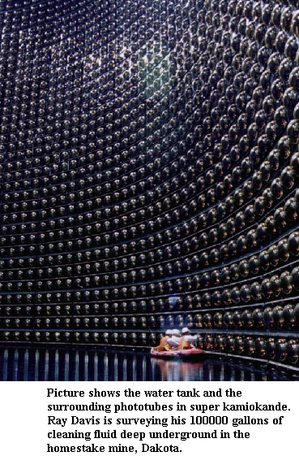
ray davis.bmpIf we could see with neutrino eyes, night would be as bright as day: solar neutrinos shine down on our heads by day and up through our beds by night, undimmed. To capture even a few of them requires thousands of tonnes of material. When Ray Davis began chasing solar neutrinos in 1960, many thought he was attempting the impossible. It nearly turned out to be: 40 years were to pass before he was proved right, winning his Nobel Prize in 2002, aged 87.
Patience is an asset in the neutrino business. Not only was Davis the first human to look inside a star, his legacy is a new science: neutrino astronomy. Not just the Sun; each of the stars visible to the naked eye, and the countless ones seen by the most powerful telescopes, are all filling the void with neutrinos. The neutrinos born in the Sun and stars, numerous though they are, are relative newcomers. Most are fossil relics of the Big Bang, and have been travelling through space unseen for over 13 billion years.

Scientists are now decamping to Antarctica, in the hope of achieving things even more remarkable than even Davis – capturing neutrinos from distant stars, and even some that are remnants of the big bang.

Neutrinos from afar

Apart from the sun, the only star ever seen to shine in neutrinos has been a supernova.

On 23 February 1987, utterly without warning, a supernova was seen to have erupted in the Large Magellanic Cloud, a satellite galaxy of the Milky Way in the southern skies. A blast of neutrinos from this explosion, having travelled across space for 170,000 years, passed through the Earth during about 15 seconds that day. Underground experiments detected a handful of neutrinos from the supernova.

Astrophysicists had long believed that the gravitational collapse of a supernova is a copious source of neutrinos; that the brilliant flash of light, the traditional manifestation of a supernova that can briefly outshine an entire galaxy, is only a minor part of the drama. Powerful though this intense electromagnetic radiation is, the visible light, radio waves, X rays and gamma rays all add up to less than 1 per cent of the whole. The bulk of the energy radiated by the supernova is carried away by neutrinos.

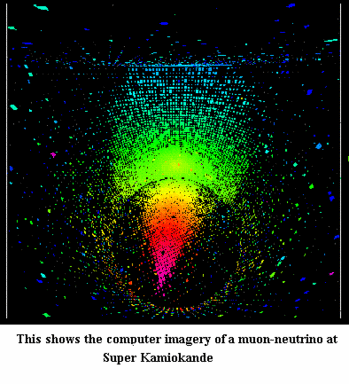
computer image.GIFFor the first time, we had detected neutrinos emanating from outside our galaxy, and proved that the theory of a supernova is right: when stars collapse they throw off their energy as neutrinos, up to 1059 – that’s one followed by 59 zeroes – a hundred billion trillion trillion trillion trillion of them.

Most had spread around the cosmos; only a few passing through the detectors on Earth. Even so, by detecting this momentary blast of neutrinos, we had our first look into the workings of a supernova. This confirmed everything that had previously been just theory: a supernova is the result of a star collapsing to form a neutron star.

Neutrinos on Ice

With the singular exception of supernova, neutrinos from stars in our galaxy and beyond are probably as faint compared to solar neutrinos as is starlight to daylight. To have any chance of capturing them requires detectors containing over a cubic kilometre of matter.

The ingenious solution is Ice Cube, an experiment just beginning at the South Pole, which uses the ice in the Antarctic as a natural detector of the vast numbers of neutrinos that fill the void

Ice in the Antarctic is not like ice that we are used to on a cold winter’s day at home. In the Antarctic, snow has fallen on ice for much longer than recorded-history. Deep down, the pressure is so great that all the air bubbles have been squeezed out, leaving ice so pure that light flashes, produced by neutrinos, can travel hundreds of metres.

Photomultiplier tubes – devices for recording the tell-tale flashes of light – have been lowered into the ice, down shafts that are made by a special drill that sprays out hot water and melts a hole. The detector is attached to a long cable, lowered into the ice, which then freezes it into place. From then on it records data continuously. The set-up is so sensitive that it regularly records neutrinos produced by cosmic rays hitting the atmosphere from all around the globe; some come from directly above the Antarctic, while others have travelled all the way through the Earth, from the North Pole.

Ice Cube will look further into space and into areas – such as the galactic core of the Milky Way – that we’ve never been able to see before. It is possible that neutrinos will interact with the background radiation from the big bang. There may be surprises, even more sensational than anything that has happened so far.

To learn more on this thrilling subject why not come to one of Frank Close’s talks, or read his book Neutrino. Details can be found on his website

*Definition: The neutrino is a sub atomic particle which holds no electrical charge, travels at nearly the speed of light, and passes through ordinary matter nearly unharmed. Neutrinos are emitted in huge numbers by stars like the sun.