Nobel laureates call for release of Iranian physicist

Posted on behalf of Michele Catanzaro.

Golfer_UnlockIran_JR_095.jpg

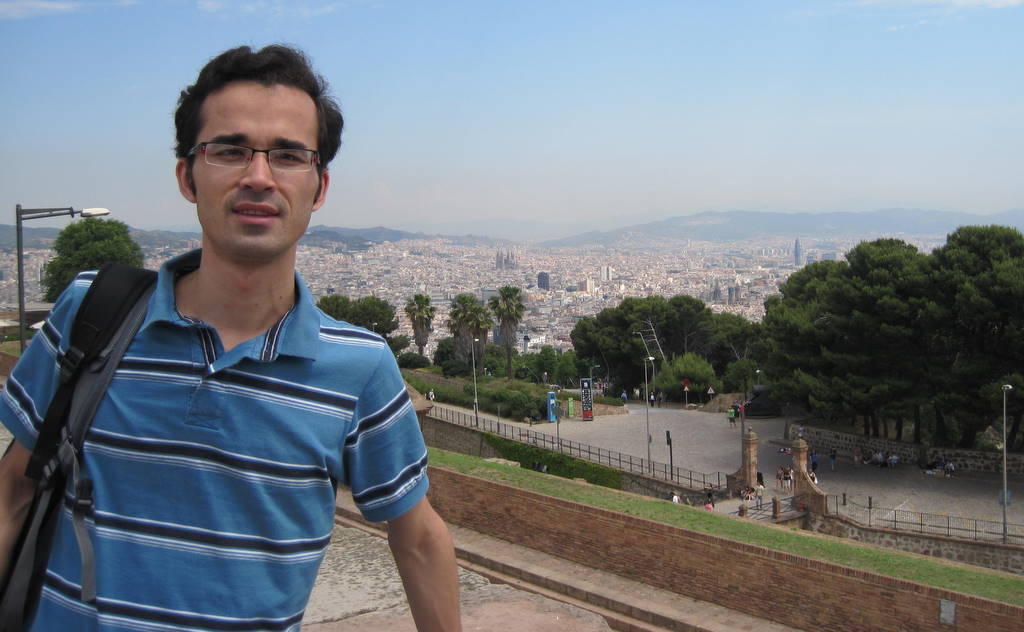
Omid Kokabee (pictured at left) was among 13 Iranian prisoners featured in an exhibition across from the United Nations in New York in February.
{credit}Unlock Iran{/credit}

[Update 14 October: An Iranian court has granted Kokabee a retrial, according to the International Campaign for Human Rights in Iran.]

Eighteen Physics Nobel laureates have signed an open letter addressed to Iranian Supreme Leader Ali Khamenei, calling for the release of Omid Kokabee, a 32-year-old physicist who has spent the last 3 years and 8 months in a Teheran prison.

The letter is a joint initiative by Amnesty International; the Committee of Concerned Scientists (CCS), an international human-rights organization headquartered in New York; and the Committee on the International Freedom of Scientists of the American Physical Society (APS), based in College Park, Maryland.

In January 2011 Kokabee, who at the time was a PhD student at the University of Texas in Austin, was arrested during a visit to his native Iran. He was later sentenced to 10 years of jail on charges of ‘communicating with a hostile government’.

Kokabee denied all charges in an April 2013 open letter, in which he claimed that his jailing was an attempt to pressure him into collaborating with a military research project (see ‘Iranian says he was jailed for refusing to engage in military research‘). Kokabee’s research included work on a type of laser that could be used in nuclear enrichment.

The Nobel laureates’ letter describes the accusations as “spurious charges related to [Kokabee’s] legitimate scholarly ties with academic institutions outside of Iran”. It also urges Khamenei “to exhibit compassion and allow him to return to his studies”.

Eugene Chudnovsky, the co-chair of the Committee of Concerned Scientists, says that the letter’s release has been timed to coincide with Iranian president Hassan Rouhani’s visit at the United Nations (UN) in New York, where on 25 September he addressed the UN General Assembly.

Earlier this month, the CCS has said that Kokabee’s health conditions have worsened, and that he was allegedly being denied medical care.

Kokabee has received sustained support from the international scientific community since Nature first covered his case in the West. In 2013, he was awarded the APS Andrei Sakharov Prize, which recognizes scientists who promote human rights. Amnesty International declared him to be a prisoner of conscience last year.

In March Kokabee submitted a paper to the physics preprint archive, signed from Teheran’s Evin jail. He has also submitted several contributions to local and international optics conferences, among them the 2014 Conference on Lasers and Electro-Optics (CLEO), which took place in June in California. Although some of these papers were accepted, he was allegedly denied permission to leave the jail temporarily to attend any of those conferences.

The Nobel laureates who signed the open letter are Alexei Abrikosov, Nicolaas Bloembergen, Claude Cohen-Tannoudji, Leon Cooper, Andre Geim, Sheldon Glashow, John Hall, Anthony Hewish, Wolfgang Ketterle, Klaus von Klitzing, Toshihide Maskawa, John Mather, Konstantin Novoselov, Arno Penzias, David Politzer, Jack Steinberger, Daniel Tsui and James Cronin.
UN Security Council says Ebola is security threat

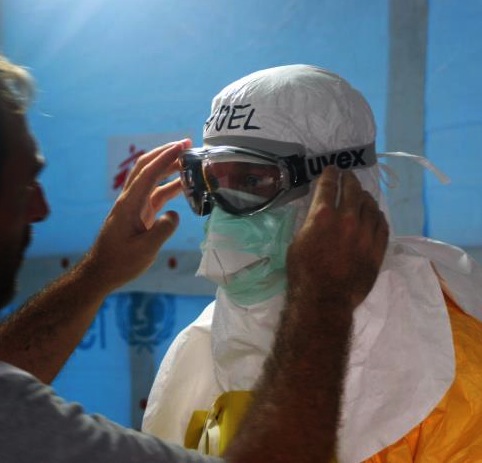
The Ebola outbreak in West Africa is “a threat to international peace and security”, the United Nations (UN) Security Council said on 18 September, in a resolution calling for a massive increase in the resources devoted to stemming the virus’s spread.

EbolaMask

{credit}Centers for Disease Control and Prevention{/credit}

The council is asking countries to send supplies and medical personnel to Liberia, Guinea and Sierra Leone, and seeks to loosen travel restrictions that have hampered outbreak response in those countries. The unusual resolution was co-sponsored by 131 nations and approved at the first emergency council meeting organized in response to a health crisis.

More than 5,300 people are thought to have been infected with Ebola during the current epidemic, and more than 2,600 have died, according to the World Health Organization (WHO) in Geneva, Switzerland.

The pace of the disease’s spread seems to be increasing, with the number of Ebola cases now doubling every three weeks, UN secretary general Ban Ki-moon told the council. “The gravity and scale of the situation now require a level of international action unprecedented for a health emergency,” he said.

WHO director-general Margaret Chan sounded a similarly dire warning. “This is likely the greatest peace-time challenge that the United Nations and its agencies have ever faced,” Chan told the security council.

The UN estimates that an effective response to the Ebola outbreak will cost nearly US$1 billion, double the $490 million figure put forth by the WHO on 28 August. The United States has promised a major influx of resources, with US President Barack Obama announcing on 16 September that he would send 3,000 military personnel and spend roughly $750 million to aid the Ebola fight.

Ban all ivory sales for 10 years, says conservationist

The international community should ban all sales of ivory — including seized tusks and antique pieces that were created when trade was legal — for at least 10 years, argues a peer-reviewed essay published today in Conservation Biology. Without such measures, the epidemic corruption and high demand will ruin attempts to save African elephants, the author says.

The article comes from Elizabeth Bennett, who is vice president for species conservation at the Wildlife Conservation Society (WCS), a non-profit organization based in New York. The WCS has previously voiced opposition to some legal ivory markets, but Bennett told Nature, “This is not a fundamentalist stand that we believe ivory should never be sold”.

She added, “Under current conditions and lack of controls, closing all markets for at least 10 years and after that until poaching no longer threatens wild populations is the only way to get the situation under control and give a break to the elephants.”

Ivory seized in the United States and destroyed in 2013.
Kate Miyamoto / USFWS.

Conservationists have long complained that legal markets, which exist across the globe and can include sales of antique ivory pieces or new carvings of ivory sold legally from stockpiles, are used as a cover for ivory poached from Africa’s elephant herds. Concern has increased as poaching has recently surged in Africa. If a vendor is allowed to trade ivory, it can be difficult to determine whether a given product is actually from a legal source or has been poached and then integrated into the legal market.

But legal markets in other countries have also come under increased scrutiny lately, with New Jersey state banning all trade in elephant ivory and rhino horn this month.

Some countries, including the United States and China, periodically destroy stockpiles of seized ivory to avoid fuelling the growing demand. However some African states are known to be keen keeping limited legal sales, especially of the large amounts of illegal ivory they have seized. Supporters of such ‘one-off sales’ say they can reduce pressure on wild elephants by flooding the market.

In her article, Bennett says legal markets cannot be tolerated because of the level of corruption among government officials in charge of them. She points out that six out of the eight countries identified as the world’s leading offenders in global ivory trafficking are in the bottom half of league of corruption drawn up by Transparency International. And six of the 12 countries in Africa that have elephants populations are also in the half.

“If we are to conserve remaining wild populations, we must close all markets because, under current levels of corruption, they cannot be controlled in a way that does not provide opportunities for illegal ivory being laundered into legal markets,” she writes.

Science is no excuse for Japan’s Antarctic whaling, court rules

Japan’s hugely controversial ‘scientific whaling’ programme is not actually scientific and must be stopped, the International Court of Justice ruled today.

The judgement represents a victory for Australia, which brought the case against Japan, and the conservationists and researchers who have for years maintained that this whaling programme was merely a commercial hunt given a veneer of legality through science.

Since the late 1980s Japan has aimed to catch hundreds of minke whales, plus smaller numbers of other species, in the waters around Antarctica. Japan has previously claimed that its fleet catches whales to study the populations and that the numbers of the animals it catches are small enough to not damage the overall health of the species. This would be allowed under provisions related to scientific research in the international convention that governs commercial whaling.

But the court’s judgement — handed down today in The Hague, the Netherlands — says that although the Antarctic whaling programme can “broadly be characterized as scientific research”, the evidence doesn’t establish that it is reasonable in relation to its stated objectives. In particular, the court notes that there is no evidence that non-lethal methods have been examined, that explanations for the number of animals killed were weak and that there has been “limited scientific output to date” from the programme

“The Court concludes that the special permits granted by Japan for the killing, taking and treating of whales in connection with JARPA II [the Antarctic whaling programme] are not ‘for purposes of scientific research’…,” says the judgement.

Norway and Iceland both have commercial whaling fleets, but do not claim a scientific justification. There are also numerous subsistence hunts in Denmark, Russia and the United States. However, the Japanese hunt has attracted the more international attention than those hunts. Whether today’s judgement will actually halt the country’s commercial hunt remains to be seen.

UPDATE, 1 April 2014

A fisheries report released today by the European Parliament highlights exactly how many whales Japan has caught over the years, in the Antarctic and under another whaling programme in the Pacific. According to media reports, Japan’s representative at the court has said the country could still continue its Pacific whaling.

whale graph jpeg
Source: Fisheries in Japan report.

Switzerland to provide grants while European funding is on hold

The Swiss government is stepping in to support individual researchers currently excluded from receiving grants from the European Union.

Hundreds of Switzerland-based scientists who had applied, or intended to apply, for European Research Council (ERC) grants have been badly hit by the fallout of a referendum last month which obliges the Swiss government to restrict immigration into the country. In response, the European Union suspended talks with Switzerland over its association with the EU’s €80 billion Horizon 2020 research programme, of which the ERC is a part.

To help frustrated ERC applicants who had planned to work in Switzerland, on 10 March the Swiss National Science Foundation (SNSF) announced that it will step in with a temporary grant scheme of its own.

Applicants who intended to apply for an ERC Starting Grant can submit their unchanged proposal to the SNSF between 15 March and 25 March, the SNSF says. Scientists who intended to apply for ERC Consolidator grants have until 20 May to file their proposal with the SNSF. Substitute grants will be comparable in size to those provided by the ERC.

Calls for SNSF grants are open to all scientists who work in Switzerland or who are currently negotiating positions at Swiss research institutions. The transitional scheme will remain in place until a new political agreement is reached over Switzerland’s participation in EU-funded research.

Iranian student awarded human-rights prize while in prison

Posted on behalf of Michele Catanzaro.

Omid Kokabee

Omid Kokabee has said he’s been imprisoned for refusing to join what he thought was a military nuclear programme.
COURTESY OMID KOKABEE

Omid Kokabee, a physics PhD student jailed in Iran since January 2011, was awarded yesterday the 2014 American Physical Society’s Andrei Sakharov Prize for “his courage in refusing to use his physics knowledge to work on projects that he deemed harmful to humanity, in the face of extreme physical and psychological pressure.”

Kokabee has said that he had been pressured to cooperate in Iranian military projects that he thought were likely part of a covert nuclear programme. It is the first time a person is awarded the prize while in prison.

The Sakharov Prize recognizes scientists committed to human rights and is named after the Russian physicist Andrei Sakharov, (1921-1989), who worked on the Soviet hydrogen bomb and later became a dissident. Sakharov received the Peace Nobel prize in 1975.

Along with Kokabee, the American Physical Society (APS) has also presented the 2014 Sakharov prize to Boris Altshuler of the Lebedev Physical Institute, for “his life-long struggle for democracy in Russia and for his advocacy on behalf of the rights of neglected children.”.

Kokabee, 31, did graduate studies in laser physics at the Institute of Photonic Sciences (ICFO) in Barcelona and at the University of Texas in Austin. He was sentenced to 10 years of prison in May 2010 for conspiring against Iran. He denied all accusations in a series of open letters, in which he also denounced ill-treatment in jail. In one letter, published in March, he wrote that the he was jailed for refusing to work on projects that were possibly related to the use of high-powered carbon dioxide laser for isotope separation.

“Kokabee is becoming an icon for science free of pressure from political influence: this independence is much in the spirit of Sakharov,” says Hossein Sadeghpour, a scientist at the Harvard-Smithsonian Center for Astrophysics and the chair of the APS Committee on the International Freedom of Scientists, which nominated the PhD student for the prize. He says that the nomination was supported by letters from prominent physicists, including a Nobel Prize laureate.

“I am happy that the prize is awarded to a person in the Middle East, because the situation of the region is very similar today to Stalin’s Russia,” says Eugene Chudnovsky, a physicist at the City University of New York and a member of the award committee who was himself a victim of repression in the Soviet Union. “Plenty of people are jailed or killed in a fight against freedom of thought.” He adds that the awardee has been selected “in part because Nature […] brought international attention to Omid”.

Now, scientists hope that the prize will improve Kokabee’s situation. The country has a new president, Hassan Rouhani, who is seen as more moderate than his predecessor. “Omid Kokabee’s case presents a good opportunity for Rouhani to show he wants to improve Iran’s human-rights standards”, says Chudnovsky.

In August, an Iranian opposition magazine published a letter in which Kokabee complained for having been refused a temporary prison leave to present results at a physics conference held in late August in Iran. His submission, made from jail, was accepted by the conference organizers, and he was assigned a time slot. Prison authorities argued that they could not afford the security and transport costs, the letter says.

Scaled-back proposals for Antarctic protection draw fire

After Russia blocked ambitious marine-conservation proposals for Antarctica earlier this summer, the United States and New Zealand are now floating a somewhat more modest version of plans that could create the world’s largest marine reserve.

In July, Russian delegates to the Commission for the Conservation of Antarctic Marine Living Resources (CCAMLR) vetoed a joint New Zealand–United States proposal for a vast marine reserve in the Ross Sea, as well as a separate proposal by Australia, France and the European Union.

The New Zealand–US proposal up for consideration earlier this year called for a ‘marine protected area’ (MPA) size of 2.3 million square kilometres in the Ross Sea, which included a core 1.6 million square kilometres of Antarctic waters that would be off-limits to fishing. In contrast, the new proposal, announced last week ahead of the next CCAMLR meeting, has a no-fishing zone of 1.25 million square kilometres, and a total size of 1.35 million square kilometres.

“It is very disappointing that the New Zealand Government has weakened its proposal,” said Bob Zuur, who  heads the Antarctic and Southern Ocean Initiative of the Washington DC-based World Wildlife Fund, in a statement. “It is also baffling as to why this has happened at this stage in the negotiations. There is a compelling scientific case for a large protected area and the New Zealand Government should have continued acting on the basis of this science.”

On its website the New Zealand ministry of foreign affairs said the revision was due to the fact that CCAMLR’s scientific committee had not been convinced of the evidence for some of the original Ross Sea proposal and the new plan “still protected a full range of habitats, ecosystems and areas of particular ecological significance”. The country remains “strongly committed to creating a marine protected area in the Ross Sea region”.

Campaigners have also expressed concern that New Zealand is now acknowledging that the reserve may not be permanent, saying on its website that this issue will be considered at the CCAMLR meeting in Hobart, Australia, in October.

Russian meteor blast was the largest ever recorded by CTBTO

https://youtu.be/duD0b1UMAnA

The blast on 15 February over the Urals Mountains of a fireball that had entered the Earth’s atmosphere over the Kazakh-Russian border was the largest explosion ever recorded by the Comprehensive Nuclear-Test-Ban Treaty Organization (CTBTO), according to the first detailed analysis of the event. The result is consistent with rougher, early estimates first reported by Nature (see ‘Russian meteor largest in a century’).

Twenty infrasound monitoring stations around the world registered the explosion, scientists report in a paper accepted for publication in Geophysical Research Letters (abstract here). A meteor explosion on 8 October 2009 over Indonesia had been recorded by 17 stations.

Some 460 kilotonnes of trinitrotoluene (TNT) equivalent — almost ten times the energy of the 2009 Indonesia event — were released when the 9,000-tonne object exploded over the Urals city of Chelyabinsk, injuring more than 1,000 people. It was the most energetic confirmed airburst since the explosion in 1908 of the Tunguska meteor over Siberia, which is estimated to have packed between 3 and 5 megatonnes of TNT equivalent. Fireball events in the order of 500 kilotonnes of explosive energy occur, on average, every 75 years.

The team reports that infrasound signals of the Chelyabinsk explosion circled twice around the globe and were recorded until almost 3 days after the event. The data on infrasound propagation can be used for calibrating the performance of the international monitoring network designed to detect violations of the nuclear-test-ban treaty that came into force last year.


Cutbacks kick off kerfuffle over Spanish-German observatory

Spain’s National Research Council (CSIC) and Germany’s Max Planck Society agreed late last month to major budget cuts at the Hispano-German Astronomical Observatory at Calar Alto, Spain.

The new contract cuts the observatory’s 2014-2018 budget from 2010 forecasts (PDF, in Spanish) of more than €3.2 million per year to €1.6 million per year (PDF, in Spanish and English). Then the Max Planck Society, which has contributed nearly two-thirds of the observatory’s budget since 1979 in return for 50% of the facility’s observing time, will leave the joint venture. The decision to drop out is not new; it was part of a 2010 agreement and is part of a shift toward new observatories with different capabilities.

The observatory will start cutting staff this month, and beginning in 2014 it will operate only one of its three instruments, its 3.5-metre telescope. Its remaining 2.2-metre and 1.23-metre telescopes will be available to research teams with the funds to operate them.

“All the medium-size observatories are going through such exercises,” says astronomer Hans-Walter Rix, director of the Max Planck Institute for Astronomy in Heidelberg, the German operating partner of the observatory. In their prime, 2- to 4-metre telescopes such as those at Palomar in California, La Silla in Chile and Kitt Peak in Arizona drew many researchers, but a proliferation of larger telescopes in locations with better observing conditions has changed astronomers’ priorities.

Now top astronomy teams fight for a few nights a year at 8- and 10-metre terrestrial telescopes or even orbiting telescopes. That has freed older medium-size telescopes for longer observing runs.

Calar Alto will fit its 3.5-metre telescope with a new spectrograph and embark on a time-intensive survey for Earth-like planets that would have been difficult or impossible when the telescope was shared by many projects. A European astronomy network, ASTRONET, called the observatory “globally unique” thanks in part to its suite of instruments (PDF, in English).

The cuts have sparked complaints in the Spanish astronomy community. The Institute of Astrophysics of Andalusia, the Spanish operating partner, accused CSIC, which is its parent body, of neglecting scientific criteria in its decision (in Spanish). The Spanish Astronomy Society also notes that despite government promises to consult a scientific panel the CSIC told Spanish astronomers of the budget cut in late May, ahead of a national astronomy commission meeting (in Spanish).

A CSIC spokesperson told Nature that the CSIC held several public meetings where community members and other institutions offered their opinions, but no funding. The observatory’s new director will seek new financial partners to give the observatory continuity after the German departure, the spokesperson says.

Rix says, “there is a bright future for such telescopes” but acknowledges that the Calar Alto budget cuts will mean “probably there will be some less redundancy, reliability, less observing comfort for the users.”

Co-discoverer of ozone hole dies

Posted on behalf of Charlotte Stoddart.

Joe Farman, one of three British scientists who discovered a ‘hole’ in the ozone layer, died on 11 May (see obituaries in The Guardian and The Telegraph).

It was exactly 28 years ago yesterday (on 16 May 1985) that Joe Farman, Brian Gardiner and Jonathan Shanklin published their finding in Nature. It prompted global action to ban chlorofluorocarbons, or CFCs, the man-made chemicals that were breaking down ozone high in the atmosphere. The ozone hole still appears above Antarctica every spring, but it is on the mend and scientists hope that it will be completely healed in the next century.

The paper is the subject of episode two of our new podcast series, The Nature PastCast.

In the podcast, Farman’s colleague Jonathan Shanklin recalls sifting through a backlog of ozone data from the British Antarctic Survey’s station at Halley Bay. At first, he remembers, Farman thought that the springtime dip in ozone was a one-off. Shanklin says he was the ‘little voice’ in the background that convinced Farman that the dip in ozone had happened every spring for several years, demonstrating a systematic decline.

Unfortunately, Farman himself was too unwell to be interviewed for our podcast, but his version of events can be heard in an interview published by the British Library, as part of its Oral Histories project.