When conferences collide with family needs

As a busy scientist with two young children, one of Rebecca Calisi’s most vexing challenges is figuring out how to attend scientific conferences without a huge disruption in family life. Bringing children to conferences is an option, but not all are especially welcoming to the needs of families, especially to mothers with young children.
1008602_10151664484247933_418737272_o (3)

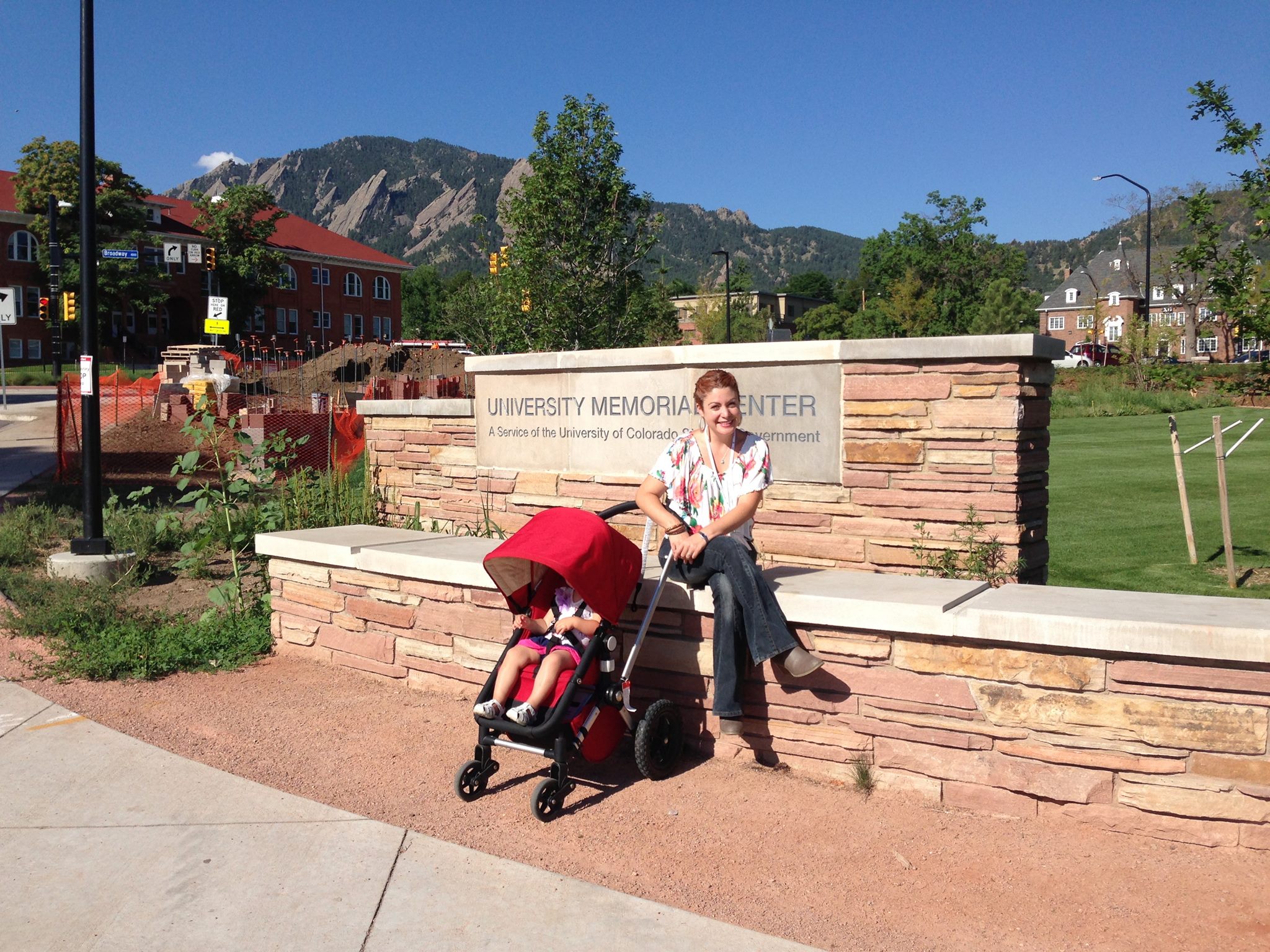
Rebecca and her daughter at the annual conference for the Animal Behavior Society at the University of Colorado in 2013

Calisi, a behavioural neuroscientist at the University of California, Davis, and a group of 45 other scientist-parents, have turned their frustrations into a call for action. In a paper published online Monday in Proceedings of the National Academy of Sciences, the researchers detail the shortcomings of past conferences and offer a blueprint for making conferences more welcoming and accessible to parents of young children.

By not providing accommodations for children, Calisi says, conferences can unintentionally create barriers that exclude large swaths of scientists—especially early-career scientist-mothers who may not be able to afford childcare. “One part of promoting diversity is supporting women with children,” Calisi says. “If institutions say they want to support diversity, they should put their money where there mouth is.”

In the paper, Calisi and co-authors suggest that conferences could fund on-site childcare services, lactation rooms and other amenities by asking for voluntary donations during registration. Exhibitors who make a donation could receive a sign or emblem that show their support. “I guarantee you they would get more foot traffic,” Calisi tells Nature. The paper also calls for all conferences to clearly state that parents are allowed to bring babies to talks and poster sessions. For now, she says, rules about children seem to change from conference to conference and even from hour to hour. She notes that researchers with babies were recently turned away from a poster session at a large conference even though the official policy permitted children in the exhibit area.

A practical, comfortable space for breastfeeding or pumping breast milk is an especially important accommodation, Calisi says. “A lactation room tells you a lot about how much a [scientific] society values women,” she says. In November, she turned to Twitter to complain about the facilities at the Society for Neuroscience (SfN) annual meeting, held last year in Washington DC.  Within hours of that tweet, the society provided more comfortable lounge chairs for mothers. “It’s not that the society was anti-women,” she says. “They just didn’t know.”

SfN, for its part, aims to become more inclusive. “The society is actively exploring ways to continue to enhance the spaces for nursing mothers in San Diego [California] this year and at SfN’s future meetings,” says society spokesperson Kara Flynn in a statement to Nature. She adds that the society is committed to “fostering a welcome and diverse community in which all scientists are able to contribute fully.”

Some conferences are already parent-friendly, Calisi says. She recently attended the annual meeting of the American Academy for the Advancement in Science in Austin, Texas, where the lactation room was comfortable and easily accessible. “I gave them two thumbs up,” she says.

Chris Woolston is a freelance writer in Billings, Montana.


Suggested posts:
The single scientist-parent

Motherhood and science 

From the frontlines 

March for Science 2018 gears up

Organisers of the second annual March for Science , scheduled for 14 April in Washington DC, are hoping to recapture the energy and enthusiasm that prompted more than 1 million researchers and others to march together last year across 600 cities around the world in support of evidence-based policy and upholding science for the greater good.

MarchforScience-Judith-2-smaller

Caroline Weinberg, an organizer for the upcoming march in Washington DC, expects smaller crowds than last year, although she admits her prediction may again be off the mark. “Last we expected 40,000 people, and we got around 100,000,” she says. She adds that most of the marchers in the nation’s capital city were concerned citizens, not practicing researchers.

In Washington DC and elsewhere, organisers envision events with fewer marchers, placards and chants but more advocacy-related activities. Weinberg and others aim to offer hands-on projects for those taking to the streets in Washington DC. In Berlin, Germany, organisers are planning a “local hero” programme where scientists will give public talks at bars, cafes and other venues. March-related activities in Portland, Oregon, will include speeches by local politicians and a science expo with at least 30 presenters, including a juggler who demonstrates the principles of physics.

The election and inauguration of Donald Trump for US president helped to spur marchers last year, and Weinberg says that she suspects that some scientists this year may be motivated to speak out against Trump’s recent budget proposal, which called for drastic cuts to the US Centers for Disease Control and Prevention spending plan . But she adds that the march and other forms of science activism shouldn’t depend on crises to draw interest and participation. “Our challenge is to build up a huge crowd and send a message that galvanizes everyone but to also make it sustainable,” she says. “We can’t allow our advocacy to be tethered to those moments.”

Roughly 15,000 people attended last year’s march in Portland, but that kind of enthusiasm will be hard to replicate, says Denesa Oberbeck, a behavioral neuroscientist at the Oregon Health & Science University in Portland and a member of the steering committee for this year’s march. “There’s some fatigue and some burnout, but we need to keep fighting,” she says. “We have to maintain an activist stance.”

Kristine Wadosky, a cancer researcher at Roswell Park Cancer Institute in Buffalo, New York, marched in Washington DC last year carrying a sign that read “Curing cancer is non-partisan.”  This year, she plans to join the march in Chicago, Illinois, where she will give a talk on advanced prostate cancer for the annual meeting of the American Association for Cancer Research. She says that she’s just as energized about science advocacy as ever before, and she thinks that many other young scientists feel the same way.

This time, Wadosky says, she won’t need a sign to send her message, which isn’t especially complicated. “I just want to go to show that I’m a scientists, and I exist,” she says.


Chris Woolston is a freelance writer in Billings, Montana.


Suggested reading:

Growing pains
In support of the March
Reflections on a movement

Rescued pets from field sites, plus other scientific career tales on video

Cats and dogs that live on or around field sites can become cherished companions, but what is the best way for researchers to help them? In this week’s Nature careers feature meet Fred and other animals who stole the heart of scientists in the field. To whet your appetite before reading Traci Watson’s article, we’ve produced this little video. Continue reading

Why scientists should communicate science – getting to the heart of the matter

Communicating science effectively needs more than facts, says Eileen Parkes.

communication

{credit}iStockphoto/Thinkstock{/credit}

Continue reading

Building skills through a gig

Some researchers are providing short-term services such as writing science news articles and consulting on industry products to bolster their skills outside the lab. These side gigs can be valuable for career development, says Josh Henkin. (See related story here.)

GettyImages-95692019-smaller

{credit}Noel Hendrickson/Getty{/credit}

Continue reading

The Naturejobs Career Expo – some secrets to scientific success

Naturejobs journalism competition winner Eileen Parkes

Over one thousand scientists attended the Naturejobs Career Expo last week in London. With professional CV checking, exhibitors from academic institutions and companies from around the world, and career-focused talks from Nobel Prize winner Professor Venki Ramakrishnan, science communication expert David Urry, popular blogger and senior lecturer Dr John Tregoning and many more, this was a resource-packed event for researchers.

Spending the day absorbing so much great careers advice left me feeling punch-drunk by the end.  Some themes cropped up repeatedly — distilled wisdom on scientific success.

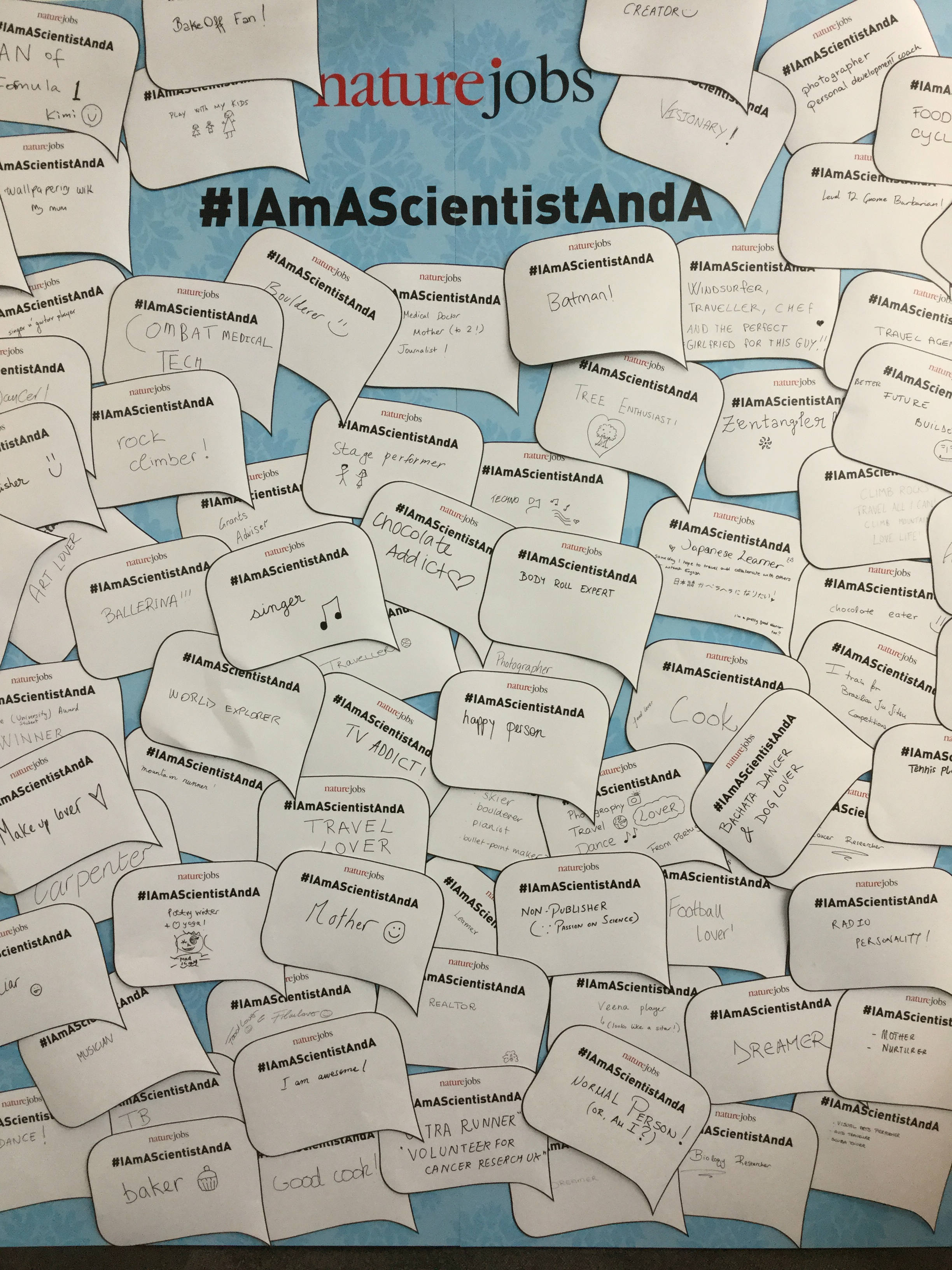
Some of the submissions to the Naturejobs Career Expo photoboth

Some of the submissions to the Naturejobs Career Expo photoboth

Continue reading

Communication: talk to peers and the general public

Effective communication will improve the value of scientific discoveries, says Eleni Wood

As scientists, our work is often driven by data collection and results. But a key step in the scientific process, and one that increases the value of our findings, is the effective communication of our investigative processes and results. Science communication is not only important within our fields for the advancement of our disciplines – communication to other audiences also influences the public perception and credibility of scientists and the work we do.

network-1911678_1920 Continue reading

Social media as a scientist: a very quick guide

By Beth Kenkel

This condensed social media guide for scientists provides key facts about how researchers report using social media and concrete examples of how you can use LinkedIn, Twitter and Facebook to network, exchange scientific ideas, or advance a career. This is an all ages guide designed for scientists at any career stage.


Illustrator Vector EPS file (any size), High Resolution JPEG preview (5417 x 5417 px) and Transparent PNG (5417 x 5417 px) included. Each element is named, grouped and layered separately. Very easy to edit. Continue reading