
 Mark Clemons has published over 250 papers over the past two-plus decades, nearly all of them involving breast cancer. So imagine his surprise when Clemons, a medical oncologist at the University of Ottawa, Canada, received a flattering email inviting him to submit his work to, of all places, a journal focusing on yoga research.
Tag Archives: open access
How useful are your publications?

Simple considerations when writing an article can make your work more accessible to a broader readership, finds Matthew Edmonds.
We’re delivering on open access. Will you join us?

This blog comes from Steven Inchcoombe, Chief Publishing Officer, Springer Nature
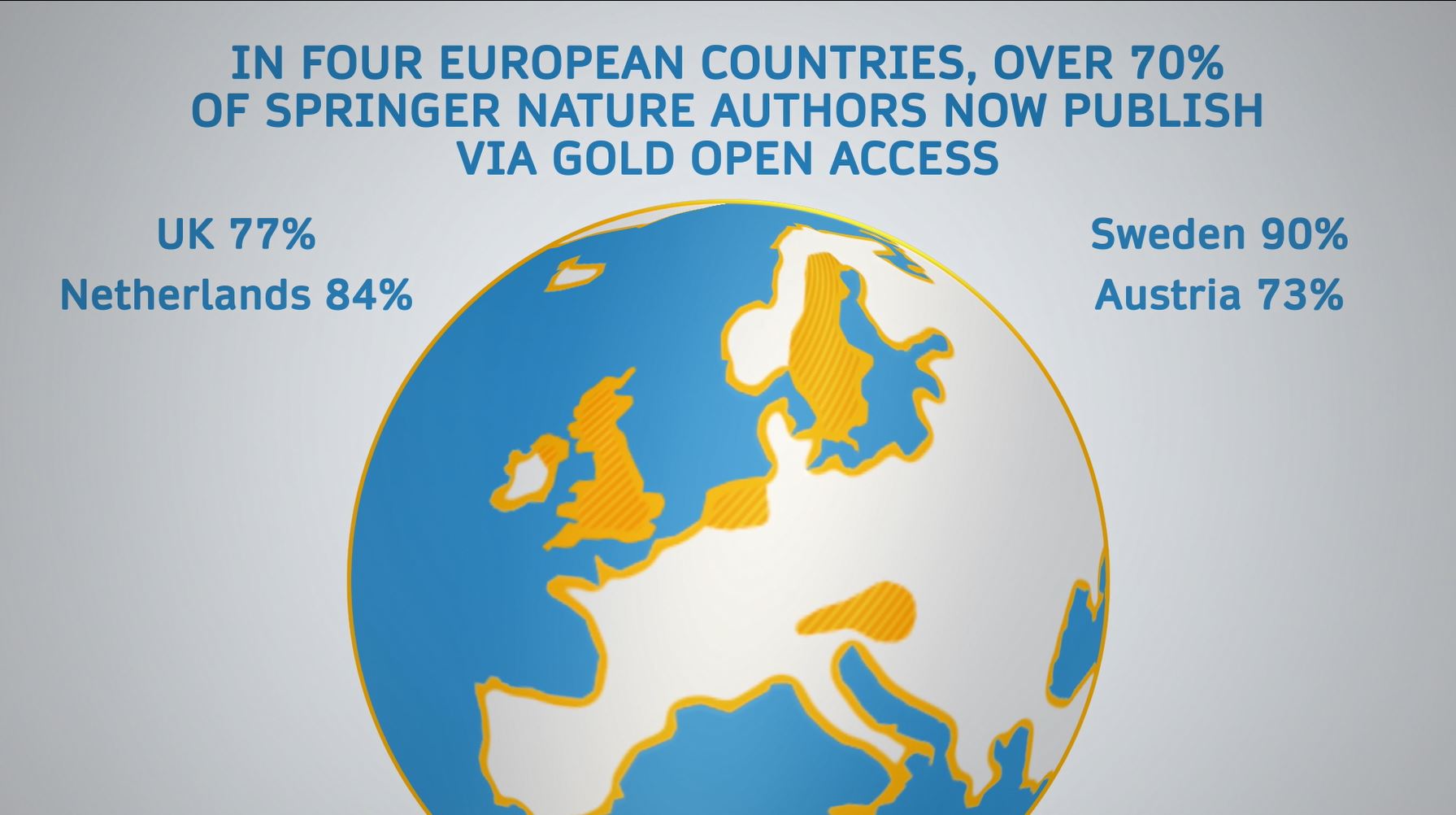
 At the start of 2017 Open Access Week, today we’re delighted to announce that we have reached a significant milestone in advancing discovery through open research. In four European countries, over 70% of Springer Nature’s journal articles are being immediately published (gold) open access.
This includes:
- Over 77% of corresponding authors based in the UK
- Over 90% of corresponding authors based in Sweden
- Over 84% of corresponding authors based in the Netherlands
- Over 73% of corresponding authors based in Austria
The rise of open access as a publishing model is not surprising, because the benefits are clear. Today globally, 27% of all research published by Springer Nature is now published under an immediate gold open access model. This is good, but it can and should be better. We will continue to strive to make it so. Why? Because we believe that open approaches benefit the whole scientific and research community, facilitate collaboration, aid the application of research to solve real-world problems, and foster economic growth, increase the public’s appreciation of research and in summary, advance discovery.
What might be surprising is the scale of this achievement in the four markets listed above, which has been made possible through a unique environment, with four key factors in the recipe for success:
- Support from governments and institutions who back open access
- Funders who fund APCs
- Authors who are willing to publish via open access
- A publisher providing authors with a wide range of attractive publishing options,
….together they make the transition to open access a reality.
Springer Nature has a long history of innovation across journals, books, and databases, our publishing platforms and ways in which content can be discovered, used, re-used and shared by humans and machines. Of course at the same time we believe in academic freedom and respect author choice, so we will continue to offer a range of traditional models for as long as there is demand, and indeed today many of these continue to be the most widely used in our portfolio.*
But we’ve now developed and offer open access options for authors at all levels (via BMC, Springer, Nature Research and Palgrave Macmillan) and across all disciplines. We’ve also taken risks by flipping some of our best-known journals to open models (for example Nature Communications) and will continue to push the boundaries with our fast-developing open access books program and new open data and data management services.
We now publish 630 fully open access journals, and over 1800 Springer Open Choice (hybrid) journals. All of the countries where we have achieved this phenomenal result are where we have Compact agreements. Compact offers our partners significantly more value and reduces their administrative burden by taking a holistic approach and combining their local Publishing Fees with their global Access/Reading Fees, facilitating the transition that we are trying hard to support.
Liam Earney, Director of Jisc Collections said: “Since its launch in 2016, the Springer Compact agreement has seen an almost complete flip in the number of articles from UK authors made open access instead of paywalled in Springer journals. This growth has only been possible because of the work done by colleagues at Jisc, Springer Nature and most importantly institutions to review and improve the workflow for institutions and authors and the efforts made to ensure that the Springer Compact agreement was affordable and sustainable.”
As a result, we are now uniquely placed among publishers to show it is possible to ‘flip’ entire countries, not just journals.
It wouldn’t work in every country, nor will it work in every discipline (not yet anyway) but we are making progress. We are on a journey, from traditional publishing methods to open access, open research, and beyond. But we can’t succeed alone. We’re calling for the research community, from funders to institutions, authors and editors to partner with us in making that happen.
We’re open in order to advance discovery. Will you join us?
*We continue to extend access to our subscription-only titles via our Springer Nature SharedIt content-sharing initiative, which provides authors and subscribers with shareable links to view-only versions of their published papers; via our liberal self-archiving policy, which permits authors to self-archive their accepted manuscript from shortly after first online publication; and through our collaboration with the Research4Life programme to provide access to institutions in low-income countries.
Communication: talk to peers and the general public
Effective communication will improve the value of scientific discoveries, says Eleni Wood
As scientists, our work is often driven by data collection and results. But a key step in the scientific process, and one that increases the value of our findings, is the effective communication of our investigative processes and results. Science communication is not only important within our fields for the advancement of our disciplines – communication to other audiences also influences the public perception and credibility of scientists and the work we do.
Promoting open science from a pub: the Panton Principles
Follow the Panton Principles to ensure your data is licensed and accessible for immediate reuse, says Atma Ivancevic.
In a world where scientific discovery is driven by impact factor and funding, the idea of open data may seem idealistic. But the open data movement has been growing since the early 2000s, spurred by the rise of big data and computational capabilities. For the sake of reproducibility in science, we need to encourage data sharing after publication.
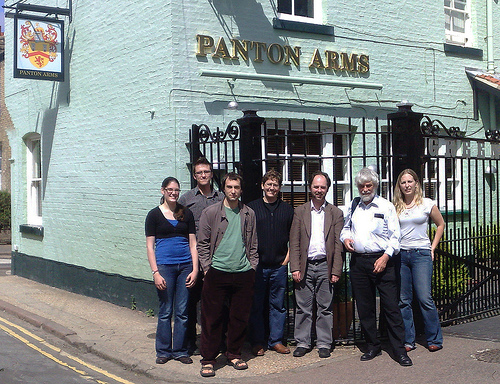
Founders of the Panton Principles at the Panton Arms, Cambridge UK.
Copyright Panton Principles Authors (CC by 3.0).
A day in the life of a Scientific Reports publishing assistant
Jessica Lawler helps shed some light on the publishing business for Scientific Reports and Naturejobs.
Every day in this job, I learn something new. As a publishing assistant, I guide manuscripts through the peer review process at Scientific Reports. As such I handle manuscripts at multiple stages of the process. I like to think of it as following a manuscript’s journey from the lab up out into the world. Each day brings new challenges. Organisational skills are a must.

Jessica Lawler
A day in the life of a Scientific Reports manuscript assistant
William Coleman helps shed some light on the publishing business for Scientific Reports and Naturejobs.
Scientific Reports is a rapidly growing online open access journal that publishes research from all areas of the natural and clinical sciences. As one of over twenty manuscript assistants at the journal, one of my main tasks is to quality check author submissions in our online manuscript tracking system before they’re sent to our editorial board and, potentially, to peer review.

William Coleman
Highlighting genomes for DNA Day 2016

October 2015 cover “Histone butterflies” by Luisa Lente. Inspired by Salvador Dalí.
Today is national DNA day, celebrating the completion of the Human Genome Project in 2003 and the publication of the proposed structure of DNA in 1953 by James Watson and Francis Crick (PDF here).
This year for DNA day, we wanted to highlight papers reporting new genome sequences of organisms from peanuts to Papilio butterflies published in Nature Genetics over the last year. All reference genomes are published open access under a CC-BY licence. Continue reading
Scientific communities: How to avoid getting scooped on social media
Being prepared before broadcasting is a sure way to avoid being scooped, says Jon Tennant at the 2015 London Naturejobs Career Expo.
Many scientists are nervous about sharing their scientific work before publishing. The fear of being scooped is there when it comes to social media, but it will be difficult for someone to scoop your work based on a 140-character sentence.
Sharing your science on social media is all about being selective. You can make data and methods open when you’re ready – there is no rush to get things out before you are prepared.
You are currently viewing a placeholder content from YouTube. To access the actual content, click the button below. Please note that doing so will share data with third-party providers.
Further reading:
Scientific communities: Build your own.
Scientific communities: How to follow the right people on Twitter
Scientific communities: From Twitter to paper
Scientific communities: Membership at learned societies
Scientific communities: How to get your blog noticed
#SciData15: Research Data for Discovery: Prepare to Share
Reply
Speakers at #SciData15 advocated for a wider degree of awareness of the field of data science and the implementation of data sharing technologies.
Guest contributor Caroline Weight
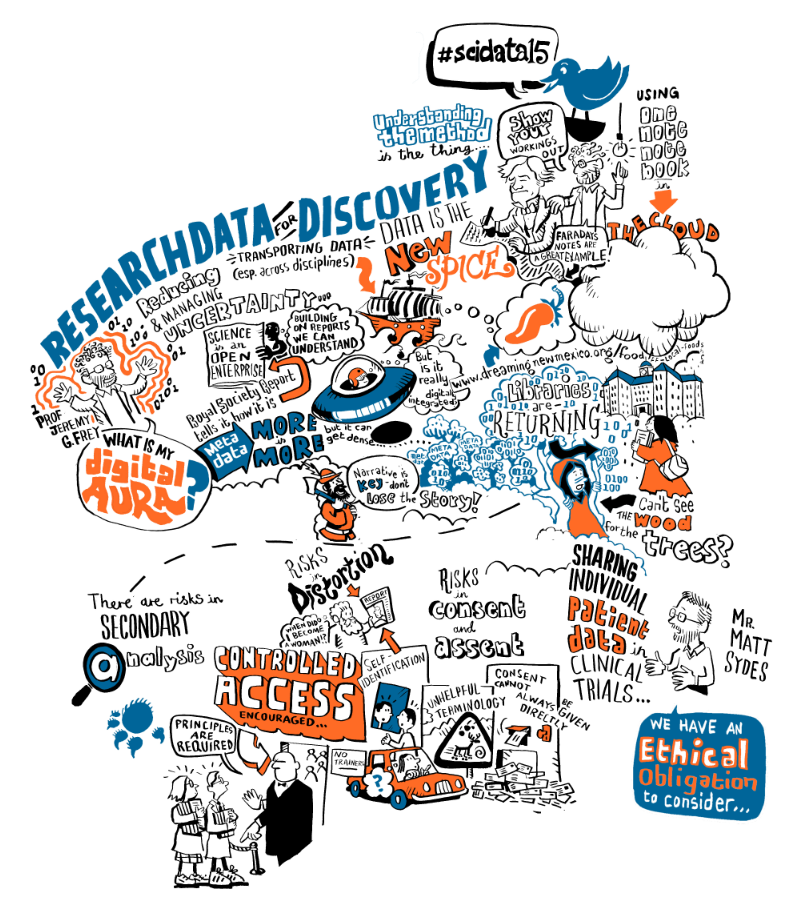
{credit}Image credit: SCIENTIFIC DATA/LUDIC GROUP{/credit}
“We must engage in the idea of sharing,” said conference chair Iain Hrynaszkiewicz as the 2015 Publishing Better Science through Better Data meeting kicked off at the headquarters of Nature Publishing Group (NPG) in London on 23rd October.
Hrynaszkiewicz, who develops new areas of open research publishing and data policy within NPG/Macmillan, noted that 30 funding bodies — including the Engineering and Physical Sciences Research Council and The Royal Society — have written policies that outline requirements for data-sharing. Examples include detailed methods and protocols, microscopy images and mathematical workings, as well as meta-datasets of, for example, genotypes and microarrays.
The meeting’s aims were to increase awareness of ways to effectively share data and to discuss how to improve the efficiency, implementation and overall impact of sharing among the scientific community. A recurring issue throughout the day was how to enforce sharing, and get the concept to become part of standard, everyday scientific practice –one that seeps into the lives and habits of working researchers. Continue reading