Surviving academia as an early career researcher: an unreliable guide

Being an early career researcher is exciting but terrifying. Use this guide to make the most of your PhD or postdoc experience, says Atma Ivancevic.

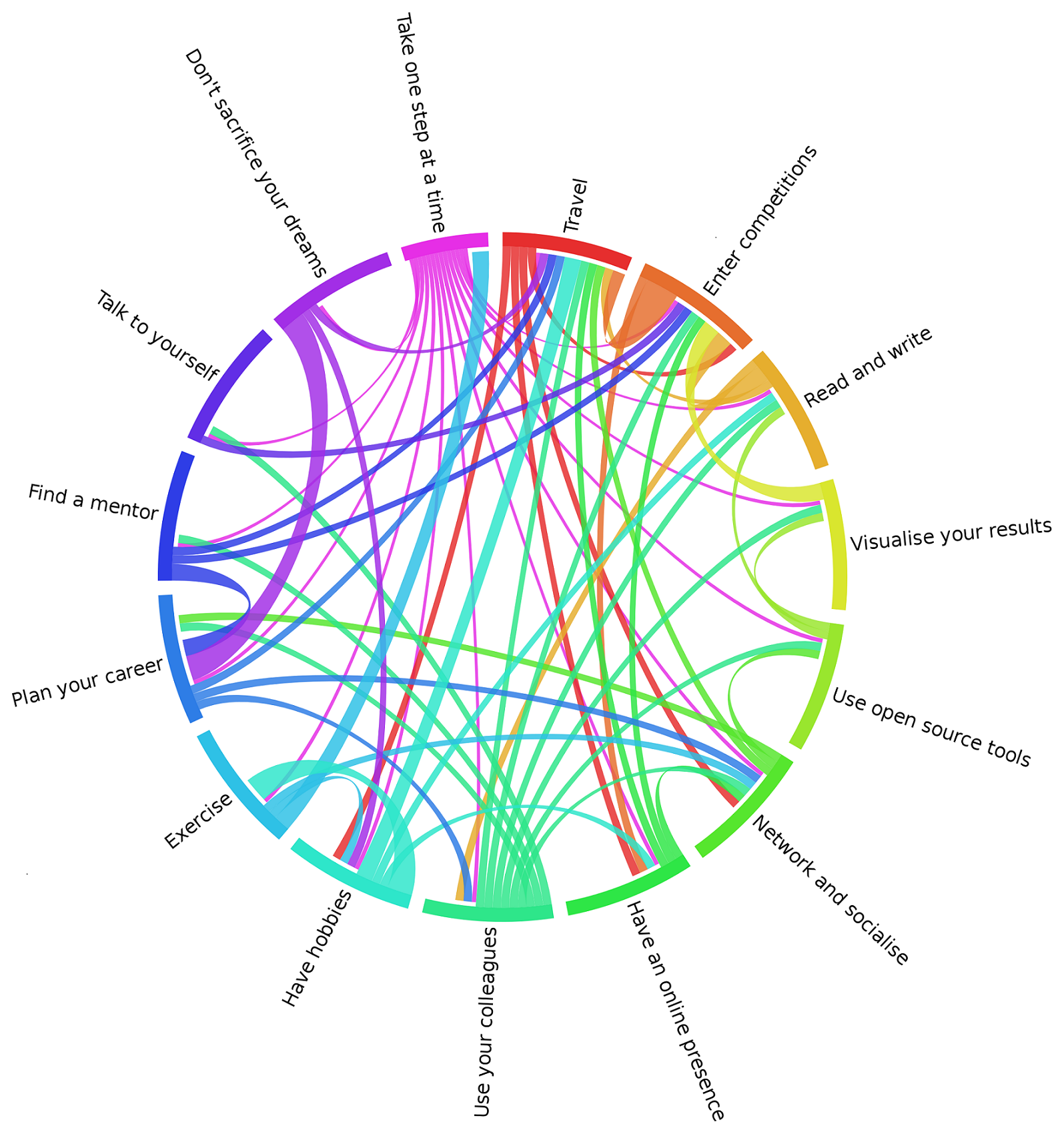
In today’s cut-throat world of grants and publications, being an early career researcher (ECR) can feel more than a little daunting. As an ECR myself, I can’t guarantee that this will help you make it to the other side unscathed. But I’m still here, and if you’re reading this, you probably are too. Outlined below are the things I’ve learnt during the ups and downs of post-PhD life.

 

circos-table-myxvjxw-smaller

Continue reading

Promoting open science from a pub: the Panton Principles

Follow the Panton Principles to ensure your data is licensed and accessible for immediate reuse, says Atma Ivancevic.

In a world where scientific discovery is driven by impact factor and funding, the idea of open data may seem idealistic. But the open data movement has been growing since the early 2000s, spurred by the rise of big data and computational capabilities. For the sake of reproducibility in science, we need to encourage data sharing after publication.

panton principles pic

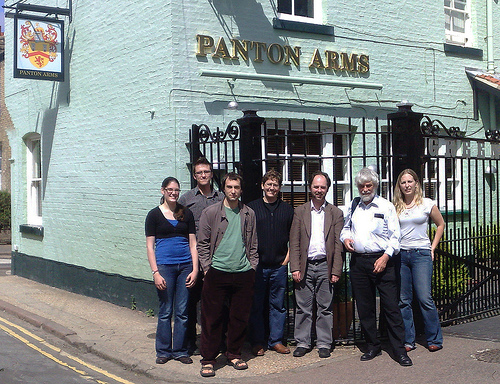
Founders of the Panton Principles at the Panton Arms, Cambridge UK.
Copyright Panton Principles Authors (CC by 3.0).

Continue reading

Naturejobs picks of the week

With Cordova’s election as the NSF director, we’ve been doing some science funding-focussed reading

books

{credit}PhotoDisc/Getty Images{/credit}

So is the amount of science funding available dwindling? Or are we just imagining it? Our reads this week have been looking into how boom-bust cycles are taking shape, how funding proposals are being made and how all of this might just be a myth.

“Without fail, the science community complains about a lack of funding, the business community complains about a lack of translation of research to commercial outcomes, and the government promotes our many achievements, offering up new programs paid for from the termination of previous ones.” Is what Brian Schmidt writes in his article for the Financial Review about the endless boom-bust loop. He’s talking specifically about his experiences in Australia, but they seem to be mirrored in other places.

Even Barack Obama put out a call for more science funding – hoping to increase it by 0.7% according to a SciAm article“In the 2015 proposal, “there’s not enough money to do anything interesting,” says Kevin Wilson, director of public policy at the American Society for Cell Biology in Bethesda, Maryland, which tracks spending at the NIH.” Write the authors  Lauren Morello, Jessica Morrison, Sara Reardon, Jeff Tollefson, Alexandra Witze and Nature magazine.

It isn’t looking good. Jack Hassard blogged about this rather depressing topic too. He summarised some of the key findings from the Chronicle of Higher Education’s survey report “Strapped Scientists Abandon Research and Students” (unfortunately behind a pay wall) by Paul Basken and Paul Voosen. He quotes from the report that “Nearly half have already abandoned an area of investigation they considered central to their lab’s mission. And more than three-quarters have reduced their recruitment of graduate students and research fellows because of economic pressures.” (Read more of his summary on his blog post “Why are scientists abandoning their research?“).

But is it all a myth? Could this funding crisis just be part of something fictional? Are scientists imagining this bust part of the boom-bust cycle? Robert N. Charette thinks so. He did a pretty long form discussion about this (and the lack of science jobs) on Spectrum IEEE with his piece The STEM Crisis is a Myth.

““If there was really a STEM labor market crisis, you’d be seeing very different behaviors from companies,” notes Ron Hira, an associate professor of public policy at the Rochester Institute of Technology, in New York state. “You wouldn’t see companies cutting their retirement contributions, or hiring new workers and giving them worse benefits packages. Instead you would see signing bonuses, you’d see wage increases. You would see these companies really training their incumbent workers.””

So maybe there is light at the end of this potentially mythical tunnel.