Ankita Anirban interviews Nell Freudenberger about her book `Lost and Wanted’ whose protagonist is a theoretical physicist.
`Lost and Wanted’ is a novel about friendship, grief and parenthood. Helen, the protagonist, is coming to terms with the death of her best friend, Charlie, when she begins to receive mysterious texts from her friend’s phone. Her son later claims to have seen Charlie in their house. The story unfolds as Helen tries to explain these seemingly `supernatural’ phenomena, while reflecting on her friendship with Charlie and continuing her academic work.
What is perhaps unusual about this plot is that Helen is a theoretical physicist. Explanations of physics concepts are threaded throughout the narrative, but the execution is not heavy-handed. Rather, physics is a focus of the book only as it is central to Helen’s life and worldview. I found Helen compelling and convincing and it was refreshing to be able to relate to a character, not necessarily in terms of feelings, but simply in her daily routines and concerns as a researcher.
When I finished the book, I wanted to learn about the author and was surprised to find that she did not have a physics background and her previous work was not about science at all. Curious to find out more about her motivation to write this novel and how she found the process, I reached out to her.
What inspired you to write a novel about a physicist?
I wanted to write a book about women and work; about the commitment of a woman to a career that demanded sacrifices of her. In my first draft (which I threw away completely) the narrator was a writer. The problem was that I got bored thinking about something I knew so well, and the writing reflected that. I have a friend from college who is an astrophysicist, and I wrote to him to ask whether he could recommend an introductory undergraduate cosmology textbook. He did, and reading it made me wonder if my female narrator could be a physicist. That idea was terrifying at first because I don’t have a background in science. Usually though, the idea that scares you is the one that’s worth pursuing. I wonder if that’s true in science as well.
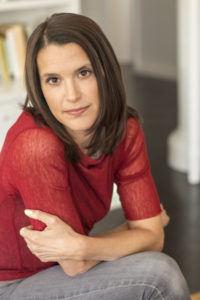
Credit: Elena Seibert
The physics metaphors are `entangled’ with the plot and structure of the book. Which came to you first, the metaphors or the plot?
Characters always come first, followed by plot. I resisted using the science in the book metaphorically at all, at least at first. I really wanted readers to see Helen doing science `onstage’ in the novel, rather than simply throwing in technical jargon to make the reader believe she was a scientist. I thought Helen would be very impatient with scientific metaphors like gravity used to describe romantic attraction, or entanglement for friendship. In talking to physicists though, I started to change my mind. One LIGO experimental physicist told me that our 3D brains have a lot of trouble understanding certain phenomena without leaning on analogies (he was talking about describing black holes quantum mechanically as opposed to classically at the time) and that he wasn’t opposed to them. He said that the trick was to make those metaphors as accurate as possible. I thought that by really trying to understand the work that Helen was doing myself, I might be able to make the scientific concepts in the book more complex and evocative than they normally are in casual conversation.
How did you go about doing your research – both on the technical aspects of the science and also about the daily rhythms of life as a physicist?
To begin with, I read a lot. I’m lucky that many physicists consider it worth their time to write for a general audience. Books by David Kaiser, Lisa Randall, Kip Thorne, Janna Levin, Steven Weinberg, and Louisa Gilder, as well as a sociology of LIGO by Harry Collins and Walter Isaacson’s biography of Einstein, were especially helpful. My reading gave me the confidence to approach some physicists myself and I was fortunate that they were all so generous with their time. I was struck by how passionate these physicists were about their work, and how willing they were to put it in simple terms for a novice. I once had an amusing conference call with two LIGO physicists from the interferometer at Livingston, where they helped me brainstorm violent disasters that might occur in a LIGO lab. (For the record, their ideas were bloodier than mine.) I also visited labs at Columbia and MIT to see some of the equipment that appears in the novel, as well as small details like the objects that might sit on a physicist’s desk, for example, a cosmic microwave background stuffed toy. You can’t make this stuff up …
Did you have any preconceived notions about the life of a physicist which you reconsidered after your research?
I kept trying to find some dramatic way in which physicists saw the world differently. I was thinking about that especially in terms of grief because Charlie’s death is the center of the book. I asked every scientist I spoke to, “Is there something that makes you different from other people because you’re a physicist?” Their answers were very boring; one physicist told me that he’s not afraid of flying, because he understands the way the plane operates. I came to the conclusion that physicists are more like the rest of us than we think, and that Helen should react to loss the same way anyone else would, with some magical thinking—what the literary critic Stephen Greenblatt calls “irrational expectations of recovery.”
As far as preconceived notions go, I’m embarrassed to admit that I didn’t know sexual harassment was as prevalent in the science departments of universities as it is in the humanities. I think I got that wrong because most of my friends in college were liberal arts majors, and because female students in STEM are so underrepresented in popular culture.
How much do you relate to the way Helen sees the world? Does she have a life you think you would enjoy?
I loved learning about Helen’s work. I don’t like the idea that science and the humanities require different types of brains, and the wonderful physicist-writers I read while researching the novel disprove that theory anyway. That said, it seems unlikely that I would’ve made it as a physicist. But if you could build me a theoretical model in which I could have done physics at Helen’s level (or even a less elevated one) I think I would have loved her life. Some readers have said that Helen is cold, or that she sees the world in a strange way; if that’s true, those are qualities I share. I do often feel sort of removed from other people, more of an observer than a participant. I won’t speak for scientists, but I think this is probably true of most writers.
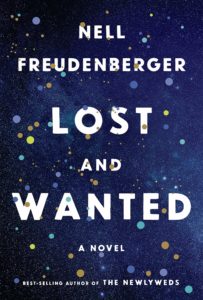
Courtesy of Knopf