Leaving’s never easy. Especially when leaving a world as complex and intricate as academia, says Judith Reichel.


By Judith Reichel
I recently had the pleasure of joining the 67th Lindau Nobel Laureate meeting at Lake Constance in the south of Germany. The weeklong meeting alternates its main focus between chemistry, physics, and medicine & physiology each year — the three categories of natural sciences the Nobel Prizes are awarded for. This year the focus was back on chemistry, and I was lucky enough to be invited by the organisers to cover the event on their blog.
Throughout the week I met handpicked junior researchers, talented fellow science communicators and journalists, and — above all — sat down with Nobel Laureates for one-on-one interviews.
One of them was Martin Chalfie, who won the 2008 prize in Chemistry with Osamu Shimomura and Roger Y. Tsien for their development of the now widely used Green Fluorescent Protein (GFP) tag. Inserting the gene sequence for GFP into a host organism produces the protein within a cell, which allows for the visualization of intricate biological processes.
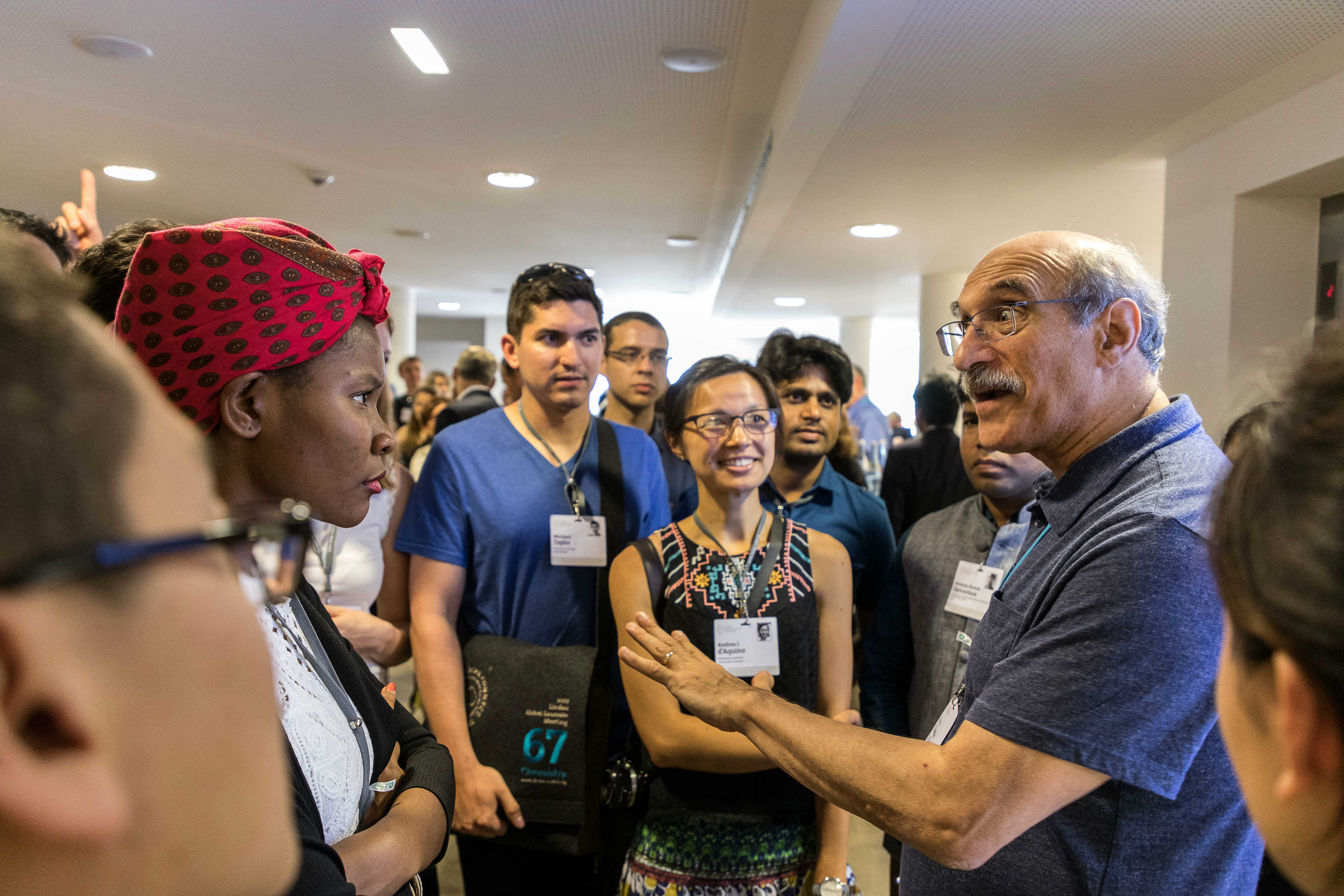
Chalfie talking to students at Lindau 2017{credit}Christian Flemming/Lindau Nobel Laureate Meetings Young Scientists in conversation with Martin Chalfie{/credit}
On Saturday, April 22nd, myself and an estimated 11,000 other science supporters marched in Berlin. The event was part of the global “March for Science” that took place in over 600 cities worldwide. While the March here and everywhere else was a great success in putting a spotlight on the importance of research and the danger of building on false facts, I’m worried it won’t have a lasting effect on the public perception of science if we don’t improve our science communication.
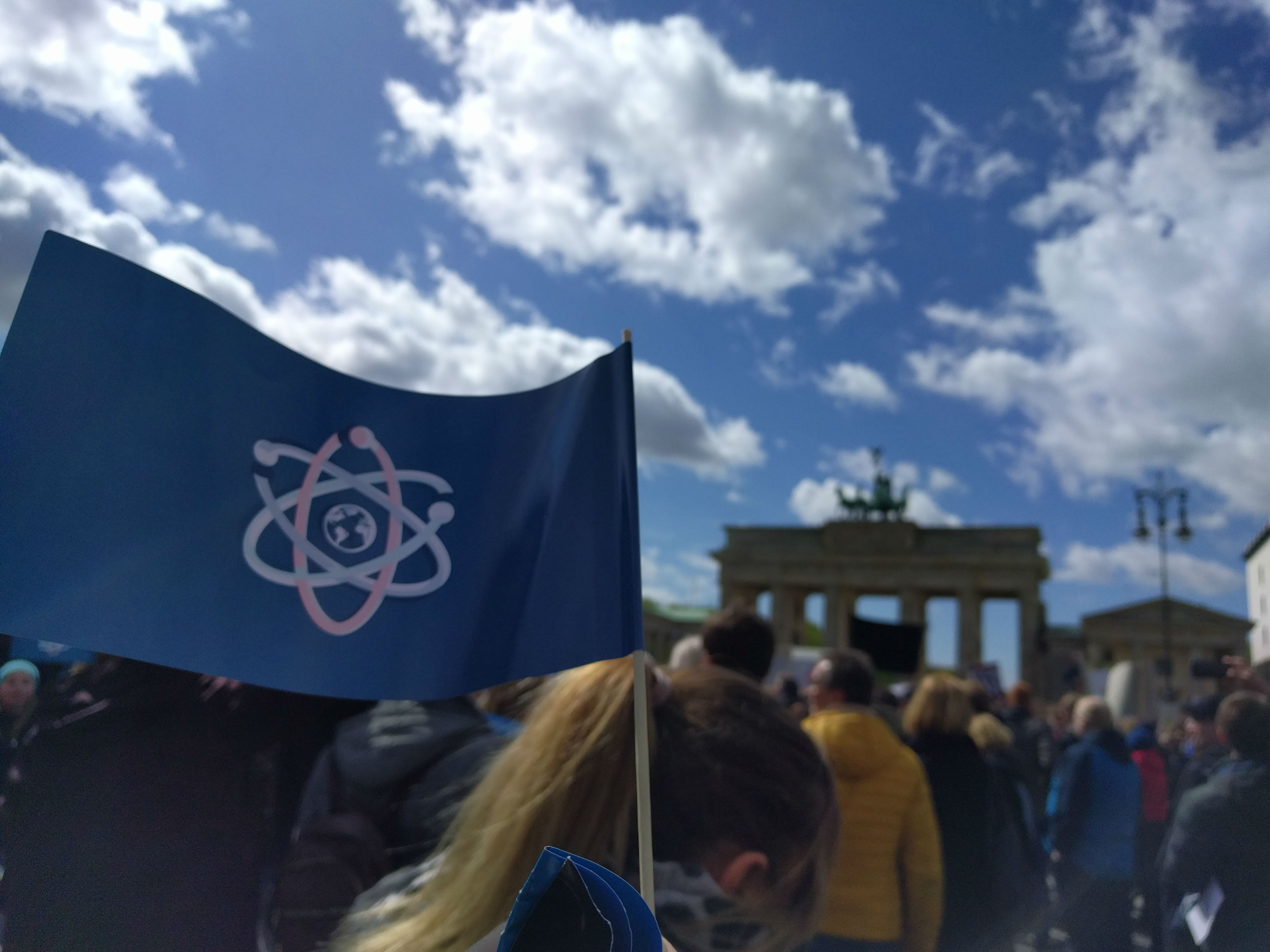
The March for Science passes the Brandenburg gate in Berlin, Germany
There are plenty of reasons to become active in the field of science communication, and for many early career researchers (ECRs) still exploring research, it’s a great way to find their niche and voice their opinions.
Yet, like many of its participants, the field of science communication itself is fairly young, and is constantly evolving from its original aim — to translate scientific findings to the public, in order to raise awareness and funding for the grand scientific endeavor. When 3000 new academic papers are published every day, it‘s impossible for any single scientist to keep track of every development.

Science communication is practiced by a range of journalists, editors, freelance writers and free-time writers, yet the aim remains the same: to communicate important findings in quick soundbites that provide enough information for scientists but are still digestible to the general public. Continue reading
Find a job you love – and you will still have to go to work every day. There are plenty out there; some are great, some are a stepping stone, and some will simply pay the rent. The key is to identify your own strengths and passion, in order to find the perfect job for you.
{credit} Sunny Ripert/Flickr {/credit}
Naturejobs journalism competition winner Judith M. Reichel
Science is a balancing act. There are experiments to be run, grants to be written, manuscripts to be published, students taught, and conferences to attend. It’s not surprising then that the life of a scientist is a balancing act as well. But how can we balance it, and can we “have it all”?