From the archives (2004): Large-scale structural variation in the human genome

Scherer_Lee

{credit}Iafrate et al. Nature Genetics 2004{/credit}

During the past 25 years, Nature Genetics has been lucky to publish many exciting papers, more than a few of which can be described as “landmark” papers—publications that have had a dramatic and long-lasting impact on a field. In 2004, the Journal published such a study by Stephen Scherer, Charles Lee and colleagues (Iafrate et al.) in which they reported 255 loci across the human genome containing large structural variants.

In 2017, the idea that there exist large numbers of structural variants in the genome (such as rearrangements, deletions and insertions) that differ from person to person is an established fact. But in 2004, this was not the prevailing wisdom. Prof. Scherer has already written an excellent essay at The Winnower about the study and its importance to the field, so I won’t recap it in detail here—I will simply encourage you to the read the piece.

Charles Lee wrote us about the study by email. “I saw a talk by Dr. Dan Pinkel at the 2002 ASHG meeting where he presented his latest array CGH findings,” he remembers. “In his talk, one of the slides showed the array CGH results of a trisomy 18 patient and Dan remarked how cleanly his array platform performed, especially for the other chromosomes. But in fact, I (and others, I’m sure) could see that there were actually occasional clones that deviated from the expected log2 ratio of 0. During the question period, I sheepishly asked him about these clones. I really didn’t mean to criticize his platform, but I think that he took it that way. Those “blips” bothered me and when I returned to Boston, John Iafrate (who was a postdoc with me at the time) began our own array CGH experiments. Ironically, there were several other groups that were way ahead of us with respect to technical expertise and experience with array CGH, but it could be that they considered these “blips” as technical artifacts – without biological implications.”

Prof. Lee added, “In late 2003, I gave a talk at the University of Toronto and met Stephen Scherer in person for the first time. In a casual conversation, we realized that we were both using the same 1 MB chromosome microarray platform from Spectral Genomics and that we were both seeing these recurrent ‘blips’ in our data.”

Stephen Scherer also corresponded with us by email about the study and the mutual decision to collaborate with the Lee lab. “We were both were fresh enough to look beyond what others were calling ‘noise’ to realize these aberrations represented intermediate and gene-level copy number variation.”

“Many of us suspected it was there,” he said of the large-scale variation they uncovered, “based on the fact there were lots of smaller indels and that 0.6% of the population carried cytogenetic alterations. We kind of predicted it in our chromosome 7 mapping and sequence paper, but only at the chromosomal level.”
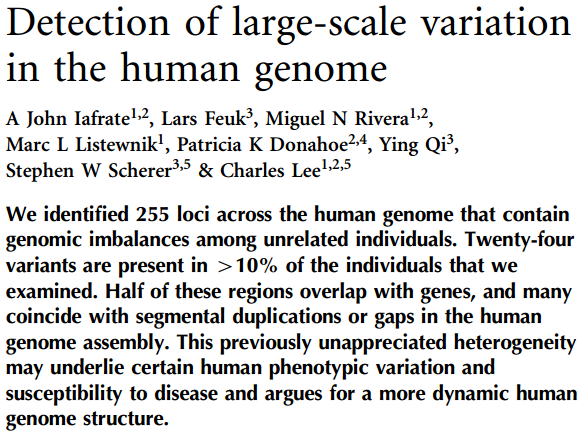
ng1416-F1

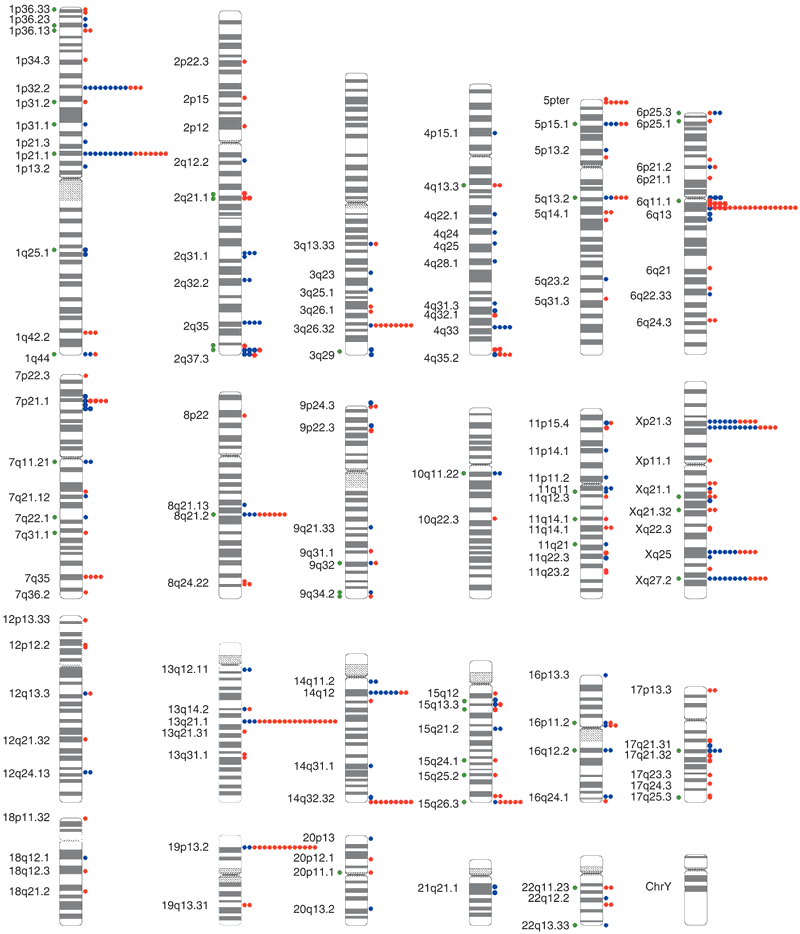
Circles to the right of each chromosome ideogram show the number of individuals with copy gains (blue) and losses (red) for each clone among 39 unrelated, healthy control individuals. Green circles to the left indicate known genome sequence gaps within 100 kb of the clone, or segmental duplications known to overlap the clone, as compared to the Human Recent Segmental Duplication Browser. Cytogenetic band positions are shown to the left. {credit}Fig. 1 from Iafrate et al. 2004{/credit}

The study by Iafrate et al. was published on August 1, 2004. Exactly one week prior, a very similar study by Michael Wigler and colleagues (Sebat et al.) was published in Science. The methods used by the two groups were different, but the findings and implications were consistent with each other. “Charles and I were happy to see the Wigler paper,” said Prof. Scherer, “because nobody believed our results.” Prof. Lee added, “This was one of the most difficult papers for me to publish. The reviewers were very skeptical. We had to keep providing more and more validation data, and one of the reviewers even commented that s/he did not believe that the paper was worthy of being an article and we had to shortened the paper into a Brief Communication. At the end, Reviewer #2, who was persistently negative wrote: ‘… I still feel hesitant about publication of this work in Nature Genetics… and I still doubt the importance and novelty of their work.” Prof. Scherer remembers similar levels of skepticism in the community. “Prior to publication I was showing the data at talks, including one at Michigan where they were trying to recruit me, and I remember getting trashed. People in my own department were mostly the same.”

[I looked up the referee reports and internal notes from the review process and Prof. Lee is correct that at least one of the reviewers was very skeptical about the impact of the study. However, I do want to note the very unusual fact, at least by today’s standards, that the study was published a little more than 2 months after initial submission, according to our records. I wish this was more common!]

After publication, however, the importance of the studies was immediately clear, at least to those working most closely in the field. Nigel Carter contributed a News and Views article in Nature Genetics about the studies. He wrote, “This unexpected level of LCV [large-scale copy-number variation] forces us to re-evaluate our view of the structure of the normal human genome.”

However, Prof. Lee remembers some ongoing skepticism about the work. “For more than 18 months after the paper was published, I had trouble getting grant funding for continuing my work in human copy number variation. Some comments that I received included, ‘If this was real, the Human Genome Project would have found it.’ I am embarrassed to say that I was forced to write for smaller grants on other topics and when funded, did everything I could to complete the projects using less money and use the ‘extra’ funds for my human copy number variation interests. It was very, very frustrating.”

In 2007, Science announced Human Genetic Variation as the Breakthrough of the Year.  “When I saw this article in Science,” Prof. Lee said, “I felt like there was finally some widespread acceptance of our findings in the general scientific community.”

“However, this came with different issues.” For example, he often received the response from the GWAS community that structural variation is interesting, but it is too difficult to incorporate into GWAS. “So, most association studies continued to focus on SNPs, which is a problem that persists to this very day.”

The findings in Iafrate et al. were based on, by today’s standards, a fairly small sample of 55 individuals profiled by array comparative hybridization array comprising ~12% of the genome (the study in Science reported results from 20 individuals using representational oligonucleotide microarray analysis). However, the impact on the field was anything but small. Part of the legacy of the studies was the establishment of the Database of Genomic Variants (originally the Genome Variation Database) that has now collected over 550,000 CNVs. The discovery that so many structural variants are present in our genomes, even in healthy individuals, opened up an entire field of study to understand the function of these variants, and much is still to be discovered (see for example a recent study on the impact of structural variation on human gene expression).

Prof. Scherer summed up the impact of the studies this way: “If you remember the fights between the public Human Genome Project and Celera Genomics, and them finger-pointing to the errors in each other’s assemblies, in many cases these were due to CNV and other structural variations. They had no idea these CNV variants existed. It was really the 2004 Nature Genetics and Science papers, coincident, pure discovery, that opened the eyes of the community and it took some longer than others to believe it.”

From the archives (1995): Guidelines for interpreting and reporting linkage results

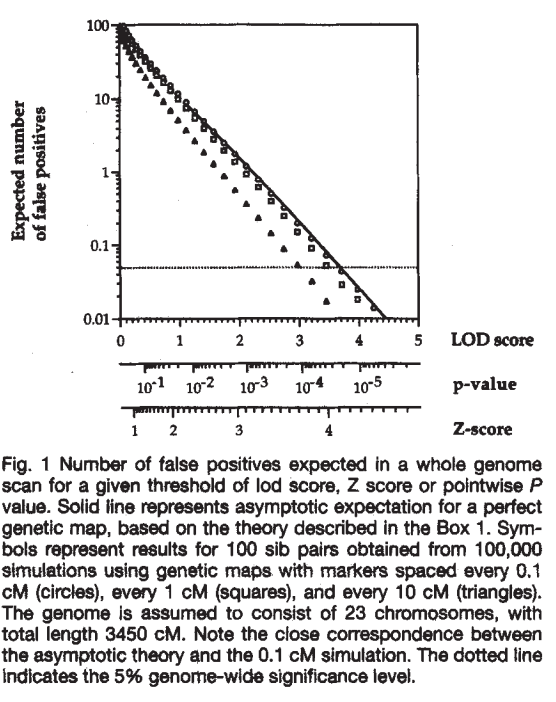
NG1995In 1995, Nature Genetics published a report by Eric Lander and Leonid Kruglyak, recommending clear statistical guidelines for reporting linkage results for complex traits. The paper had an immediate impact, setting the bar for what could or could not be called “significant” in the literature. Although originally focused on human genetic linkage studies, the guidelines set forth by Lander & Kruglyak influenced fields from model organism genetics to plant genetics, and eventually genome-wide association studies (GWAS).

The mid-1990’s was a very exciting time in genetics. The human genome project had recently been announced and advances like microsatellite linkage maps of the human genome and multiplex sequencing technology were now available. Mapping genes underlying complex phenotypes was now a real possibility, and human geneticists were busy prospecting for genetic gold. However, as Lander & Kruglyak cautioned in their paper, the lack of clear guidelines could foster a spate a false positive reports that would, if left unchecked, discredit a the nascent field (for example, see this 1993 paper in Nature Genetics finding no evidence for a previously-reported linkage region for manic depressive illness).

On the other hand, setting too high a bar for reporting significance would mean missing many true signals where they exist, an equally dangerous proposition for a new field. As explained in the paper, “striking the right balance requires both a mathematical understanding of how positive results will occur just by chance and a value judgment about the relative costs of false positives and false negatives.” The paper then outlines the mathematical and statistical arguments in favor of the standards we now all know and love.

Capture

{credit}Lander & Kruglyak, Nature Genetics 1995{/credit}

I spoke with Leonid Kruglyak, co-author of this landmark paper, to get a sense of the context in which this paper came about, and the impact it had on the field at the time of publication. He first explained that it was finally possible to conduct genome-wide linkage studies with hundreds of individuals, allowing linkage mapping methods to be applied to complex traits (for example, this genome-wide screen for schizophrenia susceptibility genes published in the same issue). However, unlike Mendelian genes, there was no clue as to “how many signals there should be, or what their expected sizes were.” Thus, the need for a statistical framework.

This need was recognized as well by the Journal. As Prof Kruglyak recalls, Kevin Davies (founding editor of Nature Genetics) originally commissioned this work as a News & Views article, but it then evolved into a more extensive piece as its implications became clear. However, as he remembers, there was still a very strict deadline for the paper as it had to make the next issue (and these were still the days of hard-copy submissions). At the time, Prof Kruglyak was a young postdoc, so it fell to him to rush to the main FedEx office in downtown Boston before closing time, to make sure the manuscript got to the printer on time.

Prior to submitting the final text, Lander & Kruglyak produced some of the “original preprints”, sending a copy of the paper by snail mail or email to “everyone we knew in statistical genetics”, for comments and suggestions. After all, these guidelines would affect quite a lot of people and “signals that people would like to be results might not be real results anymore”.

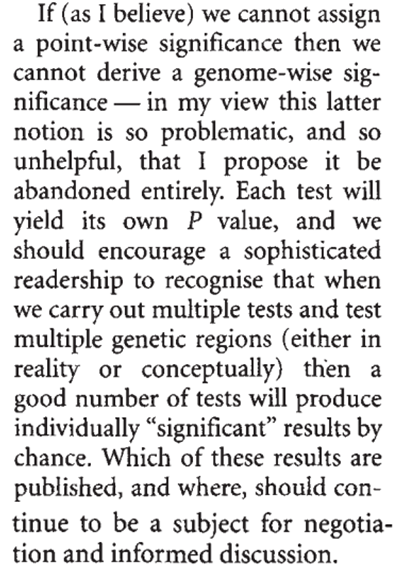
Presentation1

{credit}Curtis, Nature Genetics 1996{/credit}

Following publication, “the reactions came in essentially two flavors,” Prof Kruglyak recalls. There were those who thanked the authors, saying that someone really needed to do this. Others were less enthused. “They said, ‘you’re standing in the way of progress and making it harder to publish.’” In fact, Nature Genetics published two letters to the editor arguing that the proposed genome-wide significance threshold was too strict, or that at the very least additional discussion was warranted before these guidelines were adopted (see the letters here and here, and the authors’ reply here). Personally, I agree with the overall sentiment of Lander & Kruglyak as summed up in this portion of their reply: “The correspondents (all trained statisticians) argue that there is no need for guidelines because everyone should be able to interpret the genomewide significance of pointwise P values on their own. In our view, this is naïve. Most geneticists are not statisticians, and rules of thumb can be extremely helpful in promoting sensible discussion.”

The legacy of this paper is clear to anyone familiar with GWAS. “The GWAS community learned a lot from that whole experience [of false positive linkage reports],” says Prof Kruglyak. “There were many serious statistical geneticists involved [in the GWAS field] from the beginning, with a lot of carryover from the linkage era to the GWAS era.”

“Guidelines are not just ‘external gatekeepers’”, he noted.  They are not just there to tell you what you can and can’t publish. “You know what they say, the easiest person to fool is yourself.” These guidelines were developed to help researchers understand their own findings better and decide which are worth following up. “You can often make up a plausible story, but how strong is the evidence?”

25 years of Nature Genetics


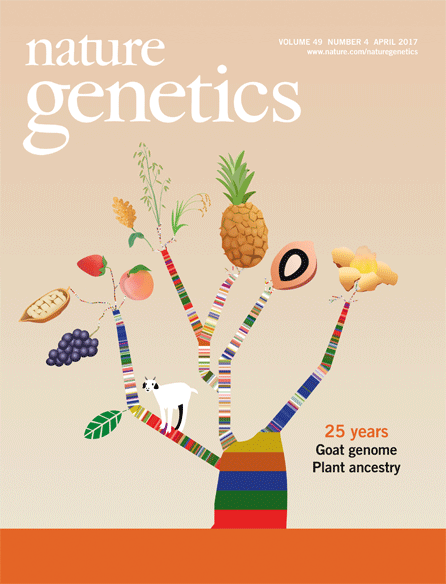
AprilThis April marks the 25th anniversary of the first issue of Nature Genetics, and I think it’s safe to say that the field of genetics has come quite a long way. In 1992, we were still nearly a decade away from the draft human genome sequence, “omics” was not yet a word in common usage, and CRISPR/Cas9 gene editing wasn’t even a pipe dream.

Most of the content in our current issue would have possibly seemed like far-fetched science fiction to geneticists in 1992. Take for instance the new-and-improved domestic goat genome assembly reported on page 643 of this issue, for which multiple, relatively new technologies were employed to create one of the most complete and contiguous genome assemblies to date. However, as the News & Views by Kim Worley exemplifies, science marches on. While the geneticists of the past might have marveled at the possibility of a whole-genome shotgun assembly (indeed, a major advance reported in that first issue was a new technology allowing for automated sequencing of 106kb), Worley refers to the scientists of the present who are “frustrated with the highly fragmented genome sequences available for most species.”

Still, many things have remained the same.

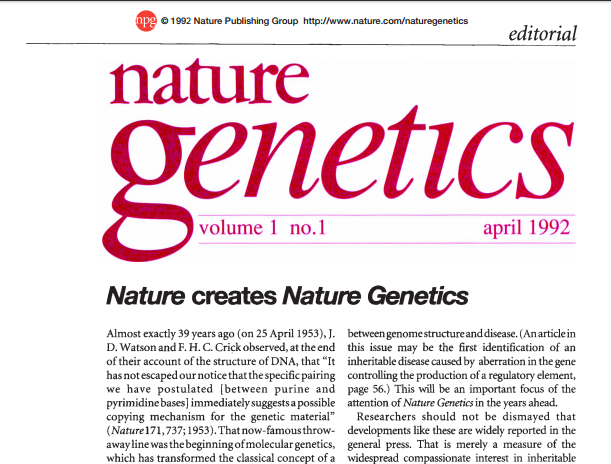
Taking a look back at the very first editorial published in the journal, much of the journal’s mission in 1992 is still applicable to 2017. Take this passage:

“Researchers should not be dismayed that developments like this are widely reported in the general press. That is merely a measure of the widespread compassionate interest in inheritable disease. Who can be but flattered by such public testimony to the importance of a field of research?

“The research community’s interest, rather, is that there should also be a wide general understanding that the identification of an aberrant gene does not imply that there is a cure at hand for the condition for which it is responsible. […] The elucidation of the mechanisms by which genes determine the behaviour of the cells that carry them will be a general preoccupation in the years ahead. Nature Genetics intends to play its part in the publication of this important research, and also of course, in classical genetics that throws light on the human genome.”

NG1992

{credit}doi:10.1038/ng0492-1{/credit}

While there is no denying that important medical advances have been enabled by the identification of disease genes, it is still painfully true that simply finding the gene does not directly lead to a cure on its own. Thus, both the identification of new disease-causing genetic alterations and studies that bring new mechanistic understanding of how a given mutation gives rise to disease are still core to the journal’s scope and aims.

The focus of the journal, as can be seen from this first editorial, was very much on human genetics at the beginning. Model organisms were considered just that, models for human biology. One of the major changes in the journal since that time has been our expansion to genetics (and genomics) more broadly, as represented by the many reference genomes and population genetics studies published for other organisms.

Too many landmarks to count

The editorial published in this month’s issue highlights a few selected articles from our among our more than 5,000 research publications over the years. These are obviously a restricted set of examples, and they are by no means the “best” papers, as such a ranking system would be ill-advised and ultimately useless. But the papers selected cover a wide range (though not all) of the sub-fields represented by the journal. This list includes landmark papers in human genome mapping (Kong et al. 2002) and cataloging of genetic variation (Iafrate et al. 2004); statistical methods that helped drive an entire field of research (Price et al. 2006); Mendelian disease gene discoveries that shed new light on biological mechanisms (Amir et al. 1999); key advances in the field of epigenetics (Heintzman et al. 2007); and advances in crop plant improvement (Ren et al. 2005).

We invite you to take a trip down memory lane and revisit these and other landmark papers from our archives. As a part of the celebration of 25 years of Nature Genetics, the editors will be blogging throughout April to highlight some of our past content.

A brief history of Nature Genetics

Nature Genetics was launched as the first of the Nature Research journals (if we ignore the very brief existence of Nature New Biology and Nature Physical Science in the early 1970s and the earlier version of Nature Biotechnology, Bio/Technology, published first in 1983).

While the history of genetics as field is by far more interesting than the history of a single journal, the occasion of our 25th anniversary has us thinking about our roots. For our 15th anniversary, founding editor Kevin Davies contributed a guest editorial telling the story of how Nature Genetics came about. I highly recommend that you check it out, if you haven’t seen it before.

Another feature of our 15th birthday celebration was the Question of the year. What would you do if the $1,000 genome were a reality today? To read the nearly 50 replies we received from leaders in the field, see the Question of the Year special here: https://go.nature.com/2mTMKBf.

The next 25 years

Just as researchers in 1992 would have been very unlikely able to predict the many breakthroughs that have occurred in genetics over the past 25 years, we have no idea where the next 25 years will take us. The goals will remain the same: to elucidate the mechanisms by which the genetic material produces the many phenotypic variations we see in nature and to identify the causes (and, more hopefully, cures) for human genetic disease.

That said, let’s take a stab at looking toward the future. What do you think will be the next major breakthrough in genetics? What will the field of genetics look like in another 25 years? Tell us below in the comments.

25 years from now, I hope to still be watching as geneticists make some of the greatest discoveries in biology. And I am confident that Nature Genetics will be there, playing its small role in announcing those discoveries to the world.


Joint calling of the ExAC publications

ExAC publications in Nature

We report this week in Nature and Nature Genetics the first publications from the Exome Aggregation Consortium (ExAC), a project that has generated the largest catalogue to date of variation in the protein-coding regions of the genome (known collectively as the exome), aggregating sequence data from over 60,000 individuals from across 21 research studies. Most importantly, they have provided a publicly accessible database (https://exac.broadinstitute.org), which has already become a critical resource for research and clinical studies. While an estimated over 1 million individuals have been exome or whole genome sequenced, only a small fraction of this data has been made publicly available, as there are many challenges to sharing and providing open access to these datasets. We applaud the authors for recognizing this need and meeting these challenges.

This work comes 15 years after we published the Human Genome Project, and follows in a series of community resources to catalogue variation in human genomes within and across populations. We continue to support these efforts, recognizing the necessity of developing these resources to further studies to understand the information encoded in our genome, genetic variation and genetic basis of disease.

Mapping ExAC publications

Very rare genetic variation: a first look

The scale of this sequencing dataset in ExAC has provided some of our first glimpses into very rare genetic variation across populations, with several important early insights. Firstly, the authors identify more than 7.4 million high-confidence genetic variants, on average one every 8 bases, the majority of them entirely novel (not present in any existing database) and extremely rare (more than half of the variants are seen only once across all 60,706 samples). Second, they are able to document recurrent rare mutations emerging independently, providing an estimate of the frequency of recurrence, never observed systematically before due to the need for such large sample sizes. Third, they are able to examine the level of selective constraint against protein-truncating variation, identifying 3,230 genes that appear highly loss-of-function-intolerant. Reassuringly, this includes most known human haploinsufficient disease genes, however 72% do not yet have an established human disease phenotype. While some of these genes may be associated with weaker phenotypes or embryonic lethality, this points to how much more we have yet to understand about the phenotypic consequences of loss of function in human genes.

Copy number variation in ExAC

In a companion paper in Nature Genetics, Douglas Rudefer, Shaun Purcell and colleagues examine rare copy number variation (CNV) with the ExAC dataset, specifically the rates and properties of genic CNVs with <0.5% frequency. They use their previous method XHMM to characterize CNV calls from this exome sequencing dataset. They find that ~70% of individuals carry at least one rare genic CNV, with an average of 0.81 deleted and 1.75 duplicated genes. The authors also estimate relative intolerance to CNVs for each gene. This CNV dataset is incorporated into ExAC and will be useful for continuing population and disease association studies, together with other measures of genic intolerance, and the authors provide an example of this in analysis of a schizophrenia case-control study.

Clinical genetics: classifying pathogenic variation

The current work also brings an important message for clinical genetics in the need for reexamining the literature on classifying pathogenic variation for rare disorders. The average ExAC participant harbors ~54 variants that have previously been classified as causal for a disease, and considering the ascertainment of the study it is likely that most of this may be due to misclassified variants.

Using ExAC as a reference panel for classifying disease relevant variation, Lek et al. review the evidence for pathogenicity of 192 previously reported pathogenic variants for rare Mendelian disorders. Only 9 of these variants had sufficient support for disease association, with a high proportion of these variants present at an implausibly high frequency in the ExAC dataset. This suggests that many of these were false positive associations and incorrectly classified as pathogenic, the implications of which are not merely academic, as these findings are often used in clinical diagnoses and treatment.

In two additional companion publications, the authors take this a step further and demonstrate what is needed to move towards resolution of the nature of these prior associations, by bringing together large case series combined with ExAC. Walsh et al. (Genetics in Medicine, 10.1038/GIM.2016.90 published online August 17, 2016) systematically reexamine evidence for genes implicated in cardiomyopathy, one of the most common and severe rare disorders, and find many well known purported cardiomyopathy genes do not show support for pathogenicity, including some that are included in routine clinical genetic testing. Similarly, Minikel et al. collect 16,025 prion disease cases, the largest case series ever available for prion disease, for which ~10-15% of cases are estimated to be caused by mutations in the PRNP gene. They find a number of variants in PRNP thought to be pathogenic and with high penetrance appear to be likely benign (Minikel et al. Science Translational Medicine 10.1126/scitranslmed.aad5169). This led to a corrected patient diagnosis soon after this report, as Robert Green explained in his Perspective accompanying this publication (Lebo et al. Science Translational Medicine 10.1126/scitranslmed.aad9460).

These findings highlight the necessity to carefully evaluate the literature for rare genetic disorders. This also reinforces the value of large reference panels such as ExAC for filtering variants seen in patient exomes, a practice most of the genomics community has adopted in establishing standards for assessing sequence variants in human disease (MacArthur et al. Nature 508, 469–476 (2014), 10.1038/nature13127). The ExAC project continues to expand in size, hoping to increase to more than 120,000 exome sequences over this next year, as well as 20,000 whole genome sequences, bringing additional sample size, diversity and exploration of non-coding regions that will aid these efforts.

ClinVar and contributing to variant interpretation databases

This project, which relied on the willingness of many large research consortia to provide their raw data, demonstrates the extreme value of promoting the sharing, aggregation and harmonization of genomic data. This is true also for patient genetic variants, as there is a need for databases that provide greater confidence in variant interpretation. NCBI’s ClinVar database, which accepts contributions of clinically annotated genetic variation from clinical labs, clinicians and researchers, has become a key resource for clinical variant interpretation.

Improvements to the landscape of clinical genetics will require continued investment in such variant databases, continued expansion of human genetic reference panels, as well as efforts to link these to phenotype data. Recontacting to obtain phenotype data will be trialed on a subset of the ExAC dataset where consents allow, while new initiatives such as the UK 100,000 Genomes Project and the US Precision Medicine Initiative will also provide linked genome and phenotype information. Finally, enabling the ethical sharing of linked genetic and clinical data without violating participant privacy will require fundamental innovation in regulation and ethics policy, work that has been started by bodies such as the NIH and the Global Alliance for Genomics and Health, but around which considerable uncertainty remains.

Happy DNA Day!

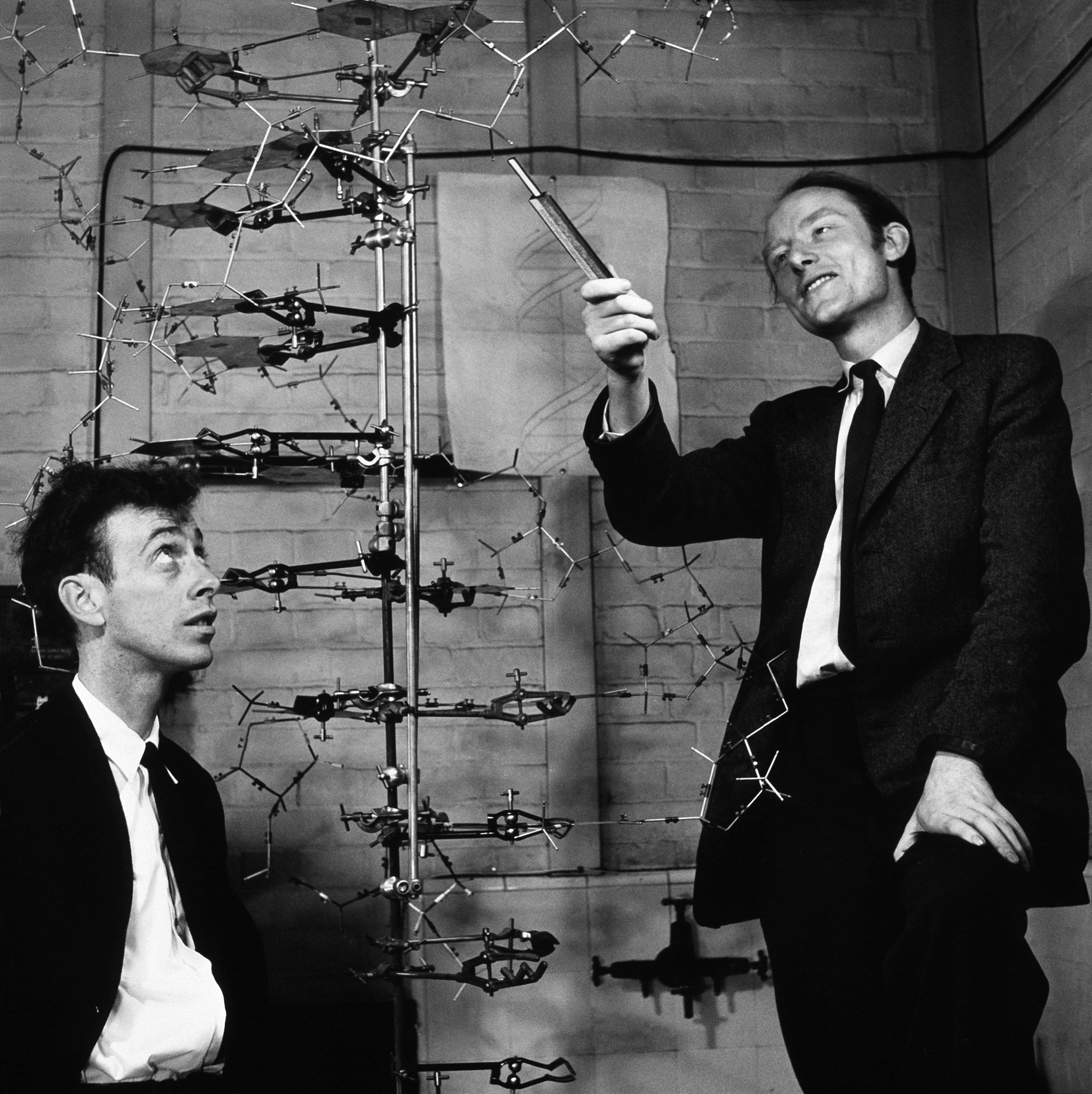
Watson-Crick-DNA-model

“It has not escaped our notice that the specific pairing we have postulated immediately suggests a possible copying mechanism for the genetic material”

Today is the 61st anniversary of the publication of the structure of DNA in Nature by James Watson and Francis Crick. Even though there are no traditional activities for this day, we hope you celebrate it doing something fitting (sequencing your genome, perhaps?).

The U.S. National Human Genome Research Institute has a National DNA Day website geared toward teachers and students, with a host of educational materials and activities centered around DNA Day.

For a little bit of history, you can also read a letter Francis Crick wrote to his son about the discovery of the structure of DNA here. In New York City, students celebrated the occasion by submitting their DNA to the National Genographic project, revealing the diversity of genetic origins amongst New Yorkers.

And finally, if you want to celebrate how far we’ve come since 1953 (and you have a ton of time to waste), you can try your hand at 2048-exome. Sure, maybe you can sequence a whole exome, but can you get to the Nature Genetics tile?


Follow me on Twitter @Brooke_LaFlamme