On the road at #SfN13 – Tackling the terabyte: how should research adapt to the era of big data?

If you’re attending the Society for Neuroscience meeting this year (#SfN13), join us for our panel discussion: ‘Tackling the terabyte: how should research adapt to the era of big data?

When: Monday, November 11, 6:30 – 8:30 p.m.

Where: Hilton San Diego Bayfront, 1 Park Blvd, San Diego, CA 92101  

Room: Sapphire 400

Continue reading

Positive feedback drives network (and manuscript) maturation.

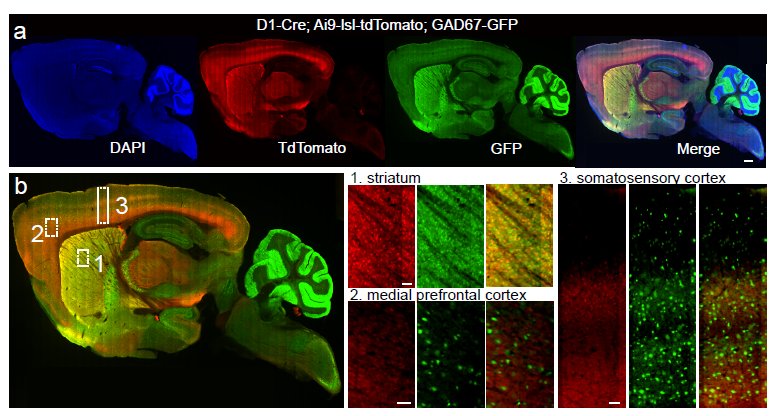
Whole-brain anatomical mapping of D1-Cre expression in inhibitory neurons (from Supp Fig.2)

It really is an embarrassment of riches here at Nature these days, what with so many excellent neuroscience-related studies emerging. Just in the last couple of weeks, we’ve had the following studies:

So really, a lot to write about from a science perspective. However, this blog is dedicated to bringing you the editorial back-story, so I wanted to touch on yet another interesting study, published in print today. This new paper offers an opportunity to discuss an important editorial issue: the manuscript appeal process. For more details, you can always read the appropriate section in our guide to authors. But it’s often helpful to follow a particular [successful] example in order to illustrate the process. Continue reading

“There is no spoon…”: Paralyzed fish navigates virtual environment while we watch its brain

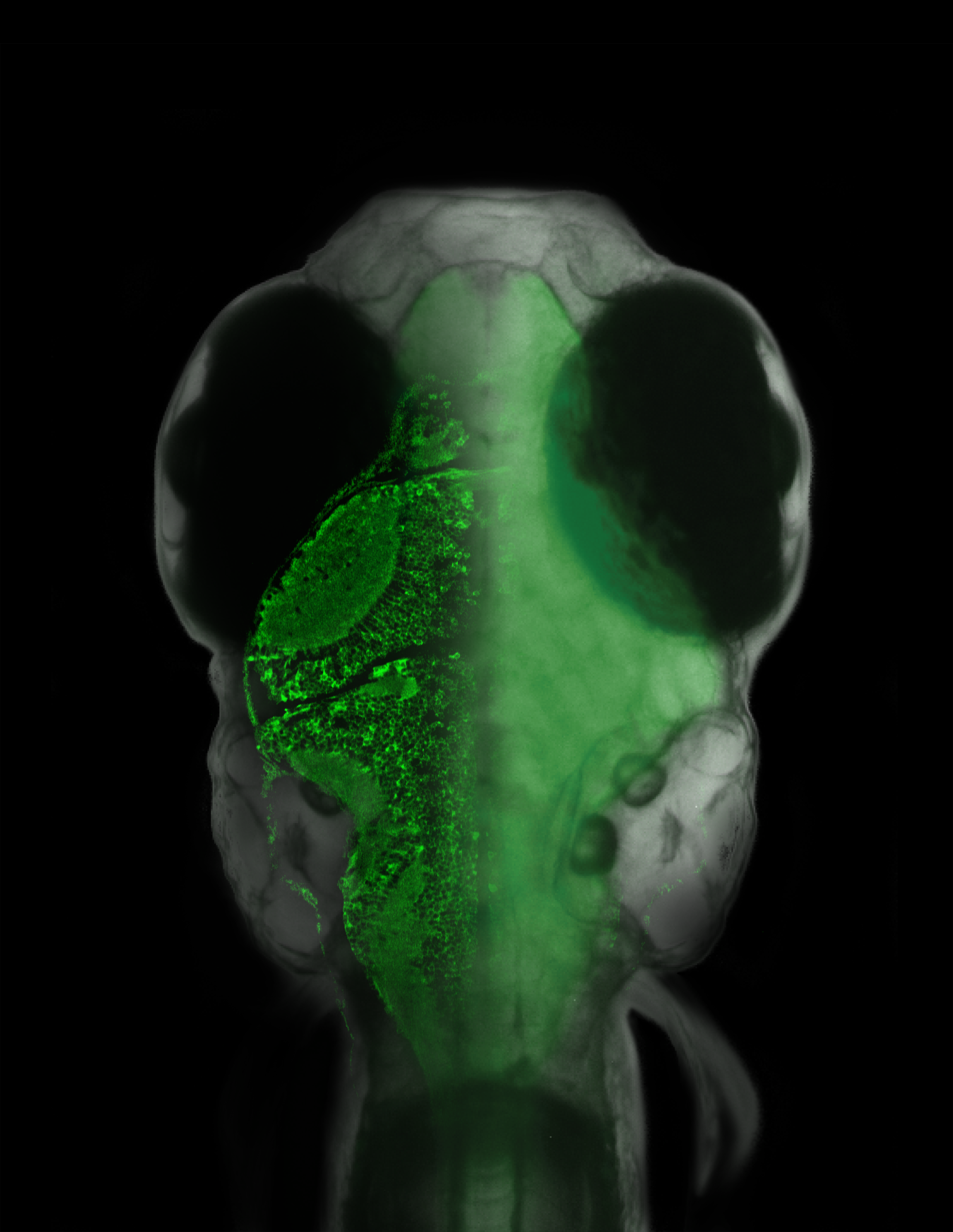
Overlaid on the micrograph of the fish is a slice of its brain measured with a laser scanning microscope, in which single neurons are visible.{credit}(courtesy of Ahrens et al.){/credit}

Sometimes an experiment will just reach off the page and slap you in the face, demanding attention. This happens to me every so often and I must admit, our latest paper from the lab of Florien Engert induced such an experience. There have been several cool, technical tours-de-force (is that proper grammar??) over the last few years involving different creatures navigating in a virtual environment while neuronal activity was monitored. These include a mouse running on a spherical treadmill, as well as a fly marching along a similar treadmill-style ball. But in these examples, having the subject head-fixed (for the stability of recordings in the brain, either with electrodes or through imaging) was moderately non-intrusive since walking motions were independent of the head. The same can’t be said for the subject in this latest example of a virtual reality navigator: a wriggling, swimming fish. Therefore, a more creative solution had to be sought and in a paper published online yesterday, Ahrens, Engert and colleagues decided that paralysis was the way to go in order to follow the neural activity of this navigating fish. Continue reading

Fear of the Light

fear-of-the-light**PLEASE SEE UPDATES BELOW**

It is commonly believed that distinct mini-networks of neurons, firing together, may be the means by which memories and other conceptual encoding requirements are handled in the brain. However, it is only recently that we have had the tools available to directly test the sufficiency of such a mechanism. Today, a new study in Nature from the lab of Susumu Tonegawa documents the ability to use light as a means to activate distinct subsets of neurons responsible for the encoding of fear memories.

Continue reading

The Fine Architecture of Learning and Joint Publication

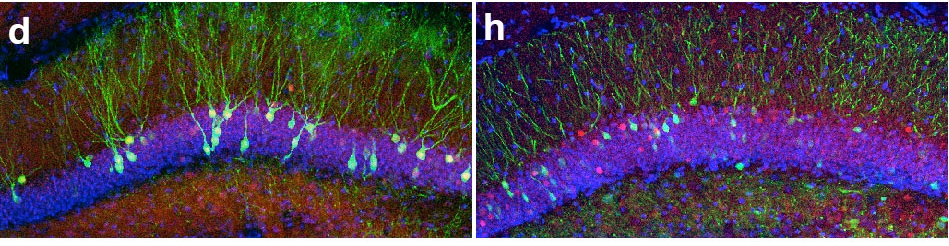
(image courtesy of Svoboda lab, https://openwiki.janelia.org/wiki/display/SvobodaLab/Research)

You warily walk into a dark compartment, wondering if there is food inside. Suddenly there is a loud tone and you feel an uncomfortable surge of electricity through your feet. This goes without saying, but it won’t take long before you will learn to be afraid of that tone. However, over time, you hear the tone without the shock, and slowly (foolishly??) accept that the previous connection may no longer hold.

Or perhaps you are extremely motivated to work for food, given that in your home area, nutrition has been sparse and hard to come by. You see millet seeds seemingly just within the reach of your fore-limb. Though not a typical movement for you, you reach for it. In another instance, you find a different type of food that is difficult to handle. However, it is nourishment nonetheless, so you will learn the required motor skills.

SPOILER ALERT: In each of the above cases, you were a mouse the whole time (I know!) But this is a neuroscience blog, not M.Night Shyamalan’s IMDB page, so perhaps we should focus on what was taking place in the brain as each scenario played out. In both of the cases above, learning was occurring, with new information stored away within the appropriate neural connections of particular brain areas. These situations are on display in a pair of new(ish) papers out in Nature, exploring the structural substrates of such learning and identifying patterns underlying the observed structural changes as learning occurred. Continue reading

Lost in Translation — Chasing the Roots of Conditioned Fear Research

I’m currently attending the Winter Conference on Neural Plasticity in lovely St. Kitts & Nevis and I’ll be tweeting when I can from #wcnp12 when the Internet access in the room decides to cooperate.

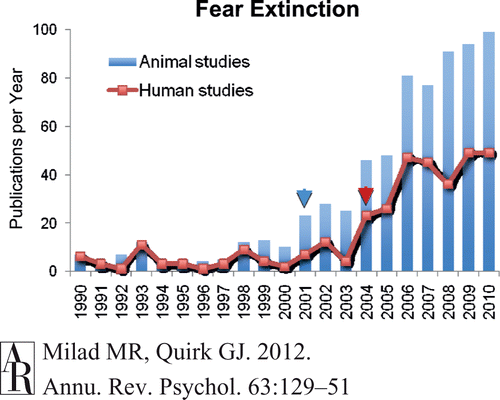
Today’s opening session at the meeting was a historical perspective on selected topics in neural plasticity. I thought I’d share an interesting piece of history about one topic that has exploded in terms of research output over the last 20 years: conditioned fear. Michael Fanselow gave the lecture on the history of fear research and focused on the era prior to the exponential growth of the literature, sticking to 1920-1980. Here’s a graph from a very recent review simply noting the number of “fear extinction” papers in the literature (one small sub-field in this topic,) just to give you a sense of how rapidly this field has grown:

Found on Google Images, not sure why it's in front of the paywall!!

I’ll do may best to channel Dr. Fanselow with the next few paragraphs:

Continue reading

Patients help bring the study of Alzheimer’s to the dish

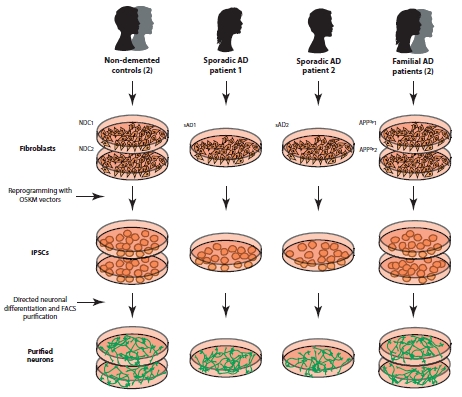
Israel et al. Supp Fig1: Experimental design.

Alzheimer’s disease (AD) is a devastating neurodegenerative disease that could become an even more massive public health problem than it already is, if current projections hold. Some predict that by 2050, 1 in 85 individuals will be affected by the disease. Currently, there is no cure, but there are neurotransmitter-enhancement-based strategies to slow down the cognitive deficits [the loss of cholinergic neurons is implicated in some of the memory problems associated with AD so therefore, pharmacological enhancement of brain acetylcholine concentration can partially alleviate some memory-based symptoms.] However, as with many neurodegenerative diseases, these stop-gap treatments only work for so long, until the cells responding to neurotransmitter supplementation treatments die off completely. Therefore, diverse strategies designed to cure or at least slow down AD are imperative.

While a number of AD transgenic mouse models have been created, based on the various mutations identified in patients, the trouble is that these models still utilize the cross-species approach of studying “diseased” mouse neurons expressing mutated human genes. And perhaps an even bigger problem with many mouse models, genetically-inherited forms of AD represent only ~0.1% of cases, with the remainder being “sporadic” (although there are genetic risk factors influencing the emergence of sporadic AD.)

Continue reading

Pulling back the editorial curtain on Nature’s papers

After a brief resurrection during the 2012  Society for Neuroscience meeting, the time has come to get a more regular series going on the old Action Potential blog! There are a lot of great (neuro)science writers out there (just to name a few,) so here at Nature, we wanted to be able to offer something different, something unique to supplement your weekly intake of neuroscience knowledge. Therefore, my editorial colleague I-han Chou and I will regularly blog about the latest neuro papers we publish in the journal, with particular attention to the back stories and our reasoning for offering publication.

Every paper has a story and this will be your opportunity to hear them. We’ll be discussing why we believe a particular paper is a potential game-changer, why we highlighted a technical advance with no biological insight, how two papers with similar findings were co-published and when possible, we will also be inviting commentary from the authors themselves or critical experts in the field to provide balance on the issue of novelty and the future importance of a finding.

We hope you’ll enjoy this series and we’ll try to post something 1-2 times a week, depending on the scheduling of neuroscience publications. On slower weeks, we may re-visit past papers that have a particularly interesting story or lesson. You are free to also make suggestions on coverage (new and old papers.) You can always comment below or use the contact information in the “About this Blog” section.

Finally, for additional coverage, please make sure to bookmark the RSS feed (if you still use that,) circle the Action Potential Google+ Page, circle I-han or myself on G+ and follow I-han or myself on Twitter and let this experimental journey begin…

Turning web traffic into citations

Our June editorial discusses the relationship between web traffic and citations. Specifically, can one predict how well any particular paper is cited years after publication, based solely on the number of downloads it receives immediately following its appearance online? Our preliminary analysis suggests that this relationship not only exists, but is surprisingly strong.

I’ll leave you to read the editorial for more of the background as to why we examined this relationship, but I will repeat a few keys things here. The main purpose of this post is to provide more of the details behind the data and analysis, and to initiate a good discussion.

Continue reading