Hidden Figures: the movie

Posted on behalf of Elizabeth Gibney
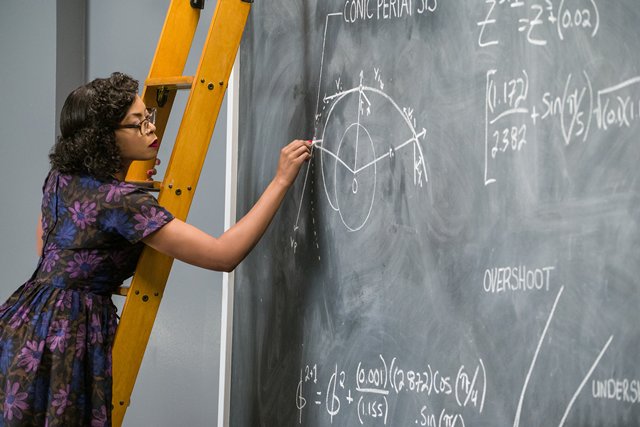
Taraji P. Henson as NASA ‘human computer’ Katherine Johnson. Over the course of her career, Johnson calculated the trajectories and launch windows for flights including the early missions of John Glenn and the Apollo 11 flight to the Moon, and did early work on the Mars mission.{credit}Courtesy of Twentieth Century Fox{/credit}

High-profile protests dominated the media during the civil rights era in 1960s America. At NASA, a quieter struggle was already underway. From the 1940s, African-American women had been chipping away at perceptions and making incursions into the early space programme — that otherwise very white, male world.

The stories of three of these scientific whizzes – Dorothy VaughanKatherine Johnson and Mary Jackson – are now told in Hidden Figures, a film directed by Theodore Melfi and based on a book of the same name by Margot Lee Shetterly (reviewed here for Nature by Alexandra Witze).

This sharp, witty triple biopic captures the focused frenzy of the United States’ space race with the Soviet Union, when NASA was trying to figure out how to achieve the remarkable feat of launching a man into orbit atop a rocket and returning him safely. That all-out effort meant opening the doors to the best people — which in turn created an opportunity for these pioneering African-American women to take on roles previously barred to them.

xxx

The Langley band of ‘human computers’ led by Dorothy Vaughan (played by Octavia Spencer).{credit}Courtesy of Twentieth Century Fox{/credit}

The movie recreates NASA’s Langley Research Center in Virginia, a state that in the early 1960s remained segregated. Vaughan, Johnson and Jackson are among Langley’s human “computers”: women hired to do the mathematics behind space flight, in the days just before the room-sized first IBM machine did it for them. This smart, passionate band, who made up the West Computing group, spend their days calculating launch and landing trajectories and air flow around capsules, armed only with pencils and reams of paper.

The trio were truly extraordinary. Vaughan, played by Academy Award-winner Octavia Spencer, is the matriarch. Although head of the computing group, she is not initially recognised as such for racist reasons. The film shows her initiative over the years in becoming an expert programmer of computing machines as the march of technology sees electronic counterparts to human computers emerge. Meanwhile Jackson, played with spirit by singer Janelle Monáe, wants to be an engineer. She struggles to reach ever-moving goalposts, including segregation laws that prevent her from attending the only school where she could get the necessary qualifications. Monáe’s vivacity earns her most of the film’s best lines.

xxx

Octavia Spencer as ‘human computer’ supervisor Dorothy Vaughan.{credit}Courtesy of Twentieth Century Fox{/credit}

The main focus in on Johnson, perhaps the most remarkable of the three. Her work stands at the very heart of US success in space. The film opens with her as a child prodigy, then zips past degrees in mathematics and French, and graduate school at West Virginia University — where she was one of the first black students to attend. At NASA she was soon picked to join the Space Task Force, who needed her talents in calculating the geometries of parabolic and, later, orbital flight. So indispensable was she that astronaut John Glenn asked for her to personally check the calculations of his trajectory by hand, ahead of the first US orbital flight in 1962.

Johnson is portrayed by Taraji P. Henson as quiet, tenacious and warm-hearted. The character could not be more different from Henson’s role as gangster Cookie Lyon in the music-industry television drama Empire. Johnson is a whizz with the chalk, often seen up a ladder scrawling calculations on a giant blackboard. She carves out her own position in the team, and in colourful outfits and heels offers a human face as often the only woman in a sea of white-shirted, pencil-tied men. (Among many excellent supporting actors, such as The Big Bang Theory’s Jim Parsons, Kevin Costner as a fictional amalgamation of several real NASA leaders deserves special mention. Gum-chewing and hard-nosed, he insists on referring to his team as “gentlemen” despite Johnson’s presence; but his desire to reach the heavens is what gives her her chance.)

xxx

Janelle Monáe as Mary Jackson, who later became a NASA engineer.{credit}Courtesy of Twentieth Century Fox{/credit}

Hidden Figures succeeds in revealing the institutionalised racism faced by the women and their families. Bathrooms, drinking fountains, schools, libraries — all were segregated. One of the best exchanges is between Vaughan and computing pool supervisor Vivian Mitchell (Kirsten Dunst), who insists, “I have nothing against y’all”. To this, Vaughan kindly replies: “I know you probably believe that.” And the women’s status as invisible engines driving the space programme contrasts clearly with the pomp surrounding the astronauts, who as the faces of NASA seem constantly showered with red, white and blue confetti.

Yet the upbeat film can sometimes come across as sanitised. There are no real baddies: even the racist characters, flawed with conscious or unconscious bias, seem ultimately good. A touch more anger wouldn’t have detracted from the enjoyable feel-goodness, epitomised by a bouncing soundtrack  by co-producer Pharrell Williams (composer of mega-hit Happy).

On another level, this may be an effort to avoid the film being solely about race. Rather, it is about women and their love of science. Vaughan, Johnson and Jackson had families to support and could not risk everything in the political fight for equality. In chasing their passions, these three chose to foment change from the inside. Hidden Figures fleshes its characters out into real human beings, and tells their cracking story with grace.

Elizabeth Gibney is a reporter on physics for Nature based in London. She tweets at @LizzieGibney. Hidden Figures’ US premiere is 25 December 2016; general release is on 6 January. The film’s UK premiere is 10 February 2017; general release is on 17 February.  


For Nature’s full coverage of science in culture, visit www.nature.com/news/booksandarts.
Crowdfunding an online tree of life

3Q: James Rosindell and Yan Wong

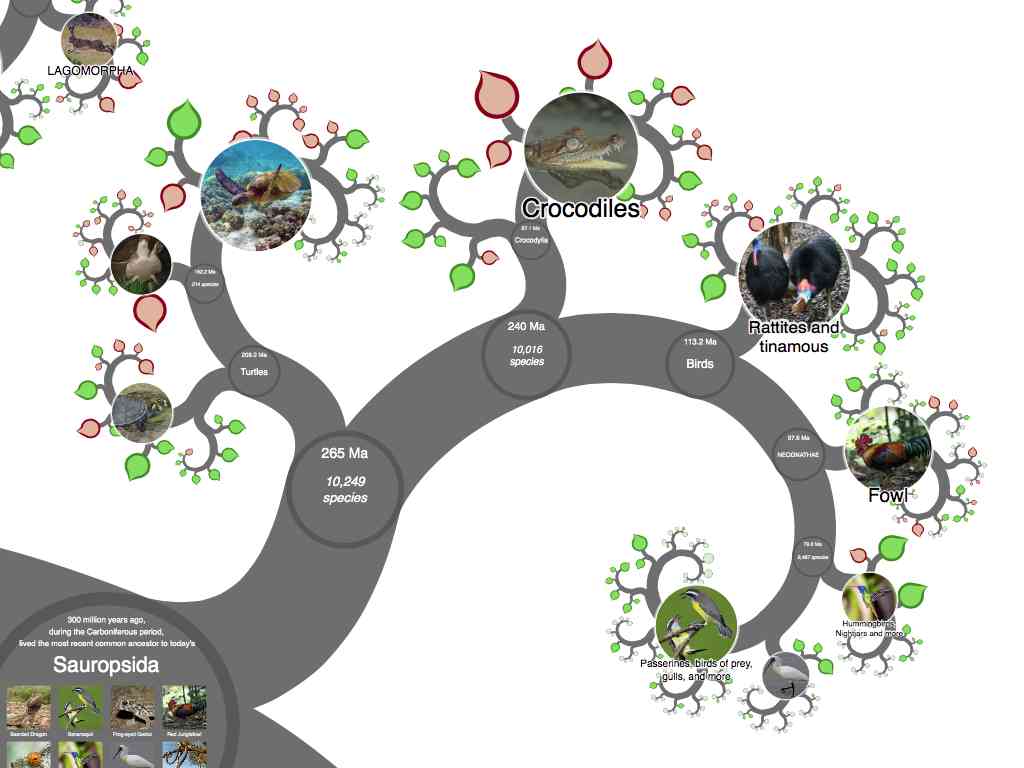
A branch on the OneZoom online tree of life.

OneZoom lets people sponsor animals and plants on an online tree of life.{credit}OneZoom{/credit}

Putting all living things, from kingdom to species level, onto a single, easy-to-explore ‘tree of life’ is an ambitious project. But a newly formed charity has just gone a long way towards that by releasing the website www.onezoom.org. To crowdfund the new ‘OneZoom’ tree, biodiversity theorist James Rosindell and evolutionary biologist Yan Wong are asking the public to sponsor their favourite animals and plants. Here Rosindell and Wong talk about OneZoom, and why graphics from it have made their way into a fully revised edition of The Ancestor’s Tale – the 2004 classic Wong co-authored with Richard Dawkins.

What is OneZoom?

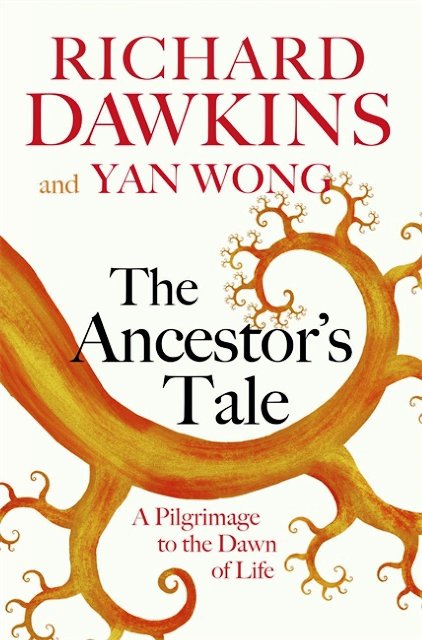
The fully revised, reissued edition of the 2004 classic by Richard Dawkins and Yan Wong.

The fully revised, reissued edition of the 2004 classic by Richard Dawkins and Yan Wong.

JR: It’s a way of visualizing large evolutionary trees as a branching fractal. Mindboggling quantities of data can be accessed easily and intuitively by panning and zooming in. With this technology we’re aiming to do for the living world what online mapping software like Google Earth has done for the physical world. Just as you might zoom from a map of the globe into a town, you could navigate into vertebrates and then, say, bats on the tree of life. Think of it as a digital natural history museum, aquarium, zoo and botanical gardens rolled into one.

YW: When James first mentioned OneZoom to me, I was in the middle of revising The Ancestor’s Tale. It became clear that the visual attractiveness and potential coverage of the entire tree of life meant OneZoom trees would be a great addition to the book, which attempts to distil the evolution of all life on earth. I looked in detail at around 100 phylogenetic studies that concern the lineage leading from humans back to the origin of life. Synthesising these studies into a single tree was necessary to give rigour to the ‘pilgrimage to the dawn of life’ that we undergo in The Ancestor’s Tale, and formed the backbone for the tree currently used in OneZoom.

What are you hoping to do now with crowdfunding?

Both: thanks largely to projects like the Open Tree of Life, we’ve now got the entire tree of life with over 2.1 million species — practically all known complex lifeforms — in our database. We’ve also developed visualization methods that allow seamless navigation. What we don’t have yet is a software engine capable of dealing with all those species on a normal PC, let alone a mobile phone. So our website currently only reveals a fraction of what is on our database. Our priority is improving the software core that runs behind the tree view so that we can handle all 2.1 million species.

JR: We chose a crowdfunding model where visitors to the site can feel a sense of ownership of the OneZoom tree of life by stamping their name on a leaf of the tree. The species you choose to sponsor is quite personal and that enhances the community feeling without detracting from the underlying scientific core of the project. Some leaves are sponsored by visitors to the website, others have been engraved as gifts from users to people they know, but there are also many wonderful species still available to choose from.

How will your tree stay up-to-date with shifts in the science?

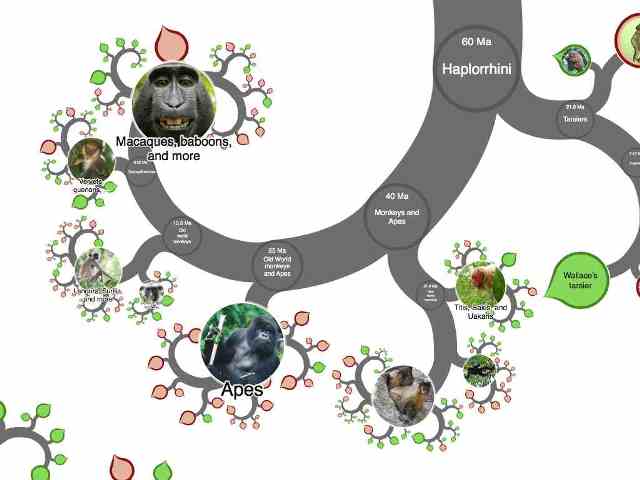
Simiiformes on OneZoom.

A branch on this section is our own family line.{credit}OneZoom{/credit}

JR: The disadvantage of human-drawn illustrations is that they can only be made for small trees and everything needs redrawing when the science is updated. Software that’s built to visualize trees tends to produce outputs more like graphs: simple to update, but lacking in visual design and only comfortable to read for an expert. The OneZoom viewer is unique because although it is easy to explore and visually appealing, it is also automatically generated.

YW: As for the topology of the tree — the order of branching and so forth — we have semi-automated pipelines in place to keep our tree up to date. They tie together several pre-existing, constantly maintained resources. For example, the Open Tree of Life release 5 came out on 7 April, and our pipeline was able to incorporate it and produce a new tree in time for our release less than a month later. However, some important areas of the tree still require hand curation: the main backbone of the tree and popular chunks. This is done as new studies are released. Another automated feature of the tree is our ‘popularity’ measure, based on visits and edits to Wikipedia pages. If there is a sustained increase in interest about a particular taxa on Wikipedia, this influences the prominence (and sponsorship price) of that leaf in the crowdfunding part of OneZoom.

Interview by Daniel Cressey, a reporter for Nature in London. He tweets at @DPCressey.

The fully revised edition of The Ancestor’s Tale was published on 28 April 2016. For further information about it, see www.ancestorstale.net. For more on OneZoom, see www.onezoom.org.


For Nature’s full coverage of science in culture, visit www.nature.com/news/booksandarts.
Neuroscience-tinged kids’ app put to the test

Posted on behalf of Hysell Oviedo and Siboney Oviedo-Gray

'Brain Street' in Kizoom's gamified neuroscience learning app, Brainventures.

‘Brain Street’ in Kizoom’s gamified neuroscience learning app, Brainventures.{credit}Kizoom{/credit}

I have two criteria for a game app for my daughter: it must assuage my guilty conscience when I’m not able to play with her, and contain no ads. Ideally I would want her to learn calculus while we wait at the airport security line (or to discover that lingering boredom can lead to creativity and observation). Realistically, I at least want her to learn something useful.

What that something is varies widely, from the physics puzzles starring candy-eating monster Om Nom in Cut the Rope (ZeptoLab) to the ruthless war strategizing in Supercell’s Clash of Clans, to good old-fashioned addition and spelling. A newish trend is apps that gamify learning, which taps into our reward and motivation systems to incentivize explicit learning (of world history, for example).

One such app is Brainventures from Kizoom, which my seven-and-a-half-year-old, Siboney, was excited to try. She played Kizoom’s Brain Jump when younger, and enjoyed a read-along vignette about neurons from the developers (the founder is a neuroscientist). Like Brain Jump, Brainventures draws heavily on classic psychophysical tasks: reaction time, memory, visual acuity. It connects Brain Jump’s star Ned the Neuron with many friends — including the competitive Pepper, dopey Big Rick, and Ada the focused.  

These neurons mainly teach us about the brain in quirky interactions via speech bubbles (such as,  Here in the brain we are just as busy when Sophie is sleeping,” says Buster. “Brain party all night!” responds another neuron). These speech bubbles risk being skipped by kids eager to get to the games. To illustrate the function of different neurons, the app gets kids to choose virtual children who need help from their neurons in their daily routine: “I like that we do stuff for Sophie,” said Siboney. That “stuff” includes turning cartwheels in a tricky timing task called Move It, catching the most nutritious food in Fuel Up, and Sort and Store.

Memories are made of this

Every task has increasing levels of difficulty. My favourite is Focus Pocus, the hide-and-seek version of a visual working memory task where kids have to remember objects presented briefly and track them in a fishbowl full of distractors. This demands sustained memory and attention, a rare feature in game apps.

Overall, the app makes it clear that neurons have to work together to do “stuff”, but that’s where the level of complexity stops. As a neuroscientist, I would have liked to see the game makers exploit more our vast knowledge of the marvelous anatomical differences between brain areas that perform different functions.

It’s arguable whether the game achieves the cognitive claims stated on Kizoom’s website (such as, “Take on quests to help the child grow brain power”). But the app does introduce the basic idea that an integrated network of neurons that perform different functions powers the brain. The psychophysical games are also well designed: it’s clear what to do but at the same time, they are challenging.

Brainventures satisfies one of the cardinal rules of a kids’ app: they can do it largely without parental help. The downside was that Siboney blasted through the app in about an hour, then started re-doing the levels. She played the game enthusiastically for about a week; then her interest waned. I surmise that Brainventures lacks some key elements of gamification — such as a virtual currency, missions and rewards — which reinforce a kid’s excitement and engagement, drive the desire for mastery and achievement, and hopefully, increase the potential for learning. But my biggest request to the game makers? Please add a pause button. 

Hysell Oviedo is a professor of neuroscience at The City College of New York, and the biology-neuroscience subprogramme at the CUNY Graduate Center. She studies the neural basis of animal communication. Her favourite science outreach project is leading a BioAnimation team of visual arts and biology students who make movies about how the brain works. She tweets at @hysell.

Siboney Oviedo-Gray’s favourite subjects are maths and grammar, her favorite city is Madrid, and she likes drawing, and cooking with mom.


For Nature’s full coverage of science in culture, visit www.nature.com/news/booksandarts.
The operatic Turing

Posted on behalf of Jo Baker

Alan Turing in 1951.

Alan Turing in 1951.{credit}Bocconi University, Wikimedia Commons. {/credit}

Music and language are codes. And Sentences, a new 30-minute work for chamber orchestra and voice by eclectic New York-based composer Nico Muhly, is a moving dialogue on abstraction and emotion in the life of British mathematician and wartime code-breaker Alan Turing. Turing is often portrayed as a binary individual – celebrated wartime hero and troubled genius, thought to have taken his own life in 1954. Even the title has a double meaning. Turing was sentenced to chemical castration in 1952 when homosexuality was illegal in the UK (he was posthumously ‘pardoned’ in 2013).

I was dazzled by the world premiere of Sentences at London’s Barbican Hall. The playing, by the inventive Britten Sinfonia with Muhly conducting, and the soaring otherworldly voice of countertenor Iestyn Davies, melded into a smart and unexpectedly moving speculation on the man behind the myth.

Turing’s tragic tale could have spawned a morose movie-soundtrack score, but Muhly’s influences are diverse. He has assisted minimalist composer Philip Glass (Q&A’d here), collaborated with pop original Björk (Q&A’d here), written film scores and operas. The depth of his music is matched by that of the libretto, from Adam Gopnik, the essayist and New Yorker regular. Gopnik wrangles with vexed questions: why do we project emotions onto machines; how can we infer the state of another; how do we extract meaning from a string of 0s and 1s?

Composer Nico Muhly.

Composer Nico Muhly.{credit}Barbican Centre, London{/credit}

The seven-part piece has a tightly structured rhythm, kicking off with a jittery edge. Alternating bass notes are enriched by trombones, violins and cor anglais. “Sentiments are sentences,” Davis sings. A broken bicycle wheel – link snapping every unlucky 13th turn – becomes the motif in part 2, backed by clacking knitting needles. Davis uses electronic loops to sing beguiling harmonies: “The weak link of the chain is the one that’s most revealing.” Flutes, xylophone, bells and piccolo bring an ethereal tone to Part 3, where Turing mourns the loss of his youthful lover Christopher Morcom to tuberculosis. “I’m glad the stars were shining.”

The orchestra gets busy in the passages on Turing’s computer work. Muhly employs a typewriter to elicit the sounds of Bletchley Park, where Turing worked during the war, deciphering German military messages. Binary codes are evoked in part 4 through oscillating sequences of notes and exotic percussion. “A zero, a one and the soul’s left behind.” Part 5muses on the mundane openings of secret messages, such as references to the weather.

Discord and unease mount in the final section.  “We read structure into chaos; meaning into nonsense; purpose into sounds”. Piercing tension, gongs and more knitting needles announce Turing’s death  by poisoned apple.  The sounds soften and dissipate: “The sentence ends.”

Muhly says his fascination with Turing began when he came across Steve Reich’s Three Tales (2002), a video opera on the march of technology that references cloning and artificial intelligence and asks what is and is not real, man-made or divine. Gopnik’s mother was a computer linguist who idolized Turing. The pair embarked on this commission — by the Barbican Centre, the Britten Sinfonia, Köln Musik GmbH and Festival de Saint-Denis — with some trepidation, given the spate of Turing vehicles such as the recent film The Imitation Game (reviewed here). But they set out to convey what may have been inside the great mathematician’s heart as well as his mind. They have succeeded.

Jo Baker is senior Comment editor at Nature.

Sentences plays next in Cologne on 21 June. Savour Philip Ball’s review of the opera Oppenheimer here, and a review of John Adams’s opera Doctor Atomic by Nature editor-in-chief Philip Campbell here.

 Correction: The Turing film reviewed was The Imitation Game, not Enigma.


For Nature’s full coverage of science in culture, visit www.nature.com/news/booksandarts.