High in the Chilean Andes, a massive project to probe the nature of dark energy has begun. Alexandra Witze explains more in the News Blog:
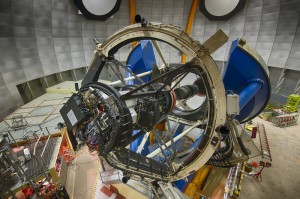
The Dark Energy Camera photographs galaxies from its perch on the Blanco telescope in Chile. REIDAR HAHN/FERMILAB
The Dark Energy Survey (DES) launched on 31 August at the 4-metre Blanco telescope at the Cerro Tololo Inter-American Observatory. It is one of several new pushes to explore the physical properties of dark energy, the mysterious force that is driving the Universe to expand at an ever faster rate.
Over the course of 5 years, the DES will map 300 million galaxies over one-eighth of the night sky. Its backbone is a 570-megapixel digital camera (pictured), designed to capture sharp images of galaxies and galaxy clusters. Such high resolution is essential because the DES measures weak gravitational lensing, the phenomenon in which light from distant cosmic objects is subtly distorted by the gravity of matter between them and Earth.
In the latest Soapbox Science guest post, Buddhini Samarasinghe outlines her thoughts on the importance of science outreach and the two things that stand in the way of public access to science; the paywall and the jargon-wall:
Two things stand in the way of public access to science. The first is obviously the paywall: the second is something that I describe as the ‘jargon-wall’. The language of science is precise and meticulous; it has to be. Somewhere along the way, it has also become esoteric, foreign and inaccessible to the public by existing only within the confines of the ivory tower of academia. This has contributed to the chasm of scientific ignorance we see today, and it has created a deep divide that could impede human progress.
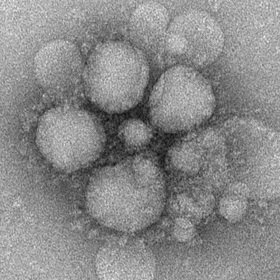
MERS-CoV particles as seen by negative stain electron microscopy. CYNTHIA GOLDSMITH/MAUREEN METCALFE/AZAIBI TAMIN/CDC
As the Middle East Respiratory Syndrome coronavirus (MERS-CoV) continues to spread, scientists have been searching for the intermediate host that might carry this virus and transmit it to humans. Mohammed Yahia elaborates in the House of Wisdom Blog:
The MERS virus belongs to a family that is usually found in bats. Some scientists argue that there might not be an intermediate host, and that it probably makes its way to humans from food contaminated by bat dropping or saliva. However, a group of researchers have tested blood samples from several animals, including cattle, sheep, goats and race camels, and suggest the camels – which come from Oman – may be the elusive intermediate host.
Kerri Smith explains in the Of Schemes and Memes blog that sometimes revolutions do happen in science. Historian Lara Marks thinks the story of monoclonal antibodies is one of them, and the latest episode of the Nature PastCast recounts that story:
These immune molecules form the basis of six out of ten of the world’s best-selling drugs, and they’re found in home-testing kits for pregnancy and menopause, and hospital tests for MRSA and HIV. They can be made to recognise specific molecules, tagging them for destruction by the body’s own immune system.
“As a historian you’re meant to be cynical, but it was revolutionary. It did transform things,”
she says in the latest episode of the Nature PastCast, which recounts the story.
The measure gained attention in May after an Oregon researcher, Shoukhrat Mitalipov, published a paper showing that he could derive stem cell lines from cloned human embryos. Mitalipov paid the women who donated the eggs US$3,000–7,000 apiece, removing a significant bottleneck in the cloning process: the availability of human eggs, which must be harvested in a time-consuming and uncomfortable procedure.
In his veto message on 13 August, Brown cited ethical concerns: “Not everything in life is for sale nor should it be,” Brown wrote. The American Society for Reproductive Medicine in Birmingham, Alabama, co-sponsored the proposed law. A coalition of conservative and watchdog groups opposed it and lauded the veto.
Aerosols contributing to climate change in India, China
Subhra Priyadarshini explains in the Indigenus Blog, researchers have found that aerosols (for example, black carbon particles in diesel exhaust and sulfate particles produced by coal burning) in India and China may indirectly contribute to climate change:
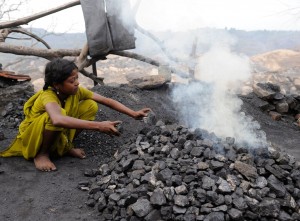
Coal burning is one of the key contributors to aerosol emissions. JOERG BOETHLING / ALAMY
Higher black carbon levels in the atmosphere lead to warming, whereas increased sulfate levels cause cooling.
To find out the situation in India and China, the researchers examined emissions from the most important aerosol sources in the two neighbouring countries and estimated the net radiative forcing from each source, both locally and globally. In this analysis, they used models developed by the NASA Goddard Institute for Space Studies.
This week’s Soapbox Science guest post is by Scott Wagers. He looks at ways we can learn by blogging about science:
Here is how you can make certain you learn the most from blogging:
A 12 step process
Determine a strategy: What do you want to learn about? What is important for you to learn about? The most popular blog posts are those that teach something, or ‘How to posts’. Even something you might think is mundane, such as the technique for cell culture, is probably interesting to lots of people. If you want to learn how to do that something, there is no better way than to write about it.
The post includes some excellent advice and top-tips from Scott Wagers, feel free to share your own too.
Flogging a dying rat and riding the wave
The wave of death is a well studied phenomenon that runs under various more sober names.
A new study suggests exactly that, namely heightened consciousness in rats after cardiac arrest. First of all, whatever the brain’s briefly lasting (~30s) high frequency oscillations mean, they are not new.
The paper—though an elegant study with some new results from what I can see on the first glimpse—seems to completely ignore the literature on so called spreading depression/depolarization and anoxic depolarization, see for example the review paper in “Nature Medicine” by Jens Dreier. A similar study was published in 2011 talking wonderfully unagitated about “latency to unconsciousness” only to conclude that the observed oscillations are the ‘wave of death’. There was a theoretical study by the group of van Putten, which shed some light on the exact physiological mechanisms on a single cell level.
Indian court halts projects in wake of calamitous monsoon
On Tuesday, India’s Supreme Court put a moratorium on the construction of new hydroelectric dams in the Himalayan state of Uttarakhand. Sanjay Kumar reveals more in the News Blog:
The region witnessed unusually heavy rain and catastrophic floods and landslides in mid-June that left more than 5,000 people dead or missing. Some ecologists and geologists suggested that a proliferation of dams and hydroelectric projects was in part to blame for exacerbating the effects of the monsoon.
The court’s findings reflected those concerns, describing the “mushrooming of a large number of hydroelectric projects in Uttarakhand” and their impact on the basins of the Alaknanda and Bhagirathi rivers, the two major tributaries that merge to form the Ganges River.
The court ordered the environment ministry and the Uttarakhand government ”not to grant any further environmental or forest clearance for any hydro-electric power project in the state until further orders”. It also mandated fresh scrutiny of the environmental impact of 24 proposed hydropower projects.
They concluded that HFCS contributed more to obesity than sucrose or food, a mix of molecules. 1 2 Fat is stored in sacs, and it is very interesting that the abdominal sac, beer gut, grew the most in the fructose fed rats. Accumulation of abdominal fat is actually worse than accumulation of other kinds of fat. Stanhope found similar evidence but he compared glucose to fructose. In this case fructose contributed more to visceral fat. From these two studies one could conclude that high fructose diets would generate a larger beer gut than diets high in other sugars. . . right? Unfortunately, it is not that simple.
Individuals who grew up in the digital era, while very technically savvy, may be outdone by the up and coming “second digital generation.” Shannon Bohle continues this discussion in her latest blog post on SciLogs:
Meet British-Australian, Nicholas D’Aloisio-Montilla (born 1995), a high school student who lives in London and has been dubbed the “world’s youngest VC-funded entrepreneur.” In March of this year, at age 17, he earned $30 million USD when Yahoo! bought his smart phone news aggregator application. D’Aloisio-Montilla had started programming just four years earlier, at age 12.By 15, he produced his first app which raised $300,000 USD in venture capital (VC), and by 16, his projects had amassed $1 million USD in VC funding. Investors in his company included big names like Ashton Kutcher, Yoko Ono, and Stephen Fry. The funding side might have come a little easier for D’Aloisio-Montilla because he probably had a bit of help from his father, Lou Montilla, who is Vice President at Morgan Stanley in London, but the programming was all his. Today, Nick has been hired by Yahoo!
Hear more on this, as well as some interesting statistics in Shannon’s post.
Many rabbits have tails with white undersides that flash prominently when they run. HARVEYHENKELMANN; WIKIPEDIA
Rabbits are one of the many animals that have the apparently contradictory features of carefully camouflaged coats and hugely conspicuous rump patches. In the News Blog, Daniel Cressey links out to research that may explain why this is:
Dirk Semmann, an evolutionary biologist at the University of Göttingen in Germany, thinks he has the answer to this puzzle — and the evidence to back it up. Other theories hold that rump patches are warning to other animals, are sexually selected, or serve to show a predator that they have been spotted.
In this week’s Soapbox Science post, Ian Woolley asks how to identify “predatory publishers”:
The phrase “predatory publishing” doesn’t project a lot of goodwill, either as a characteristic of the publisher or of the person who is classifying them. Jeffrey Beall is an academic librarian at the University of Colorado who publishes a blog “Scholarly Open Access”, recently featured in a much debated article in the New York Times and a wide-ranging report in Nature. Titles of recent posts include “The onslaught of questionable open access journal continues unabated”, “new open access publisher launches with 66 journal titles” and “another society journal hijacked”. He clearly feels passionately about these issues. The first edition of his criteria for determining predatory open access publishers was uploaded in August 2012, and a new version in December; his decisions are made partly on the basis of colleagues who have “shared information”.
An online CV is now an everyday part of the job hunt, and this week the Nature Jobs Blog are offering some simple ways to make sure your CV catches the eye of a potential new boss:
Stay current. Make sure your online profile is complete. Provide as much information about yourself as possible so a potential new boss knows exactly who you are and what makes you tick. Check your CV is up to date, and do that regularly, topping it up with any new information on, say, public speaking, awards or new publications. If you have been shortlisted by an employer, they will be alerted every time you update your CV.
This week’s guest blogger on Scitable’s Brain Metrics blog is PhD student George Wallis. In George’s post he discusses the ways in which hallucinations provide neuro-scientists clues about the hidden workings of the brain:
What are hallucinations? Sacks defines them as ‘percepts arising in the absence of any external reality – seeing things or hearing things that are not there’. A few hundred years ago hallucinations might have been ascribed to the influence of Gods or ghosts. Nowadays, neuroscientists and psychologists see hallucinations as the result of abnormal activity in the brain.”
To make it easier for anyone interested to find a great work placement, the Nature Jobs Blog have dedicated their latest post to upcoming opportunities in science, technology, engineering and maths:
If you have a paid internship suitable for scientists you’d like us to add to the list, please send details to naturejobseditor@nature.com
They will be updating this post regularly, so keep checking back for more.
Google doodle celebrates Muslim physicist
Mohammed Yahia explains in the House of Wisdom Blog that if you live in one of the Arab states of the Middle East, then you will likely have been greeted by an interesting new Google doodle this week for the anniversary of one of the most celebrated Muslim medieval scientists:
Ibn al-Haytham, known in the West by his Latinized name Alhazen, was born 1 July, 956 AD, in Basra in present-day Iraq but lived most of his life in Egypt. A polymath, Alhazen has contributed to the sciences of optics, astronomy, mathematics and philosophy. He is one of the earliest, if not the first, theoretical physicists in the world, using mathematics to prove his theories of optics.
The Russian Academy of Sciences is to be axed. QUIRIN SCHIERMEIER
Quirin Schiermeier reveals in the News Blog how the Russian Academy of Sciences (RAS), threatened with liquidation, has been granted a temporary reprieve:
The Duma — the Russian Parliament — agreed today to postpone until October its final vote on a bill that some feel will mark the end of the academy, founded in 1724 by Peter the Great.
The Russian government, at a meeting last week, launched a bill proposing fundamental changes to the academy. According to the bill, dated 28 June, the academy is to merge with two minor societies — the Russian Academy of Medical Sciences and the Russian Academy of Agricultural Sciences. The responsibility for the more than 400 research institutes now under the academy’s auspices would be transferred to a new government-run agency.
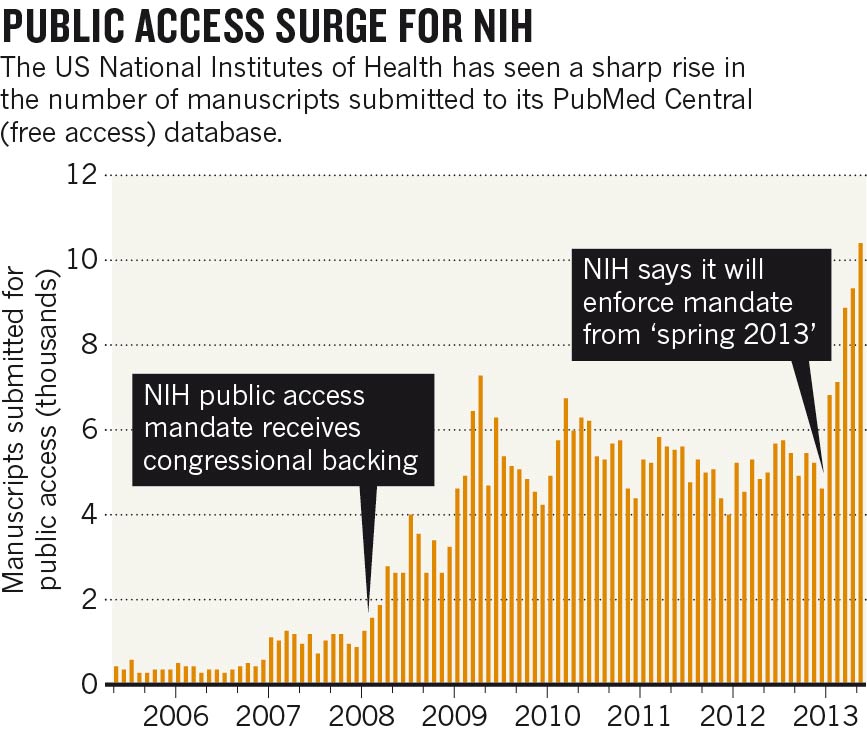
Last November, the US National Institutes of Health (NIH) said that “as of spring 2013″ it would start cracking down on enforcing its public-access policy — and it seems the agency is now seeing positive results. Richard Van Noorden elaborates in the News Blog:
NATIONAL INSTITUTES OF HEALTH
In May, authors approved more than 10,000 peer-reviewed manuscripts arising from NIH-funded research to go into the agency’s online free repository, PubMed Central. That’s a huge jump from the average 5,100 per month in 2011–12, and suggests the agency is nearing its goal of getting everyone it funds to make their papers publicly available. (Numbers available in csv format; the NIH also publishes them, so far without the May update, here).
Crossing the great divide – moving between academia and industry
In this week’s Soapbox Science guest post, Luke Devey talks about his scientific career and leaving his comfort zone:
Before I could consider working in pharma, I needed to answer a lot of thorny questions in my own mind. Was pharma ethical? Was I ‘selling out’? Would the science be worthwhile? Was this a smart career move for a clinical academic? Was there opportunity for progression? What would I learn in industry? And, finally, were there going to be credible outputs from my work? In other words, all of the same questions anyone who has been embedded in the National Health Service (NHS) and university sector for their whole careers would pose.
Have you moved out of academia into another role? Share with us your experiences in the comment thread.
Europe’s politicians vote to resuscitate carbon market
Politicians in Europe’s parliament this week agreed a plan to revive market prices which have collapsed in the recession. Richard Van Noorden expands on this in the News Blog:
It’s a change-of-heart from a parliament which had rejected the same idea in April. But although it would lift the market out of total irrelevancy, the plan still won’t raise carbon prices high enough to spur investment in low-carbon energy, which was one of the European trading scheme’s key goals when it was launched in 2005. So some politicians say much deeper reforms are needed. What’s more, the plan still needs to be approved by the ministers of Europe’s member states – a decision that won’t be taken until after Germany’s elections in September.
Hear what the UK’s climate secretary, Ed Davey, has to say on the matter in Richard’s post.
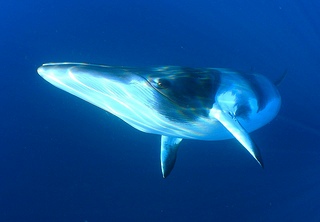
The Japanese Whaling Controversy
Scitable blogger Kate Whittington’s latest post looks at Japan’s scientific whaling practices:
The killing of whales for research is allowed under the 1946 ICRW which states that: “any Contracting Government may grant to any of its nationals a special permit authorizing that national to kill, take and treat whales for purposes of scientific research subject to such restrictions as to number and subject to such other conditions as the Contracting Government thinks fit, and the killing, taking, and treating of whales in accordance with the provisions of this Article shall be exempt from the operation of this Convention.” (Source)
SciLogs blogger Paige Brown, highlights how science communication can be aided by good art:
When it comes to science communication, eye-catching visual content can be as important as a capturing lead or headline. Alex Wild, an Illinois-based entomologist and Scientific American blogger, inspires a wonder of the insect world, and the science behind insect morphology and behavior, through his breathtaking macro photography.
Image by Paige Brown, https://paigesphotos.photoshelter.com/.
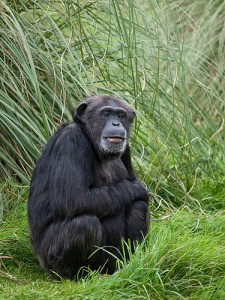
The US National Institutes of Health (NIH) announced this week that it will retire to sanctuary nearly all of its research chimpanzees. Meredith Wadman elaborates in the News Blog:
FLICKR/WILLIAM WARBY
…about 310 animals — leaving a rump colony of up to 50 animals available to researchers who can clear high ethical and regulatory hurdles for using them.
What do you think about this decision? Share your thoughts in the comment thread.
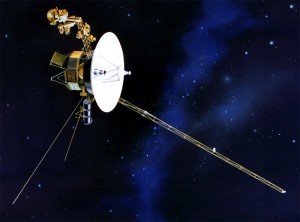
The Voyager 1
An artist’s illustration of Voyager 1. NASA
The Voyager 1 spacecraft has almost left the Solar System — but not quite, according to a set of papers published online in Science on 27 June:
Voyager 1, launched in 1977, is now 18.6 billion kilometres from the Sun and getting farther away every day. In 2004, it crossed from the part of space dominated by the Sun’s influence into a transition region where the solar wind mixes turbulently with interstellar gas. Space physicists are now eagerly waiting for Voyager 1 to exit this transition region and enter true interstellar space.
This week, a panel of expert science bloggers shared their tips at the World Conference of Science Journalists. Mohammed Yahia reports on this event in the House of Wisdom Blog:
For Ed Yong, a blogger with National Geographic who writes the wonderful Not Exactly Rocket Science blog, science blogging was his way to get into science writing back in 2006.
“Blogging offers you such freedom with your stories. You don’t have to do any pitching, you can just write about what you want,” says Yong. “The blog is a playground and a laboratory for writing. It allows you to practice everyday without the need for commissioning or anything.”
He also uses the blog to try out different formats and styles of writing without the normal editorial process.
‘Liberated’ mice from Italian lab now housed in poor conditions
Two months after animal-rights activists broke into an animal facility at the University of Milan and removed hundreds of animals, photographs of many of the mice have appeared on the Facebook page of one of the protestors’ supporters who uses the pen name Jooleea Carleenee. Alison Abbott explains more in the News Blog:
Mice removed by protestors from a Milan lab appear to be housed in cramped cages.
Carleenee says that she posted the pictures to show that the animals were still alive. But the images of the overcrowded and uncontrolled conditions in which the mice appear to have been kept in her home have fuelled a new row, with scientists posting angry comments, complaining of cruelty.
Daria Giovannoni, president of the pro-science lobby group Pro-Test Italia, says: “If these photos show the actual conditions of the stolen mice, we’re seriously concerned about their well-being and health: we don’t think that these animals are faring better now than when they were in the laboratory.”
Continue to the post for an update from Jooleea Carleenee.
In this study, the cats infected with Aspergillus felis were seen in Australia and UK. They were of different varieties, including pure breeds (such as Russian blue, Cornish Rex, Himalayan Persian, Chinchilla Persian, Ragdoll, and Exotic Shorthair) and domestic crossbreds (short hair and long hair). Otherwise disease free, they presented with nasal discharge and/or sneezing. In addition, many of them had a fungal ball growing behind an eye, which pushed that eyeball outwards – the poor cats! Many of them had severe disease progression and had to be compassionately euthanized. There were a dog also from Australia, and a human patient from Portugal, both of whom were receiving therapy that suppressed their immunity. The fungus had spread throughout the body of the dog causing pain, fever, and abnormal heart sounds (a.k.a. cardiac murmurs); in the man, it was growing in the lining of the lung. They did not survive this onslaught either.
The latest Spoonful of Medicine post talks in detail about the recent US Supreme Court decision to make isolated human genes unpatentable:
The decision has been a long time in coming—so long that Myriad’s patents were due to expire in less than three years. And the 15-year delay has surely not aided patients who frequently benefit from healthy competition in the biotech sector or from research on BRCA genes. Yet the decision brings relief to those of us who reject the idea that an individual or corporation can own—even for a limited time—human genes and thereby control their use.
Finding an audience with social media: whether they “like” it or not
This week’s Soapbox Science guest post in an inventive entry by Josh Witten. He explores the use of social media platforms for science communication with references to The Blue Brothers and boy-band One Direction:
Our rock stars are not even really rock stars of social media. Neil DeGrasse Tyson entertains and educates nearly 1.3 million followers on Twitter, which lags behind leaders of the generally pro-science geek/nerd pop-culture movement, like Chris Hardwick (1.9 million) and Felicia Day (2.1 million). They are all crushed by the manufactured (a process publicly televised on UK’s The X-Factor) boy band, One Direction (12.9 million). I had to leave Justin Bieber off the chart (>40 million) in order to make anyone else visible. The audience for science blogs is dwarfed by the audience for political blogs, fashion blogs, economics blogs, music blogs, mommy blogs, etc.
Josh Witten – Creative Commons Attribution
Global Crisis: Honeybee Population on the Decline
Picture Credit: Sami Hurmerinta (via flickr)
Scitable blogger, Samantha Jakuboski’s latest post looks at why the decline in honeybees is such a serious issue, and why honeybees are so important:
So, why is the decline in honeybees such a serious issue, and why are honeybees so important?
Honeybees are one of the world’s leading pollinators, for they are responsible for $30 billion a year in crops, and we depend on them and other pollinators for one-third of our food supply. Without bees, our produce sections in supermarkets would look bare- with up to 50% less fruit and vegetables- and our favorite foods, such as apples, carrots, lemons, onions, broccoli, and not to mention honey, would become a luxury of the past.
End of exam period
Viktor Poór highlights in his latest comic, exam season is coming to an end soon:
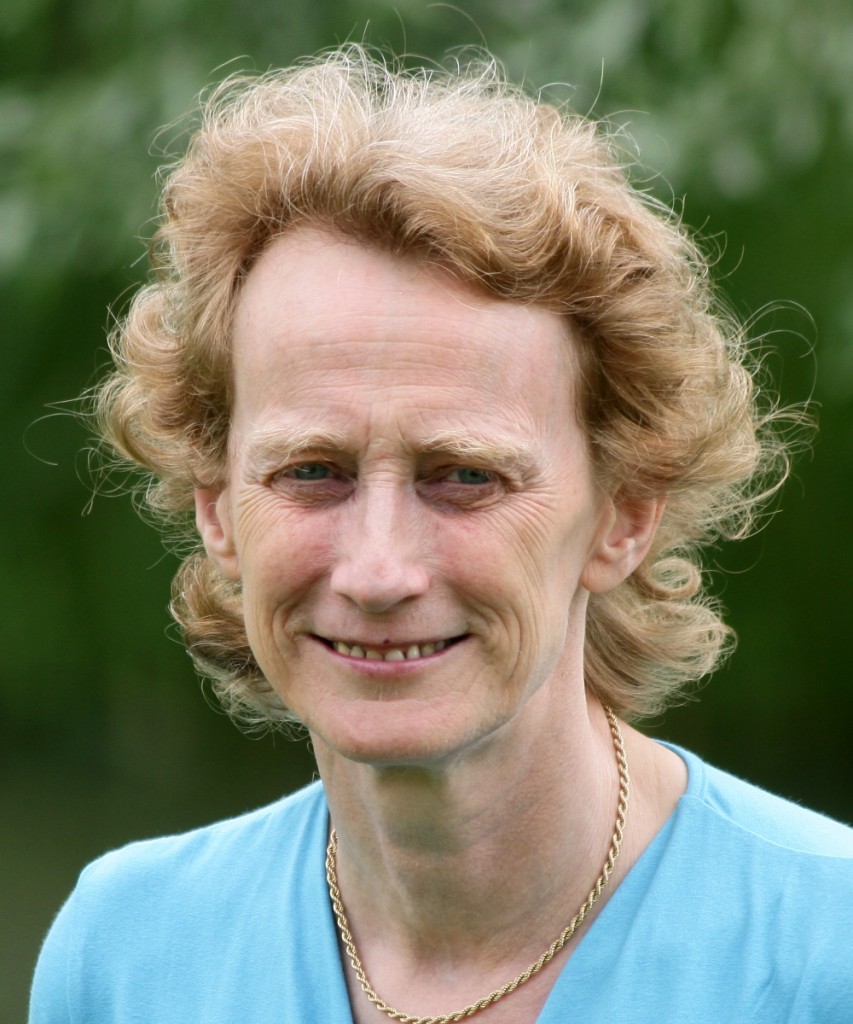
Athene Donald: I still suffer from ‘Imposter Syndrome’
Professor Athene Donald
Even scientists at the top of their game can suffer self-doubt, says renowned Physicist Athene Donald in the Nature Jobs Blog:
Donald also admitted to the occasional bout of Imposter Syndrome – the feeling of certainty that your current position is a result of a clerical error rather than your ability to do the work. An error that will be discovered any day at which point you’ll swiftly be ejected from your university, job, etc. This is certainly something I suffer from too, for example whilst I write this very article.




 The phrase “predatory publishing” doesn’t project a lot of goodwill, either as a characteristic of the publisher or of the person who is classifying them. Jeffrey Beall is an academic librarian at the University of Colorado who publishes a blog “Scholarly Open Access”, recently featured in a




 In this week’s