
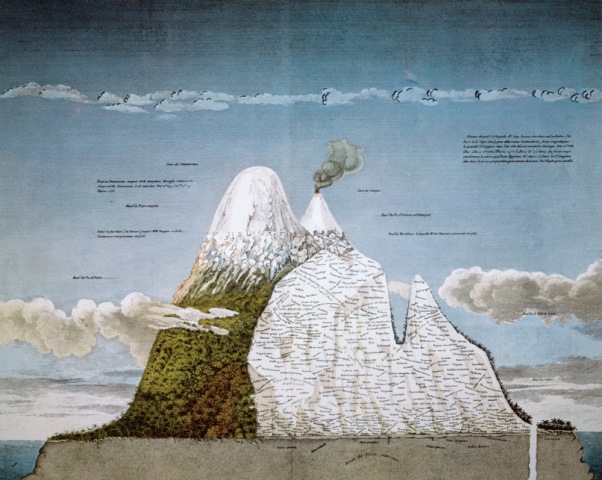
Alexander von Humboldt kept immensely detailed expedition notebooks. This cross-sectional study of Chimborazo in Ecuador (1805), derived from a sketch, shows flora growing at different altitudes on the volcano.{credit}akg-images. Reproduced in Explorers’ Sketchbooks. {/credit}
We live in illustrated times — a golden age for science graphics, data visualisation and scientific illustration generally. Photography has become positively eye-popping — from the cosmoscapes of Hubble to the Earthly delights of nature photography and photo archives the world over. And luckily for us, this gargantuan trove is being steadily funnelled into science-oriented coffee-table books.
I confess that in early in 2016 I was hanging around waiting for one. Then, like a fleet of barouches, several came along at once. In them I’ve found aesthetic thrills, deep insights and unexpected hilarity. Here are five of the best.
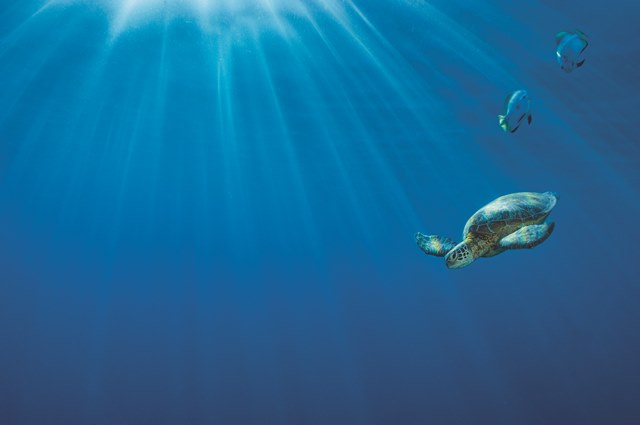
A green turtle (Chelonia mydas).{credit}Alex Mustard, in Secrets of the Sea.{/credit}
Animals proved a draw — archival menageries and photo-surveys playing on our unquenchable fascination with other species. Secrets of the Seas: A Journey into the Heart of the Oceans (Bloomsbury), with text by marine biologist Callum Roberts and photographs by underwater adept Alex Mustard, explores the wild beneath the waves. It begins in the Coral Triangle, where 4 million square kilometres of tropical ocean support three-quarters of the world’s corals and 2,500 fish species. One denizen, the paddle-flap scorpionfish Rhinopias eschmeyeri of Indonesia, is a cartoon in bubble-gum pink. Beauties throng here too, from the sinuous ballets of California sealions Zalophus californianus to silver blizzards of shoaling fish — mackerel to barracuda.
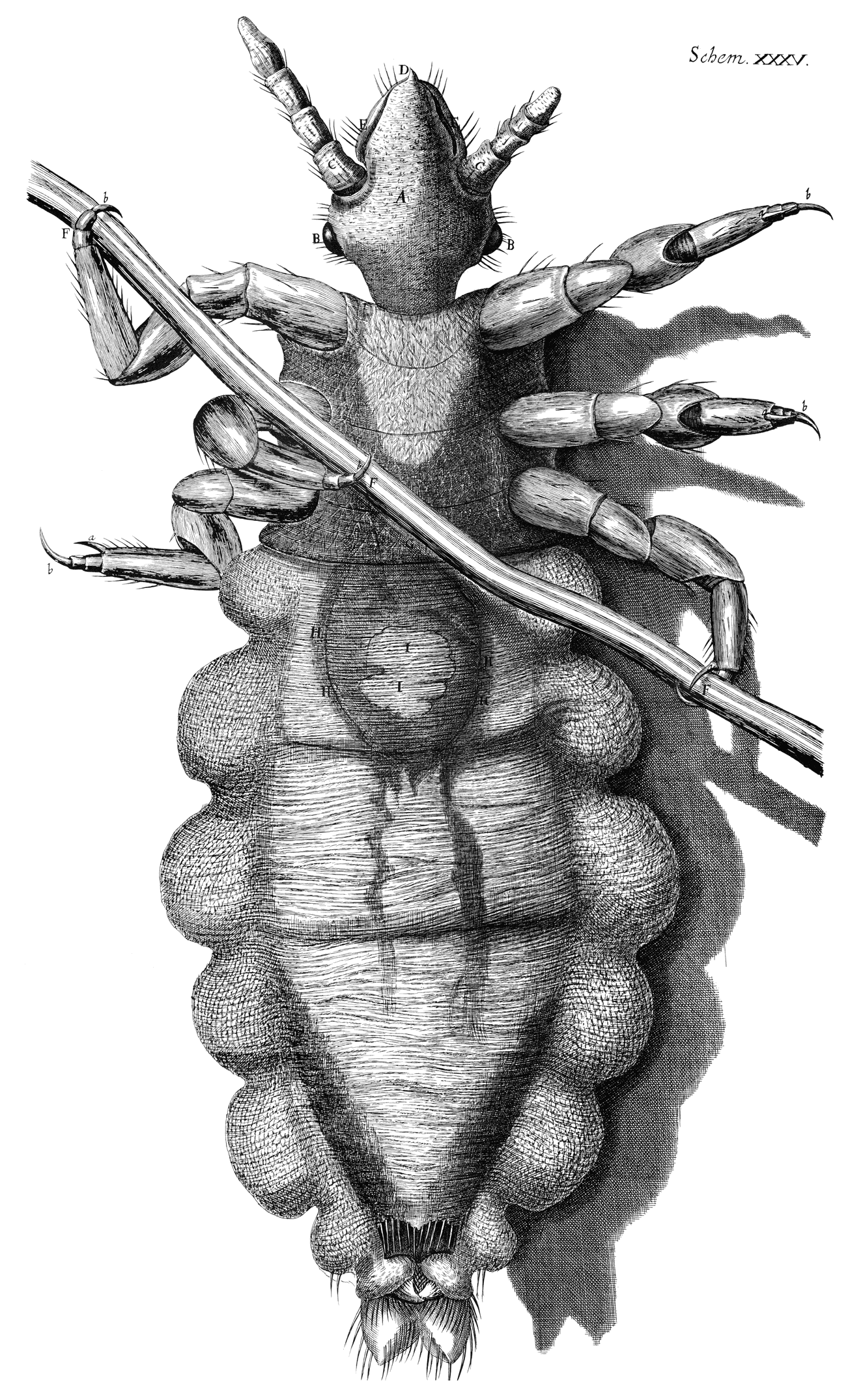
Robert Hooke’s 1665 engraving of a louse on a human hair, from Micrographia.{credit}National Library of Wales. Reproduced in The Paper Zoo.{/credit}
Roberts’s urgent text underlines the state of play for today’s beleaguered marine animals. The Paper Zoo focuses firmly on the planet’s biodiverse past, rummaging through the British Library’s wealth of natural history illustrations spanning 500 years. Science historian Charlotte Sleigh leads us through an ark of beasts from the exotic to the ‘paradoxical’, limned by greats of scientific illustration. Robert Hooke’s eighteenth-century microscopic menagerie of drone flies and lice jostle with natural historian John Ray’s Dürer-like renderings of fish from the 1680s. The nineteenth-century art ranges further South; my favourite is an anonymous double portrait of langurs (one black, one white) staring sagely out in mid-snack.
By necessity, many explorers were illustrators manqué — before the advent of reliable cameras, sketches were essential records of the geological, zoological and meteorological wonders they encountered. Explorers’ Sketchbooks: the Art of Discovery and Adventure (Thames & Hudson), by cultural historians Huw Lewis-Jones and Kari Herbert, is a mesmerising multiverse of them. Facsimile pages from the notebooks of 70 ‘terranauts’ give a stunning immediacy to distant time and space. Edward Wilson’s dreamlike evocations of the Antarctic, Maria Sibylla Merian’s caiman chomping on a false coral snake, the lava streams on Vesuvius mapped by John Auldjo, Alexander von Humboldt’s bold cross-section of Chimborazo — every turn of the page is a subtle thrill.
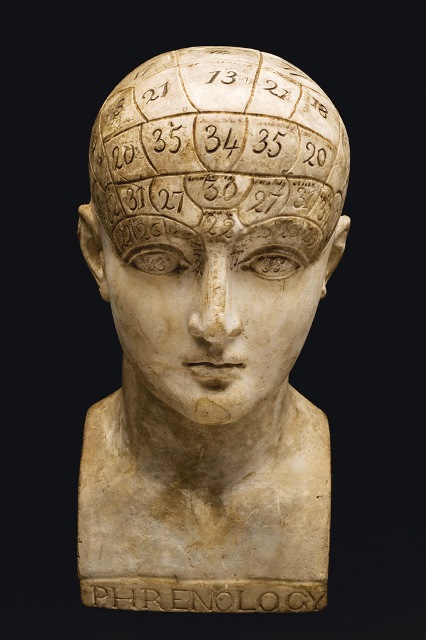
A phrenological bust.{credit}Wellcome Library, London. Pictured in This Way Madness Lies.{/credit}
There are outer, and inner, journeys. Mike Jay’s This Way Madness Lies (Thames & Hudson) peers into the history of mental illness and its treatment as ‘madhouses’ gradually morphed into mental hospitals. (The book accompanies the Wellcome Collection show Bedlam.) Many of the more than 600 images, gleaned from European and US archives, are harrowing portraits of marginalised people further marginalised by experimental treatments ranging from the bizarrely exploitative to the ineffectual. Yet, as Jay notes, there were countercurrents. Franco Basaglia’s 1960s-70s psychiatric revolution in Italy sought to reinstate patient autonomy and social integration. Community refuges from Geel, Belgium, to Gould Farm, Massachusetts, offer treatment based on acceptance and occupation. And the science advances — even as depression and psychoses remain very much with us. A gallery features astounding art by the diagnosed, from proto-surrealist and Victorian parricide Richard Dadd to Adolf Wölfi, a talented abstractionist confined to a Bern asylum for life in 1895.
Finally, there are journeys into myth. The Un-Discovered Islands: An Archipelago of Myths and Mysteries, Phantoms and Fakes (Polygon) by travel writer Malachy Tallack and artist Katie Scott relates the stories of islands that never were. The Terra Novas off East Antarctica spotted by expedition leader Phillip Law in the 1960s were probably icebergs. The Auroras, a trio of islands halfway between the Falklands and South Georgia, were discovered in 1762, actually surveyed in 1796, and finally declared non-existent in the nineteenth century. There are more, from Hy Brasil to Bermeja, and all embellished by Scott’s strange and powerful images of whales, rabbits and jellyfish — species inhabiting what Tallack calls the “geography of the mind”.
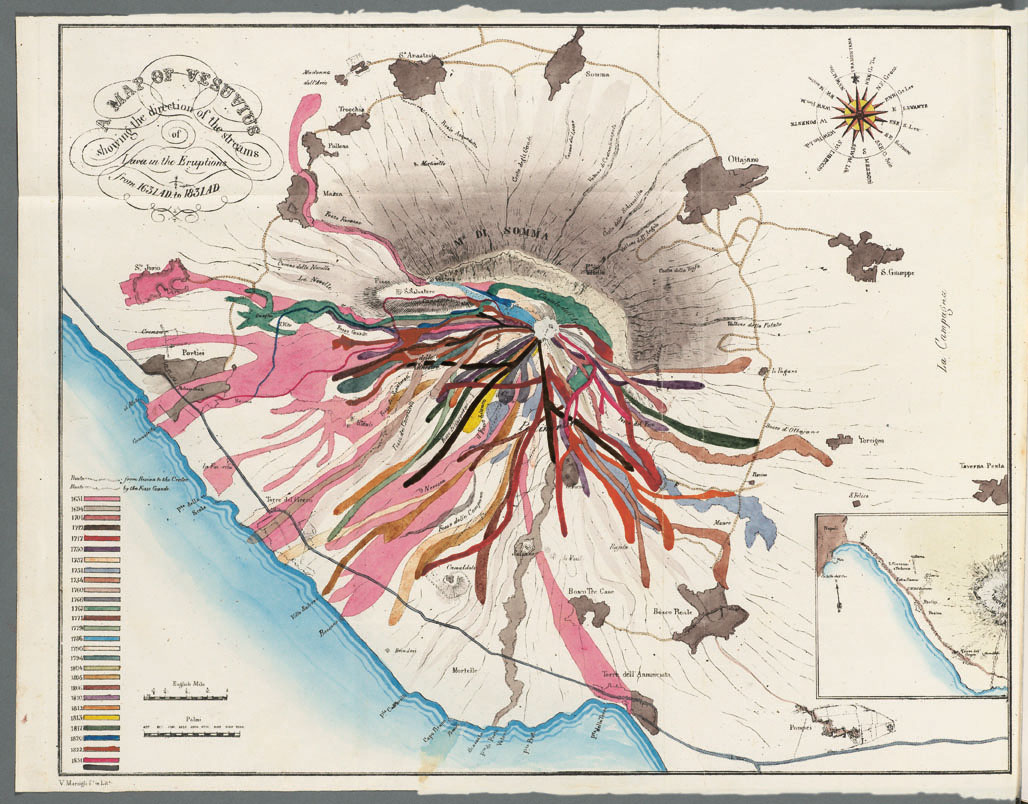
John Auldjo’s nineteenth-century map of successive lava flows on Vesuvius.{credit}Houghton Library, Harvard University, Cambridge, Massachusetts. Reproduced in Explorers’ Sketchbooks. {/credit}
For Nature’s full coverage of science in culture, visit www.nature.com/news/booksandarts.