My science failures: How to err wisely

Science stories are equal to success stories. Right? Wrong. In thinking of scientists as successful people, we often assume that their career paths are straightforward, meticulously planned, and yield positive outcomes. However, things don’t always go as planned. Behind every small success, there’s probably a string of failures — work that did not make it to the curriculum vitae, rejected papers, turned-down applications, declined grants, unsuccessful job interviews, and many closed doors.

Science blooms in these failures as much as it does in the glory of accepted manuscripts, grants, awards, and patents. In this blog series “My Science Failures” we will hear some straight-from-the-heart stories of these secret milestones in the lives of scientists — and learn how they turned these events on their head (or did not).

Vijay Soni, an instructor at Weill Cornell Medicine, New York, says the actual reason why science is so successful is these failures.
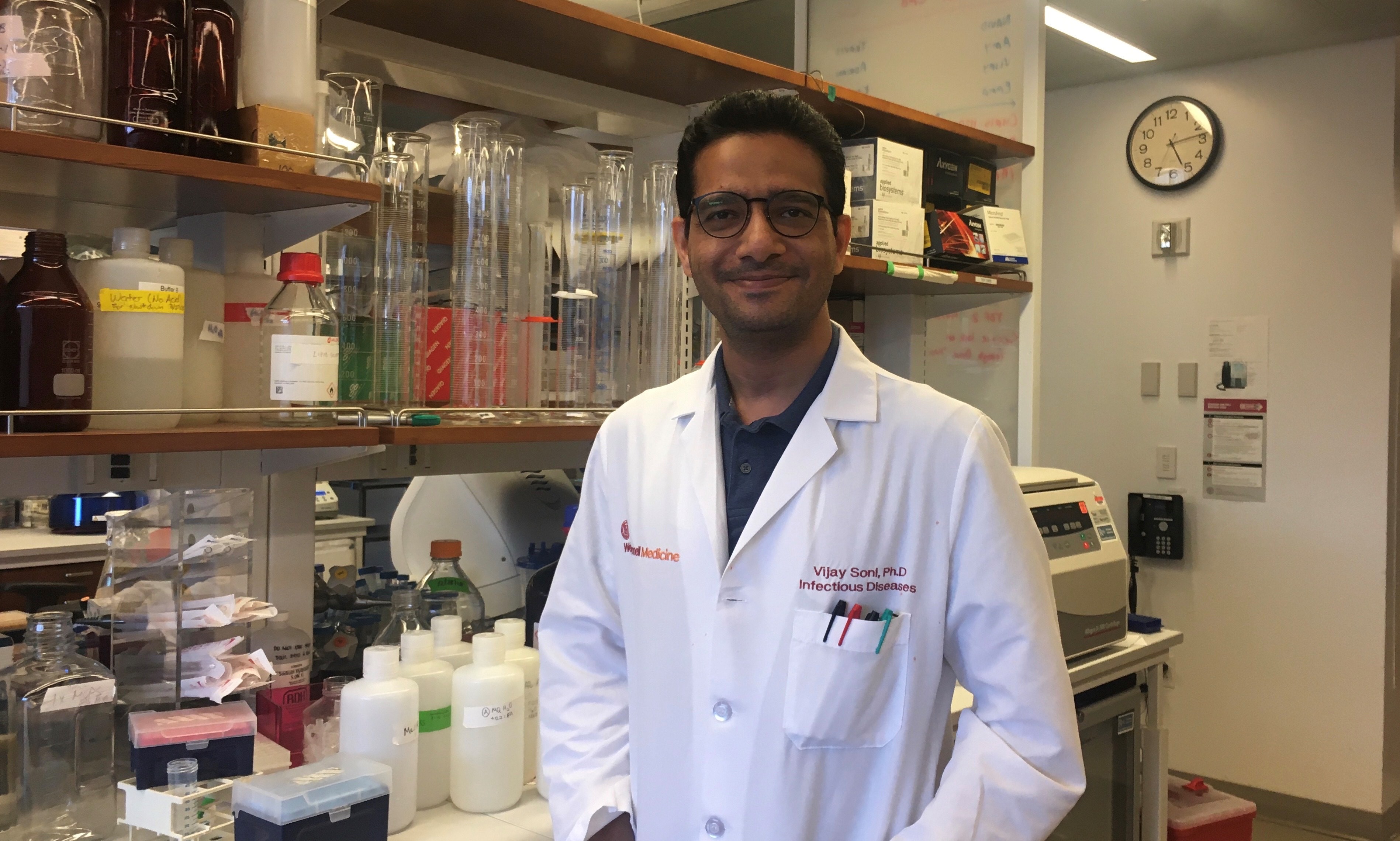
Vijay Soni

In science, we fail more often and at a rate higher than in other vocations. Hypotheses go wrong, experiments do not deliver the expected outcomes. There are contaminations, misleadingly simplistic or representative models, false-positive results, experiments without controls, rejections of manuscripts, and failed projects. The actual reason, why science is so successful, is all these failures. It is, therefore, imperative to learn the real value of mistakes.

Failures are a sign that you are inventing,” says Elon Musk. Curiosity guides us to learn better and faster. We have been taught to attach connotations to words and are accustomed to believing that success is positive, and failures are negative. However, learnings are never black and white – they are a full rainbow. Each colour is an experience that must be enjoyed, lived, and felt.

Scientists hardly speak of false starts. There is nothing glamorous about dead and failed stories. And so there is a big chunk of knowledge that goes unreported or unpublished.

How do scientists cope with recurrent failures and grow? In my own research journey, many times I wish I knew about earlier false starts so that it didn’t have to go down an already failed path. I did not find any resource where scientists shared their wisdom from failures. Therefore, I started FailWise to offer learnings, information, opinion, and guidance around such failures. The inspiration came from Brandon Mull’s words: “Smart people learn from their mistakes, but the real sharp ones learn from the mistakes of others.”

Every scientist has a personal relationship with failures, and evolves uniquely. I have too. As a biology undergraduate, I learnt a big lesson early on when my lecturer published under his name all data from a research project I was working on to get a grant. Similarly, a lab mate presented my data without my consent or acknowledgment to get a postdoc position. Lesson I learnt: don’t disclose all your data and research to anyone. Never circulate your lab reports or critical data even among close friends.

There are more things that I learnt as a researcher:

  1. I studied undergraduate in a Hindi medium. I always felt it would be a problem when I go for higher studies. But I was wrong. Language is not a barrier in science but lack of knowledge is. I never stopped reading books and research articles. If you do not read background literature, maintain notes or connect the dots to frame your questions, you will likely fail. Learn to ask better questions, you will automatically be guided towards better answers.
  2. Once I was told that I would not have been hired if I was not from a certain lab (my master’s and undergraduate studies were from a very small state university in India). It was discouraging. But I reminded myself that people who follow their path passionately and honestly make great scientists and labs, and they may not necessarily be working in a world-class institute. No matter what your background, chase your dreams with perseverance.
  3. After Masters, I was working as a project assistant at a renowned institute in India. I was treated like a labourer there — never allowed to ask any question, asked to help in my principal investigator’s household work. He used foul language, forced me to work at least 12 hours every day, even on weekends. I tried hard to stay but gave up after 6 months and joined another lab. The lesson I learnt: Quit (as soon as possible) if you are not respected or treated properly. A mentor who does not provoke thought or gives you the freedom to ask questions, will likely not aid your career much. Choose your research mentor wisely. You can not do science when you have a micro-manager or a bad human for a mentor.
  4. During my undergraduate, I was selected for a presentation for a national-level scholarship. I researched hard for a project on neural tube defects and but I was not well prepared for the presentation. And thus I failed to get the scholarship. Lesson learnt: Bad communication or presentation skills will dampen your science. Work on them, ask for feedback from your mentor and lab mates. Do mock presentations, write notes, try recording and listening to them to improve your sentences and script.
  5. While I was doing Ph.D. I never explored anything beyond my lab. But during postdoc, I started attending various courses on entrepreneurship and leadership skills. This helped me start my own company (Scipreneur). Researchers seldom explore things beyond their labs. Remember, your network is your net worth. Try to participate in courses, meetings, competitions, and networking events. Use social media wisely and to your benefit. Read biographies, listen and watch good talks and podcasts. They will help you in multiple ways. Like how to manage stress and time, how to cope with failures, how to deal with relationship hurdles, and how to envision your future with a better goal? Do more informational interviews, where you ask an expert’s time to discuss how they achieved their goals.
  6. Entrepreneurship was always on my mind but I never explored it as I felt I lacked the skills required. I failed to start on some interesting ideas and later found that someone had worked on them successfully. It took me 6 to 7 years to realise that Ph.D. and postdoc leverage us with so many traits like leadership, mentoring, communication, negotiation, perseverance, collaboration, and entrepreneurial skills. Do not undervalue yourself. Learn to swim beyond your safe zone and against the currents. It will not only boost your confidence but also enhance your ability to cope with challenges.
  7. I have seen researchers working day and night but failing to achieve big. Donkey work will seldom give you great science and big breaks; smart work will. You need to polish your ideas, questions, plans and execution. Teamwork is dream work, so never hesitate to ask for help. Collaborate and discuss with peers. I also learnt to use technology in the right way to accelerate the pace of research and increase efficiency. For example, use software and languages for better and fast analysis, LinkedIn for better collaboration and learning, Evernote for writing and as a virtual notebook, simple web-based software for colony counting and standard curve plotting, and different online tools to make beautiful figures and presentations.

We cannot predict failure, but we should keep the lessons learnt imprinted in our minds. Collaborative learning and sharing help us see mistakes more positively. Failures can rewire our brains and give us the confidence to approach problems from a different angle. They force us to question our hypotheses, plans, protocols, execution, and experimental setups. The greatest thing a scientist can discover is “a novel or better question”. Give yourself permission to fail and explore.
My science failures: Get up fast after each fall

Science stories are equal to success stories. Right? Wrong. In thinking of scientists as successful people, we often assume that their career paths are straightforward, meticulously-planned and yield positive outcomes. However, things don’t always go as planned. Behind every small success, there’s probably a string of failures — work that did not make it to the curriculum vitae, rejected papers, turned-down applications, declined grants, unsuccessful job interviews, and many closed doors.

Science blooms in these failures as much as it does in the glory of accepted manuscripts, grants, awards and patents. In this blog series “My Science Failures” we will hear some straight-from-the-heart stories of these secret milestones in the lives of scientists — and learn how they turned these events on their head (or did not). You can join the resultant online conversation with the #mysciencefailures hashtag. Let us know at indigenus@nature.com if you would want to tell us your story.

Divya P. Kumar, is an Assistant Professor and DBT-Ramalingaswami Fellow at the Department of Biochemistry in J S S Medical College, Mysuru, Karnataka. As a young investigator, it took courage for her to talk about failures. But her belief to ‘do what’s right, not what’s easy’ saw her through this exercise in soul searching.

{credit}Divya P. Kumar{/credit}

“Success is a public affair but failure is a private funeral.”

Failure is an integral part of any career path, but the irony is that one doesn’t dare to speak of it in public. We admire reading or watching stories of successful people who have failed at some point in their lives but are reluctant in accepting and overcoming our own failures. Fortunately things are changing and the world has started appreciating that it’s okay to fail rather than not trying, or quitting.

In the scientific world, we are more acquainted with failures than success – be it in experiments, grant proposals, job interviews, manuscripts or lab management. It is therefore important that we discuss failures, appreciate the attempt made and importantly, support each other to iron them out. Accepting failure is an integral part of career development.

My work is still in progress in terms of building a career path as a scientist. This blog piece is my humble effort to say out aloud to every research scholar, postdoctoral fellow or young investigator who has failed:  “You are not alone”. All scientific failure stories appear alike whereas success stories differ in their own way. I say this because while reading someone’s scientific failures, we often relate to them.

Science just happened

I never dreamt of becoming a scientist. Growing up in the southern India city of Mysore in Karnataka, the professions of choice were engineering or medicine (thankfully, it has changed now). Though I was interested in engineering, I did not make the cut in the entrance exams. I chose to study biotechnology.

During the great economic recession of 2009, I moved to the United States with my husband. My application to a graduate school got rejected. It made me realise how competitive the scene was. It also made me appreciate the importance of participation in summer research programmes, workshops, conferences, publications and extracurricular activities that count along with the regular academic requirements of the graduate programme.

Not losing hope of a PhD, I started volunteering in the lab and soon took up the job of a project assistant. The hard work paid off and I had a first-author publication and then got enrolled into a graduate programme.

All this happened while I was working in two different labs, the first one being a bitter experience because of micro-management by a rather insecure leader.

The PhD roller coaster

I decided to opt for a different lab for PhD. However, having one published paper, one co-authored manuscript in press and another first-author manuscript in the works, it was a tough call to leave the lab and start all over again. It was a structural biology lab and I had realized within one year that it was not my cup of tea. Setting up crystal trays needed a lot of patience and stamina (and I admire those in the field for that). I also had limitations with my knowledge of physics. It would perhaps have been easy for me if I put in some effort to get familiar with the work, the people and the ambience but I listened to my heart and got ready for the next challenge.

PhD was challenging. The research work demanded key expertise in islet isolation from mice as also working with mice and human islets in vitro. This expertise was not available in the lab. So I had the great opportunity to collaborate with scientists from a different University. Earlier, my first publication had been accepted within 3-4 days of submission in the journal Biochemical and Biophysical Research Communications, something I realised was a rarity. I got to taste the reality of PhD, struggling with the new expertise I had to master for nearly half a year. This was the best period of my PhD as I learnt how important mentors and their support are. I also learnt the life skills of troubleshooting, perseverance and patience and of loving one’s work despite uncertainties.

Managing a lab

Setting up a research lab and a team marks the beginning of an exciting phase in the career of all young investigators. It is challenging and does require management skills to build and run the lab effectively. Having realised this, I set up a new research team with academic values and good lab culture. As everything was falling in place, the two research scholars quit – one was selected for a government job and the other for her personal reasons. I had heard similar stories, but your heart breaks when it happens to you.

The time and effort invested at this initial stage of establishing your career seem to have gone to waste. However, I did appreciate the interest of the research scholars and their personal journeys.

I got back to the drawing board with renewed energy and inducted new research scholars in the lab. The exercise was humbling and taught me that ‘sometimes good things fall apart so better things can fall together for the best to happen’. We are just a couple of months into the new set up and it seems promising so far.

Being a young investigator, listing these failures in my scientific career took some courage. This introspection gives me a sense of pride for not letting failures break my self-trust. I have learnt from from them to go with the flow, re-envision my goals and seek inspiration from others. In the end, I have always believed in doing ‘what is right than what is easy’.

More in the series:

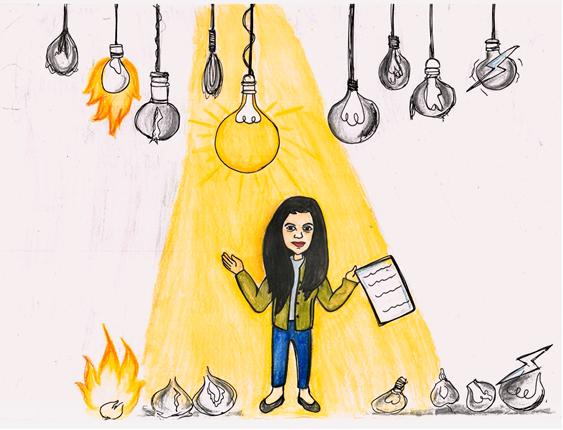
My science failures: All the light bulbs that did not work

My science failures: All the light bulbs that did not work

Science stories are equal to success stories. Right? Wrong. In thinking of scientists as successful people, we often assume that their career paths are straightforward, meticulously-planned and yield positive outcomes. However, things don’t always go as planned. Behind every small success, there’s probably a string of failures — work that did not make it to the curriculum vitae, rejected papers, turned-down applications, declined grants, unsuccessful job interviews, and many closed doors.

Science blooms in these failures as much as it does in the glory of accepted manuscripts, grants, awards and patents. In this blog series “My Science Failures” we will hear some straight-from-the-heart stories of these secret milestones in the lives of scientists — and learn how they turned these events on their head (or did not). You can join the resultant online conversation with the #mysciencefailures hashtag. Let us know at indigenus@nature.com if you would want to tell us your story.

The first volunteer in this dare-to-bare series is Karishma Kaushik, an Assistant Professor and Ramalingaswami Fellow at the Institute of Bioinformatics and Biotechnology, Savitribai Phule Pune University. Karishma shares the ‘failure’ milestones of her career, and discovers a sense of gratitude for things that did not go her way.

{credit}Meetali Barhate (Morya Arties), IBB, SPPU{/credit}

‘I haven’t failed, I’ve just found 10,000 that won’t work’ — Thomas Alva Edison on the invention of the light bulb.

While failure is an integral part of our scientific journeys, we are often too crestfallen to acknowledge and share these stories. But it is these closed doors that force us to consider alternative options and look for unexpected openings. It is, therefore, imperative to talk openly of failures at the workplace and recognize them as integral to career progression.

Taking the initiative, a few members of the academic community have published their ‘CVs of Failures’ or ‘Anti-Portfolios’, which instead of listing successes and accomplishments, chronicle rejections, failures and ‘changes of plans’.

Such open records of career failures help de-stigmatize rejections in academia, and have spurred a discussion on including a ‘failures’ section in one’s curriculum vitae. Whether one decides to publish a full-length failure resume or not, chronicling these difficult milestones for oneself is definitely an invaluable exercise and brings forth unprecedented insights as I realized first-hand.

So, this is my ‘real’ career story.

1. I almost failed my 10th standard History exam: A stellar student through my school years, I least expected to make a dismally poor grade in my 10th standard History exam. Blame it on the exam paper getting mixed up or misplaced, the fact remained that this single score brought down my average grade. This meant that to get into a reputed junior college, I couldn’t get into the exclusive Physics, Chemistry and Mathematics programme, and had to take Biology as an add on.

Little could I imagine that being ‘forced’ to take Biology would set me on a career path as a physician!

2. I never planned a career in medicine: Forced to take up as biology as an add-on, I neglected the subject for most part of junior college. Two months before the 12th standard examinations, I came across an excellent piece of human biology educational material. Those realistic illustrations of the human body fascinated me. I decided to pursue medicine and began preparing for medical college. To this day, I am convinced I must have been one of the last people to fill those medical entrance exam forms!

It has been close to 20 years in medicine and the biological sciences, and with each career milestone, I have only grown to love the subject and my work more.

3. I did not get into a government medical college: I blamed it on my last minute decision to pursue medicine, but the fact remains I did not make it to the cut-off list for a government medical college. I took up a state-subsidized seat at a relatively new private medical college.

It turned out to be a wonderful student phase, where I not only excelled academically but also through my participation in health-related public talk shows and symposiums, discovered a natural inclination for public speaking. Honing this ability to address large audiences has inevitably shaped my career decisions, particularly to seek opportunities that include teaching.

4. I did not get into my top choice of residency programmes: During medical college, I decided on two choices of specialty to potentially pursue, dermatology and pathology. Short-listed for interviews for both at a prestigious medical college in India, I did not make it to the final lists for either. Determined not to ‘lapse’ a year, I took up a residency program in clinical microbiology.

In this programme, I had the opportunity to do a notable piece of research work for my thesis for which I interfaced with basic scientists’. This led me to pursue a PhD in the US. I recently returned to India as one of the country’s few trained physician-scientists. It was ‘denial’ and not ‘design’ that set me on this career path.

5. I was rejected by graduate schools for two years: Moving to the US with my husband, my search for PhD positions coincided with the economic recession of 2008. My rounds of the Bay Area’s top graduate schools left with me with an appreciation for academic science in the US, but also with a harsh realization of the immigration and funding constraints. After two years of close to 10 applications and no success, I decided to apply outside of California, focusing on cities my husband could also relocate to. I finally accepted an offer from a well-known school in Texas. I spent the first year telling myself we would be out of Texas as soon as the PhD was done.

My ‘stint’ in Texas lasted almost a decade and marked one of the most luminous phases of my professional and personal life. I could never imagine myself saying ‘Texas is home’!

6. I did not get into the first three labs I tried in graduate school: I started the first year of my Ph.D. rotating through three laboratories, after which I was expected to find a laboratory to pursue my PhD. At the end of one year, all three rotations yielded no takers, either due to space constraints or the fact that I didn’t have a particular skill set. I petitioned the programme to allow me a fourth rotation.

That ended up being my PhD lab. That also ended up being a wonderful mentorship experience, start of a new research group, a 5 year PhD with five papers, extensive teaching experience, professional independence, and a work environment that supported my choice of motherhood and parenting. To think, I almost did not join this lab!

7. I struggled with the science for almost half the PhD: While I really liked the laboratory I finally ended up in, I found myself completely out of depth with the science. It was interdisciplinary, employed biophysical concepts and developed mathematical models – it was exactly the Ph.D. I did not anticipate. Nevertheless, I persevered at it.

Mid-way through the PhD, I discovered an interesting phenomenon, after which I focused on probing the biological aspects of it, while a talented undergraduate worked on the mathematical models. This proved to be a turning point in my PhD journey, and the gateway to a highly productive remaining stint.

8. I walked out of a prestigious post-doc laboratory: With a very productive PhD stint, landing a post-doc was not difficult. I joined a ‘pedigreed’ research group where the science was cutting edge, and advantageously, in the same city I was living in. Within a month, I noticed glaring signs of a toxic and bullying academic culture. I had seen enough of academia to read through intense-levels of micromanagement, a flurry of to-do lists on a Friday night demanding work over the weekend, and pressure to respond to emails at 4 a.m. This was not normal or acceptable. Fortunately, I had the support system and flexibility to walk out.

The silver lining in this brief stint was that I discovered, in this short span of time, that I had it in me to steer my own research. I believe that this was the best and possibly, the boldest professional decision I have ever made.

As anticipated, making my own ‘list of failures’ was an exercise in introspection. It highlighted the varied challenges I have managed to overcome in this professional journey, and underscored that while there were many things beyond my control, I was able to effectively respond and redirect my career trajectory. Most importantly, looking at these career failures, I discovered a deep sense of gratitude for all the things that did not go my way. I realized that the best-laid plans that did not work actually led me to where I am today.

Revisiting this list will serve as a reminder to embrace the entire journey, its ups and downs, closed doors and unexpected openings, crushing lows and dizzying highs. For, it’s both – the things that work and the things that do not – that shape our unique career stories.