
Levels of editing at Nature

nature11mar.jpg

Q: Is editing support given to manuscripts published in Nature? What level of editing is done? Is this editing done in house or outsourced? Are you and the authors pleased with the level of editing?

A: When a manuscript is submitted to Nature it goes through several rounds of peer review – the manuscript as accepted is very different from the version submitted. The peer-reviewers (typically 2 or 3) and the editors provide substantial structural (developmental) editing suggestions. All manuscripts accepted in principle for publication go through a detailed checklist procedure to guide the author both in matters of clarity and in important points such as financial interest declarations, supplementary information, and so on.

After acceptance, we use a combination of automatic editing tools for routine structuring (eg ordering and styling reference lists) but have a dedicated team of sub (copy) editors who edit the manuscript in Word, sending the author an edited version of the ms with changes tracked. The subeditor also manages the artwork process (all figures are relettered and sized by a dedicated art department), and the proofing-out process in which the author is sent a PDF to sign off. We officially don’t accept “new” changes on proof but in practice we do if they are reasonable. The subeditors also manage any post-publication correction process, in consultation with the manuscript editors.

The only part of this editorial process that is done externally is the typesetting. The rest of it is done in-house, with an increasing number of technical tools such as tracking systems.

Nature also has review, opinion and comment sections as well as a comprehensive weekly and daily news service. These are all produced in-house: editing, graphics, art, layout. All of our web production and processes are done in-house, some parts of the process are managed by our team in Bangalore but all of our standard web production and development is done in-house.

Nature authors are pleased at the level of editing help they receive – we regularly conduct author experience surveys, and are currently doing market research among groups of readers. As a senior editor at Nature I am very happy with the subediting process we run here – having the team in-house is extremely flexible for adding in web functionality, metadata and developing new templates and other projects, as well as the more traditional editing tasks.

The editorial process at Nature.
Getting published in a Nature journal.

Advice on writing a paper for a Nature journal.

Synthetic systems biology, ten years on

syntheticsytemsbiology.jpg

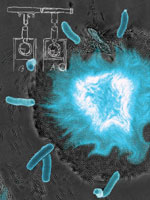
Synthetic biology goes beyond classic genetic engineering as it attempts to engineer living systems to perform new functions not found in nature. Ten years ago, Nature published a pair of seminal papers that stimulated ‘systems biology’ thinking in the field. The journal has now collected these papers, together with other, more recently published articles and an accompanying free podcast and video, as a web focus on ‘Synthetic systems biology’.

The collection includes a News Feature ‘Bioengineering: Five hard truths for synthetic biology’ (Nature 463, 288–290; 21 January 2010), which is free to access online. In this News Feature, Nature asks whether engineering approaches can tame the complexity of living systems by exploring five challenges for the field and how they might be resolved.

Also in the focus is a free online Editorial from Nature, ‘Ten years of synergy’ (Nature 463, 269-270; 21 January 2010), which suggests that contributions to and from basic science are the part of synthetic biology that most deserves celebration. In an accompanying podcast, one of Nature’s biology editors, Tanguy Chouard, discusses toggle switches, flashing colonies of bacteria and the challenges ahead for synthetic biology. And you can see a Nature video of synchronizing bacteria.

For these and other Nature articles on synthetic biology (commissioned editorials and original research papers), please visit the web focus.

Elucian Islands village in Second Life

elucian.jpg

Via the Nature Network Second Life forum, Nature Publishing Group has created a new Elucian Islands village.

The village is a whole ‘sim’ owned by Nature Publishing Group (NPG) and covered with labs available for scientists or educators to use free of charge to work on their own projects. If you would like a space in the village, please contact Joanna Scott or Lou Woodley to get set up.

There is a new Nature Network group specially for residents of the village and people interested in what’s going on there: please do feel free to join if you’d like to keep up to date. In the next couple of weeks Jo and Lou will be starting a group blog for residents to blog about their projects, so do watch out for that as well.

Find out more here about the Elucian Islands, Nature Publishing Group’s home at Second Life.

Nature Chemical Biology’s symposium series

Taken from the Editorial in the November issue of Nature Chemical Biology (5, 863; 2009):

In the past decade, chemical biology has expanded to embrace increasingly diverse research areas at the interface of chemistry and biology. Nature Chemical Biology has strived to highlight this aspect of chemical biology by publishing papers that apply chemical and biological approaches to achieving a greater mechanistic understanding of biological systems. The field also offers small molecules and tools that can be used to manipulate chemical and biological systems with unprecedented molecular precision. Given these basic and applied aspects, chemical biology has naturally resonated with fields that rely upon integrated chemical and biological insights. No field has been more affected than drug discovery.

This synergy was highlighted at the third Nature Chemical Biology symposium Chemical Biology in Drug Discovery, held on 19–20 September 2009 in Cambridge, Massachusetts. The organizers were Paul Workman (Cancer Research UK Centre for Cancer Therapeutics at The Institute of Cancer Research, UK), Giulio Superti-Furga (Center for Molecular Medicine, Austrian Academy of Sciences, Austria), Brian Shoichet (University of California, San Francisco, USA), and Joanne Kotz (Nature Chemical Biology, USA)

Though the symposium focused primarily on the ways that chemical biology will shape the science of drug discovery, it was clear that chemical biologists, who are equipped with a substantial toolbox of ‘pathfinder compounds’, chemical methods and other technologies, represent a new generation of talented interdisciplinary scientists who will bring fresh insights to the drug discovery culture. Pharmaceutical companies should make every effort to integrate chemical biology programs and scientists into their portfolios to promote innovation in chemical biology for drug discovery.

A primary aim of the Nature Chemical Biology symposium series has been to nucleate discussions among scientists who share common interests but approach these scientific areas from different perspectives or with divergent tools. We look forward to bringing together other groups at the frontiers of chemical biology, and we welcome suggestions for future symposium topics.

Nature Chemical Biology:

Journal home page.

About the journal’s web site.

Focuses and supplements.

Guide for authors and peer-reviewers.

About the editors.

Contact the journal.

Nature Conferences main index.

Poster on small RNAs from Nature Reviews Molecular and Cell Biology

Nature Reviews Molecular and Cell Biology presents a free poster on the productions and actions of small RNAs (ribonucleic acids), by V. Narry Kim and Mikiko C. Siomi. Recent progress in cloning, deep sequencing and bioinformatics have revealed an astounding landscape of small RNAs in eukaryotic cells. Small (20–30-nucleotide) RNAs, in association with Argonaute-family proteins, target messenger (m)RNAs and chromatin, and thereby keep both the genome and the transcriptome under extensive surveillance. The poster depicts our current understanding of the processing pathways of eukaryotic small RNAs and their possible mechanisms of action, and accompanies the Review article ‘Biogenesis of small RNAs in animals’ by V. Narry Kim, Jinju Han and Mikiko C. Siomi in the February issue of Nature Reviews Molecular and Cell Biology (10, 126-139; 2009).

High-resolution PDF of the poster.

Futher reading about productions and actions of small RNAs.

Nature Reviews Molecular and Cell Biology article series on post-transcriptional control.

See also Nature’s Insight on RNA silencing, in the 22 January issue (Nature 457, 395-433; 2009). This collection of five Review articles is free to access online.

Nature Publishing Group RNAi (RNA interference) gateway.

Focus on mechanotransduction

Nature Reviews Molecular and Cell Biology presents a special Focus on mechanotransduction — on a range of topics from how cells sense mechanical forces in different tissues to how these mechanical forces are transduced into biochemical signals — in development, normal physiology and disease. Cells sense their physical three-dimensional environment — properties of the extracellular matrix, neighbouring cells and physical stress — by translating mechanical forces and deformations into biochemical signals. In turn, these signals can adjust cellular and extracellular structure. This mechanosensitive feedback modulates cellular functions as diverse as proliferation, differentiation, migration and apoptosis, and is crucial for organ development and homeostasis. Any molecular defect that interrupts or alters this chain of mechanical sensing and subsequent cell signalling events could perturb the normal cellular function and potentially lead to diverse diseases such as loss of hearing, cardiovascular disease, muscular dystrophy and cancer.

The Focus is free to access for the month of January 2009.

See also Milestones in Cytoskeleton, and request a free print copy here.

Seminar on publishing excellence and citation data

Nature Publishing Group (NPG) and Thomson Reuters are holding a joint seminar on publishing excellence and how to correctly interpret journal citation data on 23 January 2009 in Sydney, Australia. This seminar will go into detail about the use and misuse of impact factors along with a presentation by senior editor Leslie Sage on how to get published in Nature.

Four speakers will present on the following:

Antoine Bocquet, Associate Director, NPG Asia-Pacific:

Growth of Nature Publishing Group

Dr Leslie Sage, senior editor, physical sciences, Nature :

How to publish a paper in Nature

Dr Berenika M Webster, strategic business manager, Thomson Reuters Scientific, Asia Pacific:

About use and misuse of impact factor and other citation metrics

Dr Dugald McGlashan, associate publisher, Asian journals, NPG:

Developments in author and reader services in a changing publishing landscape

This seminar is free to attend and open to those interested in publishing in Nature titles and journal citation data.

See here for more information, details of the venue, and to reserve your place.

Nature Milestones in Cytoskeleton

Published on 1 December, Nature Milestones in Cytoskeleton is a collaboration from Nature, Nature Cell Biology and Nature Reviews Molecular Cell Biology, focusing on ground-breaking advances in cytoskeleton research. Developments in the past 60 years range from the discovery of actomyosin to the identification of molecular motors, and from fluorescence analogue cytochemistry and differential interference contrast microscopy to single-molecule in vitro assays and optical traps.

Milestones are a series of specially written articles, which highlight the most influential discoveries in the field of cytoskeleton over the past 60 years, as described in an Editorial. Nature Milestones in Cytoskeleton also comprises a collection of selected review articles, a timeline of key discoveries, and an online-only library of recent research papers and review-type articles from Nature Publishing Group.

Free print copies of the Milestones in Cytoskeleton suppliement are available to order (the supplement is being distributed with the December 2008 issues of Nature Cell Biology and Nature Reviews Molecular Cell Biology, so subscribers of these journals do not need to request a copy).

See also Nature’s web focus on the 50th anniversary of the first report of muscle crossbridges, published online in 2004. A few print copies of the reprint of the two 1954 papers are available: if you would like one, please leave your name and mailing address in the comments field to this post, or send an email to authors@nature.com.

Direct control of paralysed muscles by cortical neurons

The activation of a single neuron in the brain may be enough to help restore muscle activity in the arms of paralysed patients with spinal cord injuries. Chet T. Moritz, Steve I. Perlmutter and Eberhard E. Fetz report their research in Nature (doi:10.1038/nature07418) showing that a potential treatment for paralysis resulting from spinal cord injury is to route control signals from the brain around the injury by artificial connections. These results are the first demonstration that direct artificial connections between cortical cells and muscles can compensate for interrupted physiological pathways and restore volitional control of movement to paralysed limbs.

The implications of this research are covered by Nature News in a story that is free to access online. The authors discuss their work in this week’s Nature Podcast.

Nature web focus on frontiers in HIV/AIDS

Development of an effective HIV/AIDS vaccine and new drugs to treat established disease remain an urgent and pressing need. To conquer the enormous challenge demands a far better understanding of the biology of the virus, its interaction with infected cells, and the response of the immune system, than is currently at our disposal. A Nature web focus presents a selection of recent research papers in Nature that advance our knowledge in this regard. Click here to access selected content free online.