Generic tips for your approach to a grant application

By Kate Christian



We’re launching our annual journalism competition, to cover our flagship career fair in London on October 4th, 2017. Continue reading
Guest contributor Andy Tay
Previously, I shared my thoughts on the usefulness of an overseas working experience to establish networks with international experts, and to develop cultural awareness — both of critical importance in a researcher’s career. This year, I decided to head to Japan, Tokyo to work on stem cells as a summer intern at the RIKEN Brain Science Institute (BSI).
If you’re thinking of an overseas internship, especially in Japan, my hope is that this will be of help to you.
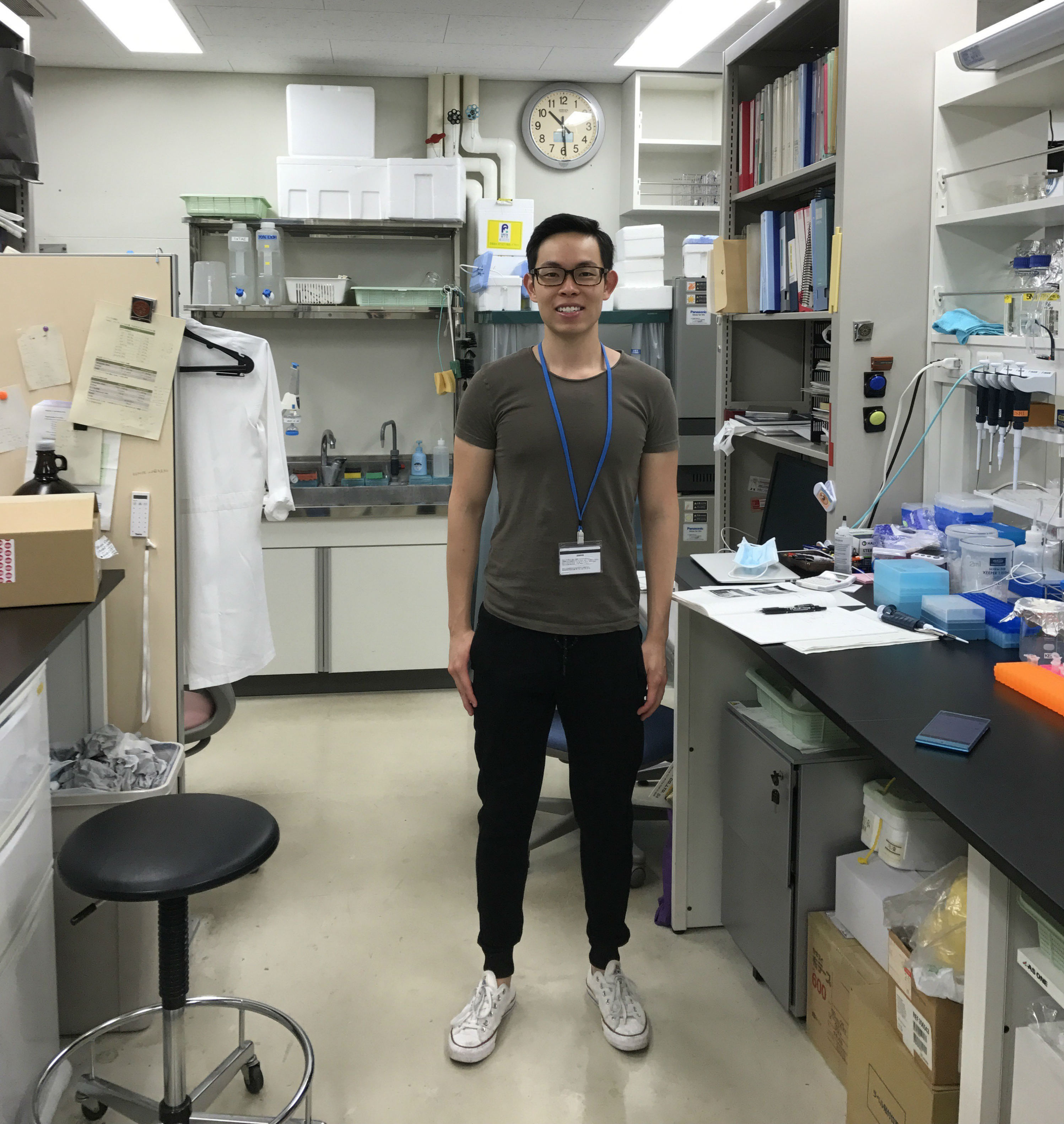
Andy in his new lab
Guest contributor Andy Tay
As science becomes more inter-disciplinary, scientists increasingly need to travel to promote their work and build collaborations. Whilst it’s common for professors to travel frequently, graduate students or post-docs may not be aware of the importance of travelling in building a career. Here’s how travelling has helped me — and how it might help you.
{credit}Flickr/British Library{/credit}
Naturejobs career expo journalism competition winner Diane N.H. Kim
Confidence is not something we normally associate with science. In this field, grounded in facts and far from emotions, it’s no wonder we have trouble seeing how our attitudes affect our success. A confident attitude is considered much more important for an actress on the red carpet, or a politician delivering a speech. Scientists are still largely portrayed and perceived as solitary individuals with passive personalities, spurred by a media portrayal of a lone scientist in their basement lab. Continue reading
Contributor Elizabeth Silva
 In a previous article I discussed the importance of honing the soft skills that are central to a research PhD, which are useful regardless of career path. Experiences outside the lab primarily provide the opportunity to develop hard skills. There are thousands of different skills, requested by thousands of employers, in an infinite number of combinations. It’s no wonder PhDs are daunted by the prospect of navigating the options and give up before they begin. The good news: many of these specific skills can be readily learned by someone who has already mastered dozens of ridiculously specific, esoteric and finicky experiments.
First, a few dos and don’ts:
Many roles in academia require you to teach future researchers. But how important is it to have experience for this? And where should you go to get some?
At the Naturejobs Career Expo in London this September, a panel of four academics got together to discuss their wildly different careers. Jim Usherwood from the Royal Veterinary College only spends his time doing research. Anita Hall from Imperial College London only does teaching. Lorraine Kerr and Louise Horsfall from the University of Edinburgh split their time (with different percentages) between research, teaching, business and management.
In this short film, Hall and Horsfall give some great advice on the importance of teaching experience and where to get some.
Read more about How to navigate an academic career and about all the other conference sessions and workshops at the Naturejobs Career Expo in London.
Other Q&A videos from the Naturejobs Career Expo, London 2014
How important is having a mentor in your academic career?
How do you achieve work/life balance in academia?
Should I apply for a fellowship or a postdoc after my PhD?
What’s the biggest challenge you’ve faced as a woman in science?