
Tag Archives: Transferable skills
Naturejobs podcast: A fresh start

Adam Gault
Career adventures require a leap of faith and can be hard to navigate. Our first podcast of 2018 examines the impact of fresh starts and how having transferable skills can deliver career fulfilment for both science PhDs and retiring lab heads.
How to escape a ‘paint-by-numbers’ career
Academia trains us to follow pre-defined paths when planning our careers, but the most exciting and rewarding careers are designed by their owners. If you’re willing to take some risk and create your own design, you can have a more exciting career than you ever imagined.
By David M. Giltner, PhD, Founder of TurningScience
If you’re like me, you entered university with a plan: to follow a career path that many had followed before. This is common, because school trains us to follow directions. Earning a degree involves predefined steps:
‘Complete this application adequately, and we will admit you.’
‘Answer this list of questions correctly, and you will pass the test.’
‘Pass this list of classes, and we will give you a degree.’
It’s natural to continue looking for a path to follow after graduation, but, in my view, that’s not how the most exciting careers are built. I’ve found my own way, founded a company, and enjoyed an immensely rewarding career along the way.

{credit}iStock{/credit}
Quick profiles: Emma Hilton
Emma Hilton worked as a doctor for nine years, including four in clinical research. After that, she shifted to pharma. Here she shares her story.
Emma is now Global Medical Affairs Leader for Chronic Obstructive Pulmonary Disease (COPD) in GSK’s Respiratory Division.
As a child, I was fascinated by how things work, especially the human body, and I decided I wanted some kind of career in science. Medicine seemed like the ideal avenue and offered a reassuringly clear path including training and employment prospects.

{credit}iStockphoto/Thinkstock{/credit}
The competition that likes to say YES!
Enterprising early career researchers get some high-level mentoring to handle the rough and tumble of the boardroom. David Payne meets finalists in the 21st annual Young Entrepreneurs Scheme (YES)
Epitome is a Singapore biotech start-up whose product pipeline is based on engineered tail proteins to tackle bacterial diseases. It wants a slice of the US’s $6bn acne market. Epitome’s founders are seeking raise $10m to build a factory where its cosmetic products can be manufactured. Investors will be rewarded with a seat on its board.
The launch team describe the company at a presentation attended by other young entrepreneurs. They brace themselves for some tough questions from a judging panel. One judge asks how a factory can be built for $10m Another challenges the team’s plan to launch an acne treatment as a cosmetic product, which means they won’t mention acne on the label (the team adopted this approach to make the US regulatory process more straightforward).
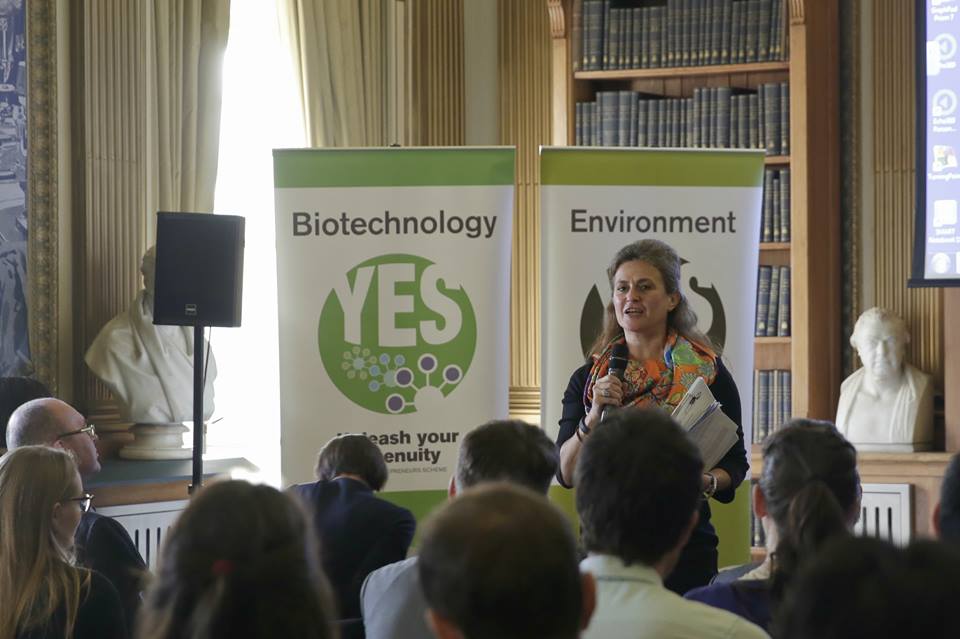
Elena Lurieluke, Head of Global Life Sciences Open Innovation, Corporate R&D at P&G, addresses fellow YES judges and finalists.
Finding job satisfaction as a data scientist
Following your interests and making connections can launch a career.
Unlike most US students, Nathan Sanders declared his specialty as soon as he started undergraduate studies. He’d known for years that he wanted to study astronomy, but during his PhD at Harvard University he realized that the analysis itself enthralled him more than the applications for astronomy. He describes how he used his technical skills, and connections outside his academic program, to launch his career.
Transferable skills: What are scientists good at (other than science)?
Naturejobs journalism competition winner Ashish Nair celebrates the cornucopia of skills owned by scientists
In today’s competitive world, it’s become increasingly common for scientists to question where their skills and knowledge will fit outside the lab. Academic research is a harsh place, littered with the victims of funding decisions and research projects that didn’t quite go to plan. The idea, even amongst scientists, that we are highly specialised professionals with no role outside the lab has become a persistent limitation in this search. So, what is the need for a scientist in any other capacity?

{credit}Topp_Yimgrimm/ThinkStock{/credit}
What did your job search teach you?
Don’t feel frustrated. You have many fabulous career options.
Most PhD students and postdocs working today will not go on to head their own labs. With little infrastructure to guide them to the next stage, young scientists are inventing it themselves.
A year ago, we launched an interview series that looks at how PhDs and postdocs found ways out of the lab and into satisfying careers. We’ve spoken to people who work in regulatory affairs, technology transfer, business development, management consulting, science outreach and philanthropy, just to name a few. And we are eager for more stories to share. See below if you’d like to volunteer.
{credit}Image credit: Venimo{/credit}
So you want to be a data scientist (again)?
Put your natural science skills to work in a data science career
Guest contributor Daniel Harris of SoftwareAdvice.com
The explosive economic impact of big data has blurred the line between the business world and the scientific world like never before. A new type of business leader, the data scientist, has evolved as an amphibian, capable of thriving in both worlds, swimming in data lakes to bring useful insights back to the solid ground of business concerns.
Of course, companies have been using business intelligence (BI) tools to analyse their operational and financial performance metrics for decades.
But datasets generated by the web are so large that they must be stored on clusters of servers with thousands of nodes. Traditional methods for analysing these datasets have faltered, necessitating a more scientific approach.

Hadoop cluster by fogcat5 is licensed under CC BY-SA 2.0
Research in industry: A great career choice
Albert Isidro-Llobet always wanted to be an academic. Now he works for GSK. Here he shares his story.
Guest contributor Albert Isidro-Llobet
I joined the R&D division of GSK as an organic and medicinal chemist in 2012. Before that, I completed my PhD at the University of Barcelona and a 3-year postdoc at the University of Cambridge. After my undergraduate degree, I decided to work in organic and medicinal chemistry to contribute to the synthesis of new medicines. Eventually, I wanted to become a Principal Investigator (PI) in academia and it seemed to me that the best course would be pursuing a second academic postdoc.
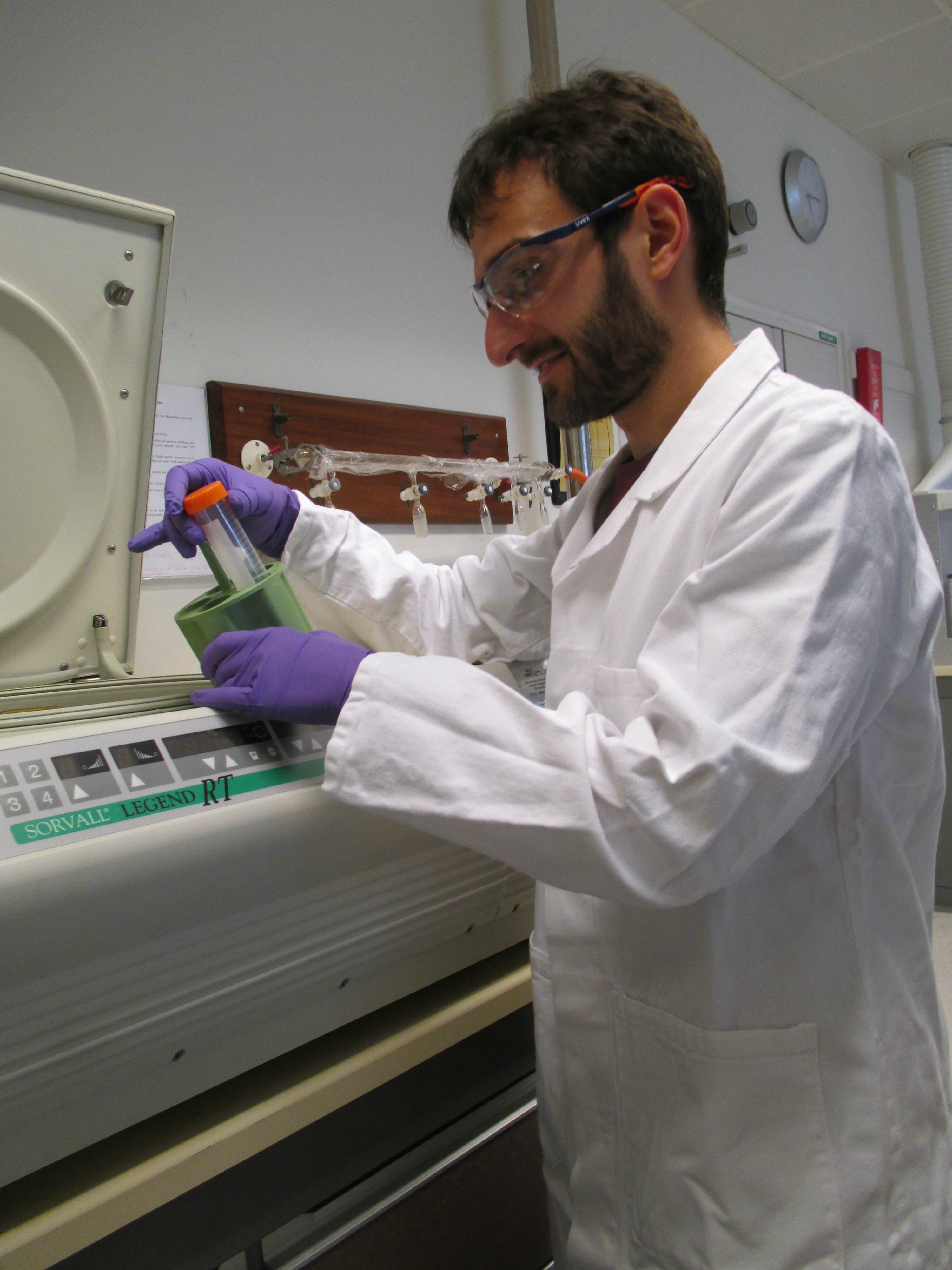
Albert in his lab