With one quarter of the year all over, and summer on its way, we run through your favourite posts last month.
First up this month is our ever-popular post on the value of Liebeth Aerts’ PhD, where she takes a look back one year after graduating.

First up this month is our ever-popular post on the value of Liebeth Aerts’ PhD, where she takes a look back one year after graduating.
Answering the most-feared interview question is high on everyone’s mind. Our guide to expressing your greatest weakness in a positive way is on the leader board as the most read piece on Naturejobs this month. Glad you liked it!
Chris Woolston talked us through the best make-up for a lab in group dynamics: a lab of their own in March. Your research group is important, and finding the right balance between different members of staff may just tip you into academic success. Continue reading
Now, she works at Texas A&M University in College Station, where she helps professors put together grant applications, form collaborations, and identify funding opportunities.
Tell me about your job.
It’s hard to say what a typical day is like, which I kind of like. On any given day, I might consult with an investigator about a research grant or edit a proposal.
Our goal is also to help promote collaboration among faculty. For example, we help to facilitate the formation of research interest groups, on, say, imaging or healthy ageing. We might organize a meeting where faculty get two minutes to present an overview of what they are doing, and we make program books and plan meetings to help make ideas happen.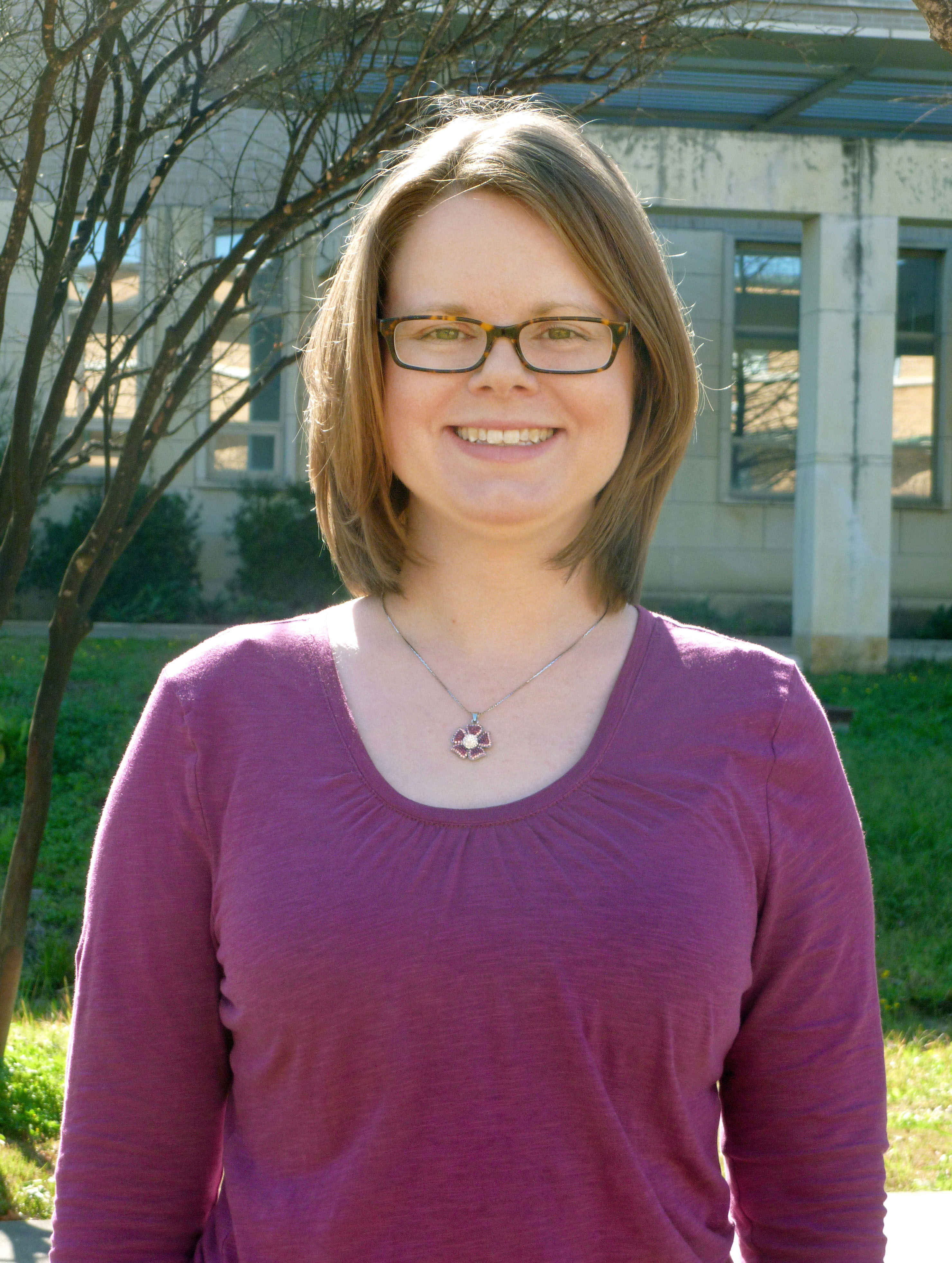 Continue reading
Ronald McQuaid, University of Stirling
When you send off a CV to a prospective employer, you will hope to get a fair hearing. You will hope that your skills, experience and qualifications decide the response, rather than the school you went to, your post code, or even your name. Instinctively, though, we know that this isn’t always the case. Prime Minister David Cameron already has zeroed in on the issue of how applications from people with non-Anglo-Saxon or Celtic names are treated:
Do you know that in our country today: even if they have exactly the same qualifications, people with white-sounding names are nearly twice as likely to get call backs for jobs than people with ethnic-sounding names?
The UK civil service, and many major employers, have agreed to introduce application forms without the applicant’s name, in order to reduce the potential for discrimination. But how much does theory and evidence back this up? Continue reading
Guest contributor Virginia Schutte
I’m transitioning from a traditional academic career to one in science communication. There are many challenges that come with this shift, but I didn’t expect the process to be so emotionally difficult.
I left my academic career path in the best possible situation. I have a great relationship with my PhD advisor and everyone I talk to is encouraging when it comes to my new direction. But in my academic experience, changing position meant moving up, or at least adding something to my CV. Graduating and then immediately starting at the bottom of the ladder in a new career felt like I was moving backwards; I was convinced that I had disappointed the people who invested in me because I was “wasting” my PhD.
Networking as a jobhunter – in a conference, careers fair, or anywhere else – can be really challenging. You’re under pressure to be pleasant and interesting company, and to sell yourself without seeming like that’s your only motive to talk to someone. If you manage that, how do you even know if you’re talking to the right person?
Of course, asking the questions is only half of the job – you have to listen carefully to the answers, encourage a two-way conversation (you’re not interviewing anyone) and give your own perspective. But the questions are a good start. So, here’s 6 questions that will help you network as a jobhunter, without sacrificing a good conversation.
“What do you do?”
It’s timeless – a classic – the Citizen Kane of networking questions. This is fairly self-explanatory, but generally finding out what someone does, who they work for, and how that can apply to you will the basis of the rest of your conversation. You have to start somewhere, and this is your best bet.
After completing a PhD and postdoc studying disease mechanisms behind epilepsy and autism, Dorothy Jones-Davis found job satisfaction as a scientific project manager working at the Foundation for the National Institutes of Health, where she coordinates projects on neuroimaging and Alzheimer’s Disease.
How does your scientific training help in your job?
My area of research was epilepsy and autism, so my specific research is not as applicable, but having a broad neuroscience background has served me. Even though I’m not at the bench, I still read neuroscience papers; I still understand science.
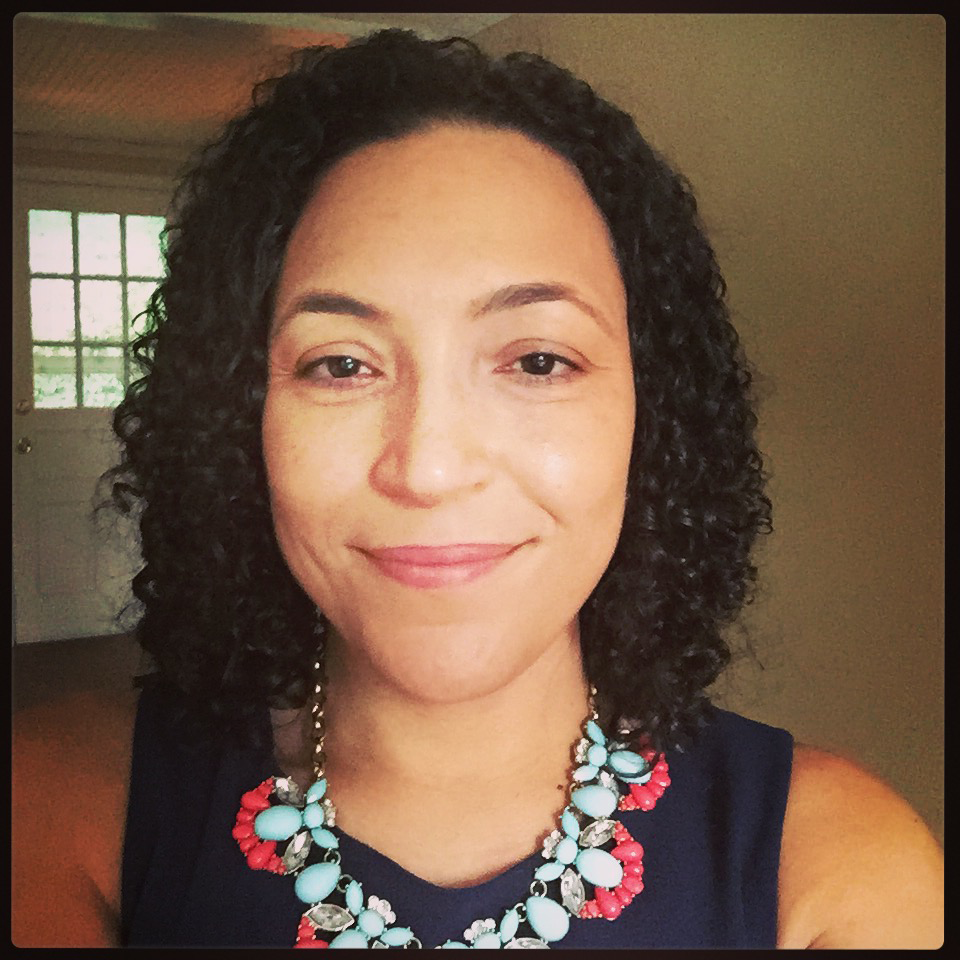
{credit}Dorothy Jones-Davis{/credit}
As for the intangible skills, some are leadership and some are organizational skills that you learn as you work your way through scientific training. I don’t think graduate students actually give themselves enough credit, but you are actually managing a project. My PhD was a portfolio of projects that I had strung together on a larger theme, and thinking about it that way, I am well equipped to be a project manager.
I think the fact that I did so much outside of my PhD and postdoc, such as mentoring, working with high school students and serving on university committees, helped me get a policy fellowship and the job I do now
Continue reading
Guest contributor Simon Hazelwood-Smith
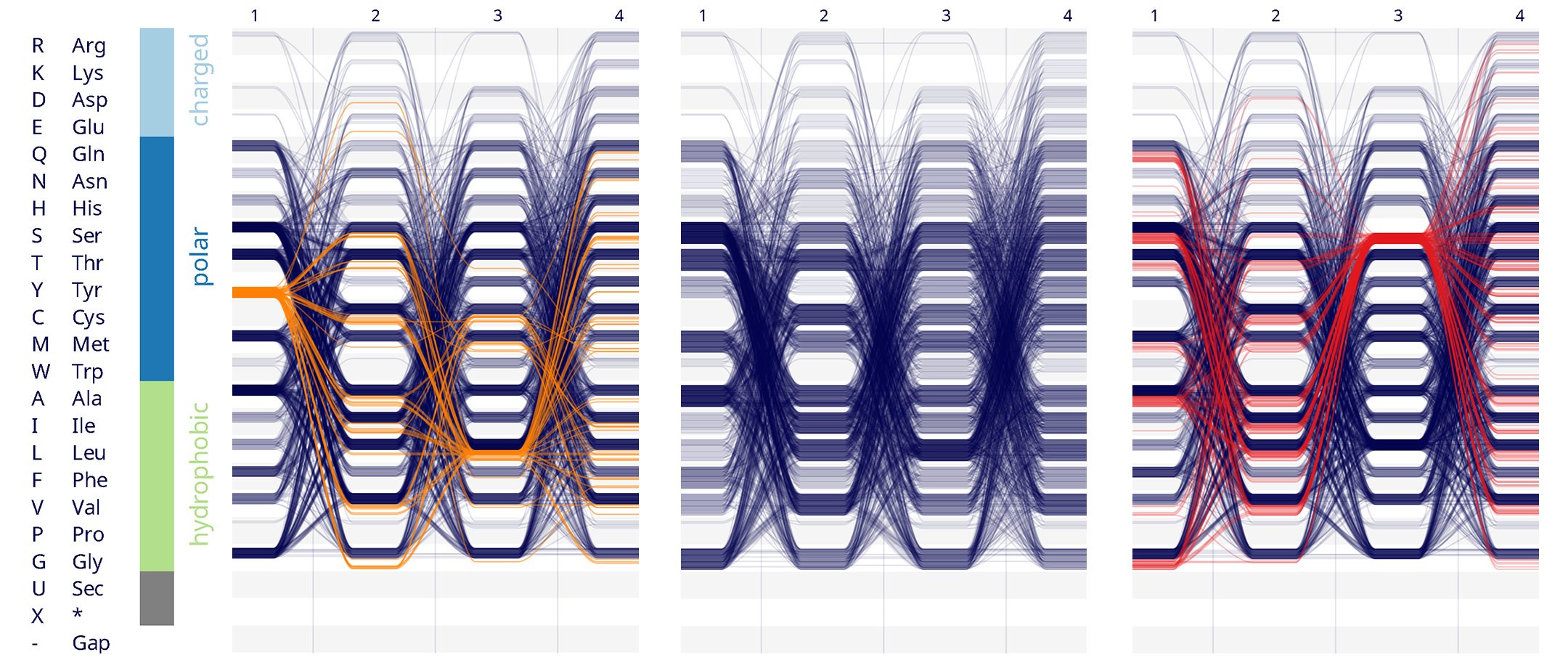
Sequence Bundles: A new method of visually displaying sequence data developed by Science Practice, where Simon works
There have never been more ways to be employed in science. Today, science is communicated, critiqued, shaped, applied and incorporated into political decisions by a multitude of people who rarely – if ever – set foot in a laboratory. For the organisations that work in these areas, there are tangible benefits to have employees with scientific experience. However, knowing how, when, and if to make the move into these areas is often a challenge for many young scientists. Continue reading
After completing his PhD and postdoc at The University of California, Berkeley in the biophysics of cancer cell growth, Gautham Venugopalan completed a science policy fellowship sponsored by the American Association for the Advancement of Science (AAAS). He describes how that experience led him to a job as an analyst at Gryphon Scientific, a consultancy focused on public health and national security.
Tell me how you planned your career path.
I could tell you a story that I thought I should do this, and then I thought I should do that, and it all prepared me for this grand thing. But let’s be real. That’s not how that works.

{credit}Richard Novak{/credit}
Why did you get a PhD?
I have a history of just jumping off and doing things that I’ve never done before. I went into the biology program in my senior year. And I decided to try grad school. At the time I was thinking, all these programs that I’m applying to are really solid, I’ll have an interesting skill set that I can use to do something, and I’ll work that out.
Did you do much outside the lab during your training?
I ended up starting a nonprofit in grad school with a few of my friends. I spent time at the career center at UCSF; I did a fellowship at the U.S. State Department.
The modern growth in cross- and multidisciplinary research in academia has already had huge impact on the world around us, and is set to reshape the jobs market for scientists globally. With this in mind, the UN recently announced their 2030 Sustainable Development Goals (SDGs), which includes the goal to create jobs with competitive salaries that lead to sustainable economic growth. We believe young scientists should be the ones establishing the new fields and areas of employment for the future, to address the 2030 SDGs.
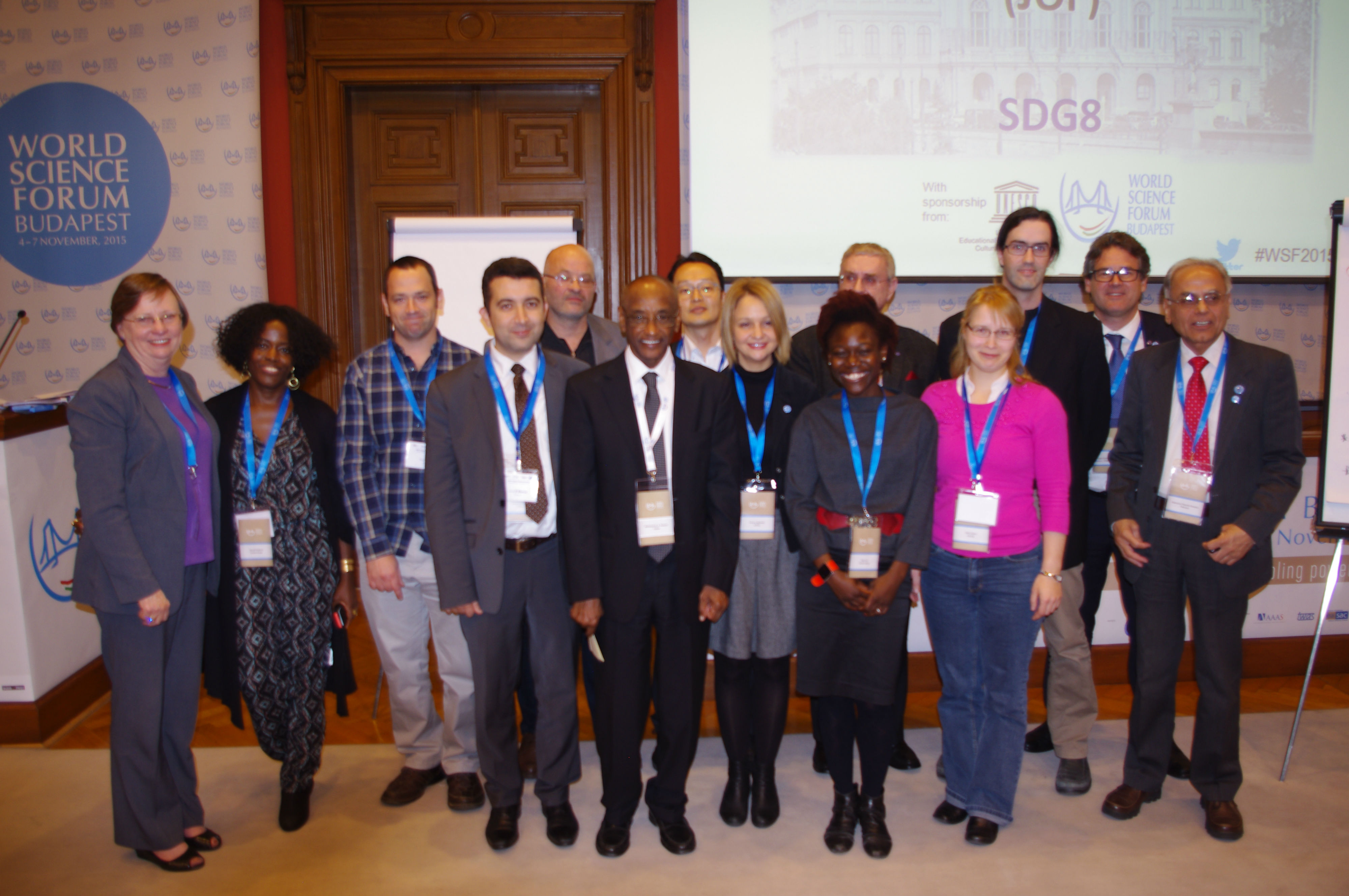
The JOF team
The Jobs of the Future (JOF) initiative will provide a platform to do just that – it’s a that allows young scientists and engineers to describe their dream job of the future.
To answer this call, a group of early career scientists and engineers at the 2015 World Science Forum pitched ideas on tangible ways to address the SDGs to a panel of international judges composed of high profile decision makers from UNESCO, InterAcademy Panel, and The Academy of Science of South Africa. The winning pitch, made by a team including the authors, was the JOF initiative.