Finding job satisfaction in a health nonprofit

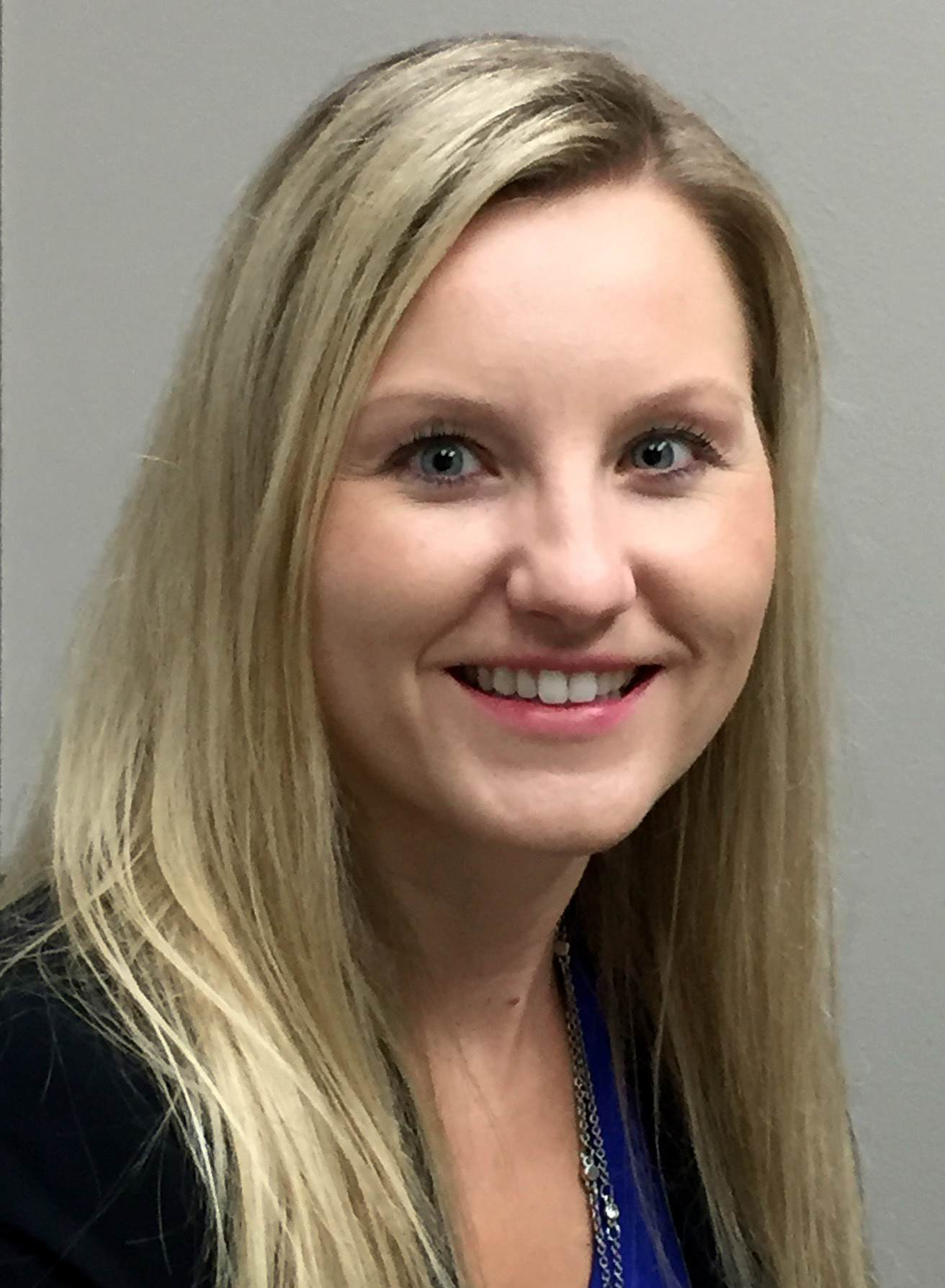
After advanced training in psychology, neuroscience, and endocrinology, Lana Gent found job satisfaction as a director of science at the American Heart Association in Dallas. Here she describes what the job entails and how it uses her scientific training in a very different setting than a lab.

Tell me about your academic training.Lana_Gent_CM-2

I started in phenomenological psychology, looking first at chimpanzees in a zoo and then how dogs were making decisions based on social influences from their species. I did that throughout my graduate school career at the University of Texas at Arlington, but there aren’t a lot of jobs in the consciousness of animals. So I started research in neuroscience at UT Southwestern Medical Center, doing stereotactic surgery on rats and mice, to understand what was happening in the brain during cocaine addiction.

After a complicated pregnancy, I decided to stay home with my daughter for a year.  I went back to UT Southwestern in a different lab—my surgical skills were in high demand —this time looking at the effect of estrogen on metabolic syndrome.

Continue reading

Career paths: Out of the Ivory Tower

Taking small steps to build up your transferable skills and contacts can be the key to moving away from academia and towards your dream job.

Guest contributor Lauren Emily Wright

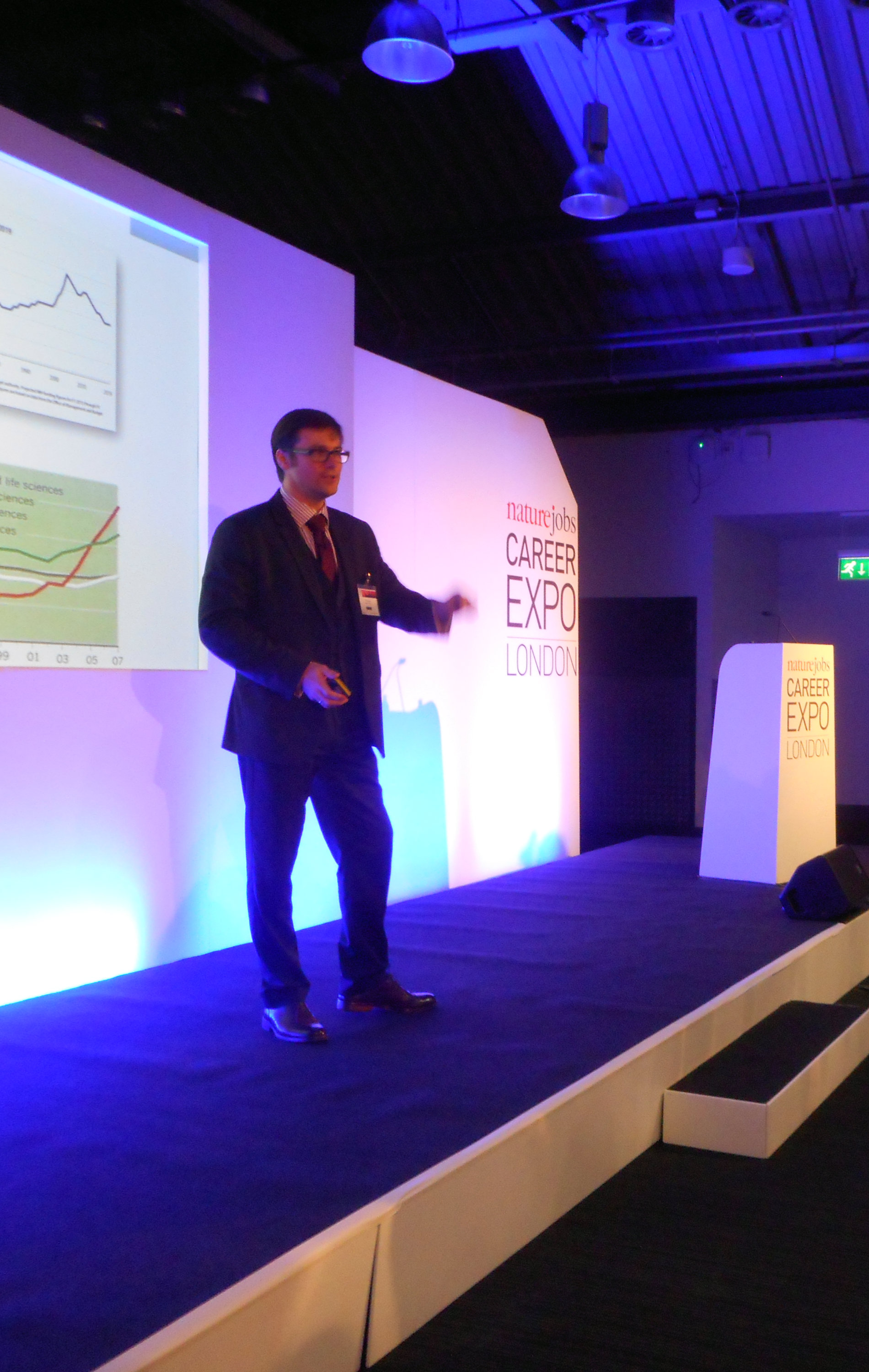
Phill-Jones-NJCE15-Keynote-naturejobs-blog

{credit}Image credit: Lauren Emily Wright{/credit}

Ever thought “I want to leave academia, but all I know is lab work”? Well despair no more — the path out isn’t as treacherous as it may seem. In a great keynote speech at the Naturejobs Career Expo 2015 on 18 September 2015, Phill Jones told the story of how he left academia to become the head of publisher outreach at Digital Science, a company that provides a multitude of services to scientists, institutions, publishers, and funding bodies.

Jones gave the audience the sense that calculated planning and sheer luck had both played their part in his career. With a PhD in physics, he was firmly grounded in the world of academia. But after following his wife to Boston, Jones realised that a postdoc in physics would be hard to come by in such a biology-centred city. “I had to be a little more flexible in my career,” he said.

As Jones notes, it is necessary to have an open mind when thinking of changing career paths. “You can’t think ‘all I know is how to pipette’.” Instead, think about what sort of transferrable skills you can offer an employer. For example, Jones finished his PhD with an in-depth knowledge of optics — perfect for a position in a biology lab that used optical imaging to investigate strokes.

But how can you identify which transferrable skills you already have, and which you need to gain for that ideal new career? How can you make contacts outside academia? Continue reading

Most read on Naturejobs: July 2015

What makes a good scientist; Leaving academia; ERC funding and much more from Naturejobs this month.

naturejobs-readsThis month on the Naturejobs blog we’ve published 17 blog posts (18 if you include this one!). That’s a lot of words, and a lot of advice from your peers.

On the last Friday of every month we share the top picks, as chosen by you. Feast your eyes:

1. What is the biggest missing piece in how we educate scientists? Responses, from a range of thought leaders, ranged from the practical to the philosophical in STEM education: to build a scientist on Nature Careers.

2. Insider Knowledge, by Chris Woolston, offers insights into what others might have already learned in a career that you have chosen to follow. His advice: take the time to seek out what inside information you can get to help decide whether or not this career is the right fit for you. Continue reading

Leaving academia: Do’s and Don’ts

Elizabeth Silva’s six Do’s and Don’ts on transferable skills before looking for a job outside of academia.

Contributor Elizabeth Silva

entrepreneur-naturejobsIn a previous article I discussed the importance of honing the soft skills that are central to a research PhD, which are useful regardless of career path. Experiences outside the lab primarily provide the opportunity to develop hard skills. There are thousands of different skills, requested by thousands of employers, in an infinite number of combinations. It’s no wonder PhDs are daunted by the prospect of navigating the options and give up before they begin. The good news: many of these specific skills can be readily learned by someone who has already mastered dozens of ridiculously specific, esoteric and finicky experiments.

First, a few dos and don’ts:

  • Don’t be tempted to develop an array of skills with the hope of marketing yourself to whatever job happens to arise. Start exploring different careers to get an idea of what you want to do, then develop skills that are related to that job or career. Continue reading

Transferable skills: Seek development opportunities

Team work and good communication are the two most valuable soft skills an academic can develop, says Elizabeth Silva.

Contributor Elizabeth Silva

teamwork-naturejobs-blog

Working effectively as a team means you need to understand how different people communicate.{credit}PhotoDisc/ Getty Images Brad Goodell{/credit}

PhDs commonly assert that their skills and experience are specific to their research niche: valuable at the bench but nowhere else. This perception is reinforced by the extraordinary time spent trouble-shooting experiments and analyzing data in detail. It is certainly true that any PhD moving away from academic research will need to learn new techniques or tools, referred to as hard skills, but most trainees are well-equipped to acquire these as needed. More important is the recognition that the real worth of a research-based PhD is in the development of highly-valued soft skills. It is these skills that many PhDs fail to see in themselves. It is also these skills that PhDs can and should be cultivating during their research, regardless of career goals.

At its best, a PhD selects for creative, rigorous and independent thinkers. A PhD’s greatest training is not in learning the details of a scientific problem but in how to find the answers they seek and critically evaluate the evidence underlying them. It is up to you, as a trainee, to actively seek opportunities to improve these skills, and these abound when you simply look for them at conferences, in journal clubs, in collaborating with colleagues, engaging in seminars and in broader scientific one-on-one conversations. It can be incredibly tempting to narrowly focus your attention on the science and techniques that are relevant to your research niche, but pushing yourself beyond your comfort zone will make you a better researcher and a more valuable employee. Continue reading

Transferable skills: Beyond the bench

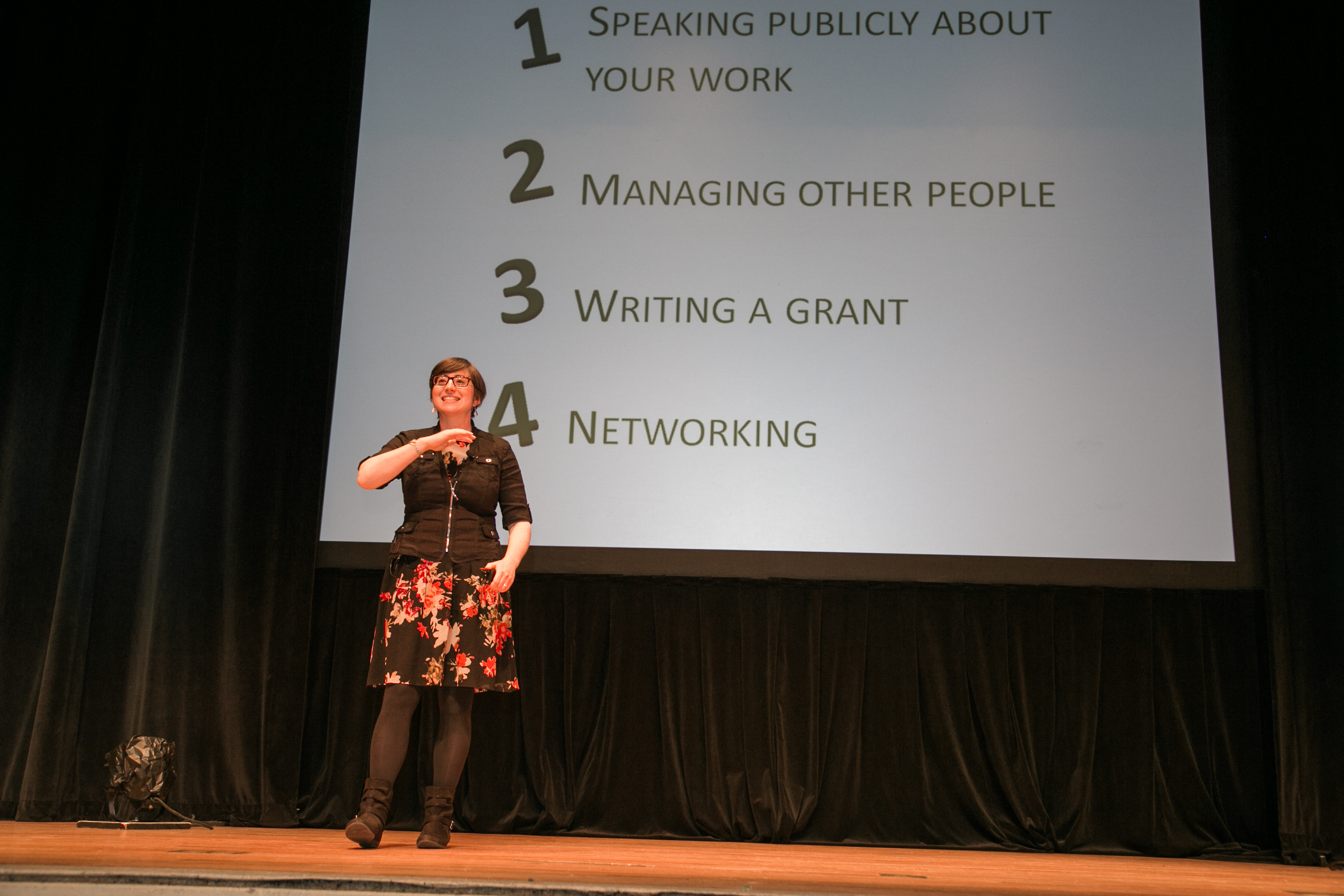
Based on personal experience, Nina Dudnik highlighted the lessons learned and transferable skills gained when moving from academia to beyond the bench at the 2015 Naturejobs Career Expo in Boston.

Contributor Diana Cai 

 Nina-dudnik-naturejobs-blog

Nina Dudnik, CEO of Seeding Labs, shares her thoughts on transferable skills at the 2015 Naturejobs Career Expo in Boston.

As a teenager, Nina Dudnik, now CEO of not-for-profit Seeding Labs, was fascinated by agriculture and genetics. After graduating from Brown, she spent several years working with scientists in developing countries on agricultural development projects. This included spending a year in a rice research lab in Ivory Coast. There, Dudnik was struck not only by the innovative scientists she met but also by the sparseness of the lab. There was only one PCR machine, and scientists had to wash and reuse equipment like pipette tips. Other labs she visited in Africa were in similar conditions. When she returned to the US to begin a doctoral program at Harvard, a wealth of resources was available to her. Dudnik started using her spare time to collect unused lab equipment and send them to researchers in need of them. This was the beginning of her path to what is now Seeding Labs.

Reflecting on her journey, Dudnik scoffs at the idea that careers other than academia are considered “alternative”. Continue reading

Transferable skills: Organizing a conference

Organizing events offers early career researchers an opportunity to develop transferable skills attractive to multiple industries, says Aliyah Weinstein.

Contributor Aliyah Weinstein
naturejobs-blog-aliyah-weinstein

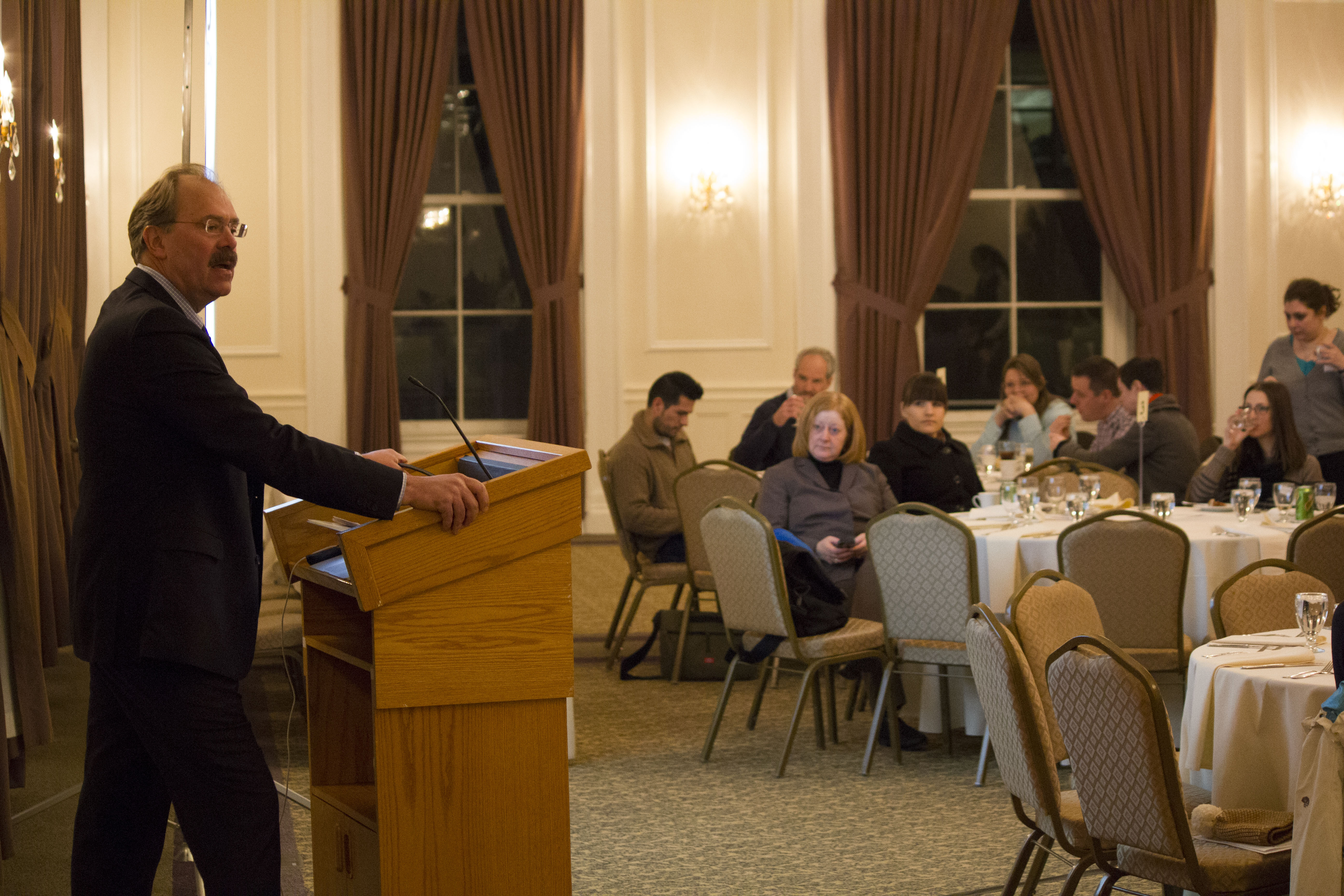
Dr. Wiley “Chip” Souba speaks at the Doctoral Directions conference, held March 5-6 at the University of Pittsburgh and co-organized by Alyce Anderson, Rachael Gordon, and Julie Boiko.{credit}Image credit: Jeremy Gale{/credit}

In an era when the career paths that PhD graduates will follow after graduation vary greatly, it is more important than ever that trainees are prepared to take on careers both inside and outside of the academy. The non-technical skills that are necessary to complete a PhD, including leadership, analytical skills, and time management, are useful in many career paths. However, it is often difficult for trainees to identify and nurture these skills while remaining focused on the technical skills required to complete their studies. Furthermore, the necessity for trainees to prepare themselves for a wide array of careers is unique to this generation of scientific trainees, and the mechanisms to prepare trainees to recognize and practice the skills needed to successfully navigate diverse career paths is lacking at many institutions.

One way that some students have found to take this task into their own hands is by organizing local scientific meetings. This provides not only the opportunity for trainees to present their work and connect with other members of the scientific community, but also to hone skills in networking, finance, and writing, among many professional skills that can translate to careers in and out of academia.

Networking

Conference planning provides opportunities for trainees to practice networking skills with more senior scientists. Alyce Anderson and Rachael Gordon, who for the past three years have been involved in organizing a professional development conference at the University of Pittsburgh, stress the importance of having an advisor involved in the conference planning committee. They recommend identifying a faculty member who has previously been involved in organizing meetings, to work with and learn from throughout the planning process. “Garner institutional support from people who work on professional development,” suggest Gordon and Anderson. Such faculty may support a conference by providing students access to their network of scientists outside of the home university as potential speakers, and guidance on the mechanics of putting together a successful meeting. Additionally, working with faculty is an opportunity for trainees to establish close relationships with them, opening the door to potential long-term benefits including further mentoring and letters of recommendation. Continue reading

The postdoc series: Help for lost postdocs

Self-reflection can help young researchers analyze their skills and plan for their futures.

write-think-naturejobs

{credit}Wavebreak Media/Thinkstock{/credit}

Alice asked the Cheshire Cat, who was sitting in a tree, “what road do I take?”

The cat asked, “where do you want to go?”

“I don’t know,” Alice answered.

“Then,” said the cat, “it really doesn’t matter, does it?”

— a paraphrased version of the scene in Lewis Carroll, Alice’s Adventures in Wonderland

Karen Hinxman completed two postdocs before realising she was on the wrong road and wasn’t cut out to be a professor. “I still love science and research, but I’m better suited to my current role,” she says. Now she’s a career consultant at Imperial College London, working with other postdocs who are looking for careers advice. “The perpetual postdocs are usually still there either because they are determined to become professors, but more often than not, they don’t know what else to do.”

Hinxman’s postdoctoral experience, like that of many others we’ve seen in this series, was beneficial when it came to finding a job outside academia. She had an insider’s point of view of what life as a postdoctoral researcher was like. “What comes next very much depends on the postdoc, what kind of person they are and what career they are hoping for.” Continue reading

How to recognise your transferable skills

transferable-skills

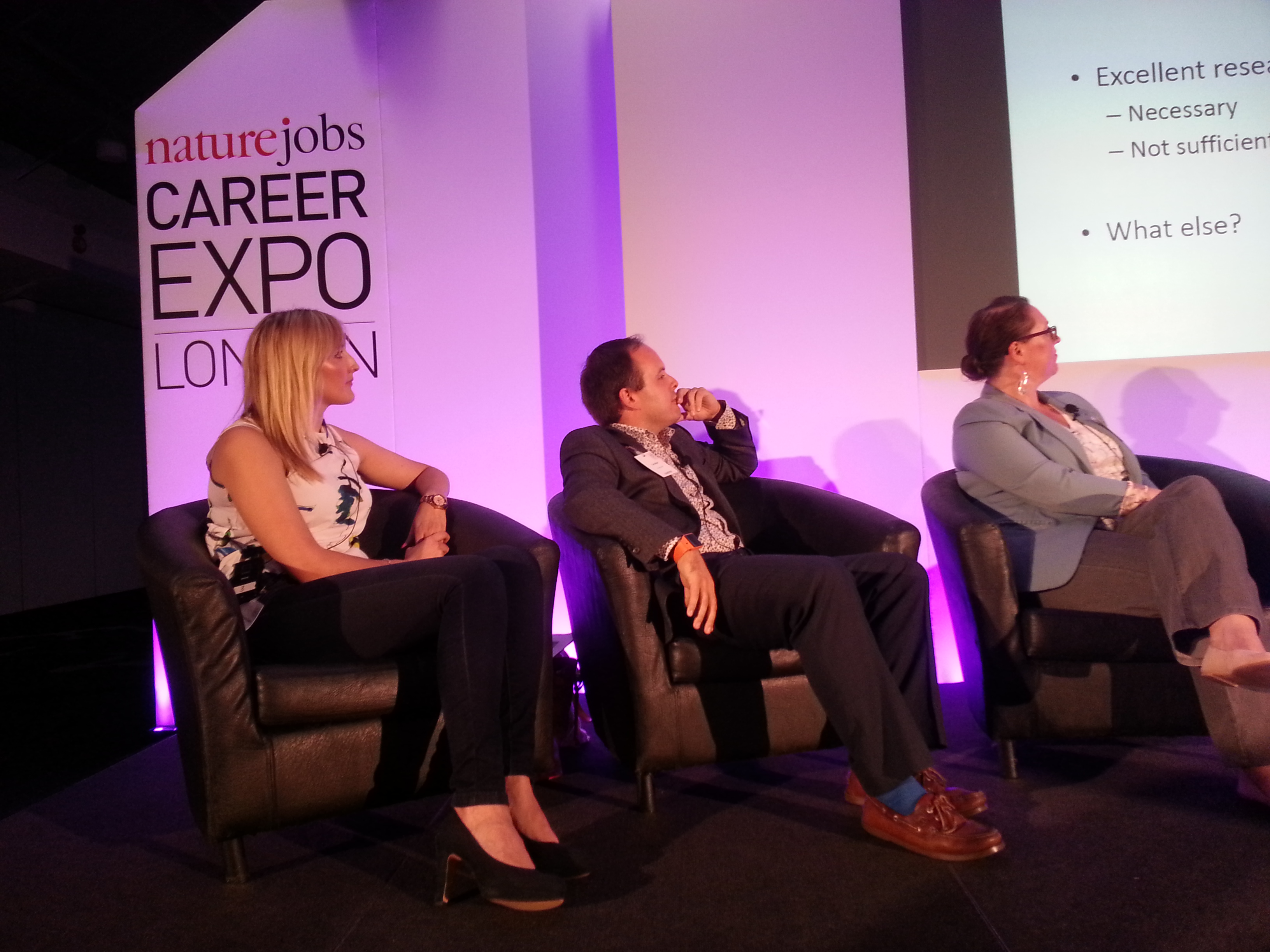
L-R: Jenna Stevens-Smith, Tom Weller, Elizabeth Bohm{credit}Creit: Lisa Restelli{/credit}

Anna Price and a panel of academics-turned-other-careers show that all scientists in academia have transferable skills, but the trick lies in recognising and applying them.

Contributor Lisa Restelli

Elizabeth Bohm is a policy advisor at the Royal Society. Before that, she was working in a lab and she also trained in law.

Tom Weller is a science teacher and runs children’s parties to transmit his love of science. Before that, he was studying physics and has a PhD from University College London.

Jenna Stevens-Smith is the outreach and public engagement manager for the Department of Bioengineering at Imperial College London. Before that, she studied bioengineering, for which she also holds a PhD.

They all started off on one career path, only to realize that their talents and interests lay elsewhere. Luckily, they found that they already possessed a number of abilities that made them especially suited for their prospective alternative careers. In short, they exploited their transferable skills.

At the Naturejobs Career Expo in London, I — along with other participants to the transferable skills session — was guided by panel chair Anna Price, Researcher Development Adviser at King’s College London, to discover these elusive abilities and their uses. Price defined a transferable skill as “any skill that you can learn in one context and employ in another”. This definition is certainly broad, but so are the skills it refers to. The challenge lies in identifying the ones we possess, as well as in establishing how to channel them into a rewarding career. They are not hard to find: a number of tools and lists exist, but the real question is, ‘how to apply them?’ To answer it, there are nothing like success stories. Continue reading

Transferable skills and storytelling

Storytelling is a part of everyone’s lives, from childhood to parenthood, and even at career path transitions.

MSCA-deciphering-job-descriptions

{credit}Credit: Arya-Marie Ba-Trung{/credit}

On Thursday June 19th I chaired a panel discussion on how to decipher a job description for the Marie Skłodowska-Curie actions (MSCA) conference themed “Transferable skills: added value for your CV“. The idea of the session was to help the MSCA fellows identify the transferable skills that they have developed during their day-to-day scientific research, and then how to relate them to the skills that potential employers are looking for. I was joined by three other panellists: Mark de Vos (Euraxess Copenhagen), Soren Bregenholt (Novo Nordisk) and Claire Hewitson (Copenhagen Business School).

Transferable skills are a hot topic amongst postgraduate students, particularly when looking for a new job either within, or outside of academia. It appears to be such a hot topic, because many fail to identify which ones they have, or how to properly communicate them in a job application or interview. The session at MSCA tried to show that scientists build up many of these transferable skills in their day-to-day activities as a researcher both in and out of the lab. 

When you’re in a job interview, you are often asked questions like “could you please demonstrate how you are an excellent team worker?” Or “when have you ever had to deal with a difficult situation at your previous job?” This type of question is looking to tease your transferable skills from you . But you cannot simply respond with “I used my diplomacy and communication skills.” You’re expected to tell the interviewer a story about the situation, and how you faced the challenge using those skills. Telling stories on the spot can be intimidating, so it’s best to have a few up your sleeve. Continue reading