Funding: Opportunities in Turkey

The Turkish government is heavily investing in its science and research, partnering with international groups to create funding opportunities for scientists.

Contributor Diana Cai

Naturejobs-money

{credit}ImageSource{/credit}

The Scientific and Technological Research Council of Turkey (TUBITAK) is on a mission to recruit talented scientists around the world and reverse the “brain drain,” or the emigration of well-educated people to other countries. Since the mid-1960s, after Turkey experienced its first military coup d’état in 1960, talented researchers have fled the country in search for more security and better opportunities. Over the past decade, the Turkish government has become vigilant of the trend, increasing research funds to help address the problem.

According to a press release issued by the Turkish Statistical Institute in November 2014, research and development expenditures grew from 0.48% of the country’s Gross Domestic Product (GDP) in 2003 to 0.95% in 2013. In 2013, the GDP of Turkey was $822.1 billion, with an average annual inflation-adjusted growth rate of 4.9% from 2003-2013. As a result, Turkey hopes to position itself as an attractive option for both Turkish nationals and foreign citizens wishing to conduct cutting-edge research. Continue reading

Transferable skills: Beyond the bench

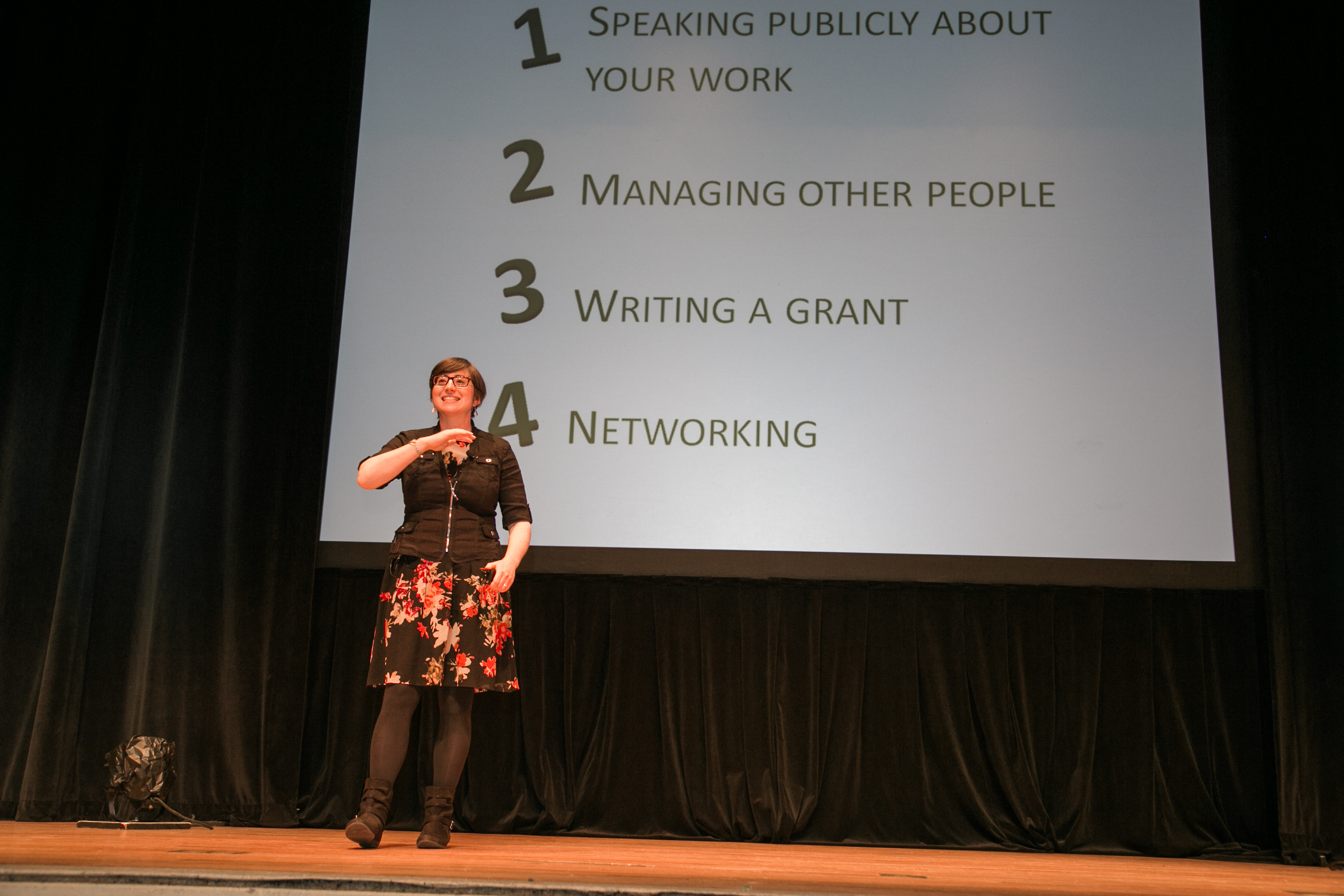
Based on personal experience, Nina Dudnik highlighted the lessons learned and transferable skills gained when moving from academia to beyond the bench at the 2015 Naturejobs Career Expo in Boston.

Contributor Diana Cai 

 Nina-dudnik-naturejobs-blog

Nina Dudnik, CEO of Seeding Labs, shares her thoughts on transferable skills at the 2015 Naturejobs Career Expo in Boston.

As a teenager, Nina Dudnik, now CEO of not-for-profit Seeding Labs, was fascinated by agriculture and genetics. After graduating from Brown, she spent several years working with scientists in developing countries on agricultural development projects. This included spending a year in a rice research lab in Ivory Coast. There, Dudnik was struck not only by the innovative scientists she met but also by the sparseness of the lab. There was only one PCR machine, and scientists had to wash and reuse equipment like pipette tips. Other labs she visited in Africa were in similar conditions. When she returned to the US to begin a doctoral program at Harvard, a wealth of resources was available to her. Dudnik started using her spare time to collect unused lab equipment and send them to researchers in need of them. This was the beginning of her path to what is now Seeding Labs.

Reflecting on her journey, Dudnik scoffs at the idea that careers other than academia are considered “alternative”. Continue reading

Career paths: Challenging convention

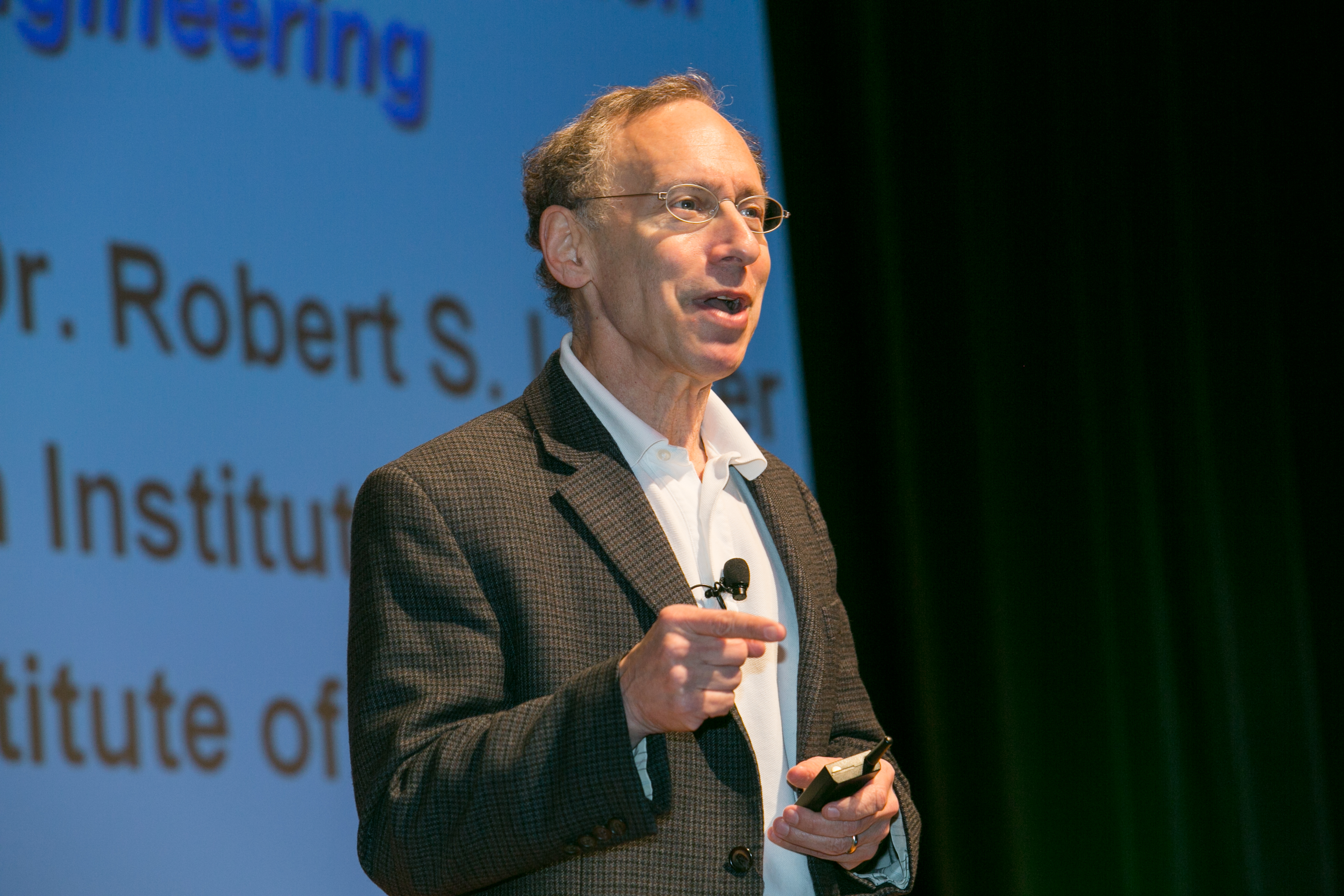
Professor Robert Langer, the 2015 Naturejobs Career Expo keynote speaker in Boston, shares the challenges he faced when becoming an academic entrepreneur.

Contributor Diana Cai 

Robert-Langer-naturejobs-blog

Robert Langer, David H. Koch Institute Professor at MIT and Keynote speaker at the 2015 Naturejobs Career Expo in Boston.

Robert Langer began by telling the audience about how, upon receiving his graduate degree in chemical engineering from MIT in 1974, he had job offers from 20 oil companies. “It’s not like I was that great or anything,” Langer says. He goes on to explain that the previous year had ended on a bad note for the oil market: the price of oil quadrupled in the span of four months, from $2.67 a barrel in October 1973 to $11.65 a barrel in January 1974. As a result, job opportunities for chemical engineers skyrocketed. He was ready to follow this path, until one of the engineers at a company said to him, “If you could just increase the yield of this one chemical by 0.1%, that would be wonderful!” Feeling uninspired and unable to contribute to society in that line of work, Langer decided to look for other options.

After applying to teaching positions at more than 40 colleges and failing to hear back from any of them, he asked himself, “How else can I use my chemical engineering education to help people? And I thought about medicine.” Langer eventually entered the laboratory of Judah Folkman, a professor at Harvard Medical School. Folkman was interested in angiogenesis, the process by which new blood vessels are formed. He had found that tumour growth is dependent on angiogenesis and postulated that inhibiting angiogenesis might be a way to halt tumour growth. Continue reading

Entrepreneurship: Discovering synergy

The entrepreneurial spirit is vital for science, says Diana Cai.

Contributor Diana Cai

entrepreneurship-naturejobs-blogFrom stories I have read (here, here, here, and here are just a few examples) and conversations I have heard, views of entrepreneurship within the scientific community at large have changed drastically since the mid-1970s. Before that time, entrepreneurship seemed to be spoken in a positive light by only a few scientists in hushed voices. To most in the community, entrepreneurship seemed to be incompatible with science. Science was associated with unbiased truth-seeking and healthy skepticism while entrepreneurship was associated with biased commercialization and aggressive sales. Since then, however, with 1) prominent academic scientists engaging in more entrepreneurial activities*, 2) the introduction of the Bayh-Dole Act in 1980 (allowing universities to take ownership of inventions) and 3) a decrease in federal funding for basic research (which encouraged scientists to turn to elsewhere for stable support) the negative attitudes towards entrepreneurism have largely dissipated. Scientists today have increasingly embraced entrepreneurship. More academic labs now than ever before are commercializing products and forming start-ups based on technologies developed or discoveries made in an academic lab. According to a 2011 Nature Methods editorial, between the establishment of the 1980 Bayh-Dole Act  and 2010, there have been more than 6,000 new companies formed from US universities.

While entrepreneurship is exciting, the entrepreneurial spirit is vital for science. The US Small Business Administration identifies an entrepreneur as “a person who organizes and manages a business undertaking, assuming the risk for the sake of profit”. These are traits that could easily describe a Principle Investigator, who, essentially, manages a lab of people who test ideas and budgets the resources of the lab for the different projects. However, these are only the most fundamental qualities of an entrepreneur. The most successful entrepreneurs have several more intangible qualities.

In a study of 2500 entrepreneurs, Gallup identified several characteristics that separate highly successful entrepreneurs from their less successful peers.  Among these characteristics are several that are most commonly associated with the entrepreneurial spirit: determination, risk taking, creativity and promotion.

Survival in science requires determination. It a characteristic that is probably found within almost all scientists as it is ingrained in us from the start. Most of us have had projects go awry, had confusing and perhaps directionless experimental outcomes, and experienced multiple rejections. But, we all know we need to find a way to overcome these obstacles, and in the end, we usually do. It is simply impossible to be in the field without being able to put up a fight and motivate oneself.

Beyond determination, risk taking and creativity are qualities that often set apart the best scientists. The most innovative work and amazing discoveries have often come from scientists who think unconventionally, take great risk, and do their research creatively. While performing safe research often leads to small, incremental progress, which is important and needed, well thought-out but risky projects done creatively are often what lead to the giant leap and catapult fields in new directions. There should be a balance between safe and risky research, but taking an entrepreneurial attitude reminds us it is important to be aware of this and not settle for the traditional methods and ways of thinking when more is possible.

Gallup also found that the most successful entrepreneurs are great promoters. Similarly, scientists need to not only be able to perform experiments and analyze data but also need to be able to sell their work so that society remains interested and excited about research, and thus willing and eager to support it. Additionally, no matter the experimental results, an enthusiastic presenter can still dazzle colleagues at conferences, publish in good journals and receive sizable funds to continue risky, creative science.  Hence, promotion in science, as in entrepreneurship, is necessary and rewarding.

Though scientists once viewed entrepreneurship with great skepticism and perhaps even repulsion, the science community has gradually come to embrace entrepreneurism and has become increasingly aware of the importance of an entrepreneurial attitude in science. If the recent years are any indication of the future, it is probably reasonable to assume that the boom in scientific entrepreneurism will continue for the foreseeable future, as scientists are increasingly looking for jobs outside academia and new companies are constantly formed from research done in academic labs.

Furthermore, while this article focuses mostly on the US, entrepreneurism seems to be regarded in a similar light by scientists in other developed countries. The embrace of entrepreneurism by scientists in developed countries has started spreading to emerging countries, with some of those countries enacting similar policies to the Bayh-Dole Act. While some of the emerging countries, most notably China ($), have seen much growth in scientific entrepreneurism in the past decade, it will be interesting to see if the trends continue in a similar manner and as rapidly as the development of scientific entrepreneurism in developed countries.

*ie: founding of Biogen by Walter Gilbert, Sir Kenneth Murray and Phillip Sharp, and founding of Genetics Institute by Thomas Maniatis and Mark Ptashne
diana-cai-naturejobs-blog

{credit}Image credit: Diana Cai{/credit}

Diana Cai is a winner of the 2015 Boston Naturejobs Career Expo journalism competition. She is also a graduate student in the Genetics and Genomics Program at Harvard, where her thesis research is in the realm of cancer biology. She was previously an undergraduate at Columbia, where she majored in biochemistry and performed research to better understand neural development. 


Entrepreneurship: Discovering synergy

The entrepreneurial spirit is vital for science, says Diana Cai.

Contributor Diana Cai

entrepreneurship-naturejobs-blogFrom stories I have read (here, here, here, and here are just a few examples) and conversations I have heard, views of entrepreneurship within the scientific community at large have changed drastically since the mid-1970s. Before that time, entrepreneurship seemed to be spoken in a positive light by only a few scientists in hushed voices. To most in the community, entrepreneurship seemed to be incompatible with science. Science was associated with unbiased truth-seeking and healthy skepticism while entrepreneurship was associated with biased commercialization and aggressive sales. Since then, however, with 1) prominent academic scientists engaging in more entrepreneurial activities*, 2) the introduction of the Bayh-Dole Act in 1980 (allowing universities to take ownership of inventions) and 3) a decrease in federal funding for basic research (which encouraged scientists to turn to elsewhere for stable support) the negative attitudes towards entrepreneurism have largely dissipated. Scientists today have increasingly embraced entrepreneurship. More academic labs now than ever before are commercializing products and forming start-ups based on technologies developed or discoveries made in an academic lab. According to a 2011 Nature Methods editorial, between the establishment of the 1980 Bayh-Dole Act  and 2010, there have been more than 6,000 new companies formed from US universities.

While entrepreneurship is exciting, the entrepreneurial spirit is vital for science. The US Small Business Administration identifies an entrepreneur as “a person who organizes and manages a business undertaking, assuming the risk for the sake of profit”. These are traits that could easily describe a Principle Investigator, who, essentially, manages a lab of people who test ideas and budgets the resources of the lab for the different projects. However, these are only the most fundamental qualities of an entrepreneur. The most successful entrepreneurs have several more intangible qualities.

In a study of 2500 entrepreneurs, Gallup identified several characteristics that separate highly successful entrepreneurs from their less successful peers.  Among these characteristics are several that are most commonly associated with the entrepreneurial spirit: determination, risk taking, creativity and promotion.

Survival in science requires determination. It a characteristic that is probably found within almost all scientists as it is ingrained in us from the start. Most of us have had projects go awry, had confusing and perhaps directionless experimental outcomes, and experienced multiple rejections. But, we all know we need to find a way to overcome these obstacles, and in the end, we usually do. It is simply impossible to be in the field without being able to put up a fight and motivate oneself.

Beyond determination, risk taking and creativity are qualities that often set apart the best scientists. The most innovative work and amazing discoveries have often come from scientists who think unconventionally, take great risk, and do their research creatively. While performing safe research often leads to small, incremental progress, which is important and needed, well thought-out but risky projects done creatively are often what lead to the giant leap and catapult fields in new directions. There should be a balance between safe and risky research, but taking an entrepreneurial attitude reminds us it is important to be aware of this and not settle for the traditional methods and ways of thinking when more is possible.

Gallup also found that the most successful entrepreneurs are great promoters. Similarly, scientists need to not only be able to perform experiments and analyze data but also need to be able to sell their work so that society remains interested and excited about research, and thus willing and eager to support it. Additionally, no matter the experimental results, an enthusiastic presenter can still dazzle colleagues at conferences, publish in good journals and receive sizable funds to continue risky, creative science.  Hence, promotion in science, as in entrepreneurship, is necessary and rewarding.

Though scientists once viewed entrepreneurship with great skepticism and perhaps even repulsion, the science community has gradually come to embrace entrepreneurism and has become increasingly aware of the importance of an entrepreneurial attitude in science. If the recent years are any indication of the future, it is probably reasonable to assume that the boom in scientific entrepreneurism will continue for the foreseeable future, as scientists are increasingly looking for jobs outside academia and new companies are constantly formed from research done in academic labs.

Furthermore, while this article focuses mostly on the US, entrepreneurism seems to be regarded in a similar light by scientists in other developed countries. The embrace of entrepreneurism by scientists in developed countries has started spreading to emerging countries, with some of those countries enacting similar policies to the Bayh-Dole Act. While some of the emerging countries, most notably China ($), have seen much growth in scientific entrepreneurism in the past decade, it will be interesting to see if the trends continue in a similar manner and as rapidly as the development of scientific entrepreneurism in developed countries.

Diana Cai is a winner of the 2015 Boston Naturejobs Career Expo journalism competition.