Industrial postdocs: A bridge between two worlds

Many pharmaceutical companies now offer postdoc positions, which might be more similar to the traditional academic positions than you think.

Guest contributor Lauren Emily Wright
Roche-NJCE15-workshop-naturejobs-blog

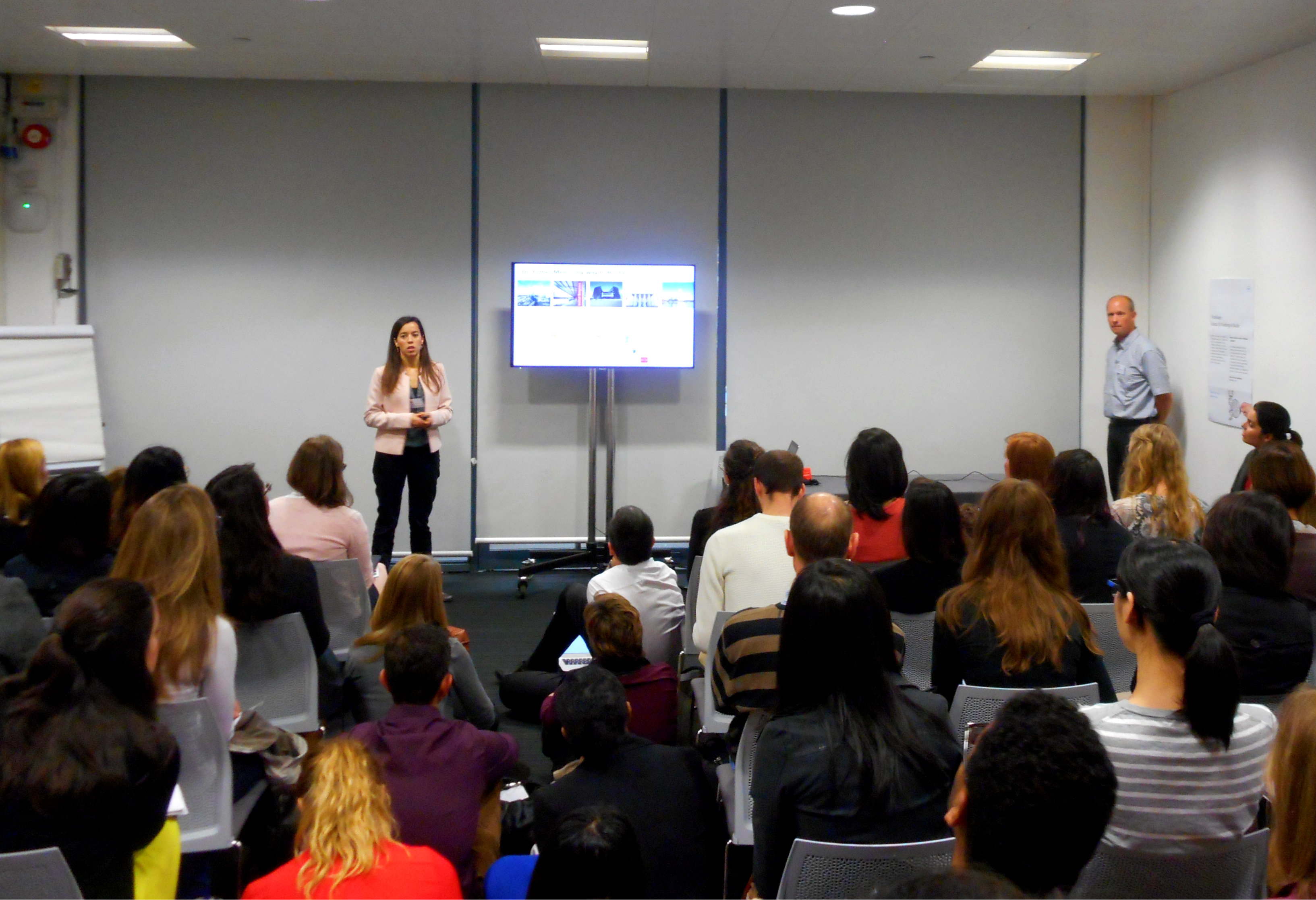
Matthias Nettekoven & Esther Melo from Roche Pharma Research & Early Development in Basel, Switzerland, presenting at the 2015 London Naturejobs Career Expo {credit}Image credit: Lauren Emily Wright{/credit}

Science is often carelessly tossed into two main categories – academia and industry – and the decision to move from one to the other can be daunting. But current opportunities seem determined to break down these walls and make a more homogenous research environment. The Roche group ran one of the most popular workshops of the Naturejobs Career Expo in London, held on the 18th of September 2015. Attendees filled the aisle and crowded around the open doorway, straining to hear the presentations by Dr. Matthias Nettekoven and Dr. Esther Melo, who work at Roche Pharma Research & Early Development in Basel, Switzerland, discovering new therapeutics and diagnostics in several research areas.

Nettekoven, a principal investigator, started with a reminder that research positions are not the only jobs offered by pharmaceutical companies. For instance, following a research post, Roche employees can move into marketing, sales, HR or manufacturing. “When you’re in, you’re just in. You develop into what you want to be,” said Nettekoven. “The world is open, but the initiative has to come from you.” Continue reading

Career paths: Out of the Ivory Tower

Taking small steps to build up your transferable skills and contacts can be the key to moving away from academia and towards your dream job.

Guest contributor Lauren Emily Wright

Phill-Jones-NJCE15-Keynote-naturejobs-blog

{credit}Image credit: Lauren Emily Wright{/credit}

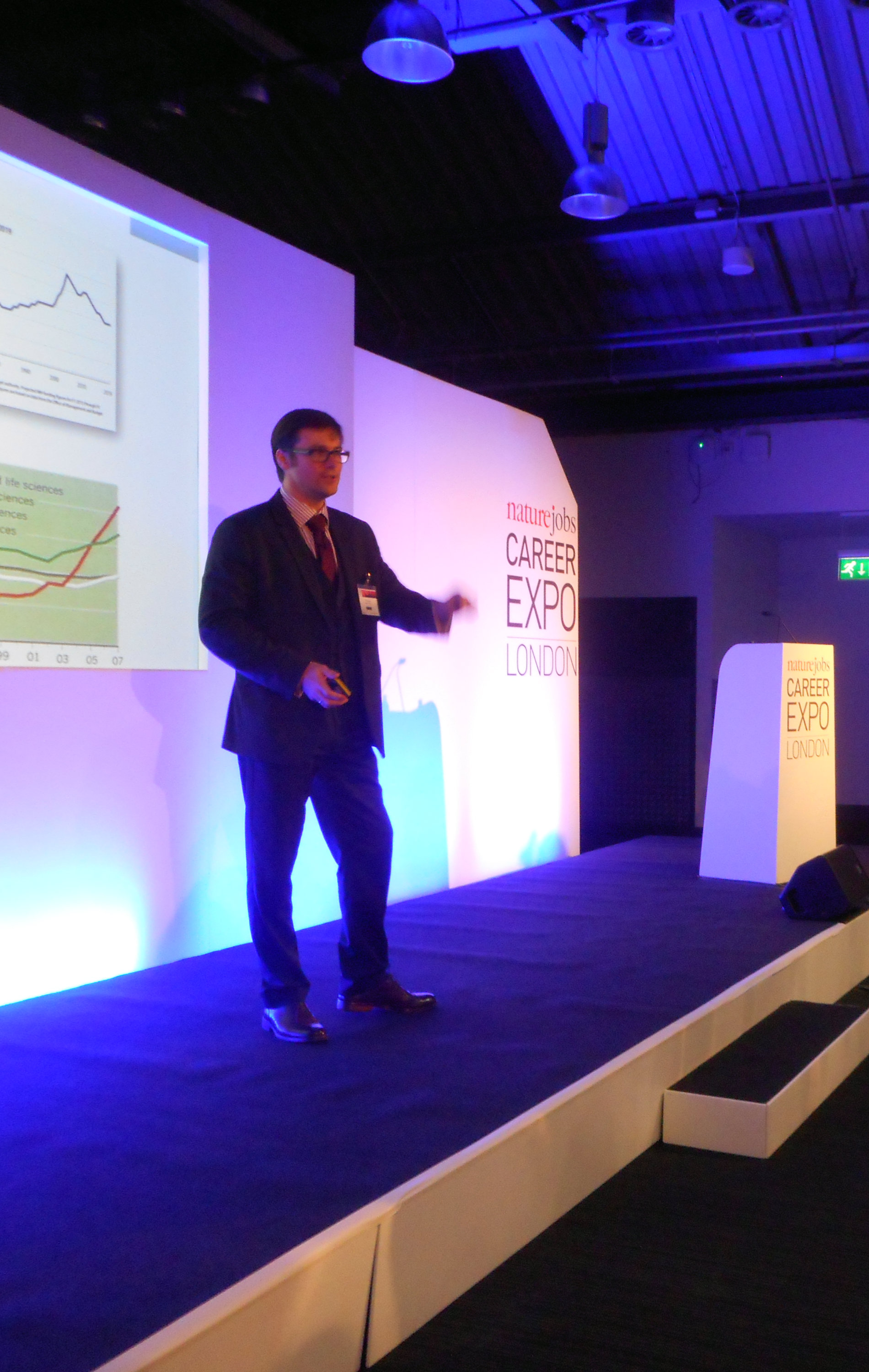
Ever thought “I want to leave academia, but all I know is lab work”? Well despair no more — the path out isn’t as treacherous as it may seem. In a great keynote speech at the Naturejobs Career Expo 2015 on 18 September 2015, Phill Jones told the story of how he left academia to become the head of publisher outreach at Digital Science, a company that provides a multitude of services to scientists, institutions, publishers, and funding bodies.

Jones gave the audience the sense that calculated planning and sheer luck had both played their part in his career. With a PhD in physics, he was firmly grounded in the world of academia. But after following his wife to Boston, Jones realised that a postdoc in physics would be hard to come by in such a biology-centred city. “I had to be a little more flexible in my career,” he said.

As Jones notes, it is necessary to have an open mind when thinking of changing career paths. “You can’t think ‘all I know is how to pipette’.” Instead, think about what sort of transferrable skills you can offer an employer. For example, Jones finished his PhD with an in-depth knowledge of optics — perfect for a position in a biology lab that used optical imaging to investigate strokes.

But how can you identify which transferrable skills you already have, and which you need to gain for that ideal new career? How can you make contacts outside academia? Continue reading

Career paths: Into the laboratory wild

Time away in a different environment can give young researchers new perspectives and challenges that could help them develop as scientists and people, says Lauren Emily Wright.

Guest contributor Lauren Emily Wright

balance-naturejobs-blog

{credit}iStock/Thinkstock{/credit}

‘Where there are experts there will be no lack of learners.’ -Swahili Proverb

Scientists know that any time away from academic data gathering and preparing the next publication is another nail in the coffin for a research career. The struggle for balance is a source of constant mental turmoil. Losing focus just a bit could mean losing the race for a faculty position.

I don’t want to believe that.

At the end of this year I will finish my first postdoc and embark on a project to counteract brain-drain in Ethiopia. I’m taking time away from the bench to work with a non-profit organisation called TReND (Teaching and Research in Natural Sciences for Development) in Africa. Continue reading