The Naturejobs podcast needs you!

Ask a careers expert your job-related questions on the Naturejobs podcast.

 The Naturejobs podcast is making a long-awaited comeback in July 2017 and we’re setting up an expert panel of careers advisers to answer your job-related questions.

25795-03_Podcast-End-User-Banner-300x100 Update3

Each month we plan to feature a hot topic for relevant members of our panel to answer. Do you have a workplace dilemma that you’d like to discuss? Are you struggling to decide what your next career step should be? Do you need help answering tricky interview questions, or tips on how to structure your CV? If you need help answering these questions and others, email your question to naturejobseditor@nature.com.

If we decide to feature your question we’ll be in touch to discuss ways of including it in the podcast, including an opportunity for you, the questioner to feature on the podcast!

In our opening episode of this new #NJPodcast series, Lauren Celano, co-founder and CEO of Propel Careers, will be our expert. Lauren has been working closely with Naturejobs for many years, regularly featuring on the blog and at our Boston Expo.

Her work with Propel Careers has allowed her to help many early career researchers find their feet when pursuing a career in the life sciences.
Continue reading

Academic research: Getting into a lab

Three chemistry Nobel laureates share how they select the PhD students and faculty members that join their labs and departments.

Naturejobs-podcastFor many young researchers entering graduate school for a PhD, a career in academic research is the end goal. Yet the pyramidal career structure doesn’t make this easy for everyone to reach. So, when it comes to finding out how you can get your foot in the door, who better to ask than three of the most successful academic research scientists?

One of my best trips this year was to the 65th Lindau Nobel Meeting. It was set on Lindau Island, a beautiful, picturesque little place in Lake Constance in Germany. And whilst I was there enjoying the sights, I also had the opportunity to speak to some very interesting people. The meeting was an opportunity for hundreds of early-career researchers to meet Nobel Prize winners from across the sciences. They networked, presented and had informal conversations about the scientific life.

This month’s podcast is a collection of conversations and thoughts I had at that meeting with three Chemistry Nobel Laureates: the 2008 Laureate Martin Chalfie from the University of Columbia; Venki Ramakrishnan from the Laboratory of Molecular biology, Cambridge, UK, who won the prize in 2009; and Arieh Warshel from the University of Southern California, the 2013 prize winner.

Amongst other things, we discussed what each of them looks for in PhD students that they take on into their laboratories and faculty members that they hire into their departments. The main message from all laureates I spoke to, not just these three, was that without visible, tangible passion and enthusiasm for the science, it’s going to be difficult for you to get a position in a laboratory.

This lead us nicely onto a discussion about how you communicate this in an interview. And so, in the last part of this podcast, Warshel and Ramakrishnan, share their concerns for young scientists in this endeavour: They understand the importance of being a good communicator, but scientists need to know the limits to this. It’s no good over-selling your work if it means neglecting it, or even fabricating it.


Most read on Naturejobs: July 2015

What makes a good scientist; Leaving academia; ERC funding and much more from Naturejobs this month.

naturejobs-readsThis month on the Naturejobs blog we’ve published 17 blog posts (18 if you include this one!). That’s a lot of words, and a lot of advice from your peers.

On the last Friday of every month we share the top picks, as chosen by you. Feast your eyes:

1. What is the biggest missing piece in how we educate scientists? Responses, from a range of thought leaders, ranged from the practical to the philosophical in STEM education: to build a scientist on Nature Careers.

2. Insider Knowledge, by Chris Woolston, offers insights into what others might have already learned in a career that you have chosen to follow. His advice: take the time to seek out what inside information you can get to help decide whether or not this career is the right fit for you. Continue reading

ERC funding: Maximize your chances

A brief insight into what the funding process is like for Starting and Consolidator grant applicants, once you click submit!

Naturejobs-podcastLast week I took the opportunity to go to Brussels to visit the ERC HQ. It’s a beautiful building in the centre of the city, and although surrounded by building works on the outside, it’s rather tranquil and green on the inside.

But, my job wasn’t to assess the interior design of ERC HQ. Instead, I was there to find out what happens to a starting or consolidator grant application once you hit submit.

In this podcast you will hear Professor Jean-Pierre Bourguignon, the ERC president, on why he’s so keen to help early career researchers. I also speak to Alejandro (Alex) Martin, who heads up the call co-ordination team, which  organises the whole evaluation process from the arrival to the final evaluation that creates the ranking list. This list determines who gets what funding. He gives a sneak peak into how the panels evaluate candidates and what they are keen to assess.

I got to meet Iva Tolić and Veerle Huvenne, two really interesting and enthusiastic scientists who wanted to share their ERC grant application stories. Veerle is in the final year of her Starting Grant, and Iva has just received the 5000th Consolidator Grant from the ERC

This podcast also acts as a sneak preview for our first FREE Naturejobs webcast, scheduled to happen on September 30th 2015. We’ve got 4 great speakers lined up for you, ready to share their insights and experiences on how to put together your application in order for you to maximize your chances of getting funded. So, keep your eyes on the blog!

The faculty series: A big adventure

Becoming faculty is a goal for many scientists in academia, but the path is littered with hurdles, challenges and lessons to learn.

Naturejobs-podcastAccording to an ASCB infographic, less than 8% of biology PhD starters in the US will become faculty. Of course, there are many that start the PhD with no aim of becoming faculty, but many do have this goal. And for them, the competition can be fierce.

When the competition is tough, it’s worth arming yourself with as much information as possible. So, my goal over the coming months is to arm all potential faculty with as much information to get them started. This podcast launches the new series about becoming and being academic faculty on the Naturejobs blog. It’s a series of anecdotes from Dori Schafer and Brian Kelch, both faculty members at the University of Massachusetts Medical School.

Dr Schafer is new to the whole faculty job world (she started her faculty job in April 2015) and is still finding her way around as she moves into her laboratory and unpacks her microscope. Dr Lee has been a faculty member for a few years now, has settled in, but is still learning a lot of new things, especially about how he mentors his postdocs and PhD students. They, and other faculty, stresses just how difficult the job hunt can be. Not just because of the scarcity, but dealing with the emotional roller-coaster that accompanies it. From there they both give an insight into what it’s like actually setting up their labs, hiring staff and mentoring them throughout their careers.

Now I need your help: to develop the up-coming posts I need to hear your stories. So, if you’ve got any stories, experiences, lessons learned, Do’s and Don’ts that you would like to share with a wider audience, and that you think people can benefit from, please get in touch by leaving a comment below.

Update 03/06/2015: Sincere apologies to Brian Kelch, who was originally incorrectly named as Mike Lee in this Naturejobs podcast. The post and podcast have been edited to reflect the change of name. 


Check out the other posts in the faculty series:

An introduction

Applying for a job

Top 10 tips on negotiating start-up packages

Setting up your own lab

Nobody rides for free

Balancing the books

Becoming independent

Recruiting staff

Learning to collaborate

Applying for grants

A case study

Top 10 tips on managing your time as a PI

What does it take to be a mentor?

Conclusion


Entrepreneurship with Steve Blank

What does it mean to be an entrepreneur?

Steve Blank

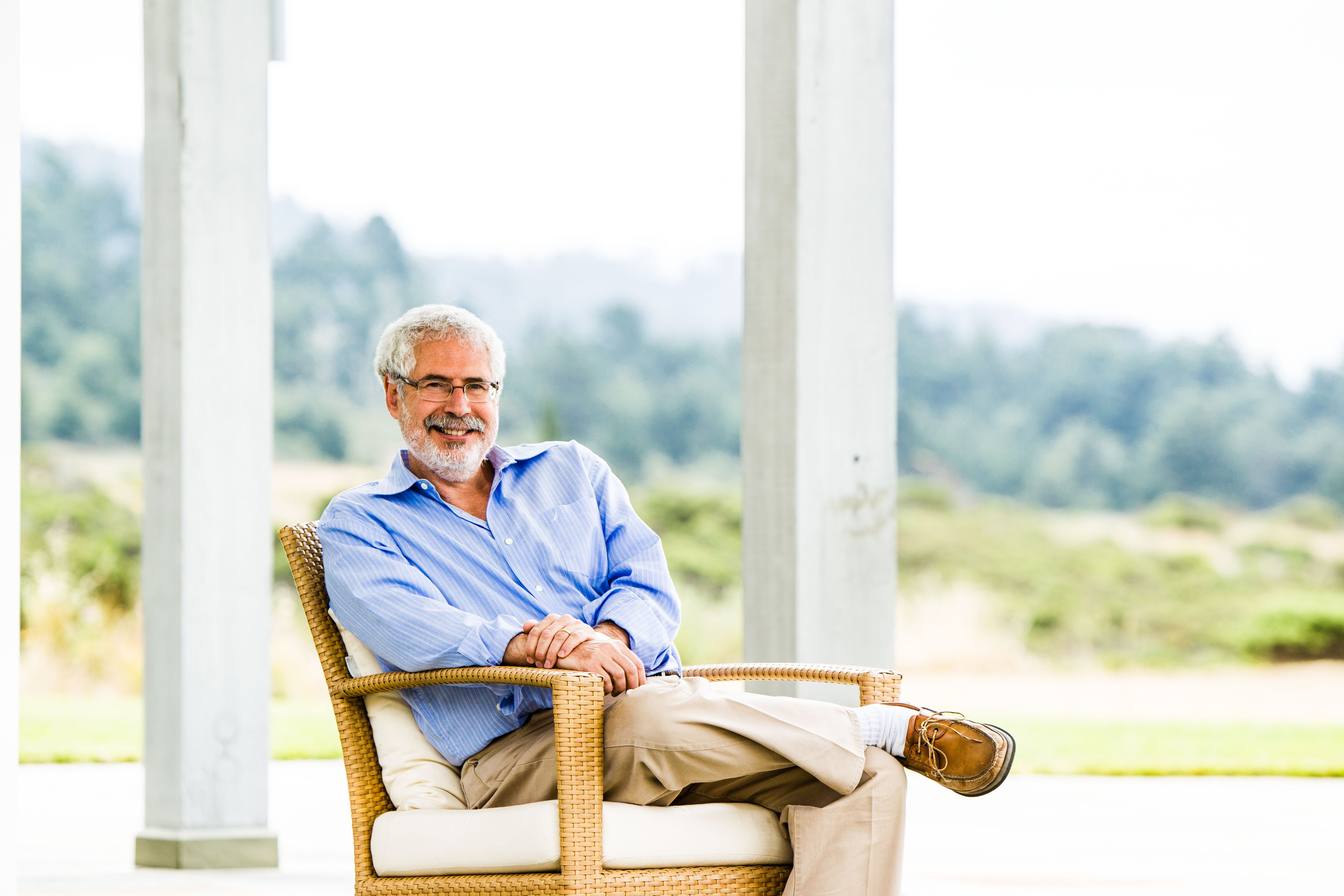
{credit}Eric Millette{/credit}

In this month’s Windback Wednesday series, we’re exploring entrepreneurship: how to brush up on your business skills, where to get venture capital funding and more. In this podcast, I speak to Steve Blank, an associate professor at Stanford University engineering school, a lecturer at UC Berkeley Haas Business SchoolColumbia Business School and the University of California in San Fransisco (UCSF). On top of all of that, he is also a thought leader of the Lean Start-up movement.

I met Steve last week at a SynBioBeta event at Imperial College London. He gave a very engaging key note speech on the Wednesday evening, giving us a flavour of what a Lean Start-up business is. He put several audience members on the spot, asking them to sell someone else’s “idea or concept”  to neighbours, who always (as per Steve’s instruction) said no thanks. They said no thanks, because of who was doing the selling. Steve was trying to make the point that if you, the scientist, have an idea or an invention that you think could be commercialised, then you, the scientist, need to go out and sell. You can’t hire a VP of sales or a marketing manager. YOU know your invention better than anyone else, YOU need to leave the lab and sell YOUR idea.

https://www.nature.com/multimedia/podcast/naturejobs/naturejobs-2014-04-10.mp3 Continue reading