How to escape a ‘paint-by-numbers’ career

Academia trains us to follow pre-defined paths when planning our careers, but the most exciting and rewarding careers are designed by their owners. If you’re willing to take some risk and create your own design, you can have a more exciting career than you ever imagined.

By David M. Giltner, PhD, Founder of TurningScience

If you’re like me, you entered university with a plan: to follow a career path that many had followed before. This is common, because school trains us to follow directions. Earning a degree involves predefined steps:

‘Complete this application adequately, and we will admit you.’

‘Answer this list of questions correctly, and you will pass the test.’

‘Pass this list of classes, and we will give you a degree.’

It’s natural to continue looking for a path to follow after graduation, but, in my view, that’s not how the most exciting careers are built. I’ve found my own way, founded a company, and enjoyed an immensely rewarding career along the way.

Career-path-decisions-naturejobs-blog-small

{credit}iStock{/credit}

Continue reading

From Doctorate to Data Science: A very short guide

Moving from a PhD into data science can be rewarding, but might be a bit of a culture shock

Are you one of the many PhDs considering a career in data science? I completed a PhD in neuroscience at Stanford three years ago; now I’m a data scientist at Uber. During my time in industry, I’ve found that the skills we develop in graduate school, such as analytical thinking, statistics, communication skills, and – oh yes – tenacity in the face of adversity, make us a great fit for the role.

smaller

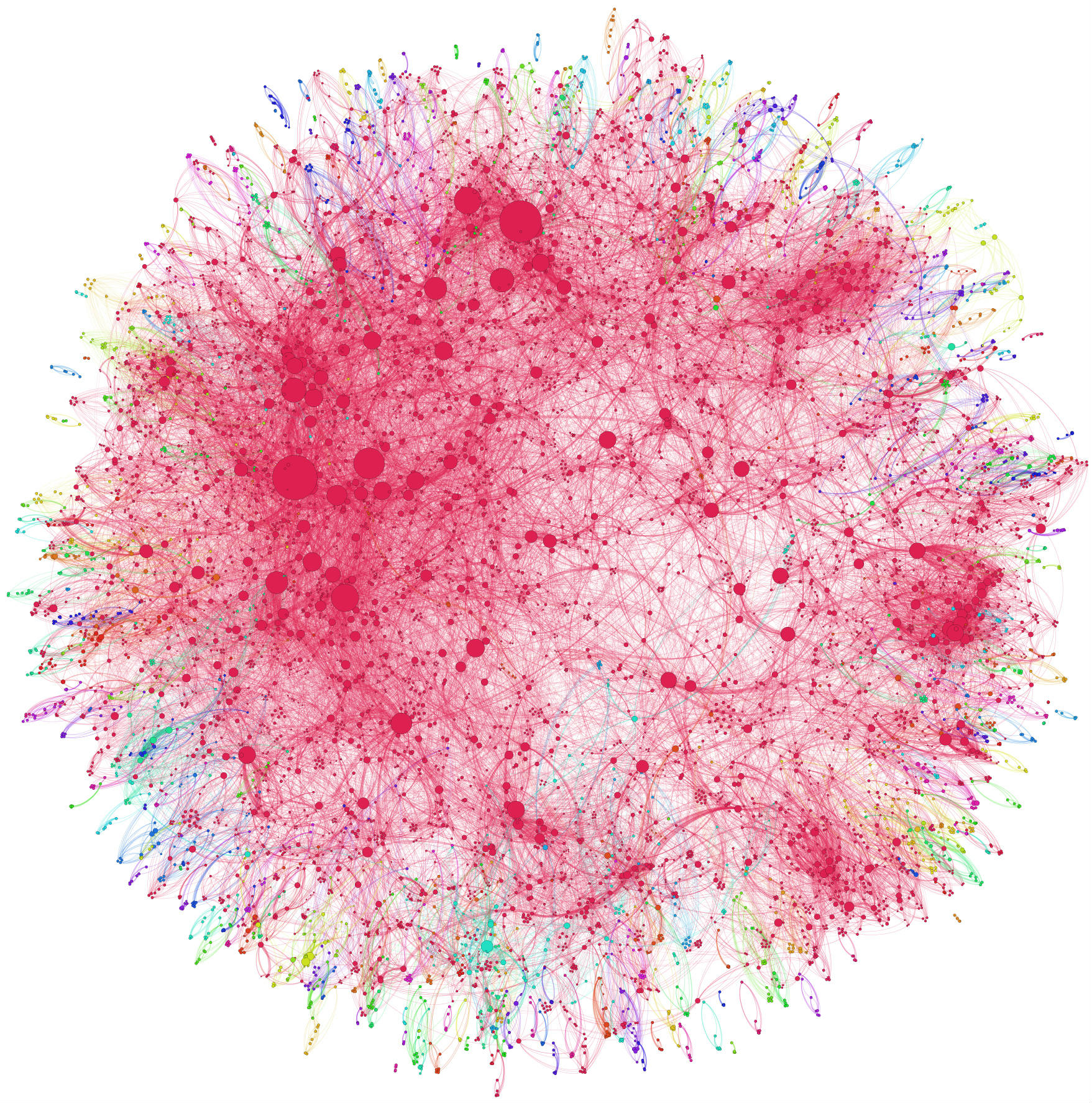
The co-authorship network of 8,500 doctors and scientists publishing on hepatitis C virus between 2008 and 2012. {credit}Andy Lamb/ Flickr{/credit}

Continue reading

Finding job satisfaction as a drug safety manager

Steffen Schulz was completing his PhD in medical neuroscience when he realised he needed more job security than academia could offer. Now, he works as a drug safety manager in his native Berlin.

How did you get into biology?

Originally I was interested in the origin and the development and evolution of life. Then I shifted to questions like ‘why do animals and humans behave the way they do?’

IMG_2299-allwhite-smaller

Steffen Schulz

Continue reading

Finding job satisfaction in industrial research

After finishing a PhD and postdoc studying the cellular mechanisms behind cardiovascular disease, Shikha Mishra decided not to continue in academia.

She found she could still do the work she loved at the bench by doing product development research at Thermo Fisher Scientific.

Mishra-msaller Continue reading

From academia to industry: A short guide

 When long hours in the lab threaten to bring you down, and the vision of a paper is a blur out in the distance, your own internal cheerleader can only carry you so far.

Guest contributor Aliyah Weinstein

Sometimes, a career change into a new environment is just the thing you need to refresh your love for science. But how can an academically-trained scientist make this transition?stairs-1014065_1920

Continue reading

How did you approach the transition from academia to industry?

We asked speakers at the Naturejobs career expo, San Francisco, how they made the move.

https://youtu.be/y2PFsG5eXhs

So you want to be a data scientist (again)?

Put your natural science skills to work in a data science career

Guest contributor Daniel Harris of SoftwareAdvice.com

The explosive economic impact of big data has blurred the line between the business world and the scientific world like never before. A new type of business leader, the data scientist, has evolved as an amphibian, capable of thriving in both worlds, swimming in data lakes to bring useful insights back to the solid ground of business concerns.

Of course, companies have been using business intelligence (BI) tools to analyse their operational and financial performance metrics for decades.

But datasets generated by the web are so large that they must be stored on clusters of servers with thousands of nodes. Traditional methods for analysing these datasets have faltered, necessitating a more scientific approach.

Continue reading

Finding job satisfaction in technology transfer

As a business development officer at STEMCELL Technologies in Vancouver, Canada, Ben Thiede evaluates new technologies and negotiates deals that bring scientific advances to market. He describes his move from graduate studies toward law and into his current position.

What do you do?

It’s a very diverse role; I’m writing and drafting a lot of agreements – like license agreements and supply agreements.  I’m helping the company evaluate the patents we have; I’m evaluating technologies that other companies are bringing to us. I’m always scouring publications; I have Google Alerts set for certain types of technologies. I feel that I am reading more scientific journals than when I was in grad school. Continue reading