
Tag Archives: GSK
Quick profiles: Emma Hilton
Emma Hilton worked as a doctor for nine years, including four in clinical research. After that, she shifted to pharma. Here she shares her story.
Emma is now Global Medical Affairs Leader for Chronic Obstructive Pulmonary Disease (COPD) in GSK’s Respiratory Division.
As a child, I was fascinated by how things work, especially the human body, and I decided I wanted some kind of career in science. Medicine seemed like the ideal avenue and offered a reassuringly clear path including training and employment prospects.

{credit}iStockphoto/Thinkstock{/credit}
What are the similarities between academia and industry?
Pauline Williams of GSK talks about the similarities between academia and industry at the Naturejobs Career Expo, London, 2016.
https://www.youtube.com/watch?v=h029rW3QczI
Is there an age limit to moving into industry?
Pauline Williams of GSK discusses the ‘age limit’ to making a move out of academia at the Naturejobs Career Expo, London, 2016.
https://www.youtube.com/watch?v=aqvEyCreVQA
Careers in industry: Medicine maker
Pauline Williams shares her thoughts on her career outside of academia.
As a junior doctor working in geriatrics, I could never have imagined that in 20 years time I would have led the development of a medicine which has the potential to save hundreds of thousands of babies’ lives.
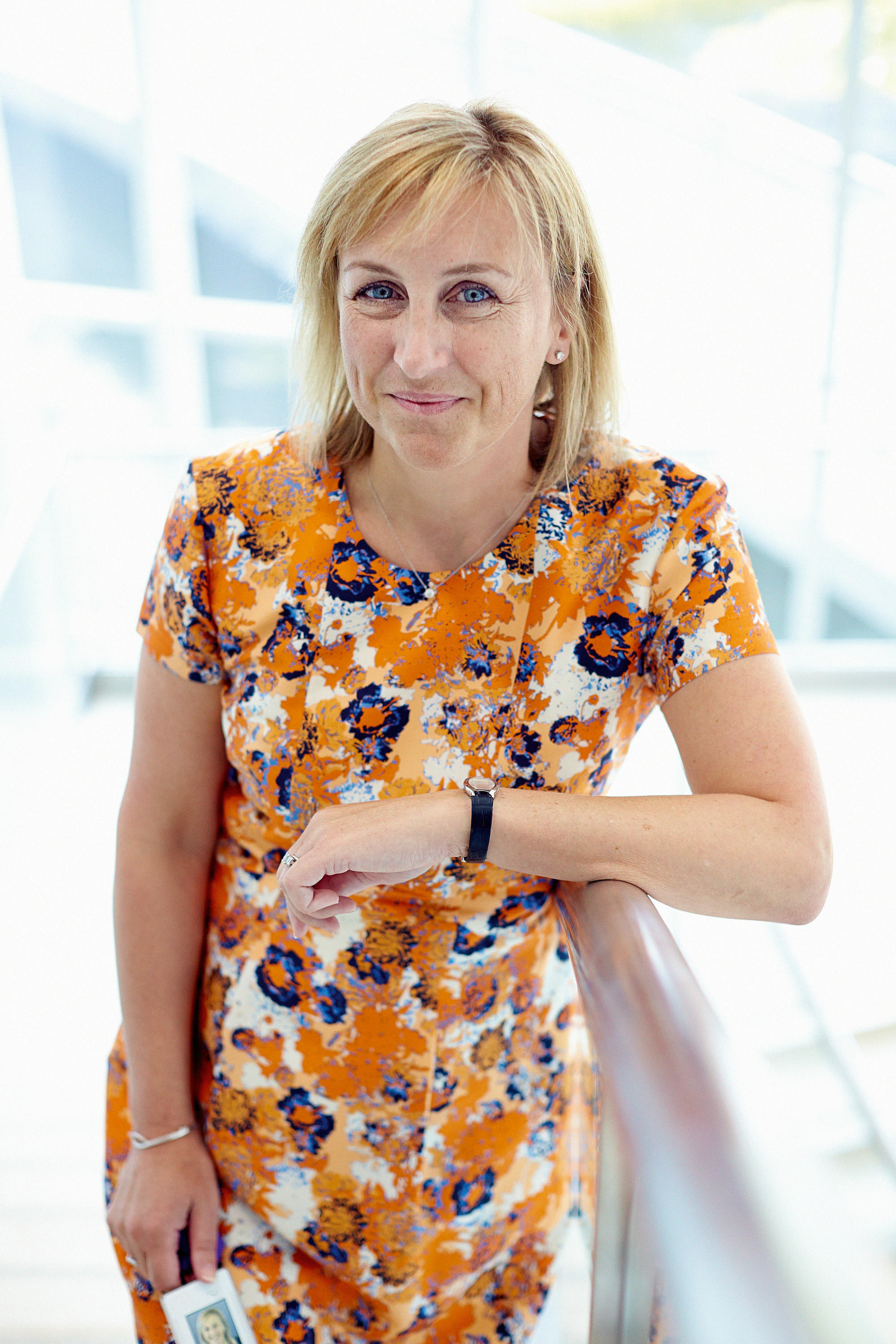
Pauline Williams
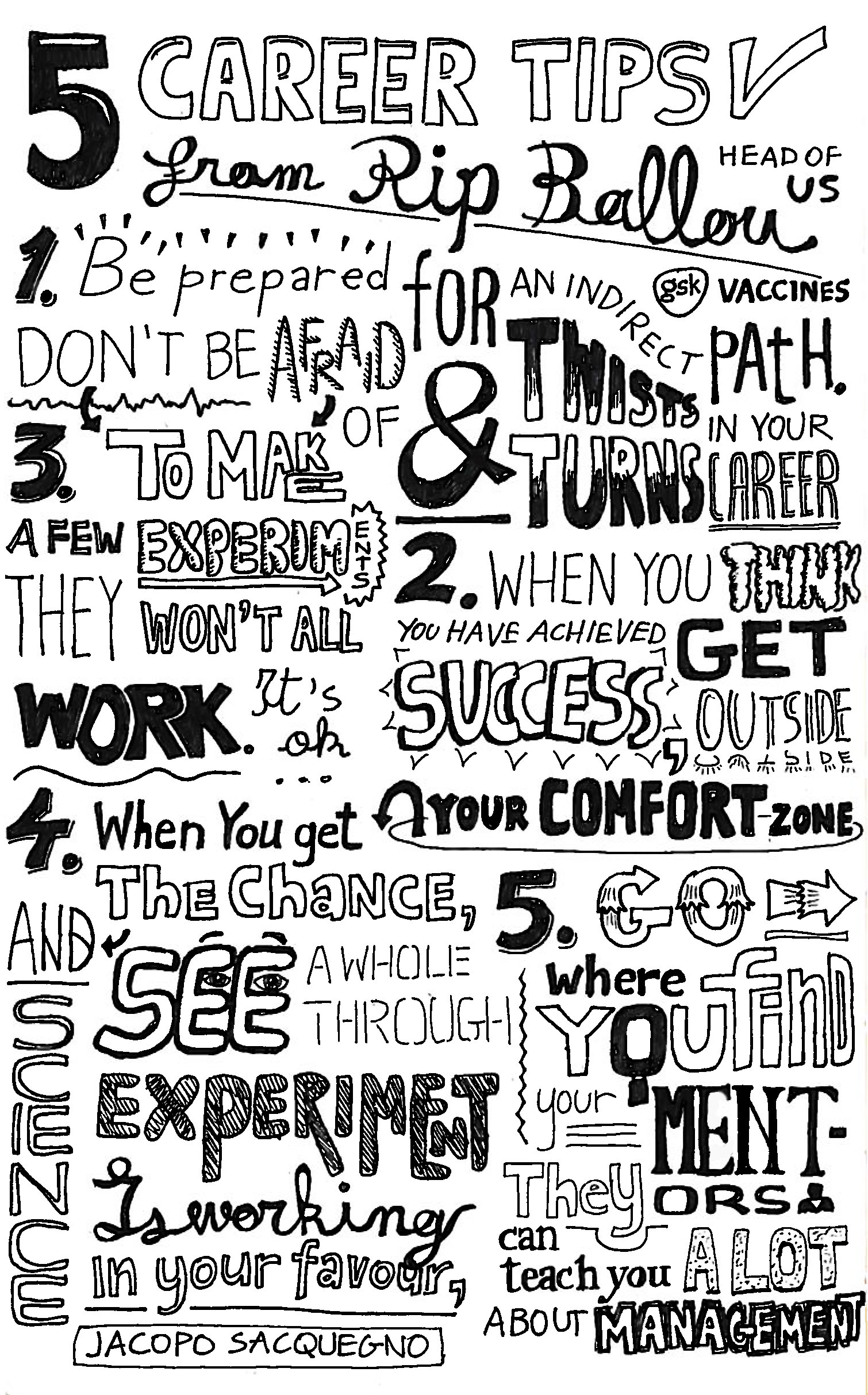
Five career tips from Ripley Ballou
We sat down with Rip at the Naturejobs career expo, Boston, to talk about his career and the advice he would give to other scientists starting theirs.
Rip’s had an interesting life; he started his career as a researcher at the US army’s Walter Reed Institute of Research, where he once exposed himself to malarial mosquitoes in a bid to see if his malarial vaccine worked. It didn’t, and that experience has motivated him in his career ever since. He’s now the head of US vaccines at GSK.
Here’s a word art graphic of five points from Rip’s talk, by Jacopo Sacquegno.
{credit}jacopo sacquegno{/credit}
Research in industry: A great career choice
Albert Isidro-Llobet always wanted to be an academic. Now he works for GSK. Here he shares his story.
Guest contributor Albert Isidro-Llobet
I joined the R&D division of GSK as an organic and medicinal chemist in 2012. Before that, I completed my PhD at the University of Barcelona and a 3-year postdoc at the University of Cambridge. After my undergraduate degree, I decided to work in organic and medicinal chemistry to contribute to the synthesis of new medicines. Eventually, I wanted to become a Principal Investigator (PI) in academia and it seemed to me that the best course would be pursuing a second academic postdoc.
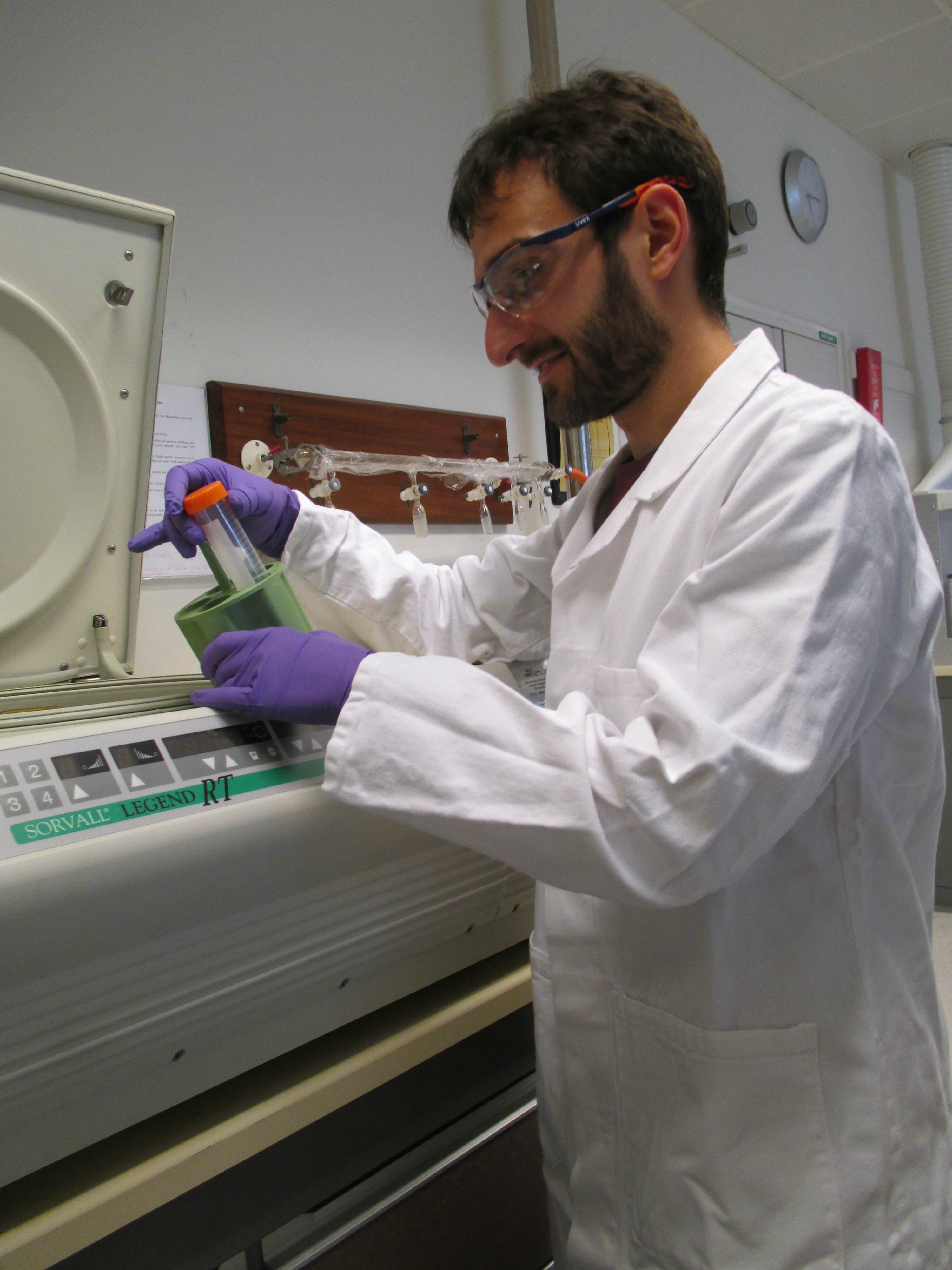
Albert in his lab
Careers in industry: The options
Reply
As PhD studentships far out-number the quantity of post-doctoral opportunities, young researchers might want to consider a career in research outside of academia.
Guest contributor Zoe Self
{credit}Image credit: Zoe Self{/credit}
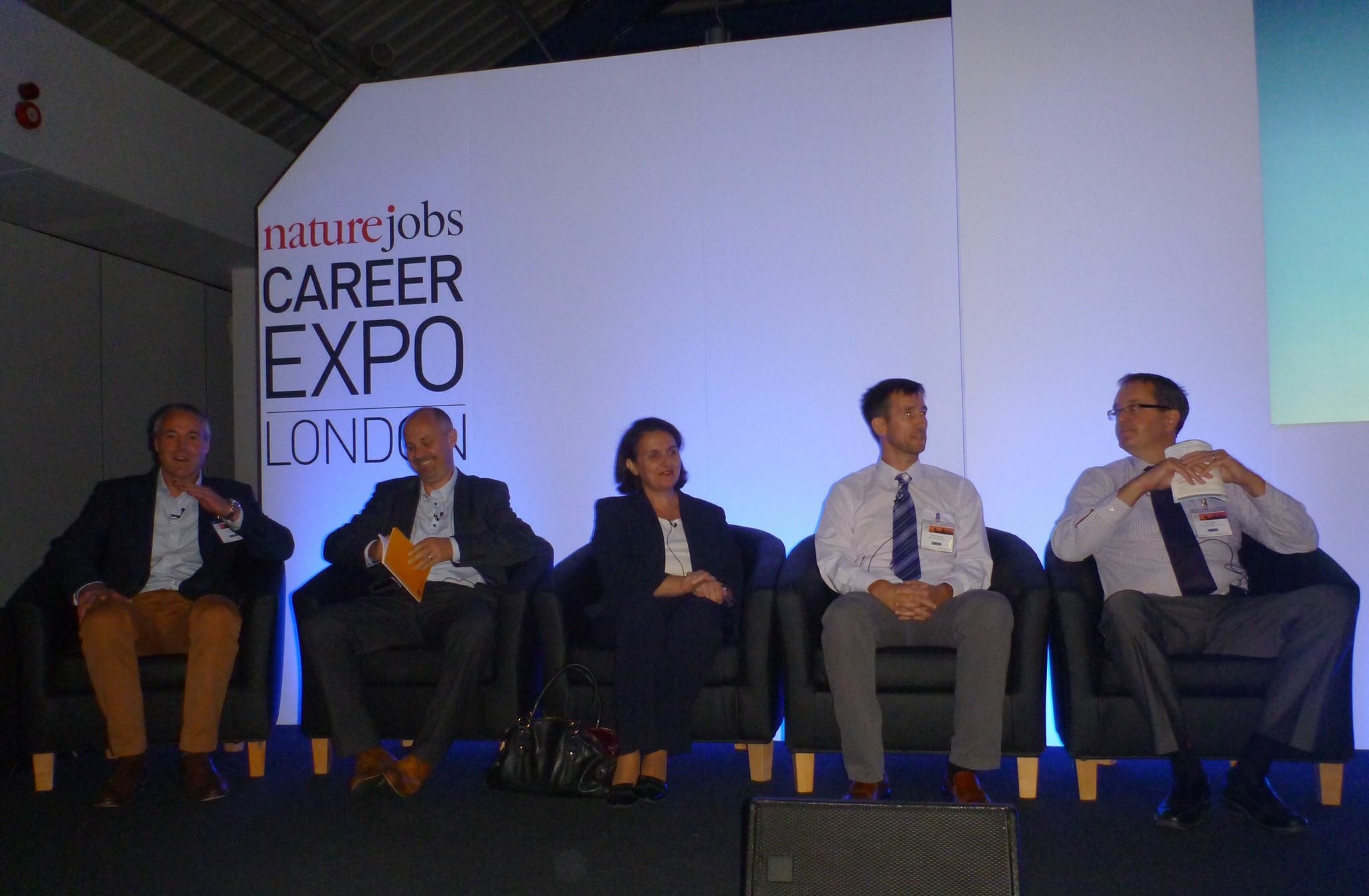
“There are careers available in academia, but they are becoming more and more limited,” said Naturejobs editor Julie Gould as she introduced the session on careers in industry at the 2015 London Naturejobs Career Expo on 18 September 2015. The auditorium was packed, with many delegates sat on the floor. Chairing the panel was Dr Ric Allott, business development manager at the Central Laser Facility, part of the UK’s Science and Technology Facilities Council. In opening, he said that he’s keen to break down the misconception that basic science occurs only in academia, while industry focuses just on applied science. “That is not the case,” he said. “There’s a real spread — a real broad application of science, research and development across both of those [academia and industry].”
Allott introduced a panel of experts from different areas of industry to give their take on careers outside of academia.
Government laboratories
Dr Dave Worton is a senior research scientist at the National Physical Laboratory (NPL), a government-run laboratory in the UK. He supervises a team of scientists and oversees multiple research projects. Worton also spends time applying for funding and attends academic meetings, much like a university researcher. The career ladder at the NPL has a similar structure to that in universities, including research scientist roles (graduate level), his position of senior research scientist (post-doctoral experience) — and beyond. “It’s very much like working in a university,” he said, but with opportunities to move laterally, into business. Continue reading
From academia to industry with Paul-Peter Tak
Building bridges between the clinic and the lab has been Paul-Peter Tak’s main mission throughout his career.

{credit}Image credit: GSK{/credit}
What is your academic, research background?
My background is a mix of clinical medicine and research: two subjects that I think go hand-in-hand. Having a medical degree and a PhD gave me a strong position from which to build a career that spans these two fields.
During my medical training, I got more interested in research, and how to bridge that gap between clinical medicine and basic science. That gave me a springboard from which to get involved in translational science in immunology, rheumatology and geriatrics.
This translational approach has been the basis of my career ever since, which involved a spell doing research in the US and more than a decade at the Academic Medical Centre/University of Amsterdam – where I became Professor of Medicine and Chair of the Department of Clinical Immunology & Rheumatology; and was proud to be elected ‘Toparts’, the best rheumatologist in the Netherlands according to my peers. Continue reading
A physician’s adventures at GSK
Sponsored content. This post is sponsored by GlaxoSmithKline, and is written by Luke Devey.
{credit}Credit: Emma Oakman GSK{/credit}
It’s been nine months since I made the transition from clinical academia to GSK via the Esprit R&D leadership development programme. Making the move was a tough decision and my previous blog captured just my first impressions. So how do I feel now that the initial shock has subsided?
Breadth of opportunity
During my first role in Esprit, working as a physician scientist in the Experimental Medicine Unit, I’ve been exposed to an almost overwhelming breadth of opportunities, ranging from leading a team developing a novel immunotherapeutic to running clinical studies and participating in commercial boards and business development. I’ve found the organisation to be like a sweet shop of novel biology and exciting technologies, many of which have transformative potential. Of the areas I’ve needed to learn about, some have been completely unanticipated. Who knew that I would be expected to contribute to discussions of manufacturing design, assay validation or Bayesian statistics? As a result, I liken a day at GSK to a workout at an intellectual gym, and it’s hugely enjoyable. Continue reading