
Albert Isidro-Llobet always wanted to be an academic. Now he works for GSK. Here he shares his story.
Guest contributor Albert Isidro-Llobet
I joined the R&D division of GSK as an organic and medicinal chemist in 2012. Before that, I completed my PhD at the University of Barcelona and a 3-year postdoc at the University of Cambridge. After my undergraduate degree, I decided to work in organic and medicinal chemistry to contribute to the synthesis of new medicines. Eventually, I wanted to become a Principal Investigator (PI) in academia and it seemed to me that the best course would be pursuing a second academic postdoc.
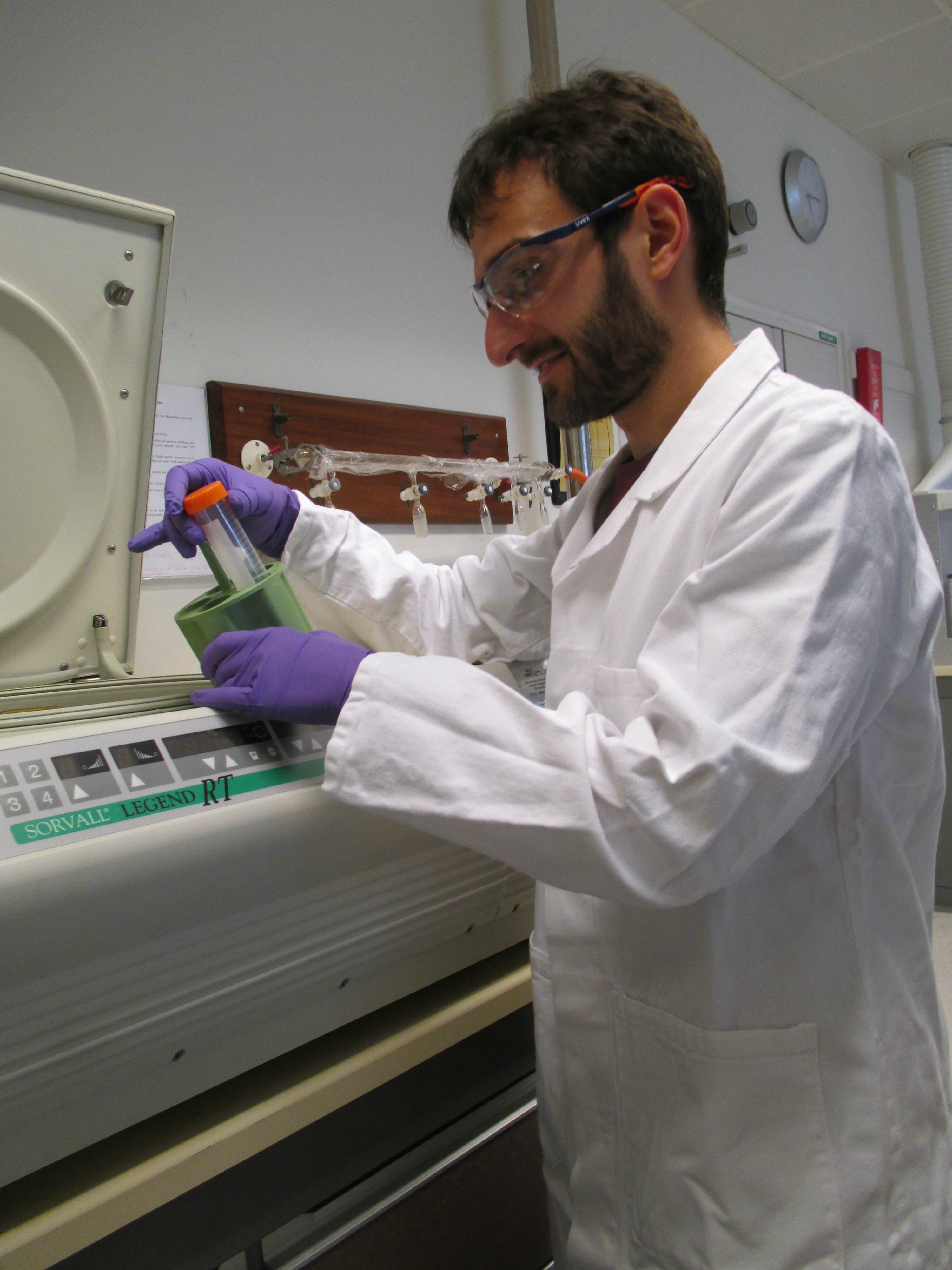
Albert in his lab
However, I found myself asking questions which will sound familiar to many scientists in that stage of their career. What if I eventually found out I didn’t want to, or couldn’t, be a PI? Would I be employable outside of academia? Besides, I was also keen to explore new challenges. Eventually, I decided another postdoc would be too similar to what I had already done.
During my time at Cambridge, I had attended talks and conferences with speakers from industry. I enjoyed the science and enthusiasm they shared. I saw that partnerships with academia were encouraged, which could be useful if I ever did decide to return to the public research world.
In terms of getting a job in industry, there is plenty of great advice around. I would recommend attending events (conferences, career events, or workshops), and talking to as many people as possible – most scientists love to talk about their experience, and many have also been in your situation, so don’t be afraid to ask.
It is also worth doing your homework before attending any networking event: determine who you want to talk to, and approach them as early as possible. Another way to make the most of conferences is to try and present your own research when possible; this will improve your communication skills and make you more visible. It’s also good to be able to summarise your research career in one or two simple sentences that show your passion, and its relevance to industry. Finally, I found that mock interviews at the careers service of the University of Cambridge were a great way to get constructive feedback, and writing and submitting speculative job applications was also a good exercise.
After a number of applications, I successfully interviewed for a research position at GSK. I’m currently part of a team of around ten medicinal chemists working in early stage drug discovery. From the start of my time with GSK, I saw that my employers not only cared about my performance but also about my personal development. For example, my manager arranged a series of 1:1 meetings between myself and research group leaders in the company to discuss scientific projects and career opportunities. I was surrounded by excellent and passionate scientists eager to share their knowledge.
My day-to-day job necessitates teamwork and we often have to present our results to collaborators from a variety of backgrounds. We’ve learned how to effectively communicate with diverse audiences, transmit our enthusiasm for science, and create and maintain fruitful collaborations.
There are, of course, differences between industry and academia – you can’t always pursue the research you’d like to in industry, for example. That said, in my experience there’s always a degree of flexibility and constant calls for new ideas, which is very motivating. Naturally, when a project has to stop for strategic reasons it’s not great, but it can open up opportunities to work on several new projects, helping to enrich your experience and skill set.
Industry and academia can also be very similar. They both offer the opportunities to attend high-quality seminars and listen to internal and external speakers – I’ve been lucky enough to see the Nobel laureates Aaron Ciechanover and Sir Paul Nurse at GSK. I’ve also found that GSK encourages us to present at international conferences, publish papers, and take on management opportunities through teaching and supervising undergraduates and PhD students. Transitioning from academia to industry has shown me that there’s more familiar ground in industry than I expected, more exciting new challenges than I hoped for, and more than ample opportunity to conduct high-quality research. My skillset and my confidence as a scientist have grown, and, most importantly, I’ve enjoyed the process.
Albert Isidro-Llobet is a medicinal chemist at the R&D division of GSK. He holds a PhD from the University of Barcelona and was awarded a Marie Curie Intra-European fellowship to undertake postdoctoral research at the University of Cambridge. His main research field is peptide therapeutics.
Suggested posts
Finding job satisfaction in high performance computing
Careers in industry: How to transition into a new field
Careers in industry: Is an industrial PhD worth it?
Working in industry: An academic-style postdoc in a pharmaceutical setting