
Sponsored content. This post is sponsored by GlaxoSmithKline, and is written by Luke Devey.
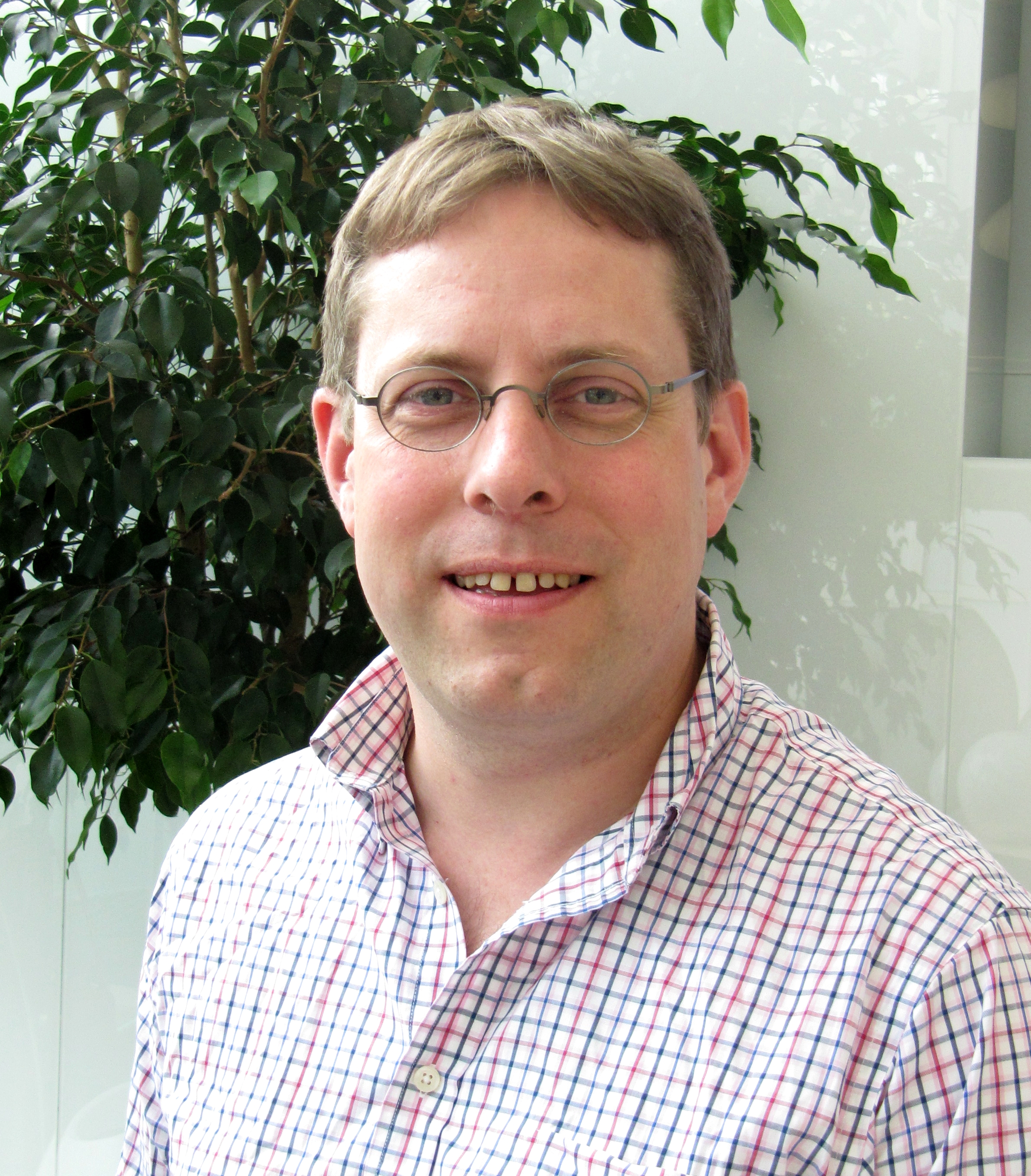
{credit}Credit: Emma Oakman GSK{/credit}
It’s been nine months since I made the transition from clinical academia to GSK via the Esprit R&D leadership development programme. Making the move was a tough decision and my previous blog captured just my first impressions. So how do I feel now that the initial shock has subsided?
Breadth of opportunity
During my first role in Esprit, working as a physician scientist in the Experimental Medicine Unit, I’ve been exposed to an almost overwhelming breadth of opportunities, ranging from leading a team developing a novel immunotherapeutic to running clinical studies and participating in commercial boards and business development. I’ve found the organisation to be like a sweet shop of novel biology and exciting technologies, many of which have transformative potential. Of the areas I’ve needed to learn about, some have been completely unanticipated. Who knew that I would be expected to contribute to discussions of manufacturing design, assay validation or Bayesian statistics? As a result, I liken a day at GSK to a workout at an intellectual gym, and it’s hugely enjoyable.
Working in a team
The biggest shift (and biggest shock) has been the ‘how’ not the ‘what’. As a clinician, I was required to work independently—to take critical decisions on my own in the middle of the night. In that acute environment, effective leadership was about marshalling the forces of the clinical team to execute a plan in which the patient received the right investigations and treatment as quickly as possible. But now things are different: slower, more multidimensional, extremely intellectually rigorous, and involving subject matter of which, in some cases, I know very little. Working with teams of really smart people, listening to their perspectives, and bringing their diverse expertise to the common goal of making a new medicine for patients has been incredibly stimulating. How do you lead a team like this when you are the least knowledgeable person in the room, especially when it comes to making critical decisions? Those who have scaled the GSK career ladder to dizzying heights tell me that this is precisely their challenge: integration of multiple perspectives, acceptance that you’re not always the expert, deference to the skills of others, and learning to ask really great questions while creating a unifying direction. These skills are a real differentiator—it’s not just about intellect any more, and toning up those leadership muscles requires considerable effort.
Advocacy
One of my fears before starting work at a 100,000 person company was that I might lose some of the liberty I had enjoyed in academia, becoming a ‘cog in a machine’. I soon discovered that this is an organisation with huge bandwidth to explore and develop new ideas, giving me a surprising freedom to operate in different areas, so I needn’t have worried. With my background in surgery, transplantation, and ischemia reperfusion injury research (understanding how to improve the function of organs after blood supply has been interrupted), I was asked to contribute to a number of drug development programmes concerning acute kidney injury (AKI). These were exciting—with potential medicines acting on many of the pathways I had studied over the years. When these reached double-digit proportions, I realised that we now had a new problem: we were spoilt for choice.
A call for ideas
In month six of the program, there was an internal ‘call for ideas’ competition, set up to harness the creativity of the many smart people in R&D, and analogous to the grant application rounds that were so familiar to me in academia. Alongside my normal duties in the experimental medicine unit, I decided to submit a proposal centred around human target validation in acute kidney injury.
For the uninitiated (as I was just a year ago) human target validation is a process of double-checking experimental discoveries made in animal models by performing creative experiments using human tissues. As such, it seeks to sort the wheat from the chaff of the published literature, and avert late stage failures when animal models have been found not to fully translate to humans.
With help from both internal and external experts, I developed a high-level experimental plan by which to make rational selections of the best potential pathways for the treatment of AKI. My next task was to advocate my cause within the organisation. For AKI to be investable, I needed to demonstrate not only unmet need (in-hospital mortality for patients with AKI requiring renal replacement therapy approaches 60%[i]) but also the tractability of the indication (i.e., whether it might be solved using existing technologies). This latter case was facilitated by the wealth of compounds at our disposal.
My proposal was supported by the R&D leadership, and after I hand over my projects in the Experimental medicine unit, my next role within the Esprit programme will be to build a new group focused on AKI research. This feels parallel to my former life in academia—I have won the grant, but I’m acutely aware of the necessity of delivering results. But here I find important differences. Firstly, I’m not expected to have all of the answers myself. My project has been placed in a unit (the Pipeline Futures Group) founded specifically to partner with early stage projects, fill gaps in knowledge, and contribute to the ‘intellectual heavy lifting’ that will be required to develop a new medicine. I have set a direction, but the decisions made are a collaborative effort. The group includes chemists, biologists and computational biologists with whom we will design optimal experiments. Physician scientists, like me, will help define clinical indications and design early clinical studies, while senior drug developers will mentor me and provide constructive feedback on the development and progress of the AKI research project. . Furthermore, I am not expected to deliver all of the work singlehandedly: the group takes much of the strain of working through internal and external processes, project management, and if necessary performing the bench work to bring the ideas I initially proposed to fruition.
Although any early drug development project is high risk, especially in a field like acute kidney injury, the resource, support and mentorship offered will help to maximise its chances.
Arc of a career
As worthwhile as I found it to work at the clinical coal-face treating many patients with acute kidney injury, carefully managing their medication and fluid balance, and hoping that they won’t be joining the unlucky few who landed on dialysis, I always sought to understand the pathology of ischemia in my laboratory research. Fundamentally my efforts were limited by their focus on animal models, tackling a single molecular hypothesis at a time, and the meagre scale of my laboratory resources. Now however, by harnessing the scale and resources of ‘big pharma’ it is exhilarating to be leading a project with a chance of ‘changing the game’ for a much larger group of patients. I could never have achieved that level of clinical impact any other way, and I have to say, it’s exciting.
Please click here for information on other physician roles at GSK
[i] Nat Rev Nephrol. 2014 Apr;10(4):193-207. doi: 10.1038/nrneph.2013.282. Epub 2014 Jan 21. Acute kidney injury-epidemiology, outcomes and economics. Rewa O, Bagshaw SM.