Podcast: Stars of the yeast

breadandwine


If you’re not loving what you do, try something new. That’s the message both from Ricardo Wilches and Eyal Schwartz. The two researchers swapped academia for careers that combine their love of science with their love of bread (in Eyal’s case) and wine (for Ricardo).

Schwartz was undertaking a neuroscience PhD in Israel when he moved his family to London and started work at an artisan bakery in east London.

And Wilches was a postdoc at the Max Planck Society in Tübingen, Germany when he decided to return to his native Colombia to co-found a vinticulture company that imports and promotes wine.

Moving south from Colombia to Chile, Naturejobs editor Jack Leeming talks to Aleszu Bajak about his recent article on the South American country. Chile is the jewel in the crown for astronomers around the world. Why are other scientists working in Chile envious of their success?


Other podcasts

A fresh start

Family life, career life: making it work

Meaningful mentoring


African astronomy and how one student broke into the field

Africa is investing in a future of astronomy research, but students need access to inspirational lecturers, says Gina Maffey.

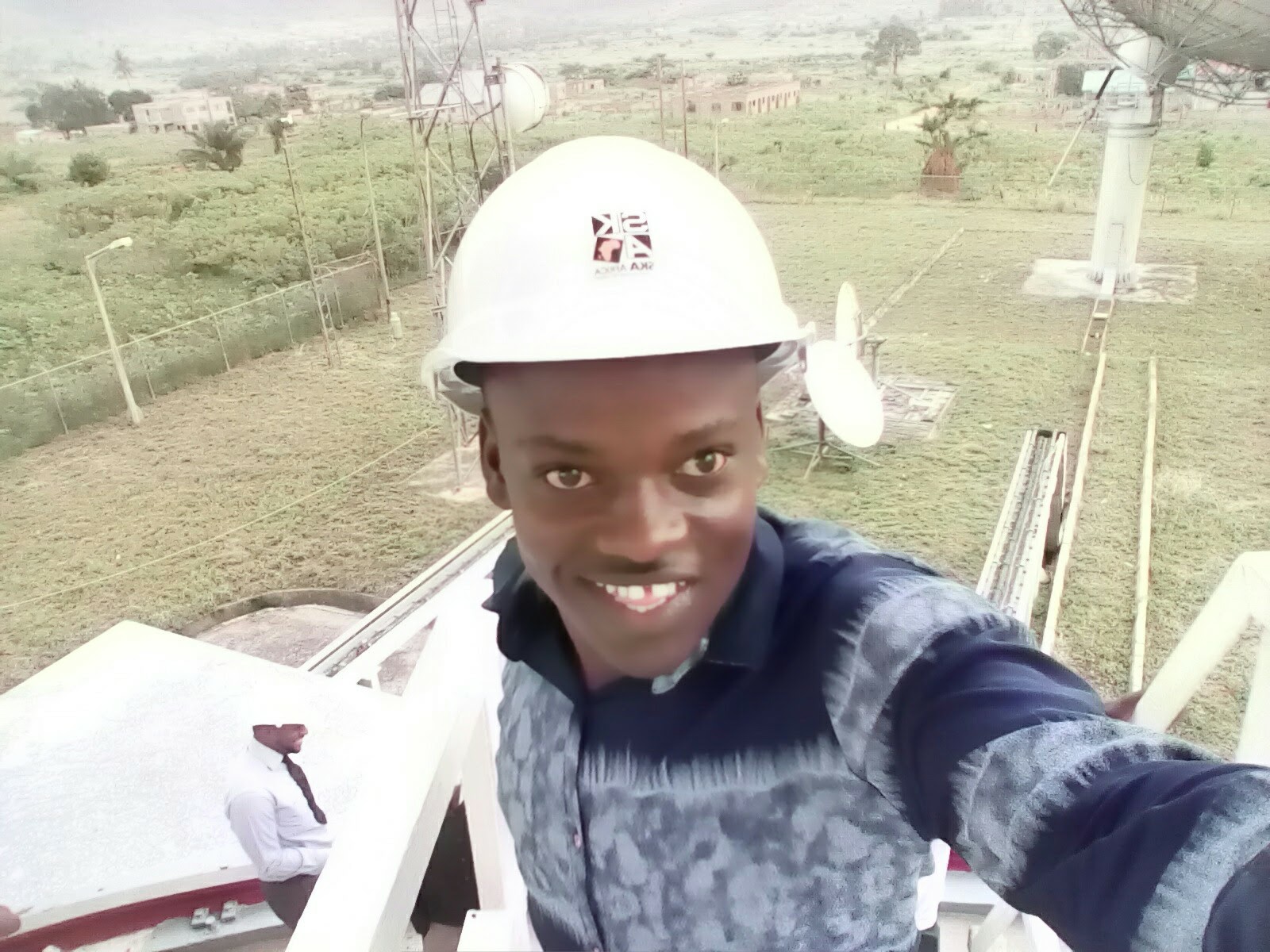
Mutie at the Ghana Radio Astronomy Observatory (GRAO) at Kuntuse, Ghana

Isaac Mumo Mutie

What do you do when the degree you want to study is not offered by your university?

You study it anyway.

“I did a lot of personal research online, looking for answers” says Isaac Mumo Mutie, an astronomy student who studied at the Technical University of Kenya. While studying for a Bachelor of Technology in Technical and Applied Physics, Professor Paul Baki introduced Mutie to astronomy, and Mutie would consult with him in his spare time.

“He would ask me ‘why are you interested? This is not part of the curriculum.’ But I insisted.” Continue reading

A student shaping the future of African astronomy

Africa is investing in a future for astronomy research, but it requires a fresh cohort of enthusiastic people to make it happen. Gina Maffey talks to one dedicated scientist.

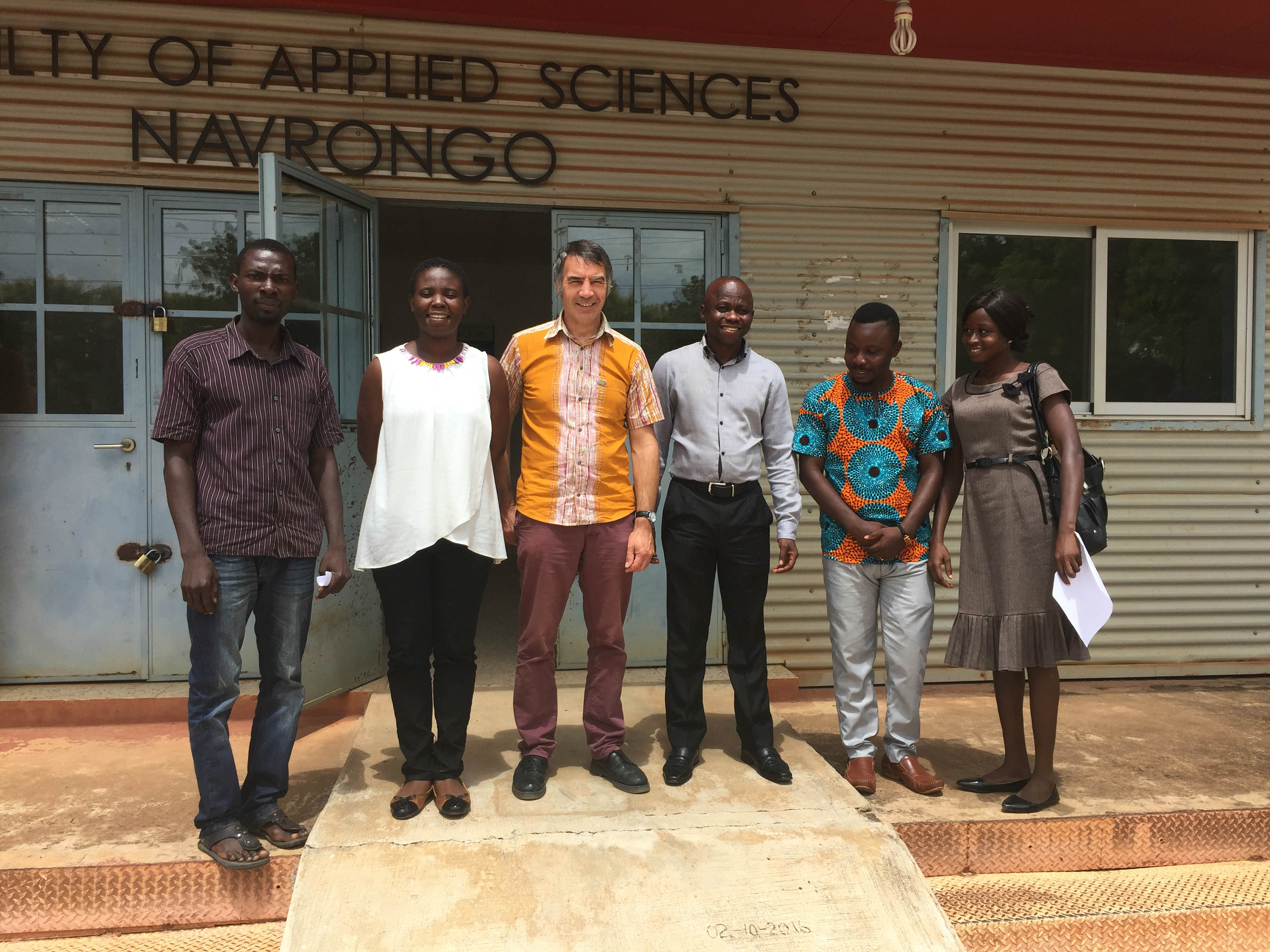
Asabre Frimpong (second from the left) and Prof-smaller

“I want to see Africa lit up.” Naomi Asabre Frimpong says with a laugh, “I want to show how Africa can be forward thinking. I want to make sure that we are not left behind.”

Asabre Frimpong is a 2nd year PhD student at the University of Manchester, in the UK, and her enthusiasm — for both astronomy and science in general — is infectious.

She says she was attracted to science through chemistry, and studied for a BSc and MPhil in Ghana. A post at the Ghana Space Science and Technology Centre introduced her to astronomy and shortly afterwards, on an astronomy and astrophysics training scheme in India, her worlds collided as she discovered astro-chemistry – the study of chemical reactions in space Continue reading

What are the benefits of reproducibility in science?

There has always been an element of risk in science, which is why data must be reproducible, explains Ellen Phiddian.

On June 6, 2012, I skipped class to watch the transit of Venus. I was studying in Adelaide, Australia, where the transit lasted from early morning until mid-afternoon and we had a wonderfully sunny day to view it. If I had known a bit more about the history of the transit, I may have been more thankful for that.

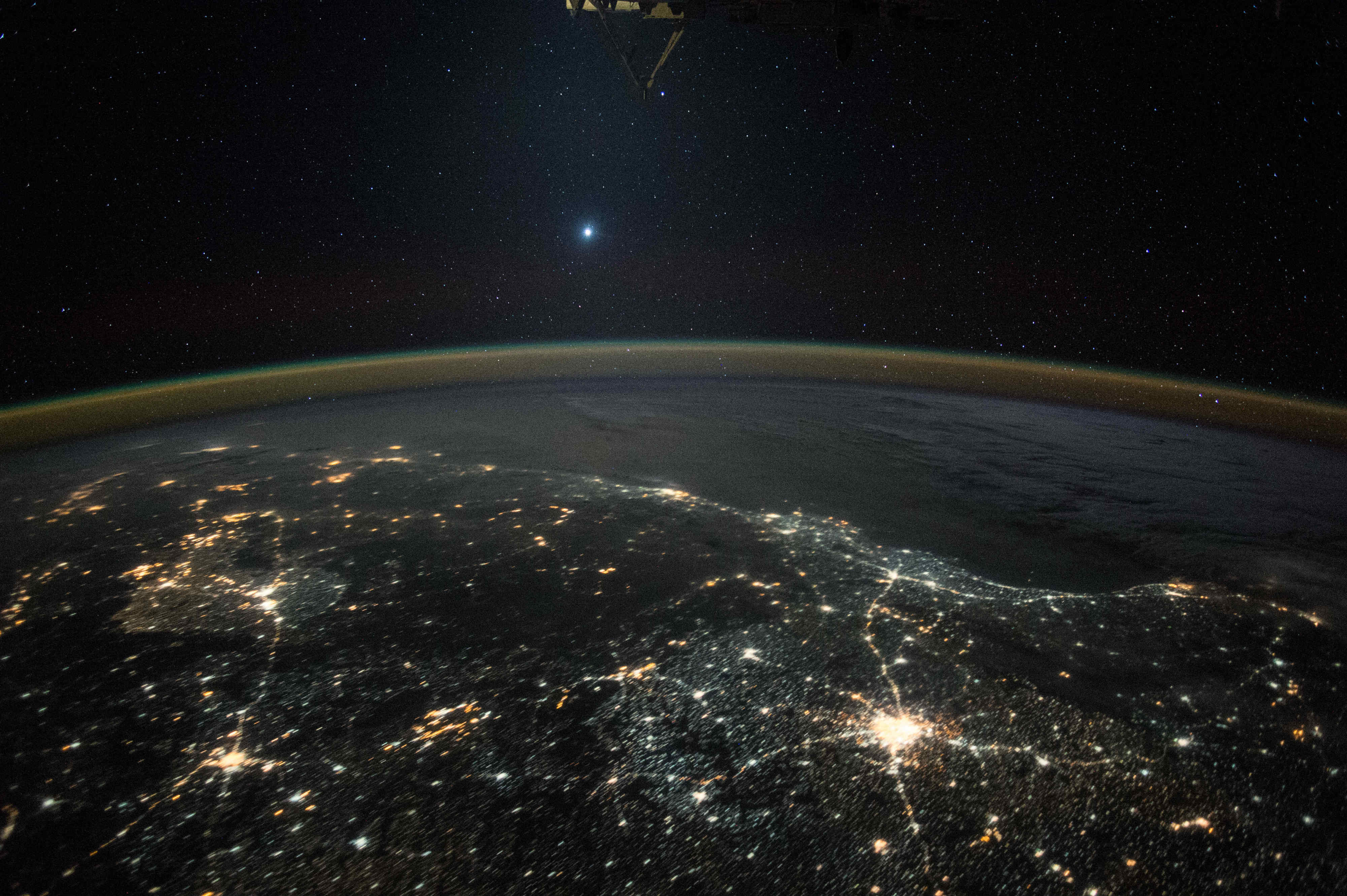
ISS-45_Indian_subcontinent-smaller

A view of Venus from over the Indian subcontinent. This photograph was taken by Japan Aerospace Exploration Agency (JAXA) astronaut Kimiya Yui from the International Space Station on December 5th, 2015

In the 1760s, astronomers made long and convoluted journeys across the globe just to observe Venus crossing the Sun. Scientists at the time wanted the transit recorded from as many continents as possible, so they could use the data to calculate the distance between the Earth and the Sun. It took years of effort and huge sums of money to orchestrate such a viewing. Continue reading

A look out to a dark Universe: Three young scientists share their thoughts

Young scientists from Nature’s Outlook on the dark Universe share their views on dark matter, gravitational waves, and dark energy.

You can find the full Outlook, covering the Lindau conference, Nobel prize winners, and Q&As with George Smoot and Brian Schmidt, here.

WEB_Astronomy-sky_65870

Continue reading

Finding job satisfaction as a data scientist

Following your interests and making connections can launch a career.

Unlike most US students, Nathan Sanders declared his specialty as soon as he started undergraduate studies. He’d known for years that he wanted to study astronomy, but during his PhD at Harvard University he realized that the analysis itself enthralled him more than the applications for astronomy. He describes how he used his technical skills, and connections outside his academic program, to launch his career.

NSanders_portrait_2016-smaller Continue reading

Hubble and the cosmic sublime in poetry

The Bug Nebula (NGC 6302).

The Butterfly Nebula (NGC 6302).{credit}NASA, ESA and A.Zijlstra (UMIST, Manchester, UK){/credit}

Twenty-five years ago, NASA’s Hubble Space Telescope began to lay bare the depths of space — from the evolution of galaxies to the age of the Universe. Beyond its contribution to science, Hubble’s dazzling images of galaxies, stellar nurseries and planetary moons have mesmerised a generation.

The orbiting scope has inspired in other ways. Pulitzer-Prize winning poet Tracy K. Smith wrote her collection Life on Mars (2011) partly in homage to a Hubble engineer — her father. (See our profile here.) 

I asked Smith for her thoughts about Hubble now, and she noted that they centre on

how radically our sense of where we are and what we belong to has changed as a result of those marvellous images. They seem to straddle the real and the impossible so perfectly, hinting as they do at an order that is almost decipherable — almost visible — but that must, after a certain point, be taken for what it is: vast, mysterious, so large and ongoing as to be eternally beyond us. Perhaps that is why, at least for a writer like myself, they activate such powerful regions of the imagination.

Poet Tracy K. Smith

Tracy K. Smith{credit}T. RUISINGER/ROLEX/RSA{/credit}

Observational leaps have fired up poets for centuries. As scientists from the seventeenth century on harnessed ever more sophisticated optics to probe the heavens (see Philip Ball’s review of Galileo’s Telescope; 2015), transformative insights from their findings began to seep into culture, bolstered by populist works. Bernard le Bovier de Fontenelle’s 1686 Conversations on the Plurality of Worlds, for instance, championed the Copernican system, framing Earth as just one world in a crowded Universe and even playing with the idea of extraterrestrial life. By the eighteenth century, Newton’s revelation of a dynamic Universe had spurred poets such as Alexander Pope, Edward Young and James Thomson to play with the idea of the ‘cosmic sublime’.

Anna Barbauld, stipple engraving by John Chapman, 1798.

Anna Barbauld, by John Chapman, 1798.{credit}National Portrait Gallery, London{/credit}

Anna Barbauld’s 1772 nocturne A Summer Evening’s Meditation is a tour de force. Barbauld, assistant to the chemist Joseph Priestley and a champion of Enlightenment values, used science as a poetic springboard into speculation about the great beyond. “This dead of midnight is the noon of thought,/And wisdom mounts her zenith with the stars”, she writes, and imagines seeing

…solitary Mars; from the vast orb
Of Jupiter, whose huge gigantic bulk
Dances in ether like the lightest leaf;
To the dim verge, the suburbs of the system,
Where chearless Saturn ‘midst her watry moons
Girt with a lucid zone, majestic sits….

She ventures even into the interstellar, “the trackless deeps of space,/Where, burning round, ten thousand suns appear” — and on to regions “Where embryo systems and unkindled suns/Sleep in the womb of chaos”. 

R136 and young stellar grouping.

30 Doradus in the Large Magellanic Cloud.{credit}NASA, ESA, and F. Paresce (INAF-IASF, Bologna, Italy), R. O’Connell (University of Virginia, Charlottesville), the Wide Field Camera 3 Science Oversight Committee, and the Hubble Heritage Team (STScI/AURA){/credit}

Almost a decade later, William Herschel spotted Uranus in the “suburbs”, a discovery celebrated by poet and inventor Erasmus Darwin and used by the young John Keats as a symbol of Romantic wonder itself,  in his 1816 sonnet On First Looking Into Chapman’s Homer: “Then felt I like some watcher of the skies/When a new planet swims into his ken”.

Trawling the skies 200 years on, the atmospheres of exoplanets are just one of the phenomena probed by Hubble among the million images gleaned on its 4.8-billion-kilometre journey. A latterday starry messenger, it is still offering up visions that seem to “straddle the real and the impossible”. As Smith recalls in “My God, It’s Full of Stars” from Life on Mars, her father “spent whole seasons/Bowing before the oracle-eye, hungry for what it would find”:

The first few pictures came back blurred, and I felt ashamed
For all the cheerful engineers, my father and his tribe. The second time,
The optics jibed. We saw to the edge of all there is —

 So brutal and alive it seemed to comprehend us back.


See the Nature special on Hubble’s 25th anniversary here. For Nature’s full coverage of science in culture, visit www.nature.com/news/booksandarts.

Arab world gets chance to name an asteroid

Maryam AljoaanA young Kuwait scientist has launched a campaign in the Middle East to give people a chance to name an asteroid, hoping it would reignite Arab’s passion with science and space.

Maryam Aljoaan is not your average run-of-the-mill young scientist. The young Kuwaiti has been fascinated with exploring the Earth – and space – since she was very young. In February 2011, she became the first Kuwaiti female to set foot on Antarctica as part of a Canadian science expedition.

Since then, her fascination with Earth continued to grow, leading her to Jacobs University Bremen in Germany where she received her bachelor’s degree in oceanography. Now, the young scientist has set up an NGO to channel her fascination with science to others in the Arab world.

Her first project to do so is by partnering with the International Astronomical Union through a large regional campaign that offers everyone in the Arab world the chance to name an asteroid.

Following the launch of the campaign, I caught up with Maryam for a quick interview.

Can you give me more details about your campaign?

The asteroid naming campaign is aimed at the general public of all ages and backgrounds in the Arab world. We offer this first of a kind opportunity in partnership with the Minor Planet Center, the nerve center of asteroid detection in the solar system. Participants are invited to submit their naming suggestions on our website www.lazurd.org by 31st March, 2014.

I understand you want to raise awareness in the Arab world about the planet and asteroids through the campaign, but how do you think naming an asteroid can help do that? 

We hope that this campaign will spark some people’s interest to learn more about asteroids. However naming an asteroid gives the general public the opportunity to be part of the scientific world, and maybe to break their limiting beliefs that they cannot contribute to science.

Is the naming campaign for a certain asteroid as agreed with the International Astronomical Union?

Yes, there is a certain asteroid to be named. We will announce which asteroid once the name has been approved by the Committee for Small-Body Nomenclature of the International Astronomical Union.

Tell me more about the NGO Azurd that you set up in Belgium.

Lazurd is the Arabic word for azure – a hue of blue. Azure represents Earth as seen from space, which is our focus at Lazurd. We aim to provide educational opportunities for the Arab youth to explore and deepen their understanding of Earth beyond textbooks. Our vision is to create the next generation of Arabs who learn about our place in space and identify themselves as caretakers of Earth.

What exactly are you doing through it?

Our motto is to explore, understand, and protect Earth. We provide access for Arab youth to a range of scientific experiences and opportunities through our global partners. These first-hand experiences could be snorkeling with a marine biologist, testing experiments in a weightless environment, going on an expedition to the Arctic or presenting ideas to the scientific community. Since we don’t have financial partners yet, we started the asteroid naming campaign as our first project.

And is there a reason why you did not launch it in Kuwait?

I am mostly based in Belgium; therefore it was more convenient to found the organization here. Also it is easier to make contacts in the scientific community and to create and maintain links between organizations worldwide.

Can you tell me more about yourself and your interest in science?

I am a Kuwaiti social entrepreneur. I founded Lazurd in Belgium and am currently the executive director. I am an oceanographer by training, and received my bachelor’s degree in Earth and Space Sciences with specialization in Oceanography from Jacobs University Bremen in Germany. In addition, I have several field experiences on land and sea including the North Sea, the Antarctic Peninsula and the Southern Ocean.

As far as I can remember I have always been interested in science since I was a little girl. Later in high school I majored in mathematics, and enjoyed studying natural sciences.


Young astronomy

We are looking at an award winning photograph by young astronomer Dhruv Arvind Paranjpye.

The award winning picture. © D. A. Paranjapye

About a year and a half back in September 2010, this picture bagged top honors at the Astronomy Photographer of the Year competition in the under-16 category. The photograph will now make it to an official annual book on the competition held by the Royal Observatory of Greenwich, UK.

The picture shows an annular eclipse, which occurs when the Moon is too far from the Earth to completely cover the Sun’s disc unlike what happens during a solar ecplise. Through a layer of cloud, Dhruv shot the bright ring that appeared as the Sun shone around the edges of the Moon.

The young photographer

“My father got me a telescope and a digital camera, and the annular eclipse was a perfect opportunity to test my skills. The photograph was clicked from the southernmost tip of the Indian Peninsula, Kanyakumari,” Dhruv, now 16, says. Dhruv’s father Arvind Paranjpye is an avid astronomy photographer himself and is presently the director of Nehru Planetarium in Mumbai. “Almost everyone had cameras attached to big telescopes with zoom lenses. While they were all disappointed that clouds had come in, he made full opportunity of the fact that clouds can act as natural filter,” the proud father says.

The photograph called ‘A Perfect Circle’ was taken with a basic 3.2 megapixel point-and-shoot camera, and got the first prize in that category. The stand out quality that got him the prize was the perfect geometry of the eclipsed Sun contrasted with the chaotic shapes of the clouds. By using the clouds as a filter, Dhruv was able to reproduce wonderful, contrasting colours.

This recognition would certainly motivate a lot of young astronomy enthusiasts and photographers to pursue their passion.