Following your interests and making connections can launch a career.
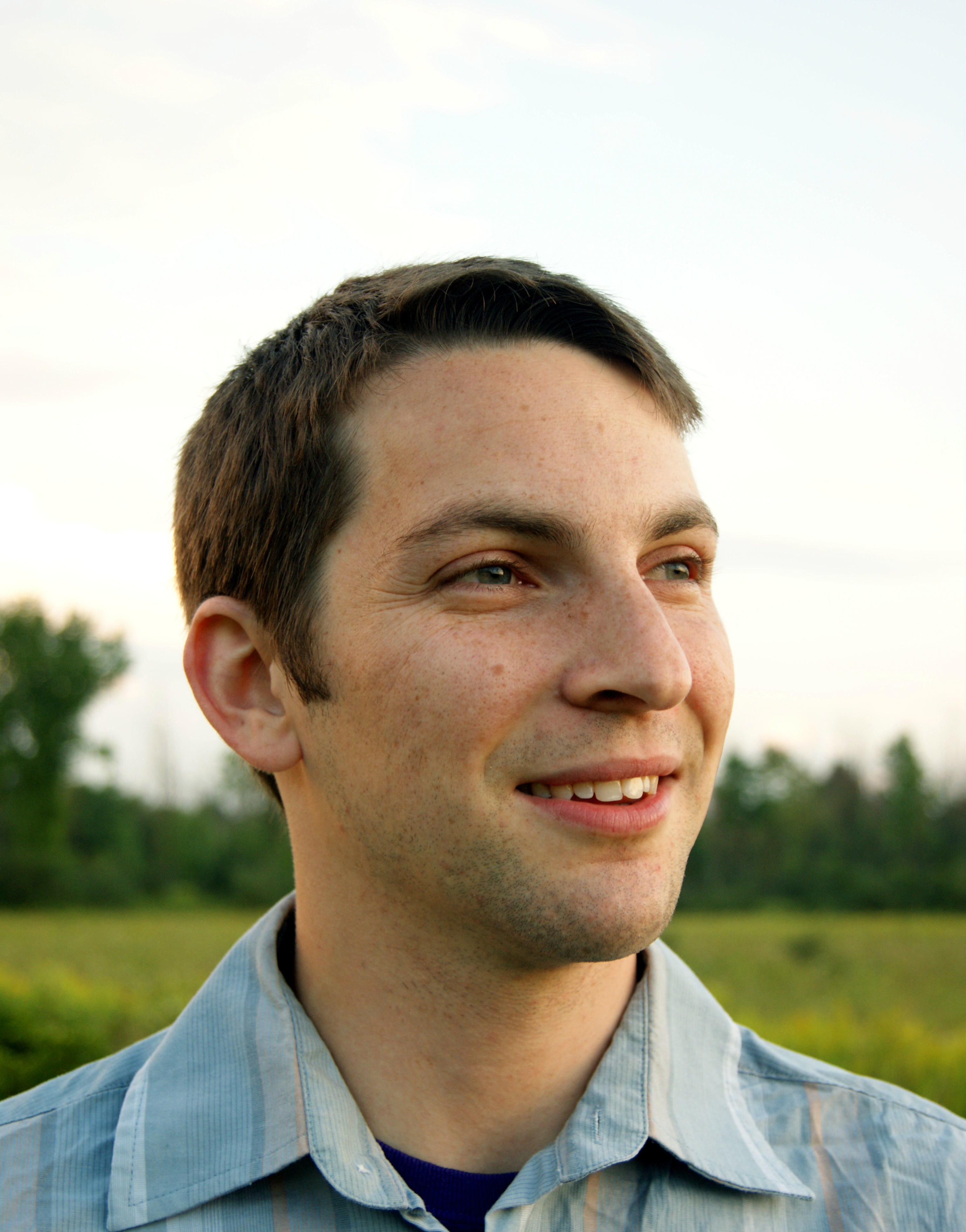
Unlike most US students, Nathan Sanders declared his specialty as soon as he started undergraduate studies. He’d known for years that he wanted to study astronomy, but during his PhD at Harvard University he realized that the analysis itself enthralled him more than the applications for astronomy. He describes how he used his technical skills, and connections outside his academic program, to launch his career.
Before choosing a new career path, take the time to get to know yourself, and you may be surprised at how well things fall into place.
Naturejobs journalism competition winner Mary Gearing
Any career, scientific or otherwise, is the product of choices. In my own path in science, the first set of choices was clear: major in biology, conduct undergraduate research, enroll in a PhD program. This was a comforting, well-trodden path, but it left me unprepared to make the next big decision: my post-PhD direction. Now, as I near the end of my graduate studies, I’ve realized that this decision is much simpler than I thought. The most important tool for a career change is self-awareness – the willingness to analyze yourself as thoroughly as you would any key experiment.
The habit of implicit bias can be broken, but it takes awareness and behavioural strategies, says a new study.
Guest contributor Viviane Callier
Gender stereotypes affect our attitudes and behaviours, even if we’re unaware of them. But the habit of implicit bias can be broken: an intervention with faculty at the University of Wisconsin helped to break the bias habit, led to an improved department climate for everyone, and increased faculty hires of women and underrepresented minorities, a new study shows.
Location: Harvard Medical School, Joseph B. Martin Conference Center, 77 Avenue Louis Pasteur, Boston, MA 02115
To commemorate the 30th anniversary of AIDS, Harvard University is convening a major international symposium.
Several hundred global health leaders, elected officials, scientists, artists and activists will gather to reflect on what we have learned from AIDS and how to apply those lessons towards ending the epidemic.
The two-day event, hosted by the Harvard School of Public Health, begins on December 1, World AIDS Day 2011.
Registration is required for this event. The General Registration fee is $250, Student Registration is $50.
For more information, please contact Tamera Kingston, Events Coordinator at tkingston@hsph.harvard.edu.
As a young professor at the Massachusetts Institute of Technology, he pored over transcripts of children’s speech, looking for telling patterns in the mistakes they made as they mastered verbs. Out of this research, he proposed that our brains contain two separate systems that contribute to language. One combines elements of language to build up meaning; the other is like a mental dictionary we keep in our memory.
This research helped to convince Dr. Pinker that language has deep biological roots. Some linguists argued that language simply emerged as a byproduct of an increasingly sophisticated brain, but he rejected that idea. “Language is so woven into what makes humans human,” he said, “that it struck me as inconceivable that it was just an accident.”
Instead, he concluded that language was an adaptation produced by natural selection. Language evolved like the eye or the hand, thanks to the way it improved reproductive success. In 1990 he published a paper called “Natural Language and Natural Selection,” with his student Paul Bloom, now at Yale. The paper was hugely influential.
That great scientific debate – how to cook a turkey – came to Harvard last week in honor of Thanksgiving.
Using math, not a cookbook, Harvard physicist David Weitz introduced the week’s “Cooking and Science” lecture by explaining how to calculate the cooking time for a bird. But, guest speaker Nathan Myhrvold – also trained as a physicist – noted that dark meat and white meat need to be cooked to different temperatures. The author of Modernist Cuisine: The Art and Science of Cooking argued that it scientifically impossible to cook the whole bird and not undercook the legs or overcook the breast.
Myhrvold was the latest in a series of cooks to take charge of the lecture hall as part of Harvard’s hugely popular program. Now in its second year, the classes and public lectures features some of the stars of what is alternately is known as molecular gastronomy, culinary physics or, simply, avant garde cuisine. They use chemistry, physics and microbiology to improve on traditional cooking techniques and create new ones.
Or as Myhrvold put it: “If you’re going to do something difficult, it really helps is you know what it going on, as opposed to going by a set of instructions.”
Something difficult like the “instant soufflé,” a squirt and bake mix stored in a whipped-cream can. That, he said, took 150 tries to perfect.
Mynrold, was the first chief technology officer at Microsoft. When he left in 1999, he took his PhD. in theoretical physics and became a scientific foodie. His latest project is a self-published, six-volume, 2,428-page, 42-pound cookbook. The $625 package is designed to offer the best from books on food science — which Mynrold says are short on technique —and books about how to cook, which are short on science and dated.
“You’ll find no technique that is younger than about 30 years old and most of them are older than that,” he told the full house of grad student-age hipsters who lined up before the doors opened.
So, Mynrold, figured out how to “optimize” the hamburger. First he cooks it "sous-vide’ – encased in plastic and immersed in warm water. That heats it all the way through. Then he dunks it in liquid nitrogen for a minute to freeze the outside. Then he deep fries it, leaving the outside crisp and the inside medium rare. He also “constructs” ice cream – his signature dessert made without milk or eggs but with pistachios and emulsifiers. His kitchen gets even more lab-like when he uses a centrifuge to make turn peas into “pea butter.” (The Modernist Cuisine website recommends the Thermo Scientific Sorvall RC-4 General-Purpose Floor Model – which goes for $22,000 on Amazon.)
A week before he spoke at Harvard, Mynrold was on a panel on “Traditionalist Versus Modern Cuisine.” The New York Times said the group was supposed to talk about the controversy over the new molecular gastronomy. While some see it as bringing food to a higher level, others find the focus on high tech kitchen wizardry to be pretentious and gimmicky.
But that panel "hardly mentioned the tools of the nouveau science-fiction kitchen: foams, gels, nitrogen for flash-freezing, alginates for specification, immersion circulators and antigriddle cooktops for low-temperature cooking.
Even the potential dangers of cutting-edge cookery were lowballed, as when Dr. Myrhvold pronounced that liquid nitrogen, frigid though it may be, is less dangerous than spattering fry oil. Or as Wylie Dufresne, the chef and owner of WD-50, put it, liquid nitrogen is “unlikely to freeze your customers to death, and hot soup in the dining room is more of a danger.” He added, “As with scissors, proper training is important.”
Dufresne has already been to Harvard. A video of his Oct. 14 talk on “Transglutaminase Tactics” is online, with all of the lectures so far. On Monday 11/28, White House Pastry Chef Bill Yosses returns with a talk on “Lip Smackin’ Science: Crystals, Emulsions, Foams, and Pink Vanilla Cupcakes.” All of the lectures are free. Next week’s requires a ticket: The return of legendary Spanish chef and modernist Ferran Adrià of elBulli, who will talk about “The New Culinary Think Tank – el bulli 2.0.” Tickets for that talk will be available on Tuesday.
A Globe staff editorial ($) congratulates Harvard on the opening of its Innovation Lab in the old public television studieo in Allston.
The ribbon-cutting at the site last week marked a milestone in Harvard’s long-awaited expansion across the Charles River into Allston. The university should infuse the rest of its plans for the neighborhood with the same upbeat energy.
But, the paper reminds the school that some of its most innovative students — or at least the innovative students who made a lot of money and became household names — fled Harvard for the west coast.
The i-lab sits on the first floor of Batten Hall on 125 Western Ave. and is equipped with a coffee shop and a 24/7 public meeting space. Local artwork hangs from the walls and ceiling, pillars double as white boards, and bright orange chairs swivel to create what Jones called a “flexible space.”
“Great ideas and great thinking don’t always happen at a desk,” Jones said. “They can happen in unconventional places because your mind starts to think in more unconventional ways.”
While the facility is designed to provide resources for start-ups, it is also a start-up of sorts itself.
The i-lab is the first realized step in a series of measures the University is taking to develop a technological hub in Allston, similar to MIT’s Kendall Square.
Though the i-lab is the first part of this plan to come to fruition, it is not the centerpiece of Harvard’s plan.
Harvard broke ground on the Allston Science Complex in 2009, a project with an estimated $1 billion price tag that was meant to be a crown jewel of Harvard’s interdisciplinary science facilities. But due to financial constraints, University President Drew G. Faust halted construction on the site.
Warning — Don’t get excited about “today’s” events. The home page calendar lists next week’s events as happening on “Friday,” although the actual dates are correct. So
don’t rush over for the health care innovations event tonight. It’s on Monday.
Come meet Harvard students from across the school interested in healthcare innovation at the new Harvard Innovation Lab. Register here: https://www.eventbrite.com/event/2508216142