Resubmitting your study to a new journal could become easier

Rejected manuscripts are a fact of life in science, but a new initiative might take some of the sting out of the process.

newspaper-pile-naturejobs-blog-2

{credit}Image credit: Getty Images/Mateusz Zagorski{/credit}

By Chris Woolston

The National Information Standards Organization (NISO), a Baltimore, Maryland-based non-profit that promotes standardization in publishing, has embraced a plan to make it easier for journals to share rejected manuscripts and manuscript reviews without forcing authors to go through another arduous submission process. Continue reading

Last-author spot tough to nail for scientists who are not white or male

Many scientists mark the evolution of their careers by publications: Their first paper, their first stint as a lead author, the first time they earn a final or senior spot. But for women and members of some minority groups, those benchmarks can be especially hard to reach, according to a study published in the May 2018 issue of AEA Papers and Proceedings.

By Chris Woolston

scales

The analysis—which covered 486,644 biomedical articles with two to nine authors published between 1946 and 2009—found that female, black and Hispanic authors were less likely than were white men to hold prestigious last-author spots. And while all scientists tended to land more last-author spots as their careers went on, that trend was slower for women and minorities. “There’s a lack of progression for those groups,” says Bruce Weinberg, a co-author of the study and an economist at Ohio State University in Columbus. Continue reading

Making headlines: Choosing the best title for your paper

It may feel like an afterthought, but taking the time to write an effective title for your paper could be an easy way of promoting your research, says Helen Robertson.

Writing up a manuscript for publication is a multi-faceted process. You’ve finished the literature review, detailed your methods, discussed your findings and formatted your figures. Now, the only thing left is to come up with the title.

Easy, right?

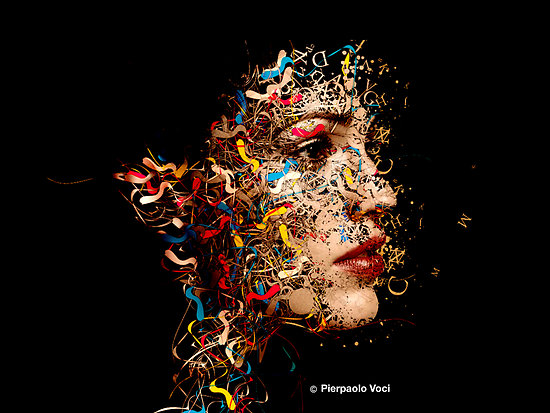
original

Is is that easy to come up with a title? {credit} Alias la Patata by Pierpaolo Voci. CC-SA-3.0 {/credit}

Continue reading

Scientific writing: A very short cheat sheet

Meenakshi Prabhune has a golden rule for effective science writing—keep it simple.

The life of a researcher is incomplete without undergoing the trauma of writing scientific documents: papers, grants, protocols, theses, and so on and on. Most researchers find this stressful, time-consuming, and difficult; and, despite the enormous time and effort invested in writing, I for one often come across close-to-incomprehensible papers while digging through the literature. Why is that the case, and how do we fix it?

writing-1043622_1920-smaller

Continue reading

Need inspiration? Go find a gallery — or pick up a paintbrush.

What inspires you? How do you come up with the innovative surge necessary to write a grant, complete a paper, apply for a fellowship or reframe a hypothesis?

Many researchers find inspiration in wandering through artistic creations, whether they’re viewing paintings, drawings, sculpture or performance art, reading, listening to live or recorded music or creating art of any genre themselves.combat-1300519_960_720

There’s little surprise here – studies have shown that experiencing art, whether as a viewer or producer, helps to stimulate creativity. And people are beginning to take note: art-science collaborations are gaining traction as researchers explore how working with artists can stoke their productivity, give them new perspective or a more creative outlook and bolster their communication and outreach skills.

Continue reading

Nature Masterclasses: Writing for highly-selective journals

Publishing in a highly-selective, high-impact journal can make a researcher’s career. So what turns great science into a great manuscript?

Guest contributor Zoe Self

Nature-masterclasses-NJCE15-workshop-naturejobs-blog

Dr Peter Gorsuch presenting the Nature Masterclasses workshop at the 2015 London Naturejobs Career Expo{credit}Image credit: Nature{/credit}

A room packed full of PhD candidates and post-docs were given a taster of Nature Masterclasses at #NJCE15 London. The session was run by Peter Gorsuch of MSC Scientific Editing, who runs a pre-submission service that offers researchers Nature-standard editing on their manuscripts. Peter was previously an associate editor for the physical sciences team at Nature, so is a fountain of knowledge on scientific writing and publishing. Also offering wisdom via video were Nature manuscript editors Sadaf Shadan (Senior Editor, Biology) and Leonie Mueck (Associate Editor, Physical Sciences).

The science: what do editors at high-impact journals look for?

For a paper to get accepted, it should contain “novel conclusions that significantly advance our understanding of the field,” says Peter. The experts told the audience that a good paper might: Continue reading