
Tag Archives: citation

#scidata16: Open data should be easy
There’ll always be reasons not to share data. It’s time we stop making excuses and start making plans, says Atma Ivancevic.
On the morning of October 26, 2016, a group of scientists convened in London to discuss the state of open data. The third Publishing Better Science through Better Data conference kicked off with morning tea, international introductions, and furious scribing from @roystoncartoons. The premise was simple: “Today is all about being open”, said conference chair Iain Hrynaszkiewicz. We settled in to learn the advantages of data sharing at both the individual level and for the scientific community at large.
“Open data should be easy,” said Dr Jenny Molloy from the University of Cambridge as she explained the importance of building a data management plan. She pulled up a poster of a missing black backpack: “CASH REWARD” it read, “contains 5 years of research data which are crucial for my PhD thesis!” I laughed along with everyone else, internally reflecting how similar my life had been before I discovered version control.
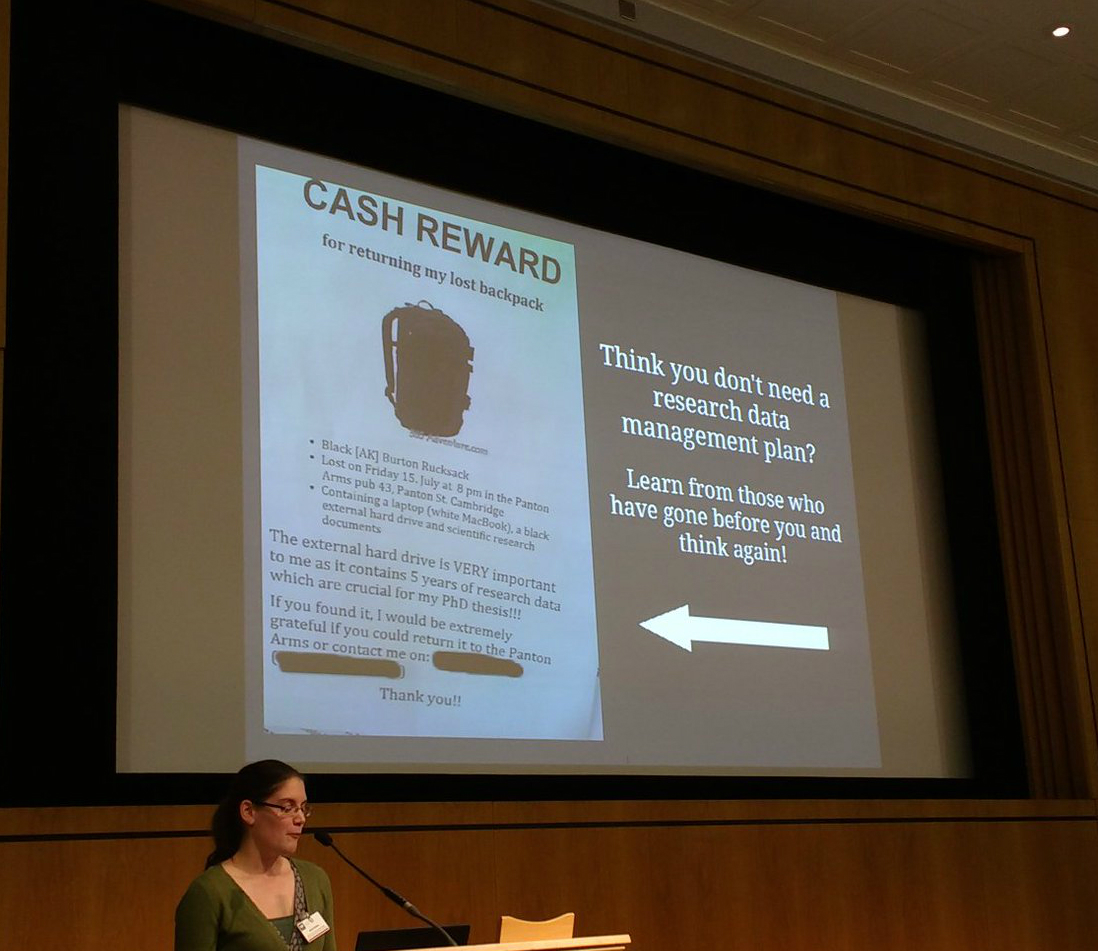
Think you don’t need a research data management plan?
Investigating open access, citation and usage: what’s the advantage?
Reply

Guest post from Ellen Collins, Research Information Network.
The Research Information Network is a small independent policy consultancy working on scholarly communications. We’ve existed since 2005 in various guises, working with librarians, publishers, research funders and academics themselves to understand how researchers want to find, use and share information.
Our aim has always been to create an evidence base that will help others to make informed decisions about the best way to support researchers. We’ve worked with a number of methodologies and techniques over the years to do this, qualitative and quantitative.
When Nature Publishing Group approached us earlier this year to undertake a brief and independent statistical analysis of usage and citation data for Nature Communications, we were happy to do it. They wanted a report that they could use to kick off a bigger conversation about what the data might tell us about open access and what this means for article use and citation.
The data about the 2,878 articles published in Nature Communications was easily machine-harvestable, and therefore fairly basic. For every article published between the journal’s launch in April 2010 and the end of 2013 we were given its open access status (open or not), discipline, year and date of publication, Web of Knowledge citation data and, where available, Altmetric scores. For the articles published in the first half of 2013, we were also given the number of HTML views and PDF downloads, 90 and 180 days after publication.