Know the odds

The odds of landing a tenure-track position in the life sciences are low while the chances of being stuck in multiple postdocs are high. So the leaders of nine top US universities and one research institution this month announced a plan to communicate those probabilities in an effort to grapple with a clogged biomedical research pipeline.

d41586-017-07836-y_15264448

Continue reading

Why scientists should communicate science – getting to the heart of the matter

Communicating science effectively needs more than facts, says Eileen Parkes.

communication

{credit}iStockphoto/Thinkstock{/credit}

Continue reading

Mobilise your creativity

How do you break into the publishing world?..

…That is, media and publishing, not publishing your manuscript. It isn’t the easiest path ever, but there is a breadth of opportunities and creativity, as celebrated this week by the UK Department of Culture, Media & Sport and the Creative Industry Council. And ‘break’ is not the key word – you don’t need a break. You just need to get creative – and get started.

newspaper-pile-naturejobs-blog-2

{credit}Getty Images/Mateusz Zagorski{/credit}

Continue reading

Citizen Science: In the Shadows of Volcán Tungurahua

How Ecuadorian communities and scientists are linking up to reduce the risk of one of South America’s most active volcanoes.

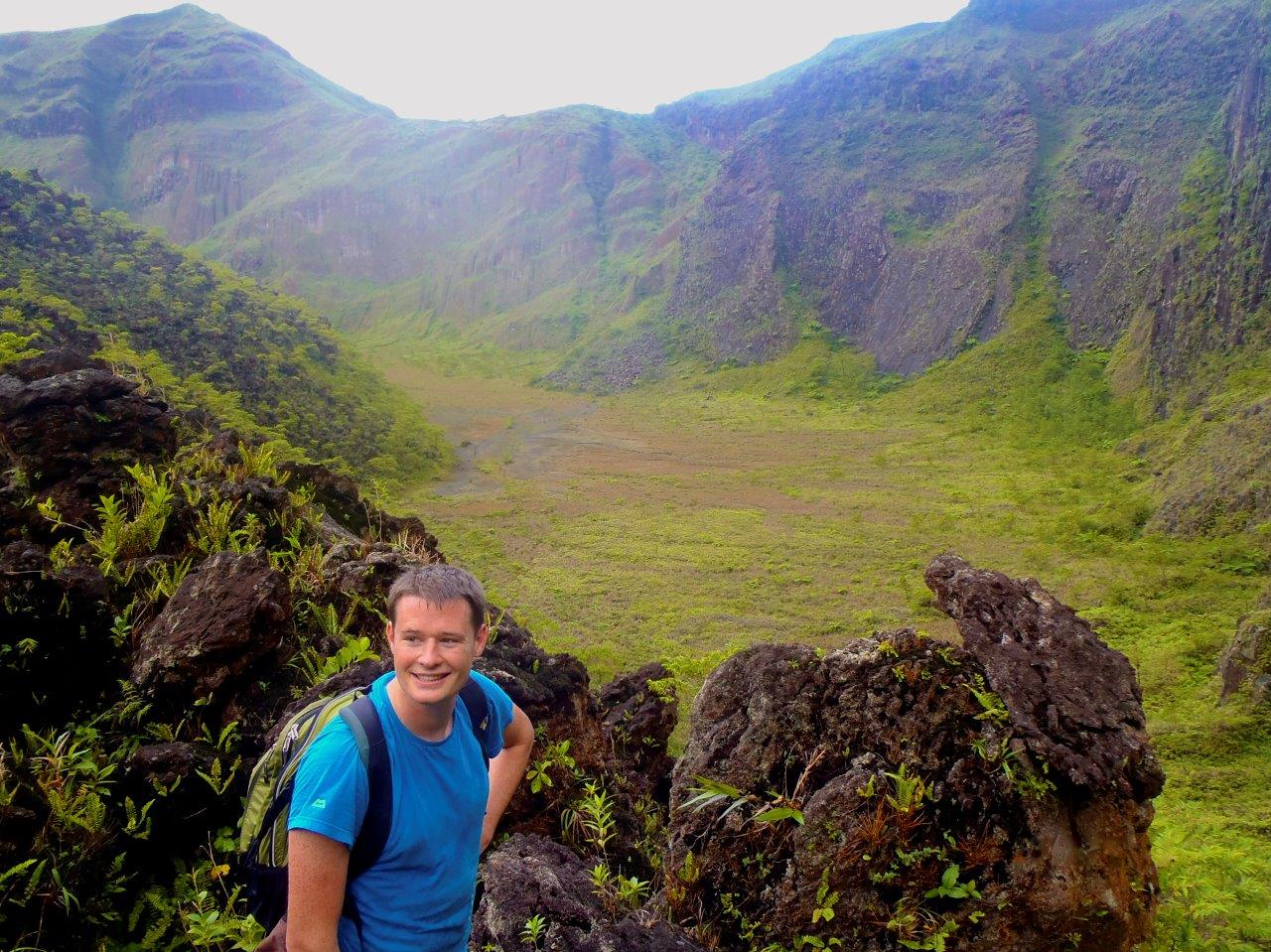
Jonathan Stone: “In volcanology a great deal of research is put into the prediction of specific hazards and the needs of those affected can often be overlooked." Image credit: (Richie Robertson)

Jonathan Stone: “In volcanology a great deal of research is put into the prediction of specific hazards and the needs of those affected can often be overlooked.” Image credit: (Richie Robertson)

Jonathan Stone is a PhD researcher at the School of Environmental Sciences, University of East Anglia, working in volcanology and disaster risk reduction.  His research focuses on the interactions between citizens, scientists and authorities around volcanoes, examining the effects of citizen science on these relationships. Although his background is in Geology, with an MSc in the Science of Natural Hazards, Jonathan went on to study for an MRes in Environmental Social Sciences before starting a PhD funded by the Economic and Social Research Council and the British Geological Survey. This experience (expertise in) of both the natural and social sciences has lead him to work on the Strengthening Resilience in Volcanic Areas (STREVA) project.

Outside of research, Jonathan is passionate about public engagement and was one of the creators of Volcanoes Top Trumps. More recently he has been involved in producing a series of short documentaries about the societal impact of volcanoes, told by the voices of those who lived through eruptions in St Vincent, West Indies. He likes running in his spare time, being involved in his local church – and of course – climbing volcanoes. 

Seemingly unflappable, tall and with a sharp sense of humour betrayed by a cheeky grin that can’t help but make you smile, Benigno Meneces is by no means your average citizen scientist. As a farmer in the modest surroundings of the Ecuadorian Andes village Bilbao, Meneces ploughs the land by day and monitors volcano eruptions by night. He is one of 35 residents across local villages and towns in the path of Volcán Tungurahua that make up a network of volunteers, known as the ‘vigías’.

Translated as watchman, guard or sentinel, the Spanish word ‘vigía’ only partially covers the passion and enthusiasm local villagers have brought to their voluntary roles protecting their communities. Made up from locals working in agriculture, teaching and business – the volunteers are tasked with communicating observations about the volcano to scientists at the Instituto Geofísico de la Escuela Politécnica Nacional (IG-EPN) and the Secretaría Nacional de Gestión de Riesgos (the Ecuadorian civil protection agency).

Tungurahua looms over the town of Baños.

Tungurahua looms over the town of Baños.

Continue reading

SpotOn London 2014 – Fringe Events

To accompany this year’s SpotOn London conference, at the Wellcome Trust on Friday, 14 November and Saturday, 15 November, we have a number of exciting fringe events taking place around London.

Tickets are available for the main event and you can read about the workshops, panels and unconference here. This year’s theme looks at the challenges of balancing the public and the private in the digital age.

Here’s the run-down on fringe events taking place across the week.


Pint of Science Logo with GlassesPint of Science

When: Thursday 13th November 2014, 7pm – 11pm

Where: The Driver, Wharfdale Road, King’s Cross

Pint of Science have teamed up with SpotOn London to offer an evening of informal, fun science talks relating to science policy, communication and preventing fraud in science.

In between pints and talks we’ll gather around for some good old fashioned storytelling with a science theme.

Speakers so far include Professor Tony Segal (UCL), who will be talking about how we can prevent fraud in science and Dr Aeneas Wiener (Cytora), who will talk about how his company Cytora uses open data to assess real time political risk. A third speaker will be announced shortly.

The event will be held the evening before the SpotOn conference, in The Driver pub near King’s Cross, on Thursday 13th November at 7pm.

Tickets cost £3 and are available at https://www.wegottickets.com/event/295178.


science showoff 2014 logo

Science Showoff

When: Friday 14th November 2014, 7pm – 10pm

Where: Basement bar, The Star of Kings pub, London

Science Showoff is the anarchic science cabaret night that gives everyone the chance to share their love of science in whatever chaotic way they like.

The stage at the Star of Kings will be full of SpotOn conference delegates and the cream of London’s science communication scene, talking about science, telling jokes, doing demos, playing songs… hell, they can do an interpretive dance if they want to as long as it relates to science.

The whole thing is loosely held-together by our MC and super-nerd Steve Cross, who will be keeping our acts to time and getting science completely wrong for laughs.

Tickets cost £6 with all donations going to the Lightyear Foundation charity and are available at https://www.wegottickets.com/event/295387

Get involved: If you think you’ve got what it takes to showoff your science and you want to take part, we’re currently looking for five performers who are attending SpotOn London 2014 to perform 9-minute sets, communicating any kind of science in any way at all. You could:

Continue reading

Christina Lewis Halpern: The New York woman inspiring young men from minority backgrounds to code

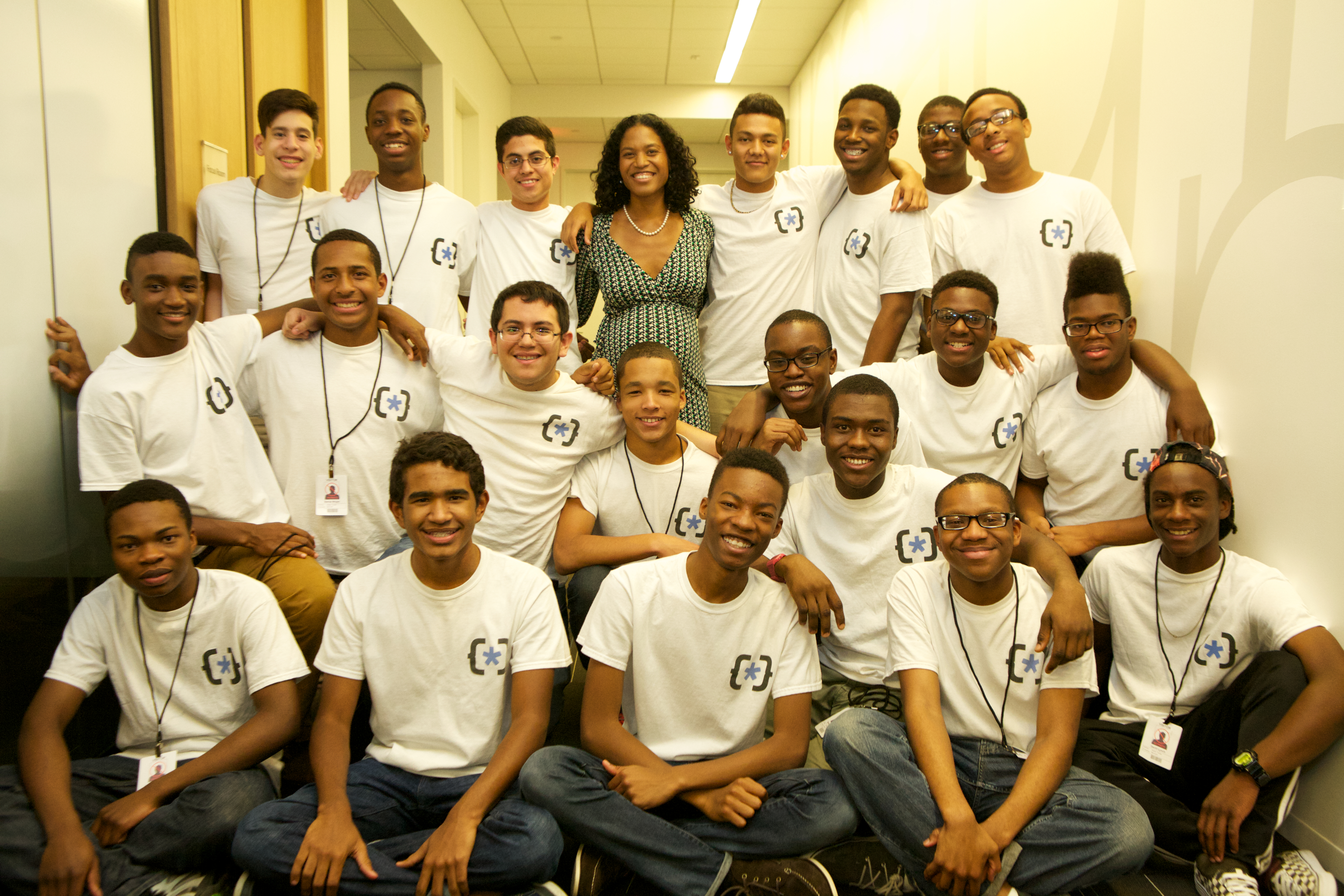
"It was an entirely new world, and IT opened my eyes to how few black and brown young men were active in the technology industry. " (Image courtesy of All Star Code)

“It was an entirely new world, and IT opened my eyes to how few black and brown young men were active in the technology industry.” (Image courtesy of All Star Code)

In the last instalment of our series celebrating prominent women in science and technology across the world, we speak to Christina Lewis Halpern, the founder of All Star Code, a charity which aims to prepare talented young men from minority backgrounds for careers in science and technology.

Christina Lewis Halpern is a social entrepreneur and award-winning journalist who is the founder of All Star Code, a unique, fast-growing non-profit education organization that attracts, prepares and places more young men of color in the technology sector. Christina is a board member of the Reginald F. Lewis Foundation, has been profiled in Fortune, Fast Company, Domino, and Vanity Fair and her work has been published in The New York Times Magazine and other publications. She has been recognized as a White House 2014 Champion of Change for STEM Access and has given talks at Harvard Law School, J.P. Morgan, the Wealth and Giving Forum, among others. She graduated from Harvard College and lives in New York City with her husband, son and dog. 

On a sign that adorns the premises of the vibrant New York technology charity, All Star Code, the bold messaging could not be clearer.  Displayed in large writing are the top ten principles that inspired the charity’s creation. Most prominently placed, and one that will ring true to many Americans, is number one. It reads: “Boys Matter: Young men of color are one of our nation’s greatest sources of untapped talent.” This is a sentiment echoed throughout the organisation’s activities, which primarily aims to prepare talented young men from minority backgrounds for careers in science and technology.

The west Chelsea offices have the look and feel of a traditional start-up. It is at once informal, accommodating and inclusive – the key ingredients that the charity, one year in, has thrived on. And yet, the protagonist behind its creation had until recently been very much an outsider to the technology community.

Wealth gap

Former Wall Street Journal business journalist, Christina Lewis Halpern, had a front row seat to observe and analyse the growth in income inequality and those with assets, who “reaped the seemingly ever-increasing rewards.” Through interviews with the upper echelons of the business world and covering real estate during both boom and bust, she became quickly attuned to the wealth gap. “The gap is very stark in the US with the average white household’s net worth of $110,000, compared to the average black household of around $6,000?” says Lewis Halpern. “It is a terrible problem. When I left the newspaper I was determined to see what I could do to make a difference.”

Lewis Halpern didn’t need to look far for inspiration, as the daughter of one of the most charismatic and powerful African-American businessmen in the US, the late Reginald F.Lewis. The month before her father died in 1993, she was named to the board of his foundation, aged just 12 years-old. The  Reginald F. Lewis Foundation had for many years funded grants of more than $10m to various non-profit programmes and organisations. It was dedicated to supporting youth, arts and education programmes that help minority communities.

Through writing a memoir on her father’s life, called Lonely at the Top, she was fortunate enough to speak to the professor who ran the access programme her father attended and which ultimately encouraged him to pursue law. “My father was one of the first African Americans to work in a white shoe law firm on Wall Street in the 1960s and 1970s, and was a pioneer in his field,” says Lewis Halpern. “He did this because of an access programme. Run by Harvard Law School, the programme would recruit college juniors from black colleges in the south and bring them to the city to introduce them to corporate law.”

Speaking to the now 85-year-old professor and Holocaust survivor, she felt immediately empowered and spurred on to create a prep programme that was as effective as her father’s. It was by chance that she attended her first ever technology conference, a world very different to the corporate environment she was used to reporting in. “It was an entirely new world, and IT opened my eyes to how few black and brown young men were active in the technology industry. It was clear this was the next economic opportunity and was where the wealth, innovation and job opportunities were,” declares Lewis Halpern.

She notes that if her father was a young man today, he would no doubt be working in technology. Through researching the industry and looking at what was available, it was clear there were some great programmes for young women, such as Black Girls Code, but a lack of opportunities for young minority men. “In honor of my father’s legacy – and everyone else who has fought for equal rights – I created this program to help the future generation of youth catch the next wave of opportunity,” remarks Lewis Halpern on her clear intentions for All Star Code.
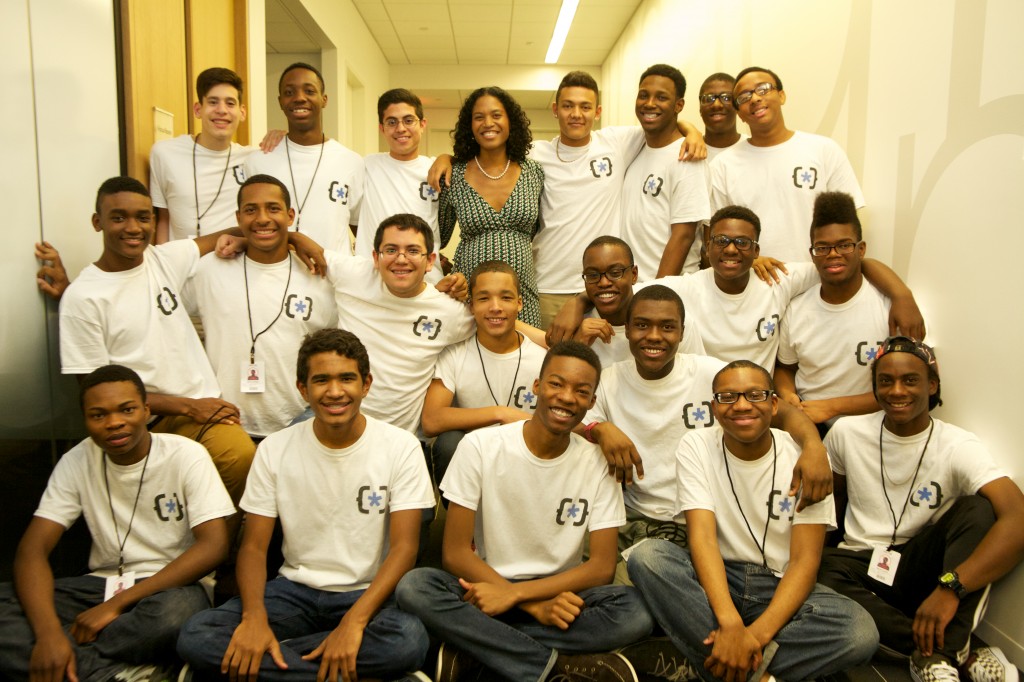
"Many students we speak to have never heard of a hackathon or even knew there was such thing as a computer scientist. It’s clear we need more access in the pipeline.”

“Many students we speak to have never heard of a hackathon or even knew there was such thing as a computer scientist. It’s clear we need more access in the pipeline.”  (Image courtesy of All Star Code)

Continue reading

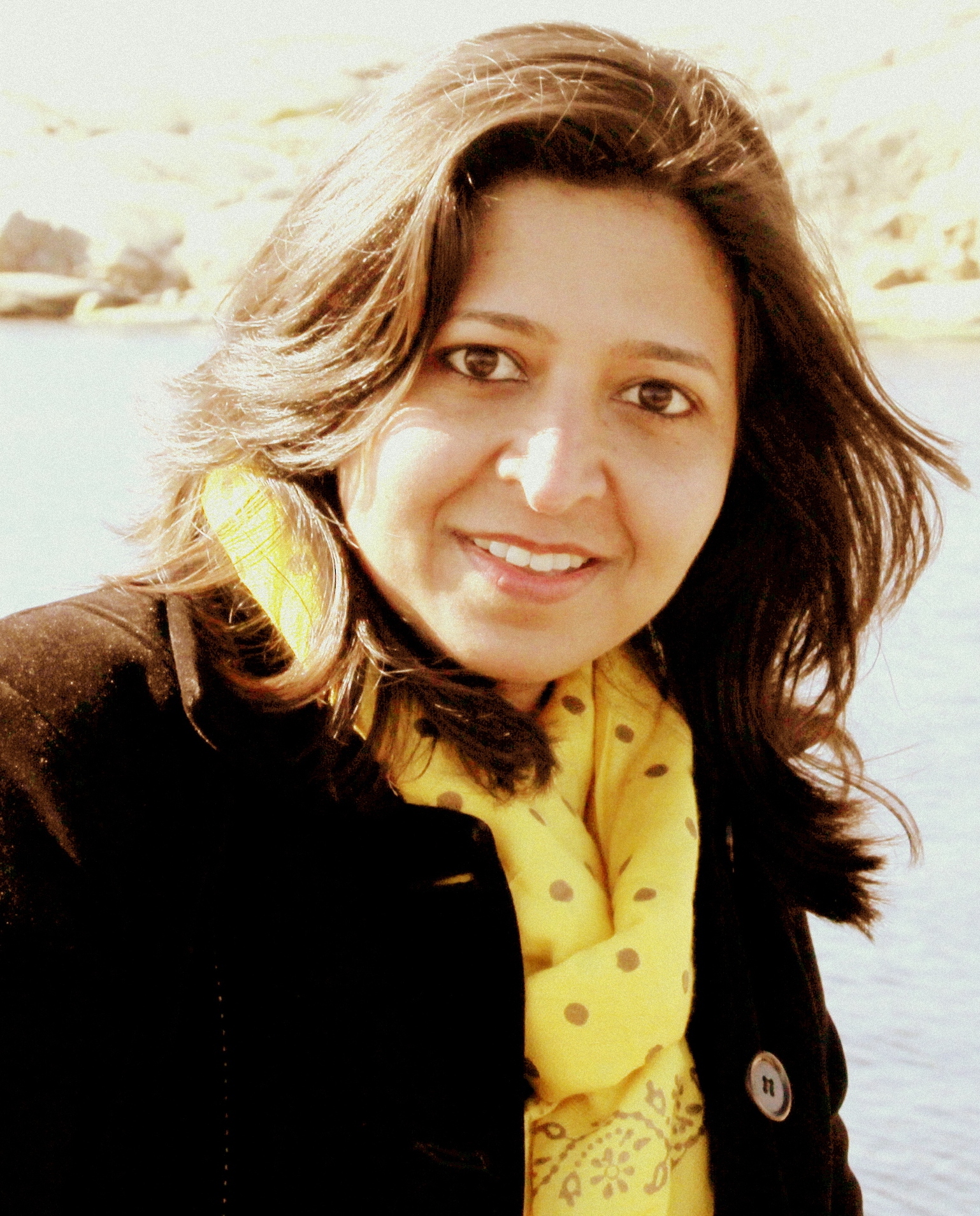
Nature India Editor Subhra Priyadarshini on the Indian science boom and the role of journalism

"India is now transitioning from a developing country into an emerging economic superpower and as a result many areas of development, including science, are catching up quickly."

“India is now transitioning from a developing country into an emerging economic superpower and as a result many areas of development, including science, are catching up quickly.”

In the second of our five features celebrating Ada Lovelace Day and prominent women in science and technology across the world, we speak to science journalist and Nature India Editor, Subhra Priyadarshini about the new resurgence of Indian science and the role science journalists play in narrating the country’s success stories.

Ada Lovelace Day, marked today across the world, is an annual celebration of the achievements of women in science, technology, engineering and maths (STEM).

Subhra Priyadarshini is an award winning science journalist and currently Editor of Nature India, the Nature Publishing Group’s (NPG) India portal. She was a deadline-chasing journalist covering politics and sports, fashion and films, crime and natural disasters in mainstream Indian media for over a dozen years. She finally chose to come back to her first love – science – in 2007 launching Nature India. Subhra has been a correspondent with major Indian dailies The Times of India, The Indian Express, The Asian Age, The Telegraph, news agency Press Trust of India (PTI) and environment fortnightly Down To Earth. She worked briefly for the Observer, London. Priyadarshini received the BBC World Service Trust award for her coverage of the ‘Vanishing islands of Sunderbans’ in the Bay of Bengal in 2006. She received letters of commendation from the PTI for her coverage of the Orissa super cyclone in 1999 and the Indian Ocean tsunami in 2004. She is a regular contributor to BBC Radio’s Hindi science programme ‘Vigyan aur Vikas’ (Science and Development) and taught science communication at University of Calcutta.

The scientific landscape of India is a constantly fascinating and fluctuating one. In a country poised to be a global super power, yet fighting issues of poverty, healthcare and education, Indian science has seen something of a new resurgence over the last decade. Research output and publications have increased significantly and an evolving technology industry has been reaping just rewards. And yet for all these exciting developments, in a country where more than 1.2 billion people live, there has until recent years been one fairly absent protagonist: the media.

When Subhra Priyadarshini, who started Nature India in 2006, first specialised in science journalism after nearly 10 years covering everything from economics to sport, she found there were certain challenges to getting science on the news agenda. “In the early 2000s you would be lucky to find a science journalist working on a newspaper or magazine in India. You had to be a generalist and would find yourself one day covering Bollywood and the next looking at financial markets,” says Priyadarshini, who has worked at the Times of India, The Asian Age and the Press Trust of India, among others. “Science was always my first love and I used to get the kind of fulfilment from a science story that I would not get from say a political reportage.”

Phenomenal growth

Priyadarshini is still today only one of a small handful of science journalists in India who are helping to narrate the ever evolving stories of Indian science. She believes many more science stories are now starting to be reported in the mainstream media, a distant reality when she first started specialising in 2000. “Scientific stories that were not popular interest ten years ago are now starting to creep into mainstream media and basic science research is getting more in-depth coverage,” Priyadarshini says. She cites new genomes being mapped or a new nanomaterial with applications in a variety of themes as the types of stories that are now starting to garner media coverage.

Continue reading

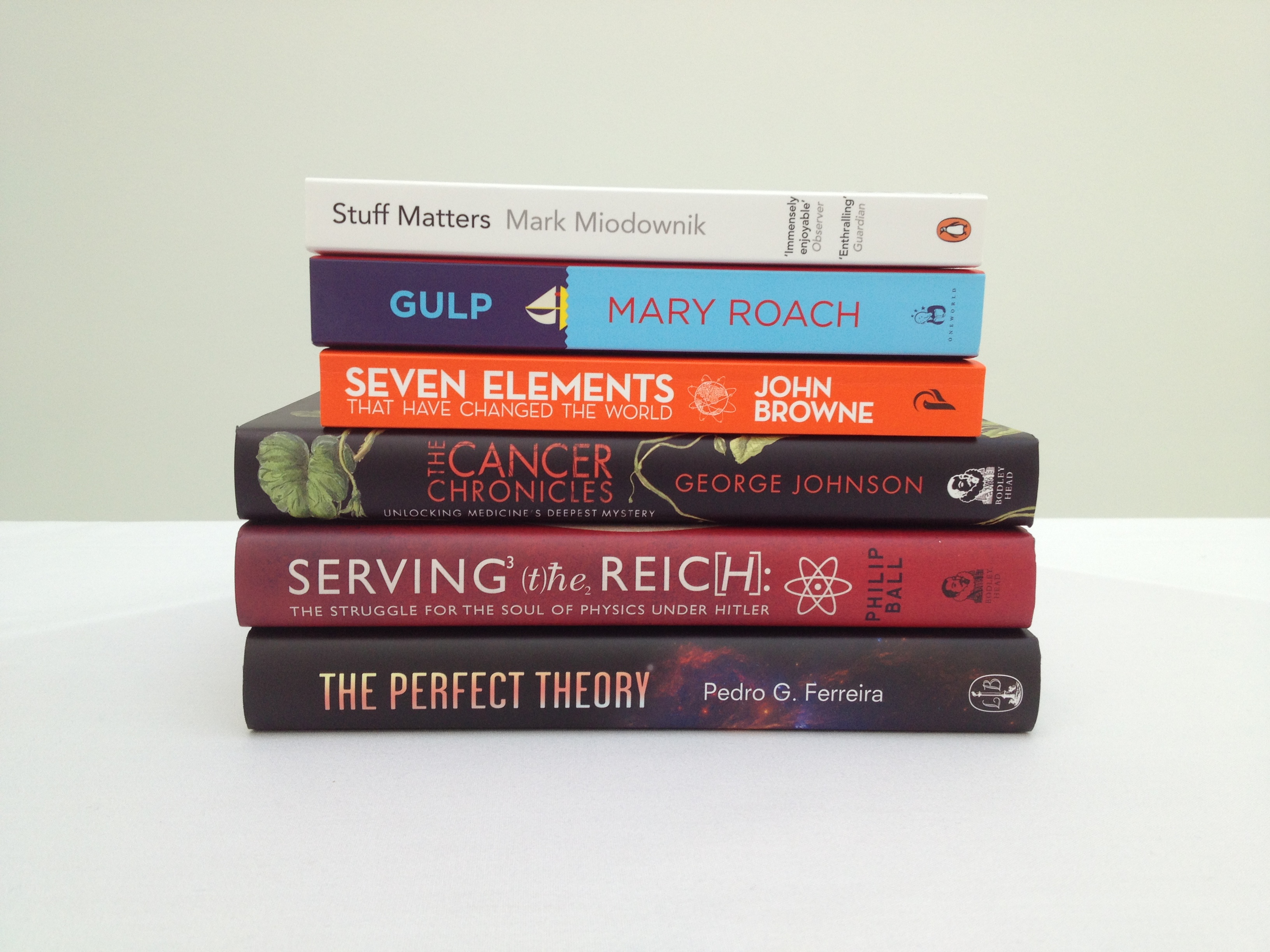
Alice’s Analysis – 2014 Royal Society Winton Prize for Science Books

Over the coming month, the Nature Press Office will be reading and reviewing the books shortlisted for the 2014 Royal Society Winton Prize for Science Books, cramming in a book or two a week until the winner is announced on the 10th November 2014.

An initial look at a strong shortlist suggests that the competition for a recently-increased prize of £25,000 will be fierce.  There’s a lot here with relevance to our everyday lives, with a vibrant exploration of the man-made materials around us and a moving personal account of experiences with cancer and the vast research world connected to it.  Along the way there’s a huge helping of humour in the form of riotously entertaining science writer Mary Roach, who takes us on a trip down the gut in disgusting and glorious detail.  However, the real hero of this shortlist seems to be history, with a celebration and exploration of the role of science in our past.  Personally I can’t wait to get stuck into the beautiful prose of Phil Ball, pulling apart the ethical struggles and individual stories of scientists in Hitler’s Third Reich.  Added to this, and completing the shortlist, are erudite accounts of the development and controversy around the theory of general relativity and the myriad of ways that seven key elements have changed, and continue to change, our lives.

6

Continue reading

SpotOn London 2014 Draft Programme

Screen Shot 2014-10-02 at 15.13.36

We’re pleased to announce that the SpotOn London conference will take place at the Wellcome Trust on Friday, 14 November and Saturday, 15 November 2014.

This year’s theme will be on the challenges of balancing the public and the private in the digital age. Friday will see panels, workshops and keynotes on topics including: sharing sensitive data, measuring social impact, open peer review and the right to be forgotten. In an exciting change to our Saturday programme, SpotOn London will be hosting an unconference completely picked and run by the community within this year’s theme.

Find out more details about the event in our previous blog post.

Tickets go on sale today at noon (UK time) via our Eventbrite page.

This year there are two ticket types, a full two-day conference ticket (£60) and a Saturday only ticket (£35) – which includes breakfast, lunch and other refreshments.

As the conference has sold out every year, we recommend buying your ticket as soon as possible to avoid disappointment.

Continue reading

How to get a ticket for this year’s SpotOn London

Screen Shot 2014-10-02 at 15.13.36

With a month to go, we’ve been busy behind the scenes planning for this year’s SpotOn London conference on 14th and 15th November. We are pleased to announce that we can now share some more details about how you can attend the event.

What is SpotOn London?

If you’ve not attended before, SpotOn London is an annual opportunity to meet other people interested in how science is carried out and communicated online. The two day event, which marks its sixth year, is hosted by Nature Publishing Group, Palgrave Macmillan, Digital Science and the Wellcome Trust.  We’re also delighted to have Martin Fenner of PLOS joining us as a co-organiser again this year.

The conference is taking place on Friday 14th and Saturday 15th November  Find out more details about the event in our blog post announcing the dates.

This year’s theme will be on the challenges of balancing the public and the private in the digital age. Friday will see panels, workshops and keynotes on topics including: sharing sensitive data, measuring social impact, open peer review and the right to be forgotten. In an exciting change to our Saturday programme, SpotOn London will be hosting an unconference completely picked and run by the community within this year’s theme.

How can I get a ticket?

This year we’re releasing tickets to attend the main conference in one batch which will go on sale at noon (UK time) on Monday 13th October via our Eventbrite page.

This year there are two ticket types, a full two-day conference ticket (£60) and a Saturday only ticket (£35) – which includes breakfast, lunch and other refreshments.

As the conference has sold out every year, we recommend buying your ticket as soon as possible to avoid disappointment.

What if I want to run a session

On Saturday, the programme will be crafted by the delegates. There will be a Google doc before the conference for session suggestions. Saturday’s schedule will be formulated on the Friday at the conference. If you are only attending on the Saturday and want to run a session, do let us know in advance.

If we’ve already been in touch with you and you’ve agreed to coordinate a session on the Friday, please don’t purchase a ticket. If you’ve got any questions about organising sessions and joining in the unconference, please do get in touch.

What about attending fringe events?

We’ve also been busy coordinating plans for fringe events on the evenings of Thursday 13th and Friday 14th November. Tickets to these events will be offered to conference attendees first. We’ll announce details of the fringe events soon – so stay tuned!

Follow @SpotonLondon and the hashtag #solo14 for updates and if you’re not already on our mailing list, or if you have any questions, drop us a line at blogs@nature.com and we’ll happily add you!