Away from home: The two-body problem

We’re bringing you the best stories in lab mobility from Nature India

The ‘Away from home‘ blogging series features Indian scientists working in foreign labs recounting their experience of working there, the triumphs and challenges, the cultural differences and what they miss about India. They also offer useful tips for other scientists headed abroad. You can join in the online conversation using the #postdochat hashtag.

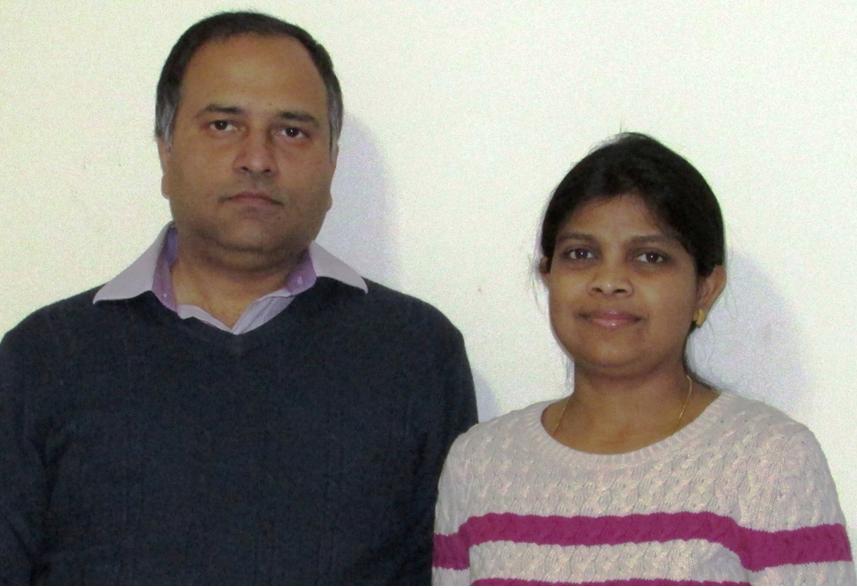
Here’s the account of a scientist couple, looking at opportunities to come back to India. Naresh Bal, a PhD from Jawarharlal Nehru University, New Delhi and a postdoc from the Ohio State University, USA is currently wanting to start an independent research group of his own. He is busy writing grants overtime given the “current grant situation in the USA”. Naresh urges the Indian government and institutions to think of schemes to recruit scientist-couples to work as a team. Read on and leave your comments — have you had a similar experience, do you know someone who has or are your bracing up for this now?

The scientist couple: Naresh Bal and Nivedita Jena

The scientist couple: Naresh Bal and Nivedita Jena

Continue reading

Away from home: Collaboration in a global organisation

We’re bringing you the best stories in lab mobility from Nature India

The ‘Away from home‘ blogging series features Indian postdocs working in foreign labs recounting their experience of working there, the triumphs and challenges, the cultural differences and what they miss about India. They also offer useful tips for their Indian postdocs headed abroad. You can join in the online conversation using the #postdochat hashtag.

Today, we have environment scientist Ram Avtar, an alumnus of Jawaharlal Nehru University (JNU), New Delhi and a postdoc from the Japan Agency for Marine-Earth Science and Technology (JAMSTEC). He tells us about his transition from a postdoc to a research associate with the United Nations University in Tokyo, an organisation with a global outlook and ample scope to forge meaningful collaborations — not just in one’s professional life but also in the personal life.

Nature India Special Annual Volume is out!

New PictureIn keeping with the promise of an annual compendium, here’s Nature India‘s second one compiling the big science events from India through 2014.

It has been a delight putting together the second issue of the Nature India Special Annual Volume, primarily because 2014 was full of big science news — India’s space scientists proudly placed the Mars mission in orbit and the country’s biologists made a mark in international proteomics research by mapping the human proteome.

During the year, Nature India also tracked an annual event that is quietly making a mark on the Indian science scene — a new initiative that is helping bring back Indian scientists settled in various parts of the world back to their homeland. Our cover story takes a look at this — the Young Investigators Meet in faraway Boston, Massachusetts. Parallely, we spotted another new pattern — that of foreign scientists trickling in to work in Indian labs.

Though their numbers are still not worth calling it a ‘trend’ of sorts, we thought this time was as good as any to put the sightings on record – a primer that might influence future science policy of this country. Besides our continued focus on climate change, policy issues that made it to our coverage in 2014 were the ban on unproven stem cell therapies — a long-standing cause for concern — and, a new push for genomic medicine in the country’s healthcare system. We also got to hear from the experts on where the legal battle on Genetically Modified crops is headed.

All these made it to our annual compendium, Nature India’s second such, that hopes to be an important addition to the science calendar of India — a must have for anyone interested in keeping abreast with the research highlights of the year, newsmakers, trends in R&D, careers and policy issues.

In the seven years of covering science in the largest democracy of the world, Nature India has closely witnessed some world-class science and scientists changing the face of science in this country. Deservedly, they should go down in history as pioneers of this new scientific boom. Beginning 2014, therefore, Nature India started chronicling what we call “the contemporary history of science in India” through annual compendia like these. For our special volumes, a group of editors and eminent scientists handpick contents from our coverage through the year. Affiliations and research interests of some people might have changed after publication of these articles. We have mentioned the publication date on top of each article so that they make sense.

As always, I welcome readers’ feedback to improve our successive volumes and to do justice to Nature India’s tagline: “All about science in India”.

More on the content and subscription of the issue here. Also, stay tuned for a Nature India Special Issue on “Proteomics Research in India” next week!

[Read about Nature India Special Annual Volume 2007-13 here.]

Why Nature published an ‘India Special’ now

The Narendra Modi-led government in India completes one year in office next week (May 26, 2015). While the government’s first budget last year disappointed scientists with its below-inflation funding increase, they were twice disappointed this year when funding for science remained flat in real terms, and actually nosedived for some departments.

But the scientific community has been hopeful that the government will come up with decent funds for them eventually, perhaps in next year’s budget.

Nature's India Special cover

Nature’s ‘India Special’ cover

Time for some stock taking.

Nature did just that with an India Special issue last week —  looking at the “state of science in a mushrooming economy, soon to be the world’s most populous nation.” In an editorial, the journal sums it up thus: “By most metrics, India is underperforming compared with developed nations and ascendant economies such as China and Brazil. So, how best to build the country’s scientific capacity, and tackle its grand challenges including energy, water, food and pollution?”

I asked Sara Abdulla, Chief Commissioning Editor at Nature, the rationale behind an India Special issue at this point of time. “The economy and population of India are booming and the nation is sitting at the nexus of these grand challenges. Plus a new government that’s going to complete one year in office — I think that’s a great time to analyse how best India can build scientific capacity.”

The India Special reflects Nature’s interest in Indian science and the journal intends to follow it up with more coverage.

Here is the list of articles in the special issue, which is seeing some healthy readership from across the world:

A nation with ambition

Indian bioscience: The anti-bureaucrat

India by the numbers

India: The fight to become a science superpower

Research management: Priorities for science in India

Policy: Rethink India’s energy strategy

The India Special makes a few things clear — what comes across as India’s biggest strengths, says my colleague, Nature Features Editor Richard Monastersky, are commitment by researchers to address the needs of India, growth in the biotech sector and the quality of India’s most elite scientific institutions. The art of jugaad — the characteristically Indian technique of frugal innovation — and youthful enthusiasm in abundance are things that shine through. The annoying bits are the age old problems of bureaucracy, government indifference, unfair appointments (or appointments based not on experience), prioritising prestige over local problems and lack of resources. The poor quality of many state universities continues to be a niggling issue.

India has the potential to turn jugaad  into a world-leading quality since frugal innovation is the the way forward for the whole world. “There is a real opportunity to lead here, with focus, vision and support,” Sara observes reflecting the views and concerns of India’s leading scientists as featured on Nature‘s pages.

Given the limited resources and complexities, why is the international science community still hopeful for Indian science? “There are some positives — for example, increasing investments by the business sector, even if a lot of that is coming from multinational companies as opposed to Indian companies. The participation by women is also growing,” Richard says.

Interestingly, earlier this month, Mamannamana Vijayan, a scientist at the Indian Institute of Science (IISc), Bangalore and a vocal advocate of increasing funding for Indian science, said, “Transition from dependence on public funding to that on private funding is like a transition from the frying pan to the fire.” Writing in Current Science, a journal published by the Current Science Association in collaboration with the Indian Academy of Sciences, he says the core activities of autonomous institutions should be funded essentially by the government.

“That in itself does not compromise autonomy. Of course we need private funding. But that should be in addition to, and not instead of, public funding. We also need to be cognizant of the Indian reality, which cannot be changed overnight. Unlike in the West, we do not have a great tradition of philanthropy in education or private investment in research. Almost all the great scientific and educational institutions in the country, mostly established after independence, are funded publicly.”

Nature‘s India Special looks at the Modi government’s “steps in the right direction” in establishing tax incentives for research and development that are among the best in the world. “These have helped to boost research investments by a few industries, but have yet to drive widespread innovation,” it notes.

Money is key for Indian science, which is clearly poised to take the big leap now. Narendra Modi’s concern for science and scientists has been in the news ever since he took office. However, whether the scientific community in this country will continue to believe that the concern is genuine hinges, to a large extent, on his government’s next budget.

Nature India Editor Subhra Priyadarshini on the Indian science boom and the role of journalism

"India is now transitioning from a developing country into an emerging economic superpower and as a result many areas of development, including science, are catching up quickly."

“India is now transitioning from a developing country into an emerging economic superpower and as a result many areas of development, including science, are catching up quickly.”

In the second of our five features celebrating Ada Lovelace Day and prominent women in science and technology across the world, we speak to science journalist and Nature India Editor, Subhra Priyadarshini about the new resurgence of Indian science and the role science journalists play in narrating the country’s success stories.

Ada Lovelace Day, marked today across the world, is an annual celebration of the achievements of women in science, technology, engineering and maths (STEM).

Subhra Priyadarshini is an award winning science journalist and currently Editor of Nature India, the Nature Publishing Group’s (NPG) India portal. She was a deadline-chasing journalist covering politics and sports, fashion and films, crime and natural disasters in mainstream Indian media for over a dozen years. She finally chose to come back to her first love – science – in 2007 launching Nature India. Subhra has been a correspondent with major Indian dailies The Times of India, The Indian Express, The Asian Age, The Telegraph, news agency Press Trust of India (PTI) and environment fortnightly Down To Earth. She worked briefly for the Observer, London. Priyadarshini received the BBC World Service Trust award for her coverage of the ‘Vanishing islands of Sunderbans’ in the Bay of Bengal in 2006. She received letters of commendation from the PTI for her coverage of the Orissa super cyclone in 1999 and the Indian Ocean tsunami in 2004. She is a regular contributor to BBC Radio’s Hindi science programme ‘Vigyan aur Vikas’ (Science and Development) and taught science communication at University of Calcutta.

The scientific landscape of India is a constantly fascinating and fluctuating one. In a country poised to be a global super power, yet fighting issues of poverty, healthcare and education, Indian science has seen something of a new resurgence over the last decade. Research output and publications have increased significantly and an evolving technology industry has been reaping just rewards. And yet for all these exciting developments, in a country where more than 1.2 billion people live, there has until recent years been one fairly absent protagonist: the media.

When Subhra Priyadarshini, who started Nature India in 2006, first specialised in science journalism after nearly 10 years covering everything from economics to sport, she found there were certain challenges to getting science on the news agenda. “In the early 2000s you would be lucky to find a science journalist working on a newspaper or magazine in India. You had to be a generalist and would find yourself one day covering Bollywood and the next looking at financial markets,” says Priyadarshini, who has worked at the Times of India, The Asian Age and the Press Trust of India, among others. “Science was always my first love and I used to get the kind of fulfilment from a science story that I would not get from say a political reportage.”

Phenomenal growth

Priyadarshini is still today only one of a small handful of science journalists in India who are helping to narrate the ever evolving stories of Indian science. She believes many more science stories are now starting to be reported in the mainstream media, a distant reality when she first started specialising in 2000. “Scientific stories that were not popular interest ten years ago are now starting to creep into mainstream media and basic science research is getting more in-depth coverage,” Priyadarshini says. She cites new genomes being mapped or a new nanomaterial with applications in a variety of themes as the types of stories that are now starting to garner media coverage.

Continue reading

Nature India announces its first photo contest

NI photo contestOn popular demand from readers, Nature India is pleased to announce its first ever photo contest!

One lucky winner chosen by the Nature India editorial and design team will be featured on Nature India. The winning entry stands a chance of being on the cover of one of our forthcoming print publications. The winner and two runners-up will receive a copy of the Nature India Special Annual volume and a bag of goodies from the Nature Publishing Group.

The theme for our inaugural photo competition is: Science & technology in India.

The contest is open to everyone – any nationality, any age, any profession. The only keywords for the subject of the picture are: ‘India’ and ‘science’. You could use whatever camera you wish to – even your cell phone – as long as the photograph you send us is unedited, original and in a digital format. Photographs will be judged for novelty, creativity and quality.

Please send a single entry to npgindia@nature.com  with your name, telephone number and address, both e-mail and postal. Please mention “Nature India Photo Contest” in the subject line of your email. The photograph must be accompanied by a brief caption (not exceeding 100 words) explaining the subject of the picture along with the date, time and place it was taken. The last date for submissions is August 15, 2014. If you are on social media, please use the hashtag #NatureIndphoto to spread the word around about the contest.

Selfies are welcome as are pictures of sculptures, statues, paintings, and other works of art. Just make sure you are not violating any copyrights. Also, no obscene, provocative, defamatory, sexually explicit, or other inappropriate content please.

So, get set and go clickety-click!

Coming this week: Nature India Special Annual Print Volume

I have often been asked why a discussion on the history of Indian science doesn’t get past her science icon triad of Bose, Raman and Saha. It is as if the inspiring figures of India’s science are frozen in a time pre-1970s. My usual retort is: this isn’t the case. However, I have to concede that we do not celebrate contemporary science icons the way we revere the work of these greats.

Nature India is all set to change this.

NI spl volIn 2007, the Nature Publishing Group felt the need for an online platform to capture the booming science scene in India. Nature India was born in February 2008 with an archive dating back to May 2007. In seven years of covering science in the largest democracy of the world, Nature India has closely witnessed some world-class science and scientists changing the face of science in this country. Deservedly, they should go down in history as pioneers of this new scientific boom.

Beginning 2014, therefore, Nature India plans to chronicle the contemporary history of science in India through annual compendia. For the first special volume, that has just gone to print, a group of editors and eminent scientists have handpicked contents from our coverage between 2007 and 2013. The subsequent volumes will be annually compiled.

In the introduction to this volume, Mamannamana Vijayan, a highly respected scientist serving the country for 50 years, gives us a peek into India’s science faring history and suggests the way forward.  “In global scientific literature, Nature represents excellence. Nature has also been concerned with science policy, the impact of scientific discoveries and science-related societal issues. True to this tradition, Nature India has addressed these concerns with particular reference to India. The compendium presented in this volume provides an excellent picture of the issues that have been addressed during the past seven years,” he says in the introduction.

Besides featuring what’s right and what’s not with science in India, the annual volumes hope to be an important addition to the science calendar of the country – a must have for anyone interested in keeping abreast with the research highlights of the year, newsmakers, trends in R&D, careers and policy issues.

More on the content and subscription of the issue here.

As always, we welcome readers’ feedback on the special volume and will continue our efforts to to do justice to Nature India’s tagline: “All about science in India”.

Nature India anniversary special issue — readers’ choice

We are happy to announce that on the sixth anniversary of Nature India in February 2014, Nature Publishing Group plans to bring to you the first ever ‘Nature India Anniversary Special’ print issue. The special issue will be a compendium of science coverage in India as seen through the eyes of Nature India over the last six years.

A must-have issue for anyone interested in India’s science, R&D scene and the latest career and industry trends, the compendium will have handpicked science news and features, research highlights, commentaries, policy features, career articles and interviews with some leading lights of Indian science. A team of NPG editors and eminent Indian scientists will dig into the rich archives of Nature India – the only stand-alone platform providing serious coverage of science in India – to bring you the special issue.

NI anniv spl readers' choice

Dig into our archives and choose your favourite articles.

In keeping with Nature India’s multi-disciplinary coverage, the anniversary special issue will cover most streams of science. The 100-page issue will chronicle the growth of Indian science. We plan to have successive annual issues making these compendia not just a showcase of the best in Indian science in the years gone by but also a historical account of science as it is happening in India, year on year. The anniversary special thus intends to be an annual feature in the country’s science calendar upholding Nature India’s mandate to provide its readers the best coverage of Indian science.

The first issue is scheduled for launch in March, 2014 and will be distributed widely across India to all the Nature subscribers and interested research institutes, libraries and R & D labs. Additional copies will be distributed at various science events, trade shows, academic institutions, national and international seminars. (Get your copy.)

We have always steered our coverage of Indian science based on our readers’ feedback. So here’s another chance for our readers to get involved in helping us chronicle the history of science in this country. Please feel free to rummage through our rich archives back to 2008 and choose what you think make the best articles in both the ‘research highlights‘ and  ‘news and features‘ section.

Tell us your choice in the comments below — you may make upto 12 choices, one from each section (research highlights/news & features) from articles published every year between 2008 to 2013. Based on your feedback, we will include a readers’ choice section in the Nature India anniversary special. Make your choice now! You may also mention your favourite articles on our Facebook page or Twitter with the hashtag #NIreaderspick .

If you haven’t registered yet to read our articles, register free now!