More to science: working as a Science Policy Analyst

This piece was originally published on the BioMed Central blog network, part of Springer Nature.

There is more to science than being a scientist! As part of our ‘Science > Careers’ series, Dana Berry asks Chris Pickett from The American Society for Biochemistry and Molecular Biology more about his role as a Science Policy Analyst.

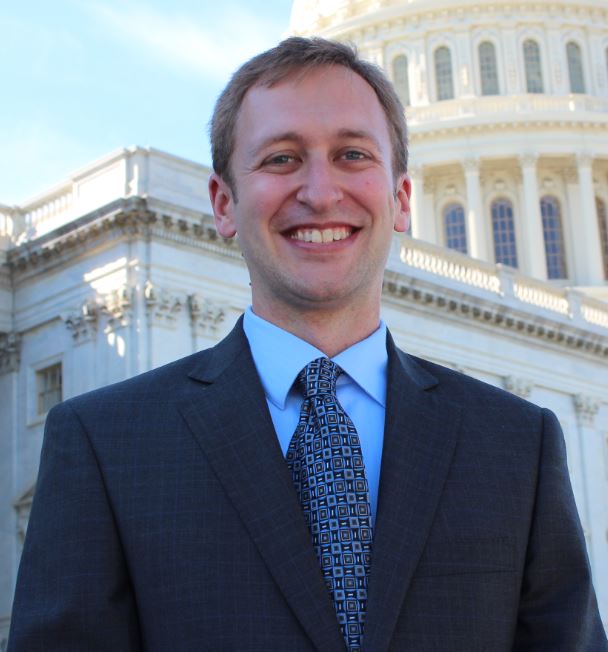
Chris Pickett is a Policy Analyst at the American Society for Biochemistry and Molecular Biology in Maryland, USA. You can read more from Chris on the ASBMB Policy Blotter, or follow him on Twitter.

How did you get interested in science?

I always had an interest in science, but my passion for it grew through high school. I enjoyed biology and physics and started studying both as an undergraduate. About a year in, I realized physics wasn’t for me, and I was also losing interest in biology. After a particularly difficult semester, I seriously considered dropping biology altogether.

However, I had already enrolled in Molecular Biology for the spring semester, and I decided I would make my decision about my major during the summer. About two weeks into the class, I was hooked again. For good this time. This class reignited my passion for biology, and it was in this semester that I decided to go to graduate school.

What is your scientific background?

I earned my BA in Molecular, Cellular and Developmental Biology from the University of Colorado at Boulder. For two years during my studies, I worked in a lab helping them with their contributions to the Human Genome Project.

I moved on to the University of Utah for graduate school. My thesis work characterized orthologs of putative oncogenic transcription factors in the nematode, Caenorhabiditis elegans. I then worked as a postdoc at Washington University in St. Louis for five years. Here I used C. elegans again to study the intersection of aging and reproduction.

Toward the end of my graduate studies and then through my postdoc, I became increasingly fascinated by the role federal policy plays in the functioning of the scientific enterprise. Specifically, I was interested in policies that affected the training of graduate students and postdocs.

Once I realized I was more interested in policy rather than academic jobs, I began applying for science policy fellowships. The American Society for Biochemistry and Molecular Biology offered me its fellowship in 2012 and I’ve been here ever since.

How do you spend your day in your job?
ChrisPickett

Congress and federal agencies appear to move quite slowly, but science policy is a pretty fast-paced field. Because of this I’ve found it difficult to describe a standard day. However, my days are often characterized by four different activities:

Research: Keeping up to date on current events and the actions of Congress and the administration is essential to a job in policy. It also means taking closer looks at policies or legislation that the society is interested in so that we can determine our best course of action.

Meetings: We meet regularly with members of Congress and their staff, staff at the NIH, the NSF and other science-related federal agencies, and representatives of other scientific societies. These meetings can be 30-minutes long, or they can take an entire day.

Organization: Keeping all of my projects on schedule can require a fair amount of organization. Furthermore, large events, like coordinating the ASBMB Student/Postdoc Hill Day, takes a lot of preparation and organization.

Writing: I would say 85% of my time is spent writing, and it’s all kinds of policy writing. Position statements, white papers, news releases, blog posts and even emails. Clear written communication is vital to a career in science policy.

Each day brings a different mix of these four tasks. Some days I’m on Capitol Hill all day, whereas others I’m writing one specific document because of a time crunch. And then some days see a healthy mix of all four.

What makes this a science job and what do you like most about it?

Many of the skills needed for science policy do not differ so much from the skills gained working at the bench. First, you need to think critically, and be able to discern changes to the forest and the trees. Policy and politics have many moving parts, and you need to understand how your group’s position or policy will affect other parts of the research enterprise.

Second, you need to pay attention. While at the bench, you read scientific publications. In policy, you read the news and policy-specific publications. Understanding what is going on in the larger government is essential.

However, some skills need to be learned on the job. I had limited policy-writing experience before landing my fellowship. But once I arrived, I was writing many different pieces, sometimes in the same day, for a variety of audiences. This is actually what I like most about the job.

News releases have a different audience than blog pieces, for example. Being able to switch communication styles depending on the audience takes quite a bit of practice. Similarly, understanding how each federal agency works with one another and how they work with Congress is something that is best learned while doing the job of policy.

What advice would you give your younger self?

It’s a romantic notion that putting all of your effort into a single career path, like becoming academic faculty, will result in success. So many things, foreseen and unforeseen, can alter your path and planning for only one outcome is foolish.

To put it another way, do you focus all of your time on a single line of experiments, or do you mitigate the risk of failure and work on multiple lines of experiments?

I would tell myself to sit down and figure out Career Plan A. And once that was mapped out, to figure out what Career Plans B, C and D were. Then I’d tell myself to put the majority of my effort into Plan A, and recognize just how much of that work is also relevant for following Plans B, C and D.

Furthermore, should the opportunity arise to participate in something that improves your resume for one of your possible career paths, take it. If Plan A works out, you will be able to contribute much more to your organization due to your broad experiences and training.

Should the time come to bail on Plan A, you will already have a body of work for your other career paths, and it will be straightforward to gauge what you need to do to follow one of these paths.

danaberry

Dana Berry graduated with a MS in Microbiology from New York University before joining BMC in 2014, where she manages the infectious diseases portfolio.


Suggested posts

Finding job satisfaction as a policy analyst

Q&A with Gerjon Ikink: Using policy to change science

Science careers are careers that involve science
 

March for Science 2018 gears up

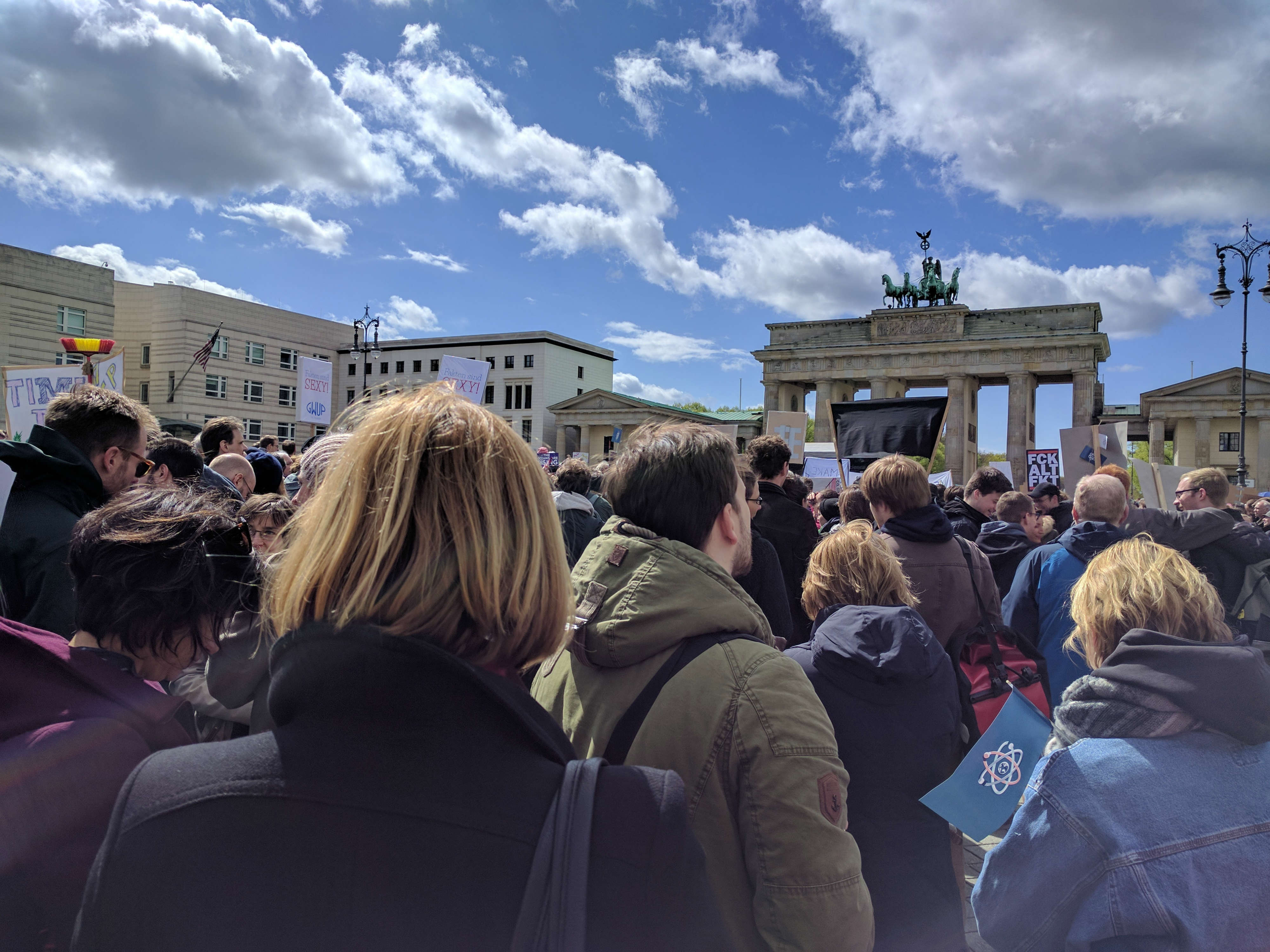
Organisers of the second annual March for Science , scheduled for 14 April in Washington DC, are hoping to recapture the energy and enthusiasm that prompted more than 1 million researchers and others to march together last year across 600 cities around the world in support of evidence-based policy and upholding science for the greater good.

MarchforScience-Judith-2-smaller

Caroline Weinberg, an organizer for the upcoming march in Washington DC, expects smaller crowds than last year, although she admits her prediction may again be off the mark. “Last we expected 40,000 people, and we got around 100,000,” she says. She adds that most of the marchers in the nation’s capital city were concerned citizens, not practicing researchers.

In Washington DC and elsewhere, organisers envision events with fewer marchers, placards and chants but more advocacy-related activities. Weinberg and others aim to offer hands-on projects for those taking to the streets in Washington DC. In Berlin, Germany, organisers are planning a “local hero” programme where scientists will give public talks at bars, cafes and other venues. March-related activities in Portland, Oregon, will include speeches by local politicians and a science expo with at least 30 presenters, including a juggler who demonstrates the principles of physics.

The election and inauguration of Donald Trump for US president helped to spur marchers last year, and Weinberg says that she suspects that some scientists this year may be motivated to speak out against Trump’s recent budget proposal, which called for drastic cuts to the US Centers for Disease Control and Prevention spending plan . But she adds that the march and other forms of science activism shouldn’t depend on crises to draw interest and participation. “Our challenge is to build up a huge crowd and send a message that galvanizes everyone but to also make it sustainable,” she says. “We can’t allow our advocacy to be tethered to those moments.”

Roughly 15,000 people attended last year’s march in Portland, but that kind of enthusiasm will be hard to replicate, says Denesa Oberbeck, a behavioral neuroscientist at the Oregon Health & Science University in Portland and a member of the steering committee for this year’s march. “There’s some fatigue and some burnout, but we need to keep fighting,” she says. “We have to maintain an activist stance.”

Kristine Wadosky, a cancer researcher at Roswell Park Cancer Institute in Buffalo, New York, marched in Washington DC last year carrying a sign that read “Curing cancer is non-partisan.”  This year, she plans to join the march in Chicago, Illinois, where she will give a talk on advanced prostate cancer for the annual meeting of the American Association for Cancer Research. She says that she’s just as energized about science advocacy as ever before, and she thinks that many other young scientists feel the same way.

This time, Wadosky says, she won’t need a sign to send her message, which isn’t especially complicated. “I just want to go to show that I’m a scientists, and I exist,” she says.


Chris Woolston is a freelance writer in Billings, Montana.


Suggested reading:

Growing pains
In support of the March
Reflections on a movement

Finding job satisfaction as a policy analyst

Working in science policy is all about taking complex science from experts and translating it into something accessible, to be used in key decision making.

catherine-ball-naturejobs-blog-small

{credit}Image credit: Catherine Ball{/credit}

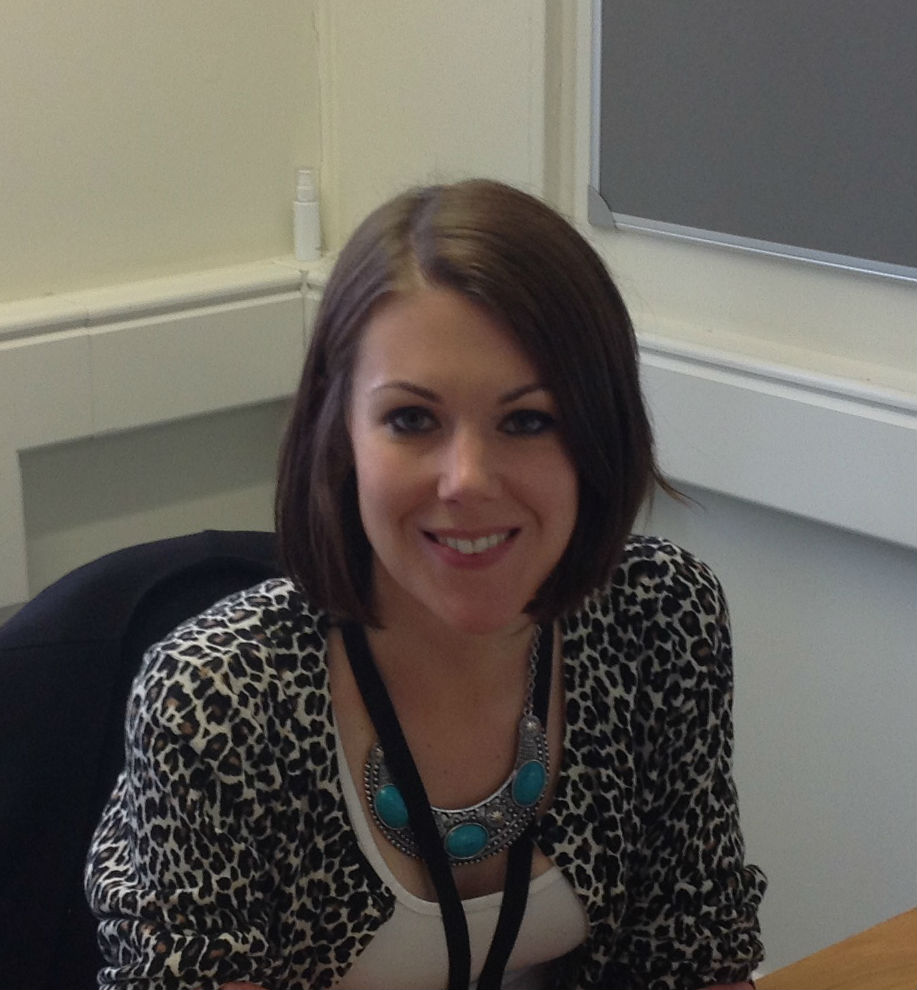
After completing a PhD at the University of Oxford, trying to find different ways to make biological tools for drug development, Catherine Ball moved into science policy, and in May 2015 she started her current role as Policy Analyst for the House of Lords Science and Technology Select Committee. Here she describes her transition from academia.

Click here to read about how Ball pursued science policy as a career.

Why did you decide to leave academia?

About two thirds of the way through my PhD I realised that academia wasn’t for me. I found it quite frustrating when things didn’t work in the lab and I struggled to cope with the fact that you could spend a whole day in the lab and be no further forward than you were when you started.

My area of research was also quite niche and theoretical, and sometimes it felt like research for research sake. I soon realised I was more interested in the broader context and implications of science. So, in 2013 I took up a role as Policy Advisor for the Biochemical Society and Society of Biology where I focused on antimicrobial resistance, equality & diversity, science policy in the devolved nations, open access and drug discovery.

What was the transition from academia to science policy like?

It was a big learning curve. It’s also about understanding the landscape, how policies are made, where scientific expertise feeds it and the best way for it to do so. I had little experience in this when I realised this would be a good career for me, so I made sure I got some before I finished my PhD.

What skills did you need to transfer?

Science communication was the main one. Lots of the work I did in terms of translating complex science and articulating it in a readily understandable and translatable way was useful. It’s all about taking complex science from experts and translating that to something anyone can readily read and use to make a key decision based on that. Continue reading

SpotOn London 2014 – Fringe Events

To accompany this year’s SpotOn London conference, at the Wellcome Trust on Friday, 14 November and Saturday, 15 November, we have a number of exciting fringe events taking place around London.

Tickets are available for the main event and you can read about the workshops, panels and unconference here. This year’s theme looks at the challenges of balancing the public and the private in the digital age.

Here’s the run-down on fringe events taking place across the week.


Pint of Science Logo with GlassesPint of Science

When: Thursday 13th November 2014, 7pm – 11pm

Where: The Driver, Wharfdale Road, King’s Cross

Pint of Science have teamed up with SpotOn London to offer an evening of informal, fun science talks relating to science policy, communication and preventing fraud in science.

In between pints and talks we’ll gather around for some good old fashioned storytelling with a science theme.

Speakers so far include Professor Tony Segal (UCL), who will be talking about how we can prevent fraud in science and Dr Aeneas Wiener (Cytora), who will talk about how his company Cytora uses open data to assess real time political risk. A third speaker will be announced shortly.

The event will be held the evening before the SpotOn conference, in The Driver pub near King’s Cross, on Thursday 13th November at 7pm.

Tickets cost £3 and are available at https://www.wegottickets.com/event/295178.


science showoff 2014 logo

Science Showoff

When: Friday 14th November 2014, 7pm – 10pm

Where: Basement bar, The Star of Kings pub, London

Science Showoff is the anarchic science cabaret night that gives everyone the chance to share their love of science in whatever chaotic way they like.

The stage at the Star of Kings will be full of SpotOn conference delegates and the cream of London’s science communication scene, talking about science, telling jokes, doing demos, playing songs… hell, they can do an interpretive dance if they want to as long as it relates to science.

The whole thing is loosely held-together by our MC and super-nerd Steve Cross, who will be keeping our acts to time and getting science completely wrong for laughs.

Tickets cost £6 with all donations going to the Lightyear Foundation charity and are available at https://www.wegottickets.com/event/295387

Get involved: If you think you’ve got what it takes to showoff your science and you want to take part, we’re currently looking for five performers who are attending SpotOn London 2014 to perform 9-minute sets, communicating any kind of science in any way at all. You could:

Continue reading

UNESCO Regional Chair on Women, Science & Technology, Dr Gloria Bonder, talks women in science and gender equality

“What I would love to see is more qualitative research not on why women can’t and why so few, but who the women are that are successfully developing careers in engineering, technology or sciences.”

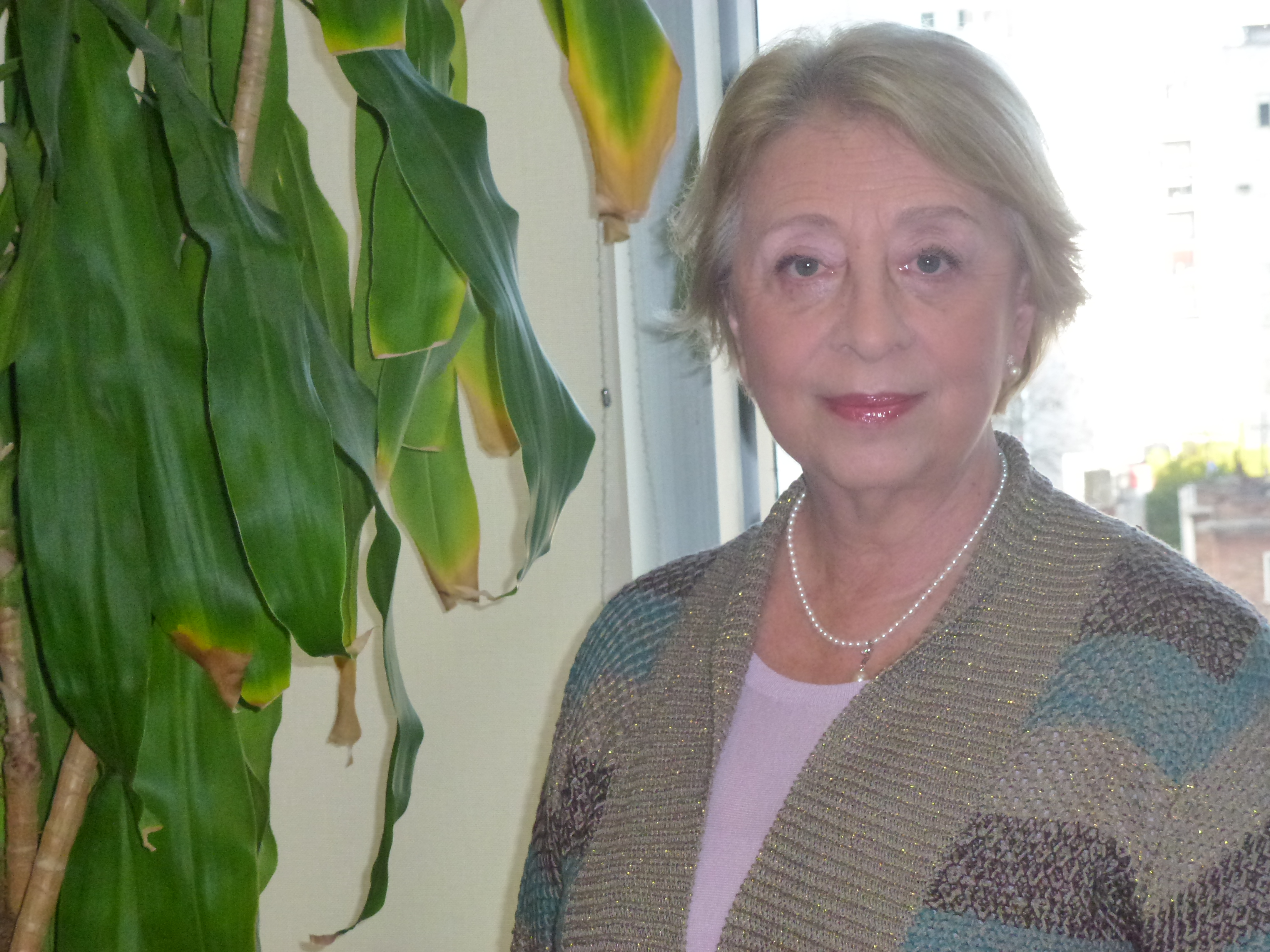
In part four of our five features this week celebrating prominent women in science and technology across the world, we speak to Dr Gloria Bonder, the coordinator of the Global Network of UNESCO Chairs on Gender and the UNESCO Regional Chair on Women, Science and Technology in Latin America. She talks about UNESCO’s latest global figures on women in science, changes that need to be made in both policy and education, and the necessity for more qualitative research on the women who are successfully developing careers in engineering, technology and science.

Dr Gloria Bonder is the Director of the Department of Gender, Society and Policies of the Latin American Postgraduate Institute of Social Sciences (FLACSO Argentina). She coordinates two regional programmes including the UNESCO Regional Chair on Women, Science and Technology in Latin America and the e-learning master’s programme on Gender, Society and Public Policies. Bonder is the coordinator of the Global Network of UNESCO Chairs on Gender. Since 2014, she has coordinated the region’s activities in the global GenderInSITE programme, through her role as the UNESCO Regional Chair. The programme aims to influence policies and policy makers in science, technology, innovation and engineering, to integrate gender equality principles and goals.

She is a researcher and consultant on Women, Science and Technology for several national, regional and international organisations such as: Minister of Science and Technology in Argentina, United Nations, Women and Development Unit, ECLAC and the Office of Science and Technology, UNICEF, UNIFEM, UNDP and UNESCO, among others. Bonder has developed several research projects on gender issues and/in technology and science, education, communication, health and youth, and published books and articles both national and international. She is a member of the advisory board of UN Women for Latin America and the Caribbean and WISAT (Women in Global Science and Technology).

“What I would love to see is more qualitative research not on why women can’t and why so few, but who the women are that are successfully developing careers in engineering, technology or sciences,” strongly asserts Gloria Bonder, coordinator of the global network of UNESCO Chairs on Gender and the Regional Chair on Women, Science and Technology in Latin America.  She continues: “We should look at why they chose that career, what their experiences have been so far, and what they like and don’t like, as well as how they overcome obstacles. We must move away from the basic question of why so few.”

Dr Bonder is not one to mix her words lightly. Having worked on gender studies for more than 40 years in science and technology, she has an authoritative voice and is deeply respected across the world. During unstable political times in the mid-1970s in her home country of Argentina, she was the catalyst behind the creation of a women’s study centre, carrying out independent research on different aspects of gender studies. At that time, it was quite the pioneering community and as a result led to the introduction of a postgraduate programme on women’s studies at the University of Buenos Aires, which Bonder was the founding director of between 1987 and 1999.

Fundamental Changes

As we look back at Dr Bonder’s achievements having set up the Gender, Society and Policies Institute in 2001 at FLACSO-Argentina, there is something on her mind that won’t shift. She interjects: “We need to not only attract both women and men to these careers, but make fundamental changes to the workplace culture and promote that both genders share caring responsibilities. If I was young now, would I choose the science and technology subjects that are taught today? No. To go into laboratories or industries  and make a career in such a way that you have to choose between having a family and enjoying other dimensions of your life, or being a successful scientist, is just plain wrong.”

At FLACSO, Bonder has been quite the influential director coordinating regional programmes across Latin America. The institute runs two huge programmes, which consist of the e-learning Master’s Programme on Gender, Society and Public Policies, and working on training and research projects for UNESCO and other organisations, alongside Bonder, in her role as the Regional Chair on Women, Science and Technology in Latin America.

Continue reading

Nature India Editor Subhra Priyadarshini on the Indian science boom and the role of journalism

"India is now transitioning from a developing country into an emerging economic superpower and as a result many areas of development, including science, are catching up quickly."

“India is now transitioning from a developing country into an emerging economic superpower and as a result many areas of development, including science, are catching up quickly.”

In the second of our five features celebrating Ada Lovelace Day and prominent women in science and technology across the world, we speak to science journalist and Nature India Editor, Subhra Priyadarshini about the new resurgence of Indian science and the role science journalists play in narrating the country’s success stories.

Ada Lovelace Day, marked today across the world, is an annual celebration of the achievements of women in science, technology, engineering and maths (STEM).

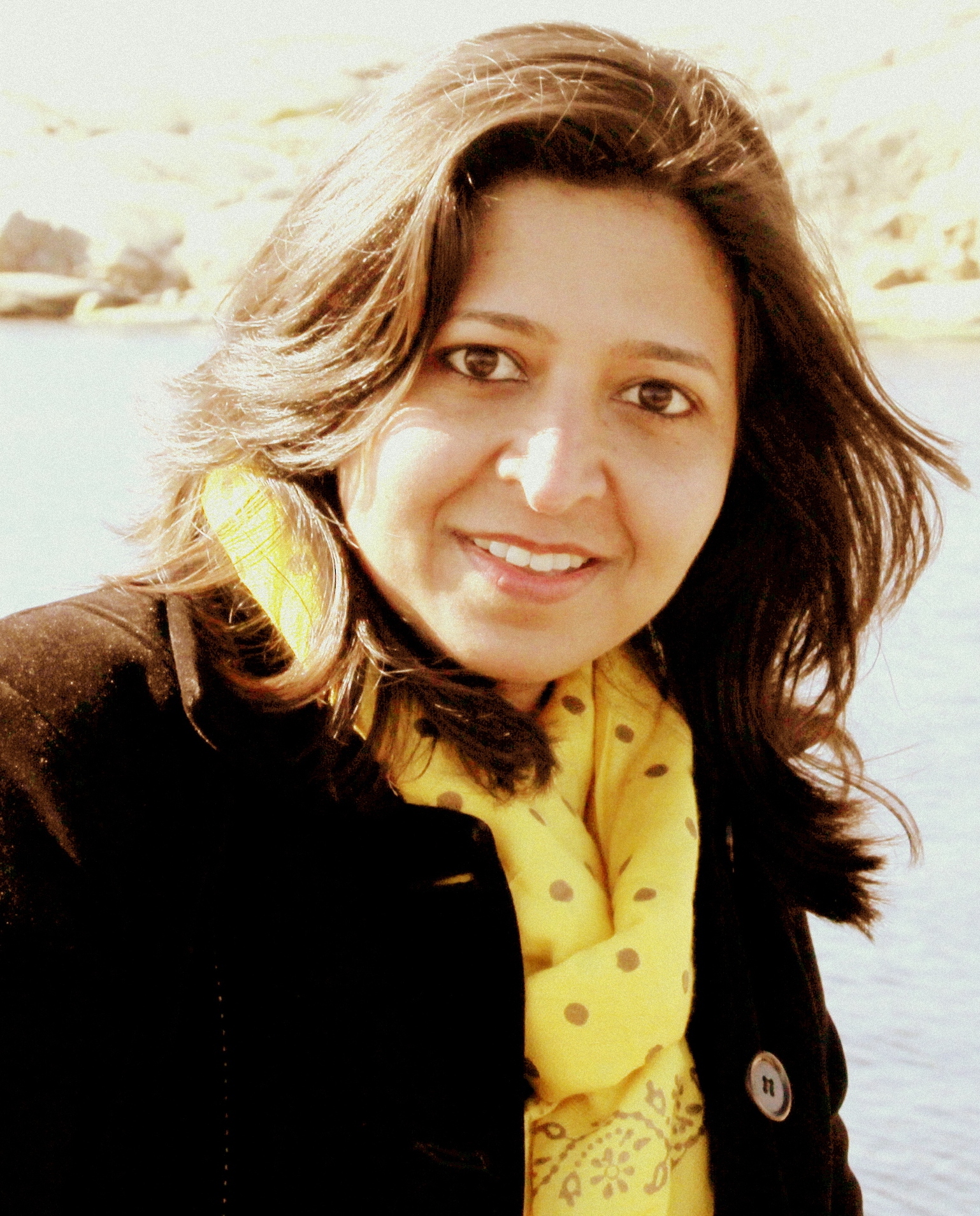
Subhra Priyadarshini is an award winning science journalist and currently Editor of Nature India, the Nature Publishing Group’s (NPG) India portal. She was a deadline-chasing journalist covering politics and sports, fashion and films, crime and natural disasters in mainstream Indian media for over a dozen years. She finally chose to come back to her first love – science – in 2007 launching Nature India. Subhra has been a correspondent with major Indian dailies The Times of India, The Indian Express, The Asian Age, The Telegraph, news agency Press Trust of India (PTI) and environment fortnightly Down To Earth. She worked briefly for the Observer, London. Priyadarshini received the BBC World Service Trust award for her coverage of the ‘Vanishing islands of Sunderbans’ in the Bay of Bengal in 2006. She received letters of commendation from the PTI for her coverage of the Orissa super cyclone in 1999 and the Indian Ocean tsunami in 2004. She is a regular contributor to BBC Radio’s Hindi science programme ‘Vigyan aur Vikas’ (Science and Development) and taught science communication at University of Calcutta.

The scientific landscape of India is a constantly fascinating and fluctuating one. In a country poised to be a global super power, yet fighting issues of poverty, healthcare and education, Indian science has seen something of a new resurgence over the last decade. Research output and publications have increased significantly and an evolving technology industry has been reaping just rewards. And yet for all these exciting developments, in a country where more than 1.2 billion people live, there has until recent years been one fairly absent protagonist: the media.

When Subhra Priyadarshini, who started Nature India in 2006, first specialised in science journalism after nearly 10 years covering everything from economics to sport, she found there were certain challenges to getting science on the news agenda. “In the early 2000s you would be lucky to find a science journalist working on a newspaper or magazine in India. You had to be a generalist and would find yourself one day covering Bollywood and the next looking at financial markets,” says Priyadarshini, who has worked at the Times of India, The Asian Age and the Press Trust of India, among others. “Science was always my first love and I used to get the kind of fulfilment from a science story that I would not get from say a political reportage.”

Phenomenal growth

Priyadarshini is still today only one of a small handful of science journalists in India who are helping to narrate the ever evolving stories of Indian science. She believes many more science stories are now starting to be reported in the mainstream media, a distant reality when she first started specialising in 2000. “Scientific stories that were not popular interest ten years ago are now starting to creep into mainstream media and basic science research is getting more in-depth coverage,” Priyadarshini says. She cites new genomes being mapped or a new nanomaterial with applications in a variety of themes as the types of stories that are now starting to garner media coverage.

Continue reading

Distinguished South African Professor Tebello Nyokong on science, education and innovation

"When I talk to schools or parents, the first thing I say, is let your children touch and explore, it’s the first path to science.” Image courtesy of Ettione

“When I talk to schools or parents, the first thing I say, is let your children touch and explore, it’s the first path to science.” Image courtesy of Ettione

In the first of our five features celebrating Ada Lovelace Day and prominent women in science and technology across the world, we speak to Professor Tebello Nyokong, an internationally renowned Chemist, on African science, education and innovation.

Ada Lovelace Day, which this year takes place on October 14, is an international celebration of the achievements of women in science, technology, engineering and maths (STEM).

Prof Tebello Nyokong holds a DST/NRF professorship in Medicinal chemistry and Nanotechnology at Rhodes University in South Africa.  She is also Director of the DST/Mintek Nanotechnology Innovation Centre (NIC)-Sensors at Rhodes University where she joined in 1992 after lecturing at the University of Lesotho for five years. She has been undertaking research on applications of phthalocyanines in healthcare: as photodynamic therapy (PDT) of cancer agents in combination with nanosized metal nanoparticles and quantum dots. In September 2009, a special motion was passed in the South African National Assembly acknowledging Professor Nyokong’s role in the transformation of science in South Africa. Nyokong has also been award the title of Distinguished Professor at Rhodes University and recognized by the Royal Society in Chemistry/Pan African Chemistry Network as a  Distinguished Woman in  Chemistry. 

“I keep telling people I’m no longer a role model, I’m too old, too straight and not hip enough,” asserts a hysterical Professor Tebello Nyokong in her own typically modest and charismatic demeanour. Of course, her defiance is far removed from the truth. The quick-talking, affable and extremely accommodating distinguished professor is today not only one of the most internationally respected scientists in the world, lauded for her pioneering research into photodynamic therapy for cancer treatment, but is a constant source of inspiration for students across Africa.

Brought up in politically unstable times in her home country of South Africa, she was sent to live with her grandparents in the mountainous terrain of Lesotho. As an eight-year-old, she would work as a shepherd on alternate days from school, learning the traits of a hard day’s shift. It was here where she found “much solace in nature’s beauty” and learned to appreciate the great science around her.

Challenging expectations

Initially dissuaded by her peers to study sciences at school, Nyokong was desperate for a challenge. After three years studying arts and humanities, she realised they had guided her in the wrong direction. “There were no role models to look up to back then. You just learned to follow your peers,” says Nyokong. “They told me science was too hard and way beyond me, but I was adamant I wanted to do it and with two years left switched courses.”

Nyokong pins much of her determination and steely resistance down to her upbringing and this is evident in her unerring enthusiasm for teaching as the director of the Nanotechnology Innovation Centre at Rhodes University in South Africa. “I was brought up to work hard, whether it was as a young shepherd or working long hours mixing cement and concrete for my father’s company. I was just used to touching things,” brims Nyokong. “Now when I talk to schools or parents, the first thing I say, is let your children touch and explore, it’s the first path to science.”

As an influential voice in South African education, she is not afraid to express her fearless views on the teaching of science and believes much needs to be changed. “In South Africa we have this system that constantly strives for 100% pass rates at schools. Many of the teachers themselves find science hard, as very few are trained in teaching the discipline, and therefore under great pressure, they discourage students from courses. It is a deeply flawed system,” notes Nyokong despondently.

“Science is not just part of our culture, it is part of our everyday life, and role models are crucial in promoting this." Image courtesy of Sophie Smith.

“Science is not just part of our culture, it is part of our everyday life, and role models are crucial in promoting this.” Image courtesy of Sophie Smith.

Continue reading

SpotOn London 2014 Draft Programme

Screen Shot 2014-10-02 at 15.13.36

We’re pleased to announce that the SpotOn London conference will take place at the Wellcome Trust on Friday, 14 November and Saturday, 15 November 2014.

This year’s theme will be on the challenges of balancing the public and the private in the digital age. Friday will see panels, workshops and keynotes on topics including: sharing sensitive data, measuring social impact, open peer review and the right to be forgotten. In an exciting change to our Saturday programme, SpotOn London will be hosting an unconference completely picked and run by the community within this year’s theme.

Find out more details about the event in our previous blog post.

Tickets go on sale today at noon (UK time) via our Eventbrite page.

This year there are two ticket types, a full two-day conference ticket (£60) and a Saturday only ticket (£35) – which includes breakfast, lunch and other refreshments.

As the conference has sold out every year, we recommend buying your ticket as soon as possible to avoid disappointment.

Continue reading

How to get a ticket for this year’s SpotOn London

Screen Shot 2014-10-02 at 15.13.36

With a month to go, we’ve been busy behind the scenes planning for this year’s SpotOn London conference on 14th and 15th November. We are pleased to announce that we can now share some more details about how you can attend the event.

What is SpotOn London?

If you’ve not attended before, SpotOn London is an annual opportunity to meet other people interested in how science is carried out and communicated online. The two day event, which marks its sixth year, is hosted by Nature Publishing Group, Palgrave Macmillan, Digital Science and the Wellcome Trust.  We’re also delighted to have Martin Fenner of PLOS joining us as a co-organiser again this year.

The conference is taking place on Friday 14th and Saturday 15th November  Find out more details about the event in our blog post announcing the dates.

This year’s theme will be on the challenges of balancing the public and the private in the digital age. Friday will see panels, workshops and keynotes on topics including: sharing sensitive data, measuring social impact, open peer review and the right to be forgotten. In an exciting change to our Saturday programme, SpotOn London will be hosting an unconference completely picked and run by the community within this year’s theme.

How can I get a ticket?

This year we’re releasing tickets to attend the main conference in one batch which will go on sale at noon (UK time) on Monday 13th October via our Eventbrite page.

This year there are two ticket types, a full two-day conference ticket (£60) and a Saturday only ticket (£35) – which includes breakfast, lunch and other refreshments.

As the conference has sold out every year, we recommend buying your ticket as soon as possible to avoid disappointment.

What if I want to run a session

On Saturday, the programme will be crafted by the delegates. There will be a Google doc before the conference for session suggestions. Saturday’s schedule will be formulated on the Friday at the conference. If you are only attending on the Saturday and want to run a session, do let us know in advance.

If we’ve already been in touch with you and you’ve agreed to coordinate a session on the Friday, please don’t purchase a ticket. If you’ve got any questions about organising sessions and joining in the unconference, please do get in touch.

What about attending fringe events?

We’ve also been busy coordinating plans for fringe events on the evenings of Thursday 13th and Friday 14th November. Tickets to these events will be offered to conference attendees first. We’ll announce details of the fringe events soon – so stay tuned!

Follow @SpotonLondon and the hashtag #solo14 for updates and if you’re not already on our mailing list, or if you have any questions, drop us a line at blogs@nature.com and we’ll happily add you!

SpotOn London: Public interest and privacy in the digital world – 14/15 November 2014

Screen Shot 2014-10-02 at 15.13.36The annual conference, SpotOn London, will be taking place at the Wellcome Trust on Friday, 14 November and Saturday, 15 November 2014. The two day event, which marks its sixth year, will be hosted by Nature Publishing Group, Palgrave Macmillan, Digital Science and the Wellcome Trust.  We’re also delighted to have Martin Fenner of PLOS joining us as a co-organiser again this year. SpotOn London is a dynamic, lively melting pot of scientists, science communicators, technologists, and those interested in science policy.

This year’s theme will be on the challenges of balancing the public and the private in the digital age. Friday will see panels, workshops and keynotes on topics including: sharing sensitive data, measuring social impact, open peer review and the right to be forgotten. In an exciting change to our Saturday programme, SpotOn London will be hosting an unconference completely picked and run by the community within this year’s theme. Issues explored will include:

  • Is our understanding of where the lines blur between private and public keeping pace with technology?
  • How do we balance public interest with the right to privacy when it comes to personal data?
  • How much are we prepared to share for our own interests, and do we really know how much we are sharing about ourselves?
  • How do we balance personal opinion and professional image on social media?
  • Has the right to be forgotten managed to strike a balance between the right of information and the individual’s right to privacy?
  • Does scientific peer review need to be open? And would this work?

Continue reading