More US graduate students win right to unionize

The National Labor Relations Board (NLRB) overturns existing ruling in 3-1 decision

Graduate students who work as teaching or research assistants at private universities won the right on Tuesday to join unions, overturning an opposing decision by the NLRB in 2004.

istockphoto/Thinkstock

{credit}istockphoto/Thinkstock{/credit}

Continue reading

Most read on Naturejobs: February 2016

Two posts this week prove that the value of a PhD means a lot of different things to a lot of different people. Here’s your favourite content from February.

Dr. Peter Fiske explains how a PhD is useful not just for companies looking to recruit scientists, but for those looking to fill other business-oriented roles in the private sector. That doctorate could cover you even further than you thought.

naturejobs-reads

Continue reading

Most read on Naturejobs: May 2015

Building reputations, relocation, adjunct teaching and more have been the topics of choice in May 2015.

naturejobs-readsThis month the Naturejobs team have been working hard on the Boston Naturejobs Career Expo, which happened last week. It was a long, but great day and we want to thank everyone who got involved: Speakers, delegates, exhibitors, sponsors. THANK YOU!

For those that missed it, there will be reports on the event coming out on the Naturejobs blog next week, starting with a summary of the keynote speech by Professor Robert Langer on Monday June 1st.

But now I want to concentrate on May, and here’s a list of your Top Ten reads from Nature Careers and the Naturejobs blog:

1. To get respect in a field, scientists need to consider not just their work, but also their interactions with others, says Chris Woolston in Recognition: Build a reputation on Nature Careers.

2. Contract teaching positions are becoming the norm for many aspiring professors. Know how to make the best out of them, says Kendall Powell in Adjunct teaching: For the love of lecture on Nature Careers.

3. The postdoc series: Help for lost postdocs shows how self-reflection can help young researchers analyze their skills and plan for their futures. Continue reading

The postdoc series: What comes next?

A postdoc sets you up for a variety of careers, including academia, editing, working in industry, core laboratories and more.

cross-roads

{credit}Ratch/Shutterstock{/credit}

The obvious path for many people doing a postdoc is to look for a more permanent academic position as a tenure-track professor. But it isn’t the only one! There are plenty of other things a postdoc can do. Here are just a few examples.

For those who have the want, determination, and, let’s face it, a bit of luck, working as an academic professor can be worth the battle. Dr Esther Bullitt is currently going through her application to become a tenure-track professor. “There were biological questions that I wanted to pursue, and having the independence to do so was absolutely compelling,” she says. One of the challenges that she faces in her application is to make sure that she stands out from the rest of the crowd. “There are many excellent scientists working on many interesting questions, so you need to demonstrate a broad set of skills that go beyond a great project and a well-developed plan for the science.” To be promoted to professor, Bullitt says that postdocs need a well-documented track record in: funding; publishing your research; being nationally and internationally recognized as an expert in your field; giving invited seminars; teaching; university committee work. “Probably in about that order,” she adds. Continue reading

The postdoc series: Finding funding

Becoming an independent researcher in academia is crucial to achieving future success.

Naturejobs-money

{credit}ImageSource{/credit}

When you start your first postdoc, you often find yourself dependent on your supervisor: the one that provides the funding so that you can do their your research. But as you build up your experience, it’s important to start demonstrating your own independence as a researcher. Doing this whilst working for someone else is not an easy task.

It might sound obvious, but “just being a clone of your PhD supervisor may be a bad strategy,” says Jim Usherwood, Wellcome Trust Senior Research Fellow and Reader at the Structure & Motion Laboratory at the Royal Veterinary College in London. You might look up to them and admire their work, but in the end funding agencies will look for innovative applications that demonstrate how you will be doing new research.

But, it’s more difficult than it looks to build up independence without treading on a PI’s toes, especially when you’re hired to work on their research. “I do know there are disciplines where the PI needs/demands postdocs to stay in their field of expertise and put all their time in to the PI’s project,” he says. If that field is expanding and going to continue to expand, then this could be an advantage: at some point a new institution would hire a younger/cheaper duplicate of the PI. “But if not, then you may be competing to step into dead-man’s shoes… and there could be generations ahead of and behind you waiting to take that step.”

Usherwood suggests the following should be done early on in an academic postdoctoral career to build up some autonomy:

  • Start supervising undergraduate student projects to give you extra time and resources on slightly different projects.
  • Find out what other areas of interest the PI might have. They might not currently be working on them but they could be willing to discuss opportunities.
  • Don’t be protective about your ideas. “It’s much better to chat about them and find what has been done before; if the occasional idea gets adopted/swiped along the way, have a new one and believe that there will be important people in the field appreciating your input anyway.”

Once you’ve started developing some of these skills during the first postdoc, it’s time to think about where you could find your own funding. Continue reading

Away from home: But close to my dream

Every Wednesday, our ‘Away from home’ blog series features one Indian postdoc working in a foreign lab recounting his/her experience of working there, the triumphs and challenges, the cultural differences, what they miss about India, as well as some top tips for postdocs headed abroad. You can join in the online conversation using the #postdochat hashtag.

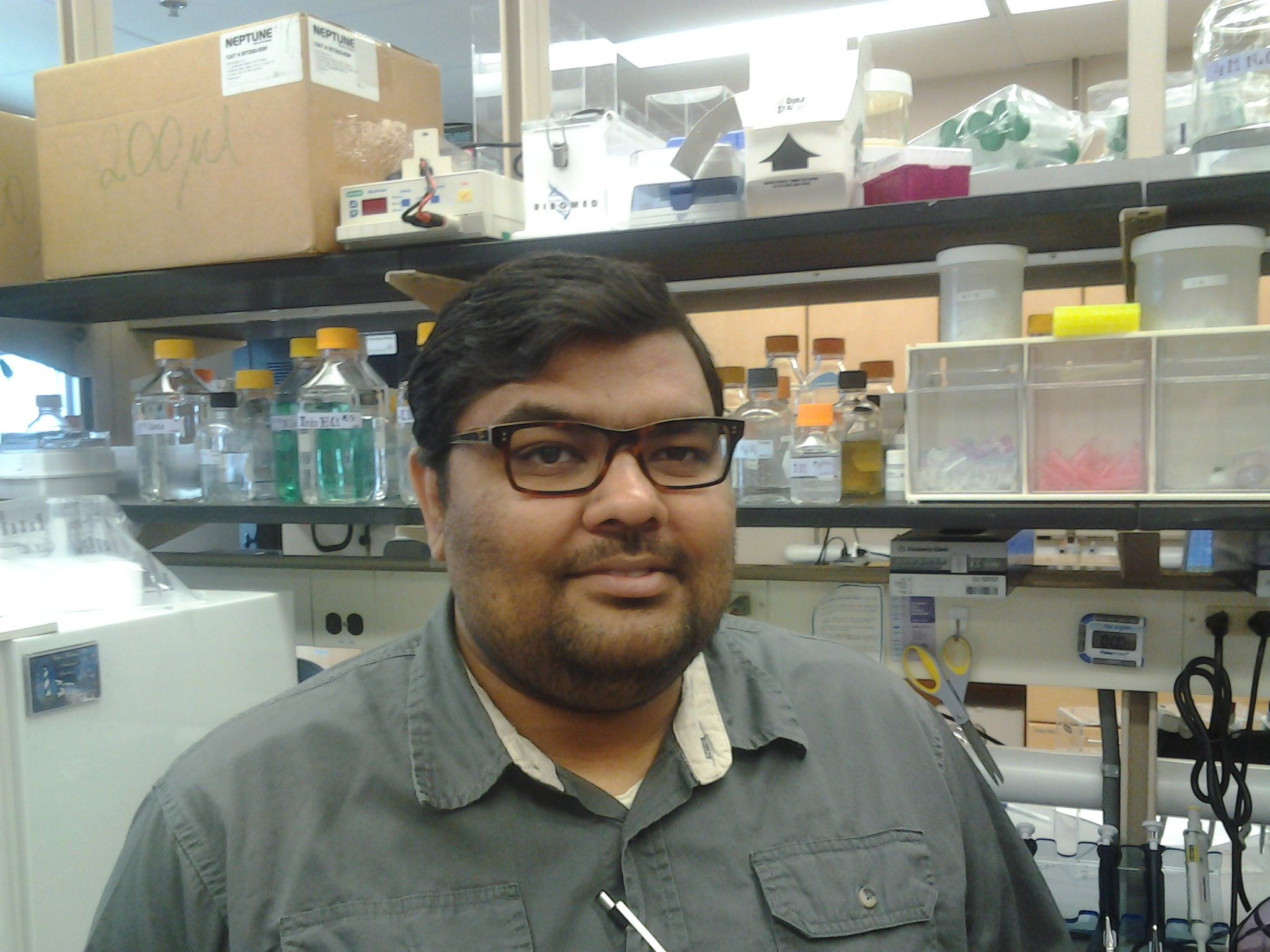
This week we feature Sushil Kumar Tomar, a PhD from the Indian Institute of Technology, Kanpur (IITK) and currently a postdoc researcher at The RNA Center, Ohio State University (OSU), Columbus, USA. Sushil has a fascinating formula to find success in life: he calls it ‘absolute success’. Read on to find what it is.

Sushil Kumar Tomar

Sushil Kumar Tomar

My superheroes: Shapeless Amoeba and immortal Hydra

My father was my first biology teacher. He used to inspire me with stories of shapeless Amoeba and rejuvenating Hydra. Electric outages were too common those days (actually even now) and there were no invertors back then.  So sleeping on the terrace was a common practice. My father and I talked about several exciting things – monstrous mosquito eating plants or giant dinosaurs or plant pigments filling the world with colors. Later, partly due to inept mathematics teachers and partly due to my biology fantasies, I opted for biology in senior school. I was extremely fortunate to choose St. John’s Pharmacy College, Bangalore, where I found several fantastic teachers in my undergraduate years. Among them Dr. Elisha Injeti deserves special mention as he was the first teacher who inspired me towards research and higher studies.

Basic Science is the key

Destiny also played a huge role in my career. Upon completion of my B. Pharmacy, I was inclined to take Medicinal Chemistry for my future studies. But, due to some unconnected mysterious events I reached at the multidisciplinary department of Biological Sciences & Bioengineering at Indian Institute of Technology, Kanpur (IITK). It had a totally different flavor for basic science in contrast to my interests. After the first few months of disappointment, I began to realize the strength of basic science. I found that it is basic science which gives birth to applied science. I realised it was important to understand normal (health) first before exploring the abnormal (disease). I started looking for postdoctoral opportunities. For my PhD, I worked with Dr. Balaji Prakash, an X-ray crystallographer by training but he encouraged me to explore the power of molecular biology and biochemistry. During this period, I attempted to elucidate the role of bacterial GTPases in a complex and essential process of ribosome biogenesis. I generated immense interest for RNA world. After profound search I selected the laboratory of Dr. Irina Artsimovitch at The RNA Center, Ohio State University (OSU) Columbus, USA for my future work.

Transcription, a potential hub for large macromolecular interactions

Here at OSU, I am working on the transcription factor RfaH. It is a unique protein that is capable of undergoing tremendous structural change. I am exploring the folding/refolding properties of RfaH. Transcription is coupled to various other cellular processes such as recombination, repair and translation. In future I am looking to explore these communications in detail. My current group is relatively small but efficient. Irina is an excellent mentor and very supportive. Sometimes I feel that it was better if the group had few more people. That could have generated larger interactions but this lacuna is fulfilled by other research groups on the floor. Weekly joint meetings provide plenty of opportunities for such communications.

Inscrutable Americans and cryptic Indians

Before coming to America, I had been to Germany three times for conferences and collaborative work during PhD. Honestly, I did not have a very pleasant experience there. This was also partly because of a language barrier and my introvert nature. But in comparison to that America seems very open and I easily mixed in. Though I still find it difficult to understand their expressions and jokes at times, it is also equally true for my fellow American friends. Overall it has been a nice experience so far.

Look for absolute success

My tip for potential postdoctoral candidates is that one should look for absolute success. Do not compare your selection with that of others. During this time most candidates have families. It means apart from science, their time is also important for the family. In a few places, work culture could be very competing and demanding. Also you need to make careful decisions based on your choices between academics/industries or planning to stay in USA or returning to India. You need to check the history of a laboratory to see how many past members have successfully achieved specific goals. So do not get overwhelmed by the numbers of publications you see from a lab on PubMed. If you do not accomplish your final goal, then even an additional good publication could leave you with an empty feeling.

Home is always better than paradise

At least for me, a postdoctoral stay is like a long work holiday in a five start hotel. Whatever facility and comfort it offers, I still miss my country every day. America seems like paradise when it comes to living standards and progress-driven culture, but home is always home. A bird could fly to distant places for fun but in the evening it needs to return to its nest. The feeling of being with parents and friends is absolutely gratifying. For now it seems couple more years before I seriously start looking for positions back in India.

Anticipations and obligations

If I had an equal opportunity in India, I could have stayed back. Right now, there are few grant agencies which offer good salary and independent research funds. This improves the economic state of the candidate but unfortunately in all institutes (even the big ones) the social status of the postdoctoral fellows remains unchanged. They are treated as graduate students when it comes to residential or any other facility on campus. For a married family it is impossible to stay in a hostel kind of environment. The overall socioeconomic status needs to be improved. Postdoctoral fellows should be treated equal to “faculty at contract basis” at least in institutes of national importance. If I become part of system some day, I would like to contribute towards these changes. After all, postdoctorate is one of the most important times in one’s scientific career.

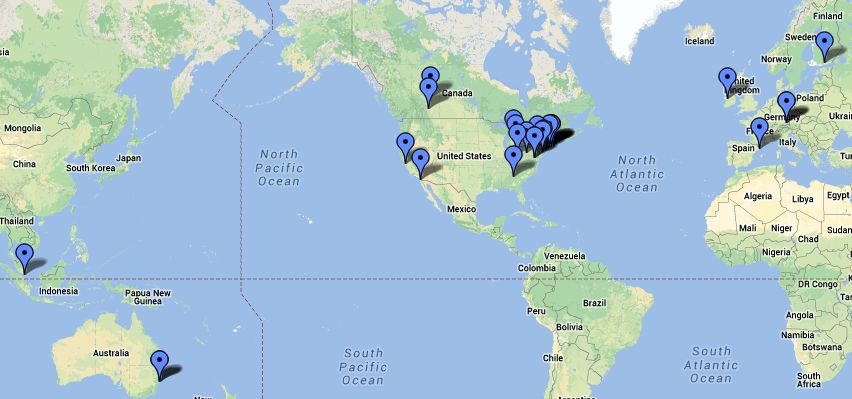
Sushil Kumar Tomar joins a large group of Indian postdocs from USA featured so far in this blog. Find him and 26 others in our interactive Away from home map pictured below and updated every Wednesday. Please feel free to suggest names of postdocs from countries and disciplines we haven’t covered yet.

AFH map updte22

Away from home: Engineering stem cells and vaccines

Every Wednesday, our ‘Away from home’ blog series features one Indian postdoc working in a foreign lab recounting his/her experience of working there, the triumphs and challenges, the cultural differences, what they miss about India, as well as some top tips for postdocs headed abroad. You can join in the online conversation using the #postdochat hashtag.

Our postdoc blogger today is Ankur Singh, an IIT-Bombay alumnus and a postdoc in Mechanical Engineering and the Parker H. Petit Institute for Bioengineering and Bioscience (IBB) at Georgia Tech, USA. Ankur is preparing for an exciting stint in academia as an assistant professor in the Sibley School of Mechanical and Aerospace Engineering at Cornell University.

Ankur Singh loads a biomaterial vaccine into a syringe.

Ankur Singh loads a biomaterial vaccine into a syringe.{credit}Beverly Barrett{/credit}

Merging disciplines: engineering and medicine

I was born and brought up in India where the education system is still traditional. The society in general and family in particular expects you to choose between engineering and medicine. Mine was no different. Combining the best of both worlds in the literal sense, I chose engineering and went on to apply it to medicine.

My undergraduate training in Biochemical Engineering and Biotechnology originally motivated me to make the next generation wine and beers using engineered microbes and agriculture produce in India. But someone close to me suggested in jest: why ruin lives, try saving some! This changed everything for me. I qualified in the Graduate Aptitude Test in Engineering with an national rank of 13 and chose IIT-Bombay for its outstanding biomedical engineering programme, with eminent scientists working at the interface of engineering and cancer biology, neuroscience, and cardiac electrophysiology.

IIT-Bombay and working with Prof. Rinti Banerjee towards my M.Tech have been the monumental milestones of my life in carving out the scientist inside me. The working hours at IIT-B were intense and the institute provided a hi-tech research environment which gave me an opportunity to realise how materials-based drug delivery platforms work to cure diseases like cancers. Many of my friends and family urged me to for pursue biomedicine given that the field was under-represented in India at that time, but I followed my heart.

Personalised medicine

I moved to the US in 2006 to gain experience in two prime emerging areas of research — stem cells and engineered vaccines. In my postdoc at Georgia Tech, I worked with a special type of stem cell called the human induced pluripotent stem (iPS) cells,which can be derived in the lab by reverting the human adult skin, blood, or even urine but behave like embryonic stem cells to form any mature cell in the body. Derivation of these cells is a non-trivial process and requires state-of-the-art culture facilities like the multi-million dollars funded Stem Cell Engineering Center (SCEC) and the Parker H. Petit Institute for Bioengineering and Bioscience (IBB) at Georgia Tech, where I did a significant part of my research work (published recently in Nature Methods).

Working in IBB, where my postdoc advisor Andrés García’s lab is housed, has been a unique experience. Faculty of most disciplines (biology, engineering, medicine, physics, chemistry) are housed under the same roof in this hi-tech building along with some of the finest biomedical research equipment. These resources have helped me establish connections with my peers and foster transdisciplinary collaborations, which I found was difficult to do in India where I had to travel for two hours in Mumbai local trains and buses to reach the collaborative institute outside Mumbai. One of the great things I have enjoyed living and working here is the mixed culture and the global talent pool that the US is able to draw.

A postdoc is a temporary position and several institutes in the US (like Georgia Tech) offer competitive salaries and benefits along with subsidized health care, retirement planning, and childcare. However, a major downside is the high level of competitiveness among the postdocs and you literally have to be on your toes to publish, protect ideas and grow. I have also struggled in finding fellowship opportunities similar to those accessible to US citizens. This is sometimes disheartening and could be of potential concern if your advisor runs out of money.

I worked with Prof. Krishnendu Roy (’93 IIT-Kharagpur) for my Ph.D. in biomedical engineering at the University of Texas at Austin to develop biomaterials based vaccine platforms that could be used to engineer immunity. Among the peers, there was a big respect for IIT students — I was praised for my mathematical abilities as an engineer, and yet questioned for my knowledge of biology, something attributed to the misconception about the education system in India. When I started my work in Texas I realised that while we had a sustainable research environment at IIT-Bombay, there was more government funding to support research in the US. I did not have to wait for several weeks for research material to arrive from vendors. There were well-established state-of-the-art core facilities with some of the best imaging, testing and analytical tools to support biomedical research. These helped me significantly to achieve my goals.

On the move

I have been fortunate to live in some of the best cities in the nation — Austin and Atlanta — and now moving to upstate New York, known for its incredibly beautiful landscapes and notoriously cold weather. My wife Shalu (’05 IIT-Bombay and a biomedical scientist) and I often miss India — our parents, siblings, cousins — and celebrating festivals with them. Although technology cannot really replace the human touch, the warmth and blessings, it still forms the best alternate when you want to pursue your dreams.

Into academics

My strong research interest and interaction with peers in the field motivated me to become a professor in the biomedical field. I am starting as an assistant professor in the Sibley School of Mechanical and Aerospace Engineering at Cornell University, an Ivy League research university in upstate New York. I am extremely excited about this transition to the faculty position and am currently in the process of setting up my research lab — Immunotherapy and Cell Engineering Lab (ICEL). Moving forward, I realize the initial years of a tenure track faculty position are going to be highly demanding as I set up my research lab, hire students and postdocs, travel, and balance my life to concentrate on my family —  my wife, daughter, and parents in India. The current recession puts most of the researchers on the edge of economic precipice, but we are in the same boat enjoying the unique funding situation around the globe.

For aspiring postdocs

Finding a postdoc position is easy. Finding a great postdoc position is rather tricky and very tough. My recommendation to aspiring trainees is to work hard, publish well, and do your homework before you accept a postdoc position. Look for publications, mentoring style, funding, and where the past trainees have transitioned to. You need to be clear on what you want out of that postdoc training. This phase of your life is extremely crucial, fundamental to your long term future. I also suggest actively looking for funding opportunities and attending conferences to establish connections.

Find Ankur Singh and 25 Indian postdocs featured so far in this blog in our interactive Away from home map pictured below and updated every Wednesday. Please feel free to suggest names of postdocs from countries and disciplines we haven’t covered yet.

AFH map update21

Away from home: Marital science bliss

Every Wednesday, our ‘Away from home’ blog series features one Indian postdoc working in a foreign lab recounting his/her experience of working there, the triumphs and challenges, the cultural differences, what they miss about India, as well as some top tips for postdocs headed abroad. You can join in the online conversation using the #postdochat hashtag.

Today,  talking about how marriage catapulted her further into her scientific pursuits is Atrayee Banerjee. Atrayee has a Masters in Environmental Management from the Indian Institute of Social Welfare and Business Management (IISWBM), Calcutta, India and was a postdoctoral researcher at the University of Missouri-Rolla. Right now, she works at the National Institute of Health (NIH) in Maryland, USA.

Atrayee Banerjee

Atrayee Banerjee

Science in the family

I grew up in an environment where education was given the top priority. My parents, specially my father, a Mechanical Engineer by profession always wanted me to study science, it started like that.  But then I got more and more interested in biology and the intricacies of it. However, with constant learning and support from my husband (a faculty member in a prestigious private university in the US), science became a part of our daily life, during my PhD here in US.

Amalgamating experiences

I completed a Masters in environmental management from Indian Institute of Social Welfare and Business Management (IISWBM), Calcutta.  I went to Texas A&M University to pursue a PhD in toxicology, where I worked on alcoholic liver diseases and then joined the University of Missouri-Rolla as a post-doctoral fellow. There, I worked on understanding the role of HIV proteins and addictive drugs in the blood-brain barrier permeability.

Currently, I am working at the National Institute of Health (NIH) in Maryland as an IRTA Fellow in the National Institute of Alcohol Abuse and Alcoholism (NIAAA). I focus on understanding the mechanism of progression of alcoholic and non-alcoholic fatty liver disease in HIV patients. My work at NIH is an unique amalgamation of my previous experiences, and thus provides me with an opportunity to carve a niche for myself.

The work-life balance

The best thing about working at NIH is you get to work with the brightest people in your field and have access to the state of the art technologies. I have always found my colleagues to be forthcoming, helpful and collegial. In my present laboratory, I have two fellow scientists who help me with my experiments. Since I am a mom to a two-year old, it is very difficult for me to work odd hours.  My mentor has been very understanding and has always helped to balance my work-family priorities.

Incidentally, my husband was also getting a PhD in mechanical engineering from Texas A&M University and we started our married life in a very academic environment. Life was sometimes a challenge, but looking back at what the two of us have achieved in our careers this far, I believe it has been very worthwhile.  There have been several proud moments in my career, most notably when I received the Novartis Fellowship from the Society of Toxicology in 2007. The Novartis Fellowship is extremely prestigious and is awarded to one-graduate student every year, from a huge pool of applicants.

Ask plenty of questions

My tips for postdoc aspirants are:

1. Make sure you know what you are getting into, what the expectations are and how long the position is funded. Ask plenty of questions, especially about your long term career growth, and make sure that your mentor is invested in your career and wants you to be successful in life and not be a life-long post doc.

2. US is a land of opportunities but you need to be careful that you end up in the right place with the right person.

3. You would need to follow the mantra of “publish or perish”.

4. Most importantly, plan to attend conferences so that you can network with people.  I have been lucky to have worked with people who are extremely helpful and allowed me to publish extensively.

To all young people reading this blog, please keep in mind that education is a marathon race. Do not let a few individuals discourage you or a few lack of opportunities distract you from your ultimate goal. We never know what life has in store for us but please be true to yourself and make use of the opportunities that life presents to you. Hard work and perseverance will always pay off. Do not let negativity surround you and stop you from achieving things in life.

Miss long holidays

In the US there are very few public holidays, so I sometimes miss the long Christmas or Puja vacations back home.

I miss Indian food, the clothes and the constant buzz of people. India is both perfect and imperfect in its own way and I miss the warmth of  family, neighbours and friends that I enjoyed back at home. I believe I cherish them more now than I used to when I lived back in India.

I would love to come back and start working in India. However, both my husband and I have advanced (PhD) degrees and it may be difficult for us to find suitable lines of work and good opportunities at the same place in India. But we would certainly like our 2.5 year old son (Adwik) to grow up to learn and appreciate his culture.

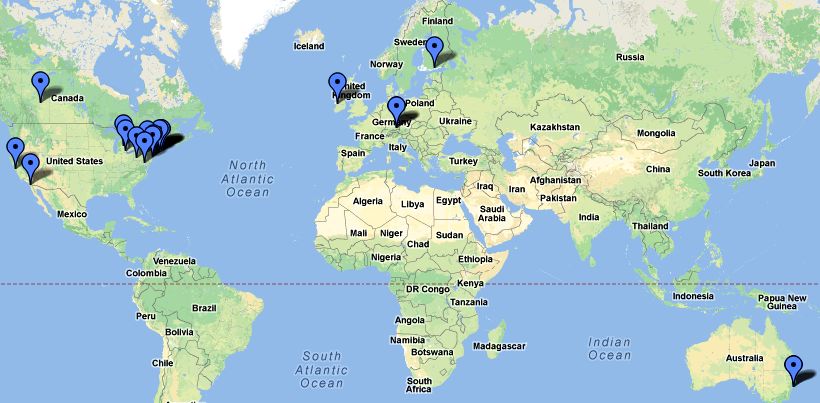
Atrayee Banerjee joins the large number of Indian postdocs from the east coast of US in our interactive Away from home map. Find her and 21 other Indian postdocs from around the world in the map pictured below and updated every Wednesday. Please feel free to suggest names of postdocs from countries and disciplines we haven’t covered yet.
 AFH map update17

Away from home: Mastering industry-academia links

Every Wednesday, our ‘Away from home’ blog series features one Indian postdoc working in a foreign lab recounting his/her experience of working there, the triumphs and challenges, the cultural differences, what they miss about India, as well as some top tips for postdocs headed abroad. You can join in the online conversation using the #postdochat hashtag.

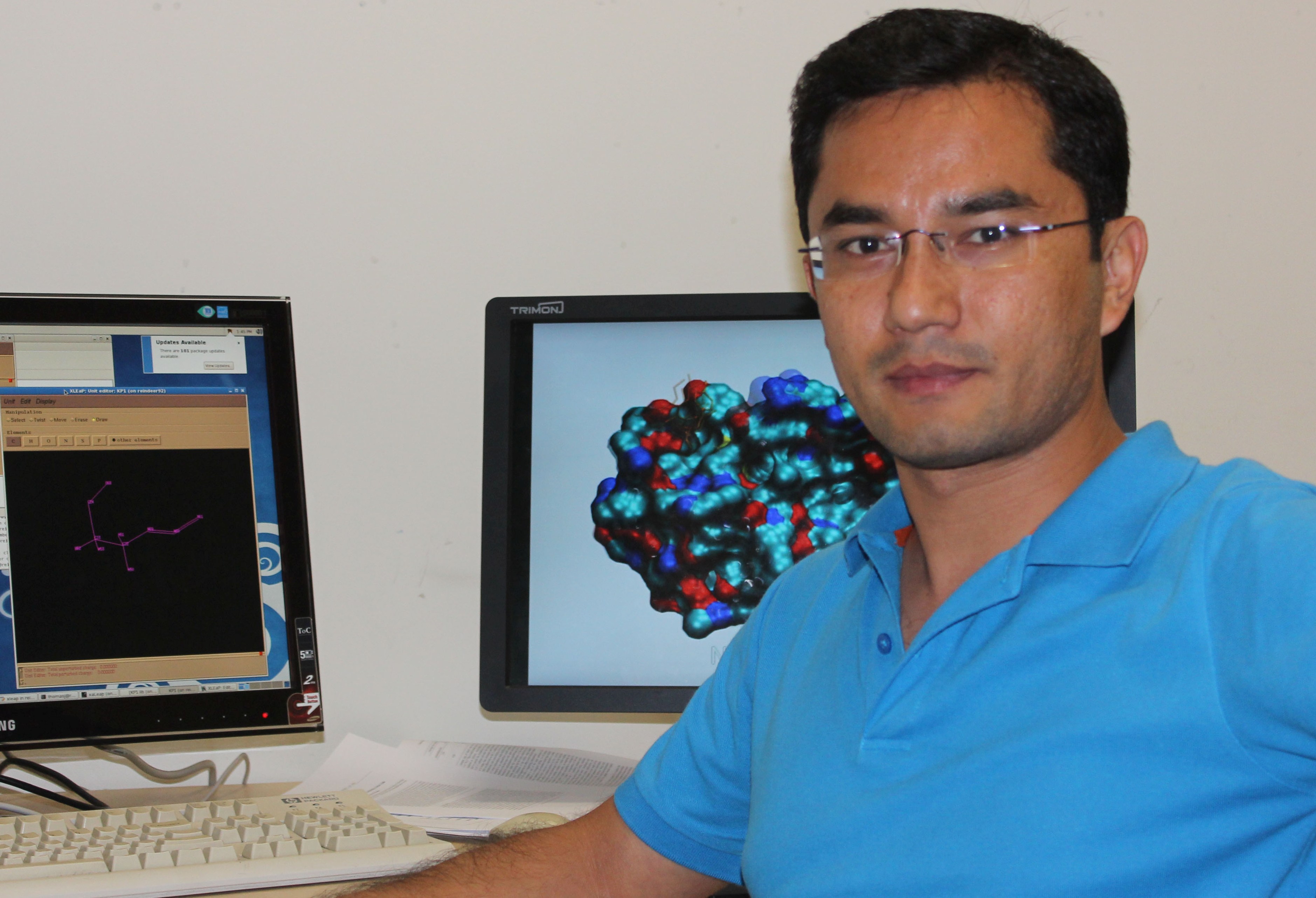
Today we have Dilraj Lama, a PhD from the Indian Institute of Technology, Kanpur and a postdoctoral research fellow at the Bioinformatics Institute, A*STAR, Singapore. Dilraj is having a great time with biological modelling and simulation experiments as he seamlessly blends in with the local community owing to similar facial features. Exposed to a healthy multi-disciplinary work team, he is also learning important lessons in industry-academia linkages early on in his research life.

Dilraj Lama

Dilraj Lama

Switching between sciences

Learning has always been like a journey for me. I opted for mathematics over biology as my major during schooling, went for engineering thereafter, and guess what? I did a PhD in biological sciences! So it has never been a conscious effort on my part to be in any particular area. Looking back, I was always a bit curious and that might have driven me towards a carrier in science.

Molecular modelling

After completing a PhD from the Indian Institute of Technology, Kanpur, I was looking for an appropriate laboratory for postdoctoral training and Dr. Chandra Verma’s work at the Bioinformatics Institute, A*STAR, Singapore, caught my attention. He uses a computational approach corroborated with extensive experimental collaboration to address biological problems and he has made significant scientific contributions over the years. I was very keen to join him and today I work as a postdoctoral researcher with him.

My primary focus is designing and modelling of peptide-based inhibitors against biomolecular targets whose malfunctioning gives rise to pathological conditions. I use the computational approach mostly involving molecular modelling and simulation for my research. The work is done in extensive collaboration with an experimental group which complements our approach and validates the designed models. We are working towards developing high-affinity inhibitors which are biologically active and hence will have the potential to expand into drug molecules.

Multi-discipline potpourri

We have people working in different areas which provides an excellent opportunity to broaden my scientific skills. The work culture in the group is very positive. Besides, we also get to interact extensively with other scientific groups, meet eminent scientists, organise talks and events, all of which are an integral part of postdoctoral training.

Singapore is very close to home which is very comforting. It has an exceptional infrastructure, cleanliness, warm people, boundless cuisines, great tourist destinations and is a prime location to explore South-East Asia. I am also told that it is the sixth least corrupt nation in the world. Now, how cool is that!

Making the switch

It was a very smooth transition for me, primarily because of the people I came in contact with during the initial days. There have been several interesting incidents but one of them stands out. I come from the north-eastern part of India where the physical features of people are similar to Singapore locals. During my search for an apartment with an Indian agent (who looked more Indian to the locals), the owner asked me for my badge mistaking me for the agent and him for the prospective tenant. It was hilarious and we had a hearty laugh when the matter was clarified.

Singapore is overall a great place to be. Yes, it is not perfect. Naturally there are issues at hand.  But I believe it’s all about how you deal with it and make it work for you.

Successful industry-academia linkages

One of the things that post-doctoral researchers can learn from training in Singapore is the intricate worki culture between industry and academia. It is a very nice place for collaborative research since one of the prime conditions for funding here is that the work has to be cooperative in nature. It will also be an attractive destination for people who are interested in product development also known as applied science.

Home is where the heart is

Home is where the heart is, they say. I stand by that and nothing can substitute the feeling of being in close company of your near and dear ones. I do look forward for an opportunity to come back and work in India.

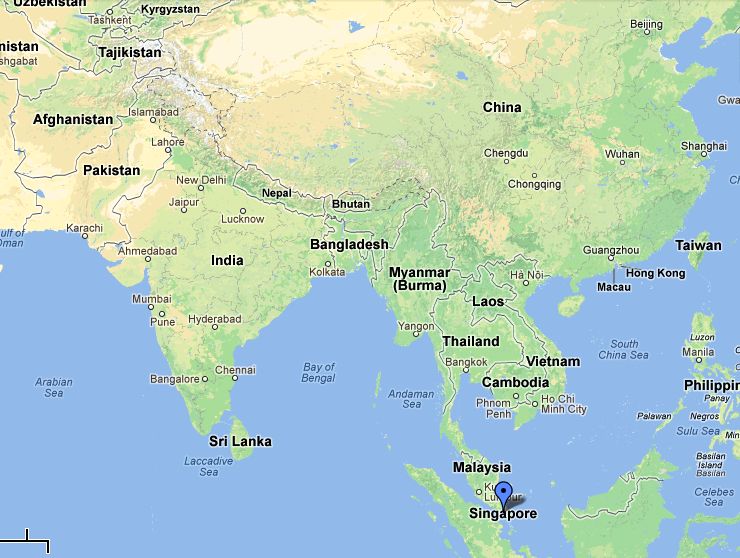
Dilraj Lama gets us the first flag post from Singapore (in fact, from the whole of Asia!) in our interactive Away from home map. Find him and 20 other Indian postdocs from around the world in the map updated every Wednesday (a snapshot showing Dilraj Lama’s flag below). Please feel free to suggest names of postdocs from countries and disciplines we haven’t covered yet.

AFH map update16

Away from home: April round-up

Our ‘Away from home’ blogging series features one Indian postdoc working in a foreign lab every Wednesday. The posts recount the experience of these postdocs — the triumphs and challenges of lab life, the cultural differences, what they miss about India — and, most importantly, offer some useful tips for postdocs headed abroad.

The series has had an excellent response from the scientific and research community worldwide. For our regular readers, and those who are just joining us now, we provide a summary of the month’s entries, including an interactive  map pinpointing the labs these postdocs are based. All these interesting entries and summaries can be found under the Away from home’ category of the Indigenus blog.

We will continue to update the map each Wednesday and hope that you will join in the online conversation using the #postdochat hashtag. 

In April 2013, we heard three great stories from diverse parts of the world — Australia, Finland and USA. Here’s a summary of the month’s wonderful entries.

Living with epigenetics & ‘strine’

For Amita Limaye, who worked at the National Centre for Cell Science in Pune, India before moving in as a postdoc to the Garvan Institute of Medical Research, Darlinghurst, the multiculutral city of Sydney is a welcome change. Getting used to the famous Aussie twang, however, remains a challenge for her! Her dream is to bridge the gap between epigenetics and translational research.

Coping with Northern lights & darkness

Bhupendra Verma is a PhD from the Indian Institute of Science in Bangalore, India and is working as a  postdoctoral researcher at the University of Helsinki, Finland right now. Bhupendra gives postdoc aspirants some brilliant tips to chose their lab as he slowly comes to terms with the harsh weather, the beautiful Northern lights and the long periods of darkness in Helsinki.

‘Indian academics must welcome global desis’

Suvasini Ramaswamy shares her alma mater with Bhupendra. She is also a PhD from the Indian Insititute of Science, Bangalore and  works as a post-doctoral fellow at the Salk Institute for Biological Studies, San Diego, California, United States. She tells us about her work in stem cells and regenerative medicine, the enviable weather in La jolla that keeps her going and that inherently Indian phenomenon of ‘jugaad’ (roughly translating to ‘a creative quick-fix’) — something she says makes Indians rustle up innovations in their backyard. Suvasini’s flair for science communication also saw her author this piece for Nature India some time back.

We love the way our Away from home interactive map, pictured below and updated every Wednesday, is dotting up with some enriching Indian postdoc experiences — we have 20 flags on that map now! Stay tuned as we add more from around the world. Please feel free to suggest names of postdocs from unusual countries and disciplines we haven’t covered yet.

AFH-Apr