Nobel, Fields Medal winners launch campaign against EU research austerity

European Nobel and Fields Medal prizewinners have launched a continent-wide campaign to protect European Union (EU) research funding from austerity.

German biologist Christiane Nuesslein-Volhard; France’s Serge Haroche, this year’s co-winner of the Nobel prize for physics; geneticist and president of the Royal Society Paul Nurse; and 47 other leading researchers have signed an open letter calling on European leaders to defend EU research funding.

At a time when Brussels — itself recently awarded its own Nobel gong for peace — is ordering governments across the 27-member bloc to slash public spending, a number of national capitals are kicking back and saying that if they need to tighten their belt domestically, then the EU needs to as well.

And the proposed €90 billion (US$116 billion) in funding for the union’s flagship seven-year research programme, Horizon 2020, is one of the items on the chopping block. At a special summit in Brussels on 22 November, national leaders will consider the EU’s overall funding for 2013–18.

The rotating EU presidency — in charge of shepherding the negotiations and now held by Cyprus — at the end of September set out a basis for negotiations that would see the proposed EU budget revised downwards across all areas, which would include Horizon 2020.

The Cypriot proposal has “particularly worried” scientists, Wolfgang Eppenschwandtner, the coordinator of the Initiative for Science in Europe, the platform of European learned societies and scientific organizations that initiated the campaign, told Nature.

“Science can help us find answers to many of the pressing problems facing us at this time: new ways to harness energy, new forms of production and products, improved ways to understand how societies function and how we might order them better,” the Nobel and Fields laureates write in the letter, which was published in 33 newspapers across the bloc on Tuesday, including in the Financial Times, Le Monde and the Frankfurter Allgemeine Zeitung. Continue reading
Researchers issue animal-research transparency declaration

Responding to a significant drop in support for the use of animals in research in the UK, the country’s leading research universities, medical charities and drugs companies today launched a new transparency initiative aimed at winning over members of the public to the need for animal research.

A total of 15 universities, four pharmaceutical firms, and groups such as Cancer Research UK, Parkinson’s UK and the Motor Neurone Disease Association issued a declaration on openness in the use of animals in medical research.

“Where possible, we use cells grown in a lab, computer models and human volunteers. When this isn’t possible, research may involve animals,” the declaration reads. “When we need to use animals, we strive to reduce the number needed, and seek to develop viable alternatives.”

“Confidence in our research rests on the scientific community embracing an open approach and taking part in an ongoing conversation about why and how animals are used in research and the benefits of this.”

The signatories welcome public scrutiny of their work in the building of an ethical framework that they say now delivers high welfare standards and only uses animals when there is no other option. The UK was the first country in the world to implement laws protecting animals – the 1822 Act to Prevent the Cruel and Improper Treatment of Cattle.

The coalition , making the declaration alongside UK universities and science minister David Willetts, committed itself to the development of a ‘concordat’ that will establish a set of principles of transparency in the realm of animal research.”

An Ipsos Mori survey of UK public attitudes towards research involving animals, released the same day, showed that that 63% of people support animal experimentation for all types of medical research where there is no alternative – a drop from the 73% that agreed with this statement in 2010.

The same poll also showed that 43% think that the UK’s rules on animal experimentation are well enforced, down from 56% two years ago. Continue reading

The TB drugs don’t work

Drug resistant TB is on the rise around the world.{credit}Reuters{/credit}

The good news is that tuberculosis prevention efforts appear to have broken the back of the spread of the disease, according to the World Health Organisation’s latest annual report on the scourge, with new cases of TB falling by 2.2% between 2010 and 2011. The mortality rate has decreased 41% since 1990 and access to TB care has expanded considerably since the mid nineties, when tuberculosis was declared a global emergency by the UN body, with the WHO estimating that some 20 million lives have been saved since 1995.

The bad news is that strains of TB that are resistant to the two most effective drugs, or what is known as multi-drug resistant tubercuolosis (MDR-TB), are posing a greater challenge than previously thought, with the WHO warning: “Drug-resistant TB threatens global TB control.”

When the drugs don’t work, patients require second-line drugs that are more toxic, with more serious side effects and that take many months longer to work. In the worst cases, of extensively drug-resistant TB (XDR-TB), TB bacteria are also no longer susceptible to any of the second-line anti-TB injectable drugs.

Globally, some 3.7% of new cases of TB and 20% of previously treated cases are multi-drug resistant, up from 2% in 2000. An estimated 9% of these cases are XDR, now reported in 84 countries. Continue reading

EU reversal on biofuels policy kicks off fresh battle

The frequently caustic battle over European biofuels policy has kicked off again this week as the European Union is set to reverse gear and end years of support for the controversial energy source.

Environmental groups, development non-governmental organizations (NGOs) and the biofuels sector were surprised in September when a leak of a long-delayed European Commission legislative proposal suggested that Brussels now wants to halve targets and shift support to more advanced fuels that it says do not displace food farming.

“Biofuels that do not lead to substantial greenhouse gas savings (when emissions from indirect land-use change are included) and are produced from crops used for food and feed should not be subsidised [after 2020],” reads a mid-October draft of the proposal seen by Nature.

In 2003, Europe embraced its first biofuels subsidies, and three years ago the EU adopted targets aiming for 10% of all transport fuels to come from renewable sources by 2020, in effect a target for crop-based biofuels. The target may now be reduced to 7–8%.

The two departments in the commission responsible for drafting the policy adjustment now want to cap the amount coming from food crops at 5% and shift the emphasis from land-derived feedstocks entirely to ‘second-generation’ biofuels coming from municipal waste, algae and agricultural residues (such as stalks, nut shells, husks and cobs).

With biofuels already accounting for 4.5% of transport fuels in Europe, the move would allow very little room for growth, although sources familiar with internal commission discussions report that the departments ultimately shied away from any strict ‘carbon accounting’ for fuels, and went for a simpler cap instead.

They did not believe this to be politically feasible, as it could in principle reduce the use of biofuels much further unless they could be shown to produce emissions savings over fossil fuels. Continue reading

MacArthur Foundation 2012 ‘genius grants’ announced

The US-based MacArthur Foundation selected its annual crop of MacArthur Fellows — US citizens working in any field who are awarded ‘no-strings-attached’ grants, popularly referred to as ‘genius grants’, of US$500,000, paid out in quarterly instalments over five years. This year, 10 of the 23 fellows are scientists.

They are:

Maria Chudnovsky, a mathematician at Columbia University in New York, who focuses on developing the conceptual foundations connecting graph theory to other major branches of mathematics, such as linear programming, geometry and complexity theory.

Eric Coleman, a geriatrician at the University of Colorado in Denver, whose work focuses on the miscommunications and errors that happen when patients leave hospital for seniors’ homes or other sub-acute care facilities. Coleman has quantified the scope of the problem and devised predictive metrics and improvements for seamless transfers of care that have been adopted internationally.

Olivier Guyon, an optical physicist and astronomer at the University of Arizona in Tucson, who invents and designs new telescope technologies that reduce the engineering and cost obstacles in the search for exoplanets.

Elissa Hallem, a neurobiologist at the University of California, Los Angeles, who investigates the physiology and behavioural consequences of odour detection. Her work on how parasitic nematodes use carbon dioxide detection to locate host organisms to invade could help reduce parasitic infections in humans.

Sarkis Mazmanian, a medical microbiologist at the California Institute of Technology in Pasadena, who explores the symbiosis between humans and their gut microbiome, aiming to find new therapies and preventative treatments for disease. He has published three times in Nature.

Terry Plank, a geochemist at Columbia University, who explores the complex interplay of thermal and chemical forces that drives plate tectonics, the science of which is still very much in its early stages. Her work has appeared three times in Nature or Nature Geoscience.

Nancy Rabalais, a marine ecologist with the Louisiana Universities Marine Consortium in Chauvin, who investigates hypoxic zones — aquatic areas with low dissolved oxygen levels commonly known as ‘dead zones‘ — that have expanded dramatically in the Gulf of Mexico and many other coastal systems around the globe, exploring hypoxia dynamics and their impact on different, interconnected ecosystems.

Daniel Spielman, a theoretical computer scientist at Yale University in New Haven, Connecticut, and winner of the Nevanlinna Prize for contributions to mathematical aspects of computer science, who has investigated optimization algorithms and the application of linear algebra to solve optimization problems in graph theory.

Melody Swartz, a bioengineer at the École Polytechnique Fédérale de Lausanne in Lausanne, Switzerland, who looks at the mechanisms controlling the movement of biologic fluids through tissue, with findings that suggest that beyond cell surface markers and chemical signals, direct mechanical forces also have a key influence on tissue vascularization. Her work has been published in Nature Reviews Immunology, Nature Reviews Molecular Cell Biology, Nature Protocols and Nature Reviews Cancer.

Benjamin Warf, a paediatric neurosurgeon with Boston Children’s Hospital in Massachusetts, who pioneered an alternative, low-cost treatment for hydrocephalus in the developing world using modern endoscopic techniques based on a surgical approach first attempted in the early twentieth century.

Massive shrinkage in African great ape habitat since 1990s

{credit}Derek Keats{/credit}

Great-ape habitat in Africa has shrunk precipitously in the past two decades, according to the first continent-wide survey of the state of environmental conditions suitable for the animals.

Gorilla habitat has been hit particularly hard, researchers have concluded. Since 1995, Cross River gorillas have lost 59% of their habitat; eastern gorillas have lost 52%; and western gorillas have faced a 31% loss.

Bonobos have suffered a 29% loss in their habitat; central chimpanzees have experienced a 17% shrinkage, and western chimpanzees, 11%.

According to a paper published this week in the biogeography journal Diversity and Distributions, the areas that underwent the greatest habitat loss were found in the centre and east of the Democratic Republic of the Congo, western Equatorial Africa and the upper Guinean forest in Liberia.

The one apparent bright spot for humankind’s closest relatives came in habitats suitable for Nigeria-Cameroon chimpanzees and eastern chimpanzees, which saw almost no change. But even here, the researchers point out, this lack of decline may be attributable to habitat loss in east and west Africa having already been substantial by the 1990s. Continue reading

South Korea aims to be second nation to engage in ‘scientific’ whaling

South Korea has announced that it hopes to launch a programme of ‘scientific’ whaling, a development that would make it the second such country to engage in the practice alongside Japan.

The South Korean delegation to the 64th conference of the International Whaling Commission (IWC), now meeting in Panama, said on Wednesday that the move is necessary to assess the size of the populations of minke whales off the Korean coast.

“Since 2001, the Korean government has been conducting a non-lethal sighting survey of the whale population to assess the status of the stock in Korean waters,” Joon-Suk Kang, the head of the delegation told the meeting in a prepared address. “But it has turned out that this survey alone cannot identify the different whale stocks and has delayed the proper assessment of the resources.”

Seoul says that it cannot correctly identify the feeding habits of the animals or the impact of the whale population on fisheries.

The delegation did not state how many whales it aimed to catch, but its research programme will investigate minke whales migrating off the Korean peninsula. One of the populations of minke whales in the region comes from the depleted ‘J-stock’.

State signatories to the International Convention for the Regulation of Whaling do not need permission from the ICW to begin scientific whaling, and the ICW is in any case a voluntary organization. The move can be taken unilaterally, although Seoul said that any such whaling will not be launched before the country’s research plan had been considered by the IWC’s scientific committee.

Anti-whaling groups question the scientific legitimacy of such whaling and accuse Japan of using the scientific whaling loophole in the convention as a cover for a commercial hunt. Continue reading

UK fracking safe but US operations marred by ‘poor practices’

Hydraulic fracturing — or ‘fracking’, as it is popularly known — presents a “very low risk” of contaminating drinking water or triggering forceful earthquakes in the United Kingdom, and can safely be performed as long as companies engage in different practices from those that have produced concern in the United States.

Fracking attracts protests around the world.{credit}ProgressOhio via Flickr{/credit}

This was the conclusion of an independent review of the controversial practice — in which a mixture of water, sand and proprietary chemicals are injected under high pressure into wells — published by the Royal Society and the Royal Academy of Engineering today. The method fractures shale, creating fissures that allow previously inaccessible natural gas to flow more easily out of the well.

“The most common areas of concern, such as the causation of earthquakes with any significant impact or fractures reaching and contaminating drinking water were very low risk,” said Robert Mair, the chairman of the review’s working group.

Recent controversy over the practice was highlighted by the 2011 release of Gasland, a North American documentary notable for its clips of people lighting running tap water on fire. The director argued that fracking was contaminating drinking water with methane.

In June last year, France banned le fracking, and last month, Vermont became the first US state to outlaw the practice. Moratoria have been imposed in Pennsylvania, New York, Quebec, South Africa and Bulgaria.

However shocking images of fireballs in kitchen sinks may be, the UK report said that none of the claims of contaminated water have shown evidence of chemicals found in hydraulic-fracturing fluids and that water wells in areas of shale-gas extraction have historically shown high levels of naturally occurring methane. This methane already in water wells may, however, be “mobilized by vibrations and pressure pulses associated with the drilling”.

Earth tremors caused by the practice are also likely to be of smaller magnitudes than England normally experiences or those related to coal-mining activities.

Last November, a report commissioned by energy firm Cuadrilla Resources based in Staffordshire, UK, concluded that it was highly probably that shale-gas drilling triggered two small tremors in Lancashire, but that this was caused by the unusual geology of the well site. The report from the Royal Society and Royal Academy of Engineering advised that seismic-risk assessments should be carried out at every site and real-time seismic monitoring employed so that operators can shut down activities promptly.

The investigators suggested that most environmental concerns springs from “improper operational practices” in the United States. Continue reading

Bahrain and Syria jail medical workers to undermine protests

Bahrain and Syria are imprisoning doctors for treating wounded anti-regime protesters, a tactic that aims at extinguishing medical neutrality in order to undermine anti-regime protests, the International Human Rights Network of Academies and Scholarly Societies has warned.

On Thursday 14 June, a group of Bahraini physicians lost an appeal against lengthy convictions for alleged violent opposition activity, amongst other charges, accusations that the network, which campaigns against human rights violations and unjust imprisonment of scientists, scholars, engineers, and health professionals, say were trumped up and intended to intimidate health professionals.

Doctors brought in by the Bahrain Independent Commission of Inquiry, an international expert group established in June last year, examined eight of the accused and found evidence of torture, including electric shocks and severe beatings. The others allege that they, too, were tortured to extract “confessions”, but independent doctors have not been permitted to examine them.

“By denying them medical care, the regime clearly doesn’t want the wounded protesters to survive,” the network’s executive director, Carol Corillon, told Nature. “If protesters know they won’t receive medical treatment, they’ll think twice about heading into the streets.”

“This is a flagrant violation of medical neutrality,” she added. Continue reading

Italian anti-GM group wins destruction of 30-year-old olive-tree project

Diggers uprooting olive trees

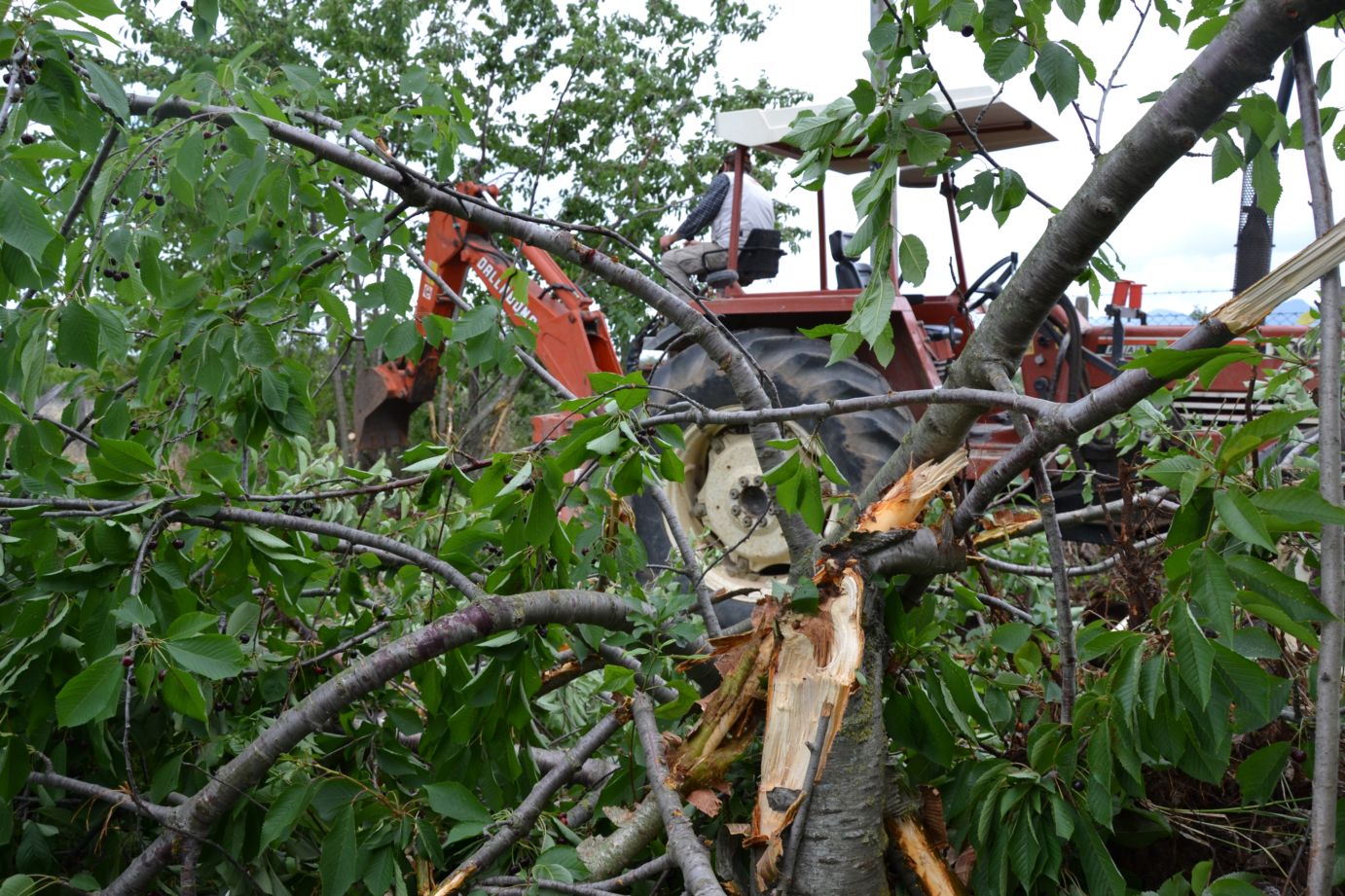
The sudden government-ordered destruction of a 30-year-old publicly-funded research project in Italy involving transgenic olive trees, cherry trees and kiwifruit vines — one of the longest-running trials on genetic modification in Europe – began on Tuesday under pressure from an environmental group.

Eddo Rugini, a plant scientist at the University of Tuscia, launched his research in 1982, aiming to find varieties that are resistant to pathogens, mainly fungi and bacteria, so as to reduce pesticide use, as well as producing shorter trees that would ease cultivation in certain Italian landscapes.

In 1998, Rugini was given permission to grow the trees. But in 2002, Italy banned all field research of genetically engineered (GE) plants. Because the trees were already growing, he was granted an extension for his work until 2008. But in 2010, a second extension to 2014 was denied by regional authorities.

On 18 May, the Genetic Rights Foundation (GRF), a domestic environmental non-governmental organization, announced that it had “exposed the existence of an experimental field of GE trees” even though government permission had long since expired. It sent a formal letter to Rugini and the local authorities demanding that they immediately dispose of the experiment, in keeping with the law. As a result, the university was ordered to destroy the trees on 12 June. Continue reading