Gold motifs from Tutankhamun’s tomb hint at Levantine influence

Photographer: Christian Eckmann

Photographer: Christian Eckmann{credit}RGZM, DAI Cairo and University of Tübingen{/credit}

Tutankhamun’s tomb is the gift that keeps on giving, it seems, as archaeologists continue to uncover new “treasures” after examining, for the first time, embossed gold applications on artifacts recovered from the famed tomb.

The objects, along with the tomb itself, were previously unearthed by English archaeologist Howard Carter in 1922 and, for decades, had been stowed away in the Egyptian Museum. Now, archaeologists from Tübingen University have painstakingly restored and analyzed the motifs adorning the tomb a century after the historical discovery. And according to their observations, the art on the motifs – images of battling animals and goats – is foreign to Egypt and betrays strong Middle Eastern, specifically levantine, aesthetic influence.

“Presumably these motifs, which were once developed in Mesopotamia, made their way to the Mediterranean region and Egypt via Syria,” says Peter Pfälzner, leader of the team of archaeologists and conservators. According to the lead archaeologist, the images from the Pharaoh’s tomb resemble those previously found on a tomb in the Syrian Royal city of Qatna, discovered during a dig in 2002.

“This again shows the great role that ancient Syria played in the dissemination of culture during the Bronze Age.”

The next step, says Pfälzner, lies in solving the riddle of how the foreign motifs came to be adopted in Egypt to begin with.

Remember Max Born – refugee scientists and a role for UK higher education institutions

Last month Nature published a Special on human migration, which included stories of refugee scientists.

This related blog comes from Leonie Mueck, writing in her personal capacity. Dr Mueck is a volunteer for Cambridge Refugee Resettlement Campaign and also Senior Editor at Nature.

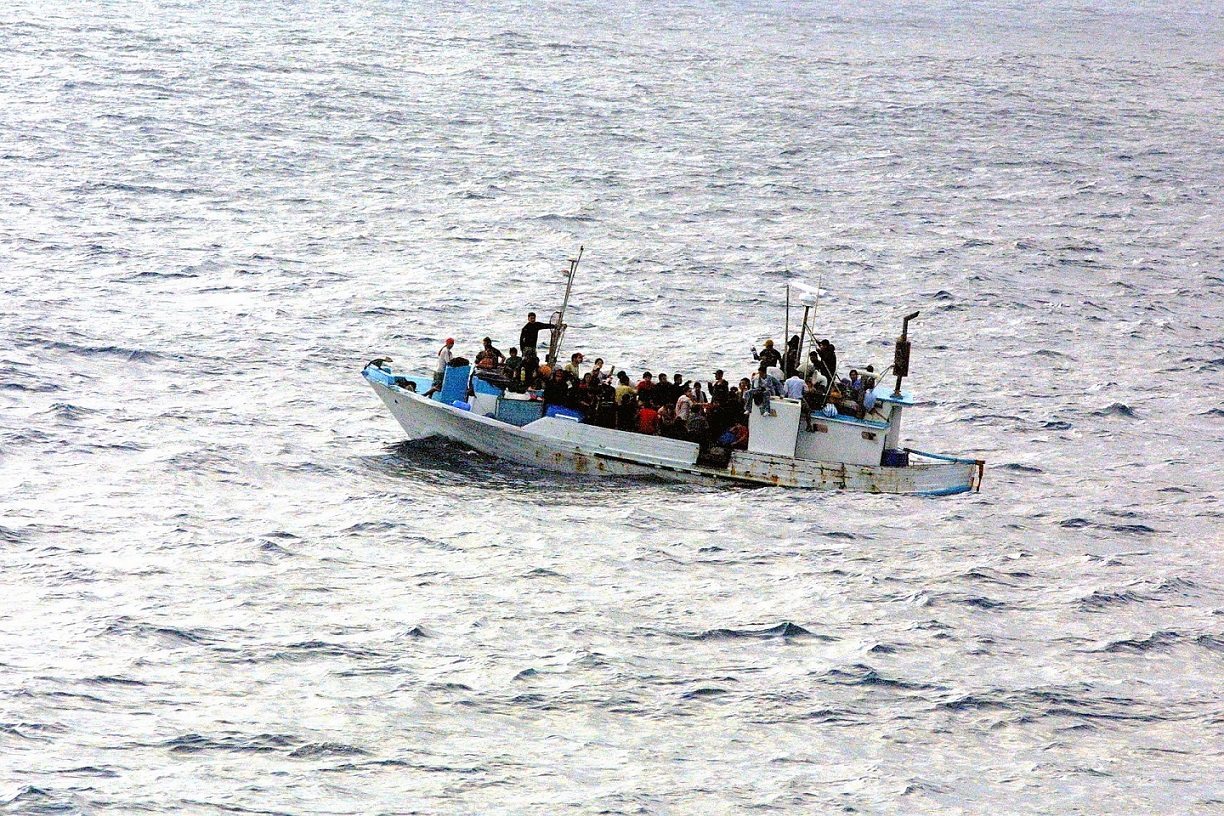
We are facing the biggest refugee crisis since the Second World War. Worldwide, more than 60 million people are seeking refuge from political persecution and war. In particular, the anguish of Syrian refugees desperately running for their lives is moving the world to tears. Already, five million Syrians have left their home country and more than seven million have been internally displaced. Images of the body of a toddler washed up on a Greek beach, of the deep furrows of fear written into the face of a father disembarking a flimsy boat in which he and his family crossed the Mediterranean, and of a badly wounded boy from Aleppo, covered in dust and blood, have been messengers of a sad and terrible conflict.
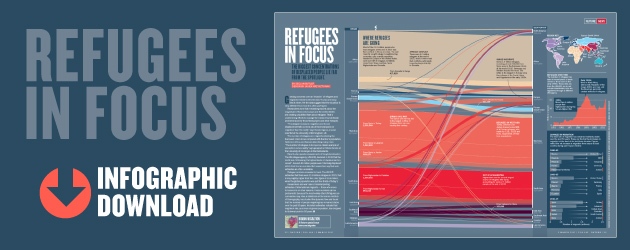
Download a PDF of the graphic from Nature

Academic solidarity

In the midst of desperation and helplessness, there are silver linings of humanity and empathy. Many ordinary citizens around Europe – and, indeed, the whole world – have joined forces to help in any way they can.

Among them are a great number of academics and students, lobbying their institutions to give sanctuary to scholars at risk and bursaries to Syrian undergraduates. “We feel a general responsibility towards helping scholars at risk.” explains Noah Azar (name changed), a Cambridge University academic. “But beyond showing solidarity, we have the goal to help rebuild a region that has historically been a centre for science and discovery.”

A lost generation

Indeed, Syria’s higher education system once comprised flourishing institutions, home to brilliant students and professors. Before the conflict, 20 per cent of youths between ages 18 and 24 were in higher education. After six years of civil war, it is less than five per cent.

As the conflict drags on, the opportunity for many young Syrians to receive an adequate education is receding.  The civil war will produce a lost generation that will lack the skills needed for the monumental and decade-long task of rebuilding the country. Researchers cannot foresee a time when they can restart their work under normal conditions.

Grassroots activism at universities

On a European level, programmes like Science4Refugees have emerged, encouraging a coordinated institutional approach by European universities to the refugee crisis that can support academics and students affected by the conflict.

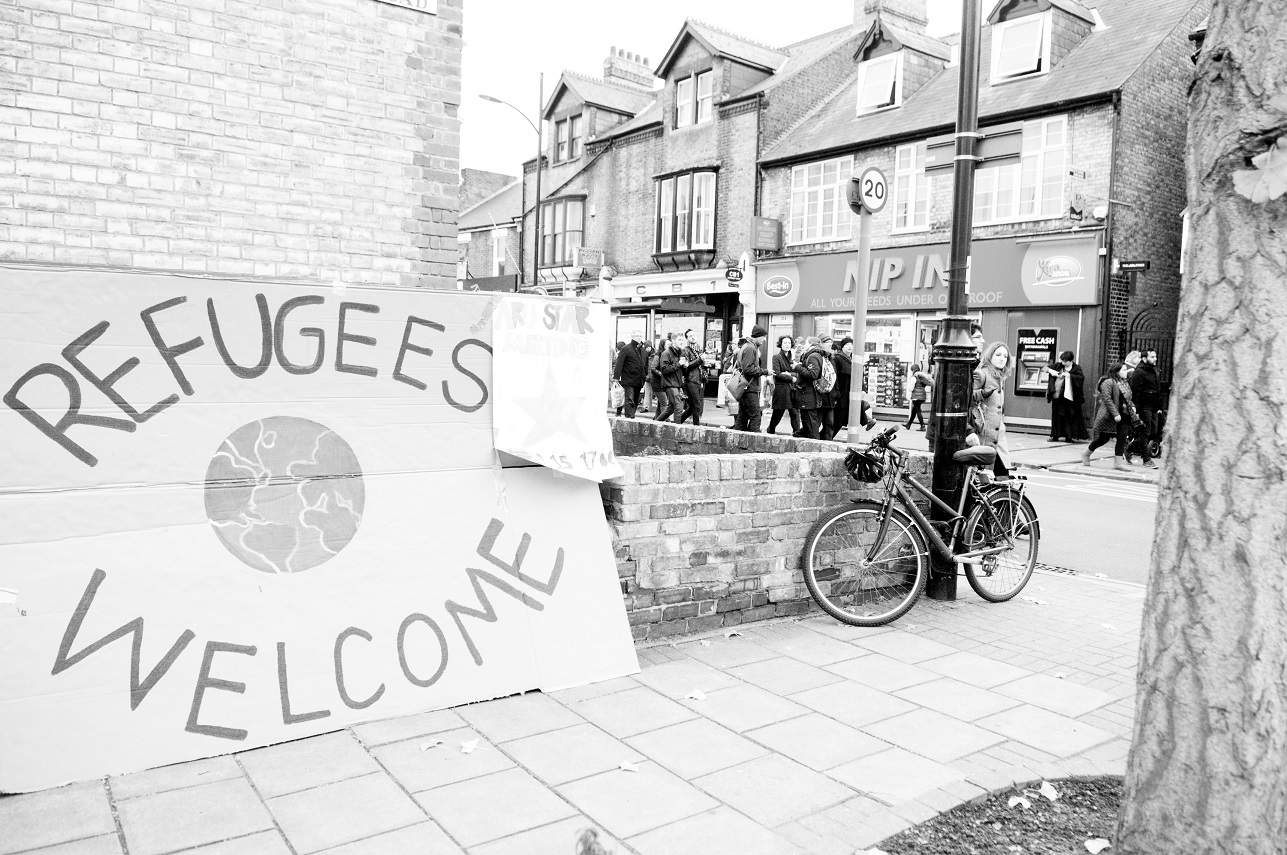
In the UK, however, the institutional response has so far been patchy. As a result, at many universities, grassroots movements of concerned academics and students have kick-started their own refugee programmes, with some notable successes. At the University of Oxford, a campaign led by biomedical engineering student Thais Roque received pledges of over £240,000 to fund scholarships for refugee students from war-torn countries. At Cambridge University, a college offered a placement to a Syrian scholar last summer after a concerned fellow took the matter into her own hands, spending countless hours convincing university officials and jumping all bureaucratic hurdles.
Cred:Chris Cellier

Azar is currently working with several Cambridge academics to bring a second refugee scholar to the university. They have partnered with CARA, the Council for At-Risk Academics. CARA was founded in the 1930s to help refugee academics from continental Europe fleeing the Nazi regime. Scholars who are persecuted in their home country can contact CARA, which then tries to secure a three-year fellowship at a UK partnering institution – but the institution needs to cover the costs. In 2016, CARA received a level of applications not seen since the 1930s, and is desperately looking for placements.

Talking to Azar, it quickly becomes clear how much grit and dedication it takes for a grassroots group to secure such a placement at their university. All university officials have been very supportive in principle, but nobody had a blueprint on how to deal with the logistics and bureaucracy of the endeavour, making the process painstakingly slow and laborious. It has already taken two years.

“There are interlocking mechanisms that are time sensitive and make coordination very complicated,” Azar says. For example, housing had to be allocated from a different college than the host college. Once the organisational details at the university were clear, CARA identified a suitable scholar and dealt with the nitty-gritty of immigration, including the very delicate and complicated process of getting the scholars out of their residing country and into the UK. The scholar is scheduled to arrive soon, if everything goes according to plan.

Opportunities to do more

Azar hopes that the process will be smoother for the next scholar at risk. After all, so much will have been learned from jumping through the bureaucratic hoops once already. But he hopes his institution may do more in future. “If university leadership made a bold commitment, saying that Cambridge University will take in ten scholars, I’m sure this would make things happen much faster,” he says.

Some universities in the UK have been more proactive on an institutional level. The University of Bradford, for example, has declared itself to be a “University of Sanctuary,” drawing up a seven-element plan to respond to the current refugee crisis. University of Sanctuary is an initiative of the City of Sanctuary movement and seeks to create a culture of hospitality at higher education institutions, for example, by ensuring equal access to education and creating structures to support asylum seeking and refugee students.

But compared to other European countries, only few UK institutions have committed themselves to creating programmes for refugees. The Refugee Welcome Map, a project of the European University Association that documents higher education initiatives in aid of refugees, lists only nine active institutions in the UK compared with 63 in Germany. Given the high number of refugees and asylum seekers that have recently come to Germany – around 750,000 asylum applications in 2016, 36% from Syria – there is pressure to create scalable solutions for giving the newcomers an education. In comparison, only 31,000 asylum applications were submitted in the UK in 2016, with Syria not among the top ten countries of origin. According to statistics published by the British Council, the number of Syrian students at UK universities actually dropped from around 600 in 2010/11 to below 300 in 2014/15.

A legacy to live up to

Higher education institutions in the UK have little incentive to work towards opening channels that would bring more Syrian scholars and students to the UK. For example, in evaluation exercises like the Research Excellence Framework, giving sanctuary to refugee students and scholars does not feature despite having huge potential “impact” –it would help preserve Syria’s education system. Given the situation, it is no surprise that demand for placements and fellowships through CARA greatly exceeds what universities have made available. 213 fellows in total were supported in 2015/16. As of July 2016, CARA had been unable to find placements for more than 100 scholars.

Even when the Syrian conflict finally ends, the issue of providing sanctuary to academics and student refugees will not stop. Conflict and persecution elsewhere – and increasingly the impact of climate change – will continue to displace people.
People such as Azar make a huge contribution by putting so much energy into securing a handful of fellowships, but only a coordinated institutional response will enable UK higher education institutions to live up to their historic legacy. A country that gave refuge to Max Born and Hans Krebs should not miss this opportunity to show its greatness and benevolence.

Year in review: Under pressure

Conflict and wars have continued to bend the region out of shape in 2016, with health infrastructure in Syria and Yemen continuing to crumble and fall, and the exodus of people out of dangerous zones affecting neighboring populations. The following are some of the most critical situations borne out of the flow of people as a result of infighting in 2016.

Water

Besides the human cost of the war in Syria, the ecological and environmental impact has, no doubt, been huge. For example, earlier this month, researchers based in the US and Canada have shown how mass migrations are changing the country’s hydrological landscape.

The flight of Syrian refugees since 2013 has dramatically changed water-use patterns and led to an increased water flow into Jordan through the Yarmouk River. In the absence of direct measurement data from Syria, the scientists had turned to remote sensing techniques, combining spatial and statistical analyses of satellite imagery with water balance calculations to estimate the changes in irrigation patterns and reservoir usage in southwest Syria. While the end of a regional drought is partly responsible for the increased flow of the Yarmouk, the analysis showed that decreased water use in the Syrian part of the river basin accounts for roughly half of the 340% increase in transboundary flow.

In a way, the war in Syria carried some good for Jordan – at least in terms of water supply.

Health

War and migration had once led to outbreaks of infectious diseases, such as visceral leishmaniasis, across the region, originating from Sudan and South Sudan. And new research is warning that this could happen again. Visceral leishmaniasis is endemic in Sudan and South Sudan, where the climate allows sandflies to thrive, and poor health systems compound the problem.

Researchers from the US and Saudi Arabia have presented new evidence suggesting that conflict, and the chronic malnutrition and displacement that follow, interrupt the cycle of immunity and allow a disease like visceral leishmaniasis to flourish. Gloomily, the scientists say they expect another outbreak.

Not far off, in Aleppo, the scene of much violence and suffering, an outbreak of another form of leishmaniasis has taken place. The Aleppo boil, which is caused by a parasite in the bloodstream and transmitted through the bites of sandflies, has been reported to have infected hundreds of thousands across the Middle East, especially across refugee camps. The disease causes disfiguring lesions on the body and the numbers are bad, according to scientists.

Until recently, the disease was contained to areas around Aleppo and Damascus, but this changed with the continuous disruption of insecticide control, poor water and sanitation services in conflict zones.

ICARDA saves gene bank

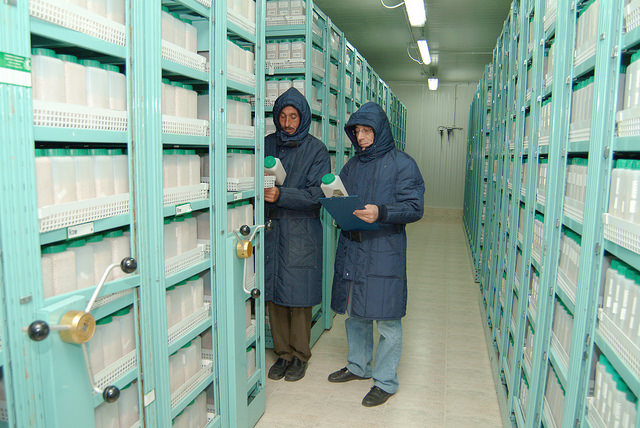
The gene bank in Tel Hadya, Syria

The gene bank in Tel Hadya, Syria{credit}ICARDA{/credit}

Shortly after the uprising in Syria deteriorated into civil war, the International Center for Agricultural Research in the Dry Areas (ICARDA) started facing major problems that threatened the survival of the research centre. Looters repeatedly attacked the main facility in Aleppo and stole computers and equipment before staff had to be evacuated to other ICARDA facilities in neighbouring countries.

Last week, ICARDA received the Gregor Mendel Innovation Prize for managing to save all the samples that were stored in its gene bank, one of the most important agricultural gene banks in the world.

““Over the years, ICARDA had managed to safety-duplicate most of its gene bank collections outside Syria. When the conflict there escalated, we sped up the duplication and now have secured 100% of the germplasm collection outside Syria,” said Mahmoud Solh, the director of ICARDA, in a statement released.

The gene bank at ICARDA’s Syrian research centre were particularly important because they carried samples of wild relatives of many of the crops that are widely cultivated today, such as bread wheat, barley, lentil and faba beans. These wild crops carry important genes that have allowed them to adapt to different habitats and challenges, such as droughts, pests and diseases. Domesticated plants may have lost these genes throughout the years, so the gene banks acts as reservoirs that breeders can use to breed new strains to combat new challenges as they arise.

The Fertile Crescent, where agriculture is thought to have originated, is rich with these unique wild crops. Scientists are worried these may be lost in the conflicts across the region. ICARDA had previously rescued and safety-duplicated germplasm collections from Afghanistan and Iraq when the wars there erupted. Now, along with the samples collected in Syria, these are being duplicated elsewhere, with 80% of ICARDA’s collection already duplicated in Svalbard Seed Vault in Norway.

“The efforts of Mahmoud Solh and his teams are valuable not only for plant breeders who are highly dependent on diversity to improve agricultural varieties but also for following generations who benefit from drought tolerant and disease and pest resistant crops” justifies Peter Harry Carstensen, president of the Gregor Mendel Foundation.

In wake of Syrian chemical attacks, scientists seek to improve sarin antidotes

US Air Force officers administer a nerve agent autoinjector containing atropine and 2-PAM during a readiness exercise.

US Air Force officers administer a nerve agent autoinjector during a readiness exercise.{credit}US Air Force photo/Staff Sgt. Chrissy FitzGerald{/credit}

In the early hours of 21 August, doctors in Damascus area hospitals scrambled—often in vain—to save the lives of Syrian civilians brought to the hospital with foaming mouths and convulsions. Today, a report released by a United Nations inspection team confirms, as many have suspected, that the chemical weapon used in the attack was the deadly nerve gas sarin.

There are medical countermeasures proven to help counteract the poisoning of sarin and other organophosphate-based nerve agents such as soman and VX—some of which were available last month to Syrian victims. But “they have their limitations,” notes David Jett, director of the Countermeasures Against Chemical Threats (CounterACT) program at the US National Institutes of Health (NIH) in Bethesda, Maryland. Certain drug therapies don’t enter the brain well and none offers protection from the long-term effects of sarin exposure. So scientists have ratcheted up their efforts to improve the arsenal of antidotes against this particular chemical weapon and its lasting impact on the nervous system.

Sarin proves so fatal because it inhibits an enzyme called acetylcholinesterase (AChE). This enzyme normally degrades the neurotransmitter acetylcholine, a key signaling molecule that has numerous functions in the body, including facilitating cognitive function and triggering muscle contraction. Without functioning AChE, muscle fibers twitch uncontrollably and neurons in the brain become hyperactive, leading to seizures. If untreated, people exposed to sarin typically die of asphyxiation, as the muscles involved with breathing proceed to fire nonstop.

More than 1,400 people, including an estimated 426 children, died in the August gas attack, according to US intelligence estimates. Syrian doctors had only limited amounts of antidotes against the nerve gas, according to Sawsan Jabri, a trained physician who teaches biology courses at Oakland Community College in Eastern Michigan and serves as a spokeswoman for the US-based Syrian Expatriates Organization. She says that medical staff around Damascus (with whom she is in contact) had a total of some 50,000 ampoules of atropine, a drug that blocks the receptor responsible for binding acetylcholine, thereby preventing nerve and muscle cells from responding to the neurotransmitter. She adds that they also had “very limited amounts” of both pralidoxime (2-PAM)—a compound that reactivates sarin-inhibited AChE—and the anti-anxiety drug diazepam (better known as Valium), which prevents and treats seizures.

These three medicines—atropine, 2-PAM and diazepam—together constitute the ‘gold standard’ of anti-sarin therapies. As a matter of precaution, US military personnel are equipped with kits that contain spring-loaded syringes full of these antidotes, known as autoinjectors, which allow them to self-administer drugs through the muscle soon after, or better yet, before a chemical attack. But the therapeutic window is small, and prophylactic treatment is typically only feasible for military personnel, not civilians. So government defense agencies have long sought more robust and widely applicable alternatives to limit the death toll and mitigate permanent disability among survivors.

“There is a very vibrant research and development program in this area,” Jett says. He notes that the US government has been funding work in this area since “long before the chemical attacks in Syria, and even before the civilian attacks in Tokyo,” referring to the domestic terrorist attack on the Tokyo subway system in 1995, one of the first-ever uses of sarin as a chemical weapon. “We’re on this.”

Continue reading

Bahrain and Syria jail medical workers to undermine protests

Bahrain and Syria are imprisoning doctors for treating wounded anti-regime protesters, a tactic that aims at extinguishing medical neutrality in order to undermine anti-regime protests, the International Human Rights Network of Academies and Scholarly Societies has warned.

On Thursday 14 June, a group of Bahraini physicians lost an appeal against lengthy convictions for alleged violent opposition activity, amongst other charges, accusations that the network, which campaigns against human rights violations and unjust imprisonment of scientists, scholars, engineers, and health professionals, say were trumped up and intended to intimidate health professionals.

Doctors brought in by the Bahrain Independent Commission of Inquiry, an international expert group established in June last year, examined eight of the accused and found evidence of torture, including electric shocks and severe beatings. The others allege that they, too, were tortured to extract “confessions”, but independent doctors have not been permitted to examine them.

“By denying them medical care, the regime clearly doesn’t want the wounded protesters to survive,” the network’s executive director, Carol Corillon, told Nature. “If protesters know they won’t receive medical treatment, they’ll think twice about heading into the streets.”

“This is a flagrant violation of medical neutrality,” she added. Continue reading