Recognising mentoring in science: A lifetime’s achievement

Guest blog by Julie Overbaugh, recipient of the Lifetime Achievement 2016 Nature Award for Mentoring in Science.

Dr Overbaugh was presented with the award in Seattle on 1 December by Sir Philip Campbell, Editor-in-Chief of Nature. These annual awards are hosted by Nature to champion the importance of mentoring and inspiring early-career scientists. You can read the full announcement here.
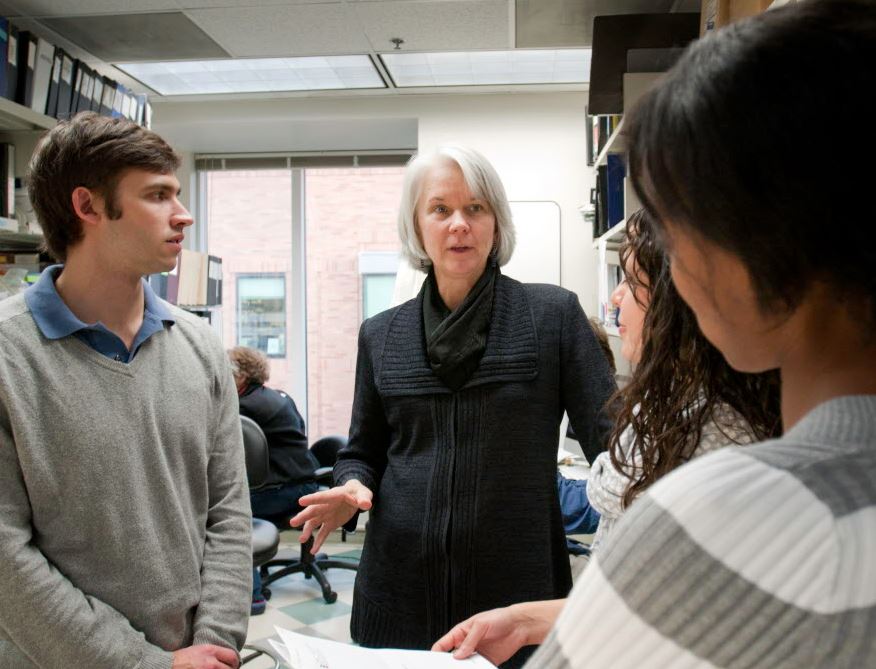
Julie-2

{credit}Stefanie Felix{/credit}

Balancing being a strong mentor and achieving the more standard measures of success in science – publications, grants, and so on – is increasingly challenging, especially as we stress more and more about tight funding.

At times, the goals of the mentor and mentee are well aligned, for example, when both are striving to publish a timely paper or generate data for an abstract. But at other times, the needs of trainees to take classes and exams, or learn other skills, may delay progress on a project that is central to the lab’s overall research portfolio. If the mentor takes the short-term view on this, they may be tempted to find ways to push the research forward and pay little attention to the needs of their trainee. This approach may result in publishing first, but most likely at the expense of the trainee.

The other option is to take the long view, and realize that while the time spent helping the mentee develop as a scientist may slow progress on this one project, the longer term benefit will be a well-trained and motivated lab member going forward. This person, in turn, will train others and promote the lab, and will be better positioned to produce thoughtful science, including if they go on to become independent investigators. Overall, I have drawn more satisfaction from seeing people I have worked with over the years achieve their goals and contribute in their own individual way to advancing science than from the papers we have published.

I am not sure I looked at this issue in this way when I started my lab almost 30 years ago, although I do recall early times in the lab when I made the decision that if a trainee was working on a project, then the pace of the project had to include time for training. I have always been interested in the ‘people’ part of science, as much as the science itself.

This approach comes in part from growing up in a working class family where we rarely talked about grades and future careers and I felt little pressure there. In my family, we mostly talked about friends and our social schedules and our sports activities. Playing sports helped me learn to work within a team, and understand healthy competition and fair play. The focus on friends and social life made me more in tune with the people I train and perhaps less focused on other benchmarks of success. So when someone comes in to my office, I mostly see them as individuals, rather than as someone who is leading project X.
{credit}Stefanie Felix{/credit}

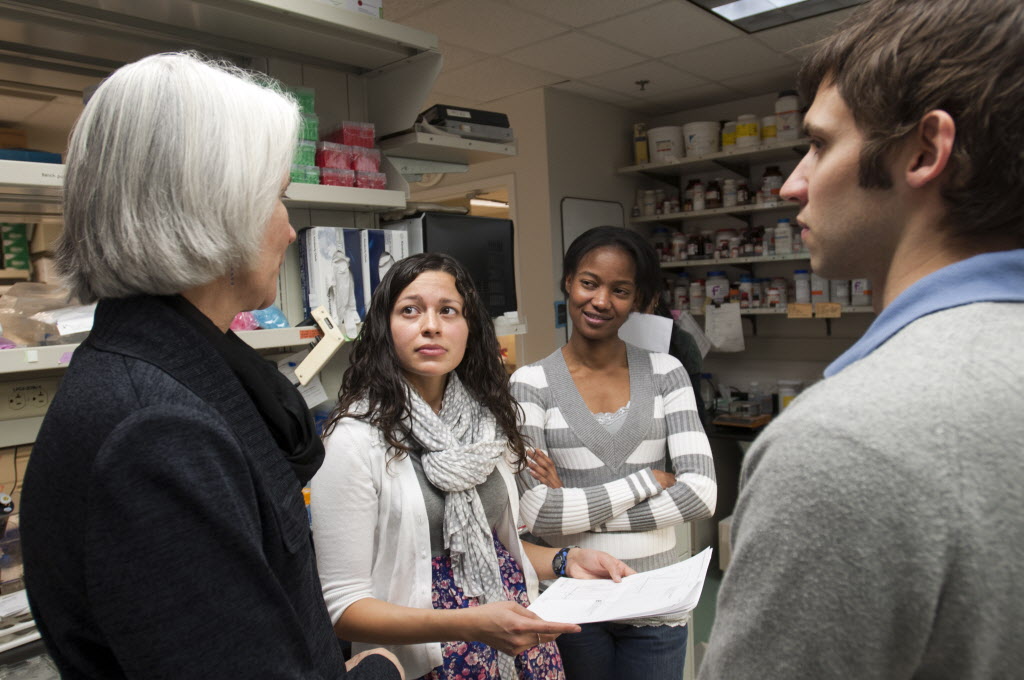
I think effective mentoring requires that you see each person as unique, with different talents and perhaps different limitations. You tailor training to people’s goals and their strengths and weaknesses.  In some cases, for example, with the best students, this means just gentle nudges and encouragement along the way. For some, it is building on their strengths and also helping them see where they need effort to correct weaknesses. And for others – and this is the most difficult – it means helping encourage someone to better align their goals and talents. The point is that mentoring has to be tailored to the individual.

Thinking of the lab as a team, but also realizing each person is an individual, has shaped the culture of my lab. It is made up of people who support each other, and it often attracts people who value work-life balance.  My guess is that a healthy work-life balance is probably correlated with wanting to work in a supportive environment because the achievements of work are just one facet of their lives.  As I have argued previously (Nature, 2011) having outside interests has many benefits and does not necessarily lead to less productivity.  I think my lab is a great example of this, as we have contributed in significant ways to understanding HIV transmission and pathogenesis, while generally working well as a team and having some fun from time to time along the way.

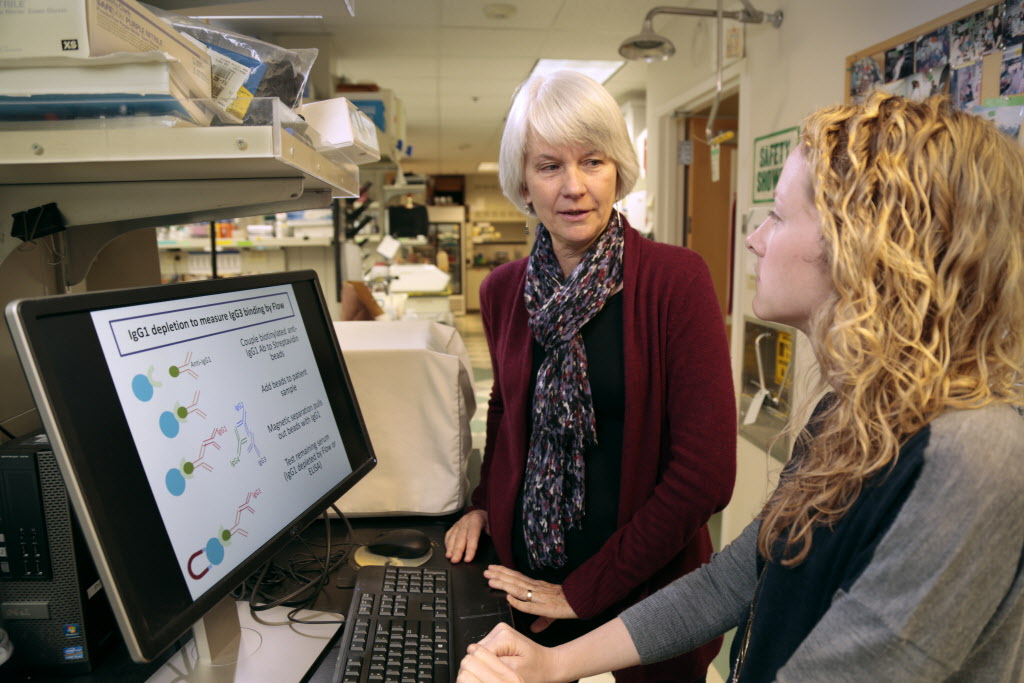
I have also had the amazing opportunity to work with a larger collaborative group, the Kenya Research Program.  This team includes people who work in a range of disciplines, in Seattle and in Kenya, who all share a passion for fighting HIV in the most vulnerable populations. This is an amazing group that shares common values around mentoring. It is perhaps why we are one of the longest standing international interdisciplinary collaborations in the HIV field, and why the team continues to do remarkable science.
{credit}Robert Hood{/credit}

Over the course of my career, I have experienced a range of mentoring, from good to bad. The strong mentors in my career helped me to think critically, write papers, prepare grants and learn how to run a lab – all invaluable to my success in science. In the situations where mentoring was not a focus, it was easy to get discouraged. From all my experiences, I’ve found that good mentoring not only provides useful practical training, it can help build confidence and provide motivation.

I am lucky to work at an institution, the Fred Hutch Cancer Research Center, that values mentoring, and I am surrounded by many dedicated mentors.  I am particularly inspired by some of our junior faculty who are taking mentoring very seriously as they build their own research teams.

I realise that when there is not effective mentoring, bottlenecks are created in science. I’ve watched people who have left the FredHutch struggle in environments where mentoring isn’t as cherished, and I think we lose talented people from the science pipeline for this reason. To an extent, the people who are most sensitive to lack of encouragement and support are women and minorities – potentially already dealing with an imposter syndrome – and this could be part of the vexing pipeline issue that exists in science and limits our diversity at higher levels.

I am incredibly honored to receive the Lifetime Achievement Nature Award for Mentoring in Science. The fact that Nature, one of the most prominent and leading journals gives this award makes a very powerful statement that success is science is not just about publishing papers in top journals, it is also the legacy we leave through our trainees, wherever they go and whatever they do – traditional or not.  Maybe Nature will set a new standard making success in mentoring part of how academic institutions promote faculty, or even how funding agencies think about supporting science.

I am even more honored that my lab members, past and present, nominated me for this award because it means I am doing my job and finding that balance between supporting my trainees, but also leading a productive research team. Finding that balance is still not always easy and I am sure I have not always got it right.

But I am reminded by the great group of people who have trained in my lab – as well as by my many colleagues who value mentoring – that it is worth it! I can’t imagine another award or honor that comes close to this one.
Recognising mentoring in science: Reflections from southern California

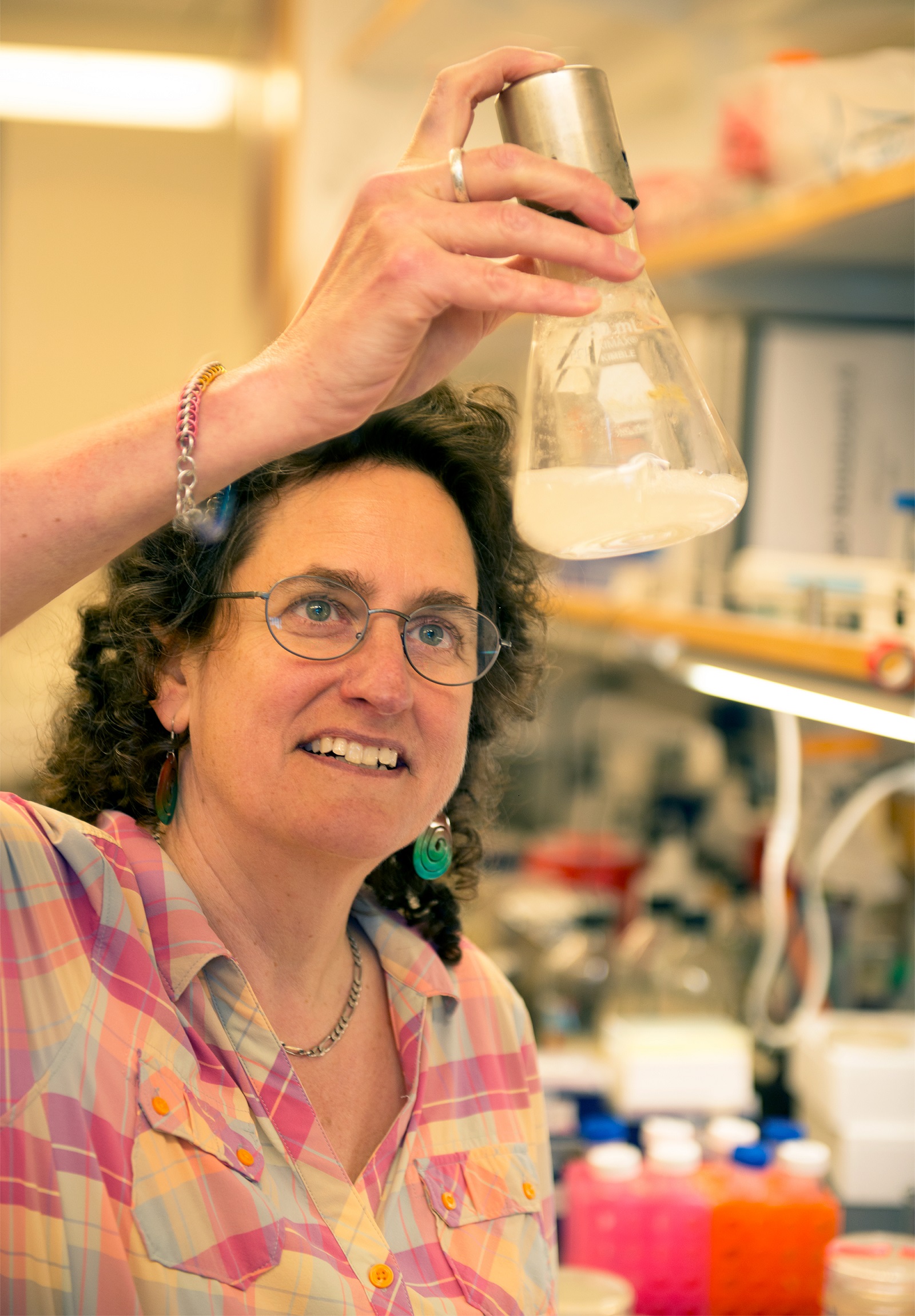
Guest blog by Susan L. Forsburg, recipient of the mid-career 2016 Nature Award for Mentoring in Science.

Professor Forsburg was presented with the award in Los Angeles on 28 November by Sir Philip Campbell, Editor-in-Chief of Nature. These annual awards are hosted by Nature to champion the importance of mentoring and inspiring early-career scientists scientists. You can read the full announcement here.

In this blog, we talked to Susan about the importance of mentoring, her approach, and what this recognition means to her.

Susan Forsburg

{credit}Peter Zhou{/credit}

What does winning this award mean to you?

This is a tremendous honour for me personally!  It is also very heartening as it recognizes an unsung and often neglected part of our professional responsibilities, which is the obligation to reach out to peers and junior colleagues and facilitate their success.

Mentoring means different things to different people. How  would you describe your approach?

Mentoring is not about giving advice, or telling people what to do.  Rather, it is helping people gather information to make their own decisions. First, I use a “vertical strategy” to integrate young scientists into the research process, to connect them with those above and below, and to persuade them to become part of the mentoring process themselves. This is classic mentoring, and can be seen in my support for undergraduate and graduate students, postdoctoral fellows and junior faculty colleagues.

As a complementary strategy, I make extensive use of the internet for writing and networking, which I call “horizontal mentoring”. This approach evolved from my role as a prominent advocate for women in science, and I have become a long distance mentor to several younger scientists.  It is the combination of these two approaches, immediate and personal, and long distance and expansive, that define my contributions to promote an inclusive science work force.

How do you encourage or challenge those that you mentor so that they reach their full potential?

There is no one-size-fits-all to mentoring. Mentoring changes according to the level of the mentee and our relationship. For example, I include undergraduates in lab research, to experience research first hand, to strengthen their applications for future training and give them confidence to carry out independent research.  For graduate students, my goal is to give them independence, suggest realistic goals and thereby generate a sense of confidence along with expectations of success. For postdocs, I help equip them with the types of sophisticated scientific training and professional savvy to kick-start and then to sustain an independent career. For junior faculty – and especially for women – I have worked to develop career direction, and offer advice on achieving grant savvy and navigating the tenure transition.  Importantly, I’m not there to tell them what to do, but help them discover what’s right for them!

In your early career, did you have mentors yourself? What impact did they have on you?

My undergraduate advisor, Richard Calendar at UC Berkeley, was a foundational mentor in my career.  Young as I was, he treated me as a colleague, and showed me how much fun science could be!  Another important mentor was Thomas Kelly, at Sloan-Kettering.  Tom was a sabbatical visitor when I was a postdoc in the UK.  We spent lots of time in the pub talking science and drawing models on a napkin with a mechanical pencil, and he really challenged me to think strategically, not just tactically. Those conversations were hugely important for me to learn make the intellectual move to being a PI from experimentalist.  Finally, Tom Pollard, now at Yale, was an incredibly generous colleague and collaborator when I was a junior faculty member.  He gave me support at a very challenging time and continues to be an advisor…a useful reminder that we are never too old to need our own mentors.

As a woman, do you think it’s important to mentor and develop young female scientists? have you felt a responsibility to do this?

Yes, absolutely.  I have been a passionate advocate for women in science for many years, and much of my long-distance mentoring has been internet-based support for young women, dating back to the days of the old Bionet message boards in the early 90s.  This is important as women navigate the leaky pipeline, particularly in transitions, for example, from postdoc to PI.  Additionally, I have learned that just by being a successful woman PI, I am a role model to people I don’t even know! I love looking around my lab and seeing an incredibly diverse group of men and women from all over the world, who are only limited by their dreams.  I get to travel along with them for part of the journey.

Finally, what would you say to other scientists who are considering giving more of their time to mentoring others in labs?

As science becomes increasingly competitive, and jobs and money are tight, we can end up in a hyper-competitive mode.  But one of the best parts of science is community.  Honestly, most of us dream of making that major discovery—but with rare exceptions, most of those major discoveries will become forgotten as others build upon them. What will be remembered is the quality of person that we are, and the legacy of the people whose lives we affected.  Their success is the best part of it.

The writer Christopher Logue wrote a poem about Guillaume Apollinaire that sums up my approach to mentoring:

Come to the edge.

We might fall.

Come to the edge.

It’s too high!

COME TO THE EDGE!

And they came,

And he pushed,

And they flew.

Nominations Open for Nature Awards for Mentoring in Science 2014

Nominations are now open for the annual Nature Awards for Mentoring in Science, this year celebrating outstanding scientific mentors in Ireland and Northern Ireland.

Launched in 2005, the global awards celebrate scientific mentors in a specific country or countries each year. The awards have previously focused on Australia, Canada, France, Germany, Japan, the Nordic countries, South Africa and the UK.

Two prizes of €10,000 will be awarded, one for a mid-career mentor and one for life-time achievement in mentoring.

Continue reading

Nature Awards for Mentoring in Science 2013 at Quirinal Palace in Rome

The annual Nature Awards for Mentoring in Science took centre stage at the Quirinal Palace yesterday in Rome as the President of the Italian Republic, Giorgio Napolitano, presented the awards to this year’s three winning scientists.

More than 60 members of the academic and scientific community attended the prestigious awards ceremony. This year Nature recognised outstanding scientific mentorship in Italy. Neurobiologist Michela Matteoli (University of Milan) received the mid-career award and €10,000 prize. Chemist Vincenzo Balzani (University of Bologna) and physicist Giorgio Parisi (University of Rome I, La Sapienza) were jointly presented with the lifetime achievement award and €5,000 each.

Editor-in-Chief of Nature, Dr Philip Campbell, opened the ceremony proceedings praising the three winners for their contributions and defining the values of a good mentor.

Continue reading