As drug target reemerges, the question is to block or stimulate it

More than two decades ago, drugmakers searching for new hypertension medications unearthed a mysterious new cell receptor that responded to a hormone known as angiotensin II. This peptide hormone constricts blood vessels, but, oddly, blocking the so-called angiotensin II receptor type 2 (AT2) appeared to have no effect on blood pressure, so the target was largely ignored by drug developers. “Big pharma really just left the AT2 receptor by the side of the road,” says Tom McCarthy, chief executive of Spinifex Pharamceuticals, a company based in Melbourne, Australia, that is exploring the promise of targeting AT2.

Fast forward to today, and scientists now know that AT2 plays a role in everything from tissue repair to inflammation to pain response. A handful of companies are hustling to develop compounds that either block or stimulate this receptor to treat inflammatory diseases, nerve injuries, hypertension and more. In a paper published today, researchers from Spinifex and their collaborators published the first clinical data on a compound that binds to AT2, called EMA401. Results from the placebo-controlled, phase 2 trial suggest that EMA401, which blocks the receptor, can blunt lingering nerve pain due to damage caused by the shingles virus.

AT2 is just one of two receptors known to bind angiotensin II. Several medications that block the other receptor, AT1, have already received market approval for hypertension, diabetic nephropathy and congestive heart failure. When AT2 was first discovered, researchers thought the receptor was “just a little brother,” says Thomas Unger, scientific director of CARIM, Maastricht University’s School for Cardiovascular Diseases in the Netherlands. But Unger and his colleagues now know that AT2 has a “very peculiar and unique combination of effects, which is completely different from the AT1 receptor.”

Continue reading

Neglected diseases see few new drugs despite upped investment

Over the past decade, neglected diseases have attracted increased attention and larger investments in research. Even often overlooked tropical diseases such as sleeping sickness and leishmaniasis have received more funding. “These Cinderella diseases, long ignored and underappreciated, are a rags-to-riches story,” said Margaret Chan, director-general of the World Health Organization, in an address in May. But these newfound ‘riches’ have given rise to just a few dozen newly approved therapies and only a handful of truly novel drugs. A new analysis by Médecins Sans Frontières (MSF) and the Drugs for Neglected Diseases Initiative (DNDi) finds that the rate of approvals for new compounds over the past decade is roughly the same as it was during the previous two-and-a-half decades, when the diseases received little attention.

“It is still a very depressing picture,” says Manica Balasegaram, head of MSF’s Access Campaign in Geneva. “This is a little bit disheartening considering the huge amount of activity that’s been happening in the global health world.”

The new analysis, presented today at a symposium in New York, shows that of the 850 new therapies and vaccines approved by the US Food and Drug Administration, the European Medicines Agency and other agencies between 2000 and 2011, 37 focused on neglected diseases, and just four of those were new chemical entities. The work builds on a pioneering paper published in 2002 by members of the Drugs for Neglected Diseases Working Group, which counted 1,393 new drug approvals—16 of which focused on neglected diseases—between 1975 and 1999 (Lancet 359, 2188–2194, 2002). According to DNDi, 11 of those 16 drugs could be considered new chemical entities. The numbers suggest that although the rate of approvals for drugs for neglected diseases has gone up, the rate of approvals for new chemical entities seems to have remained relatively flat.

Direct comparisons, however, are difficult, as the new analysis is more comprehensive than the previous one, and tallying drug approvals can prove challenging. Joshua Cohen, a health economist with the Tufts Center for the Study of Drug Development in Boston, reanalyzed the working group’s data a few years ago and came up with a different count—32 new drugs approved for neglected diseases, including 13 new chemical entities (PLoS ONE 5, e10610, 2010).

Continue reading

Malaria vaccine results present infant immunization quandary

{credit}CDC{/credit}

Babies receive a battery of vaccines after they’re born to protect them against dreaded diseases such as tetanus, whooping cough and polio. Public health officials in the developing world had hoped to soon add a malaria (Plasmodium falciparum) vaccine to the childhood immunization schedule to take advantage of the existing vaccine distribution system. However, new results from a trial of the leading candidate—a shot known as RTS,S, or Mosquirix—suggest that the vaccine reduces the risk of malaria by only a third in infants.

Given the low efficacy, some experts are now questioning whether RTS,S would be a useful addition to the childhood vaccination roster. John Lusingu, a malaria researcher at the National Institute for Medical Research in Tanga, Tanzania, and a principal investigator on the trial, points out that children six months and older are most affected by the disease, so it might make sense to administer the vaccine to older children, for whom the vaccine is more protective. But that would probably require an expansion of the routine immunization program to include additional clinic visits, which can be burdensome for health workers and families.

The vaccine’s developers, GlaxoSmithKline (GSK) and the PATH Malaria Vaccine Initiative, plan to push on with the phase 3 trial, which is slated to end in 2014. “This is not a mission we should just walk away from,” Andrew Witty, chief executive of GSK, said in a press conference on 9 November. The London-based company has spent approximately $300 million on RTS,S to date and expects to invest another $200 million before the project is finished.

The study, published last week in the New England Journal of Medicine, included more than 6,500 infants between 6 and 12 weeks old from across seven African countries. The vaccine reduced the risk of clinical episodes of malaria by 31% in this young cohort, a lower level than that found in children vaccinated between 5 and 17 months for whom the vaccine provided up to 56% protection.

Why the vaccine is less effective in infants than it is in toddlers isn’t yet clear, but the research team behind the trial has a number of hypotheses. One complicating factor could be antibodies passed on from the babies’ mothers during pregnancy. These maternal antibodies protect infants from disease, but they can also prevent vaccines from eliciting a strong immune response .

Those same antibodies decay over time, though, so the older group of children would probably have had lower levels of them, says Rick Fairhurst, chief of the malaria pathogenesis and human immunity unit at the US National Institute of Allergy and Infectious Diseases in Rockville, Maryland. The effect could be especially pronounced in areas with the highest burden of malaria. Repeated exposure to the parasite results in higher levels of antibodies in the mothers, which can then be passed on to the children.

Continue reading

Prisoners, hard hit by hepatitis C, decry lack of access to drugs

David Proulx was diagnosed with hepatitis C in 2003, but he suspects he contracted the virus decades earlier. He injected drugs in the 1970s and picked up several tattoos when he was first incarcerated in the early 1980s. Over the years, the infection wreaked havoc on his liver. Within a year of diagnosis, he received antiviral drugs to treat the disease, but the medicine failed to eliminate the virus. Proulx had run out of options. In 2011, however, the US Food and Drug Administration approved two new medications to treat hepatitis C. Clinical trials indicated that these drugs could help individuals like Proulx who had previously failed other therapies. But Proulx can’t access them. He’s incarcerated at the Massachusetts Treatment Center within the correctional complex in Bridgewater, and the state has not yet begun administering the new medications to inmates, according to Joel Thompson, a lawyer and prisoner advocate based in Boston.

The hepatitis C virus is the leading cause of liver cancer and the most common blood-borne infection in the US, affecting approximately 3.2 million people. Among prisoners, the infection is rampant. Between 12% and 30% of the roughly 1.6 million people living in state or federal prisons in the US are infected with the virus, as a result of exposures such as injection drug use and unsafe tattooing.

Fortunately, the infection can be cured. Antivirals can eliminate the infection in about half of all cases. Adding to the case to treat incarcerated individuals, a paper published this month by researchers at the University of Wisconsin–Madison concluded that inmates receiving traditional hepatitis C therapy fare just as well as individuals being treated in the community (Hepatology 56, 1252–1260, 2012). However, the newest, most effective medicines cost tens of thousands of dollars. Today, prison officials are facing tough choices about which inmates to treat and which medicines to administer.

“Prisoners are guaranteed access to community-standard health care,” says Josiah Rich, an infectious disease expert at Brown University’s Alpert Medical School in Providence, Rhode Island, and director of the university’s Center for Prisoner Health and Human Rights. But “this community-standard treatment is now, all of a sudden, god-awful expensive.”

Budget buster

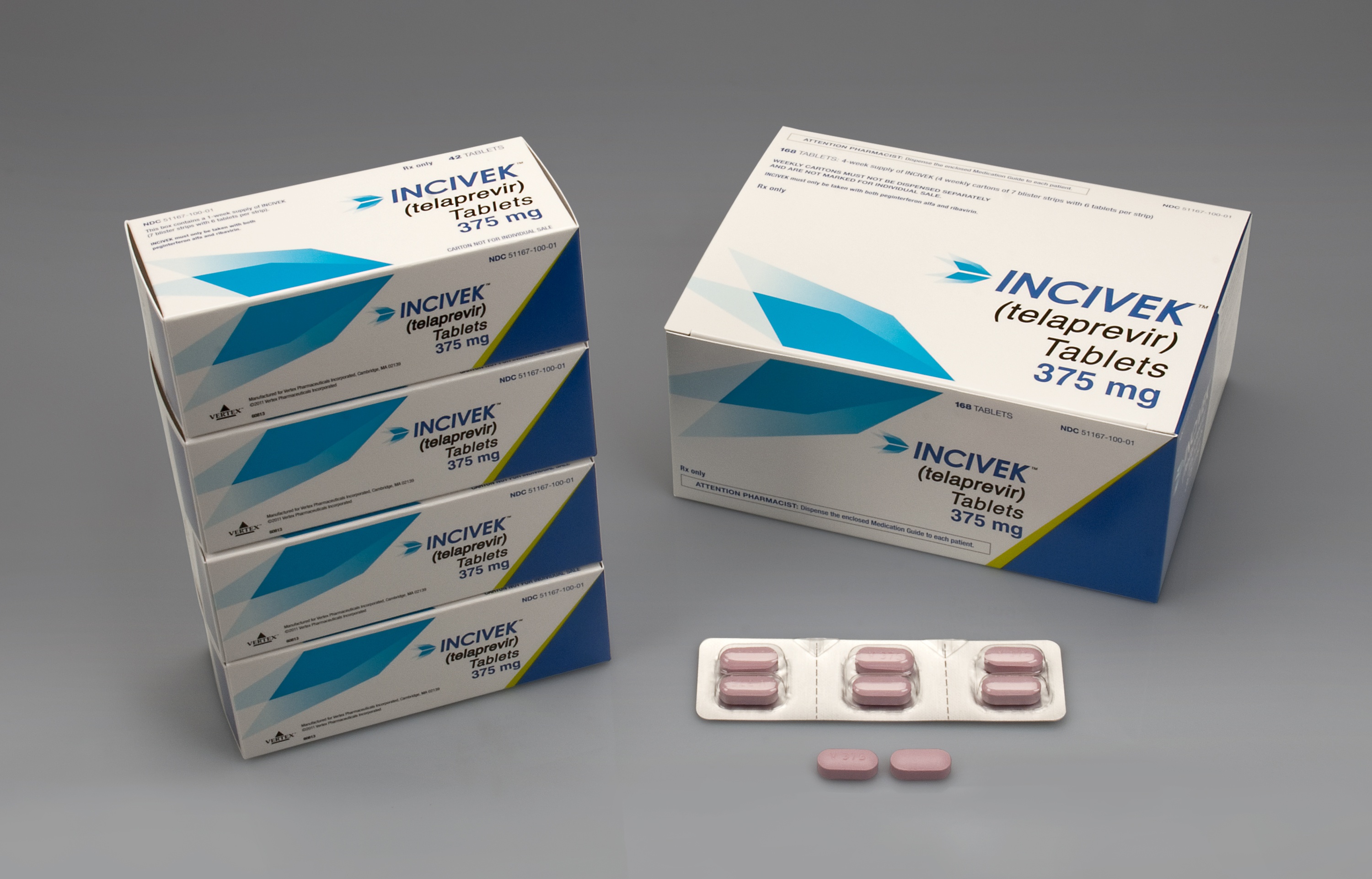
The American Association for the Study of Liver Diseases, a Virginia-based professional society for hepatologists, now recommends that people infected with the most common strain of hepatitis C receive the traditional combination of two antiviral medications, pegylated interferon and ribavirin, as well as one of two new protease inhibitors approved in 2011, Victrelis (boceprevir) from New Jersey’s Merck or Incivek (telaprevir) from Massachusetts-based Vertex Pharmaceuticals. The traditional combination therapy already costs between $15,000 and $30,000 per patient, depending on the length of treatment. The new protease inhibitors will add at least $26,000 and as much as $50,000 to the cost. “It could potentially be a budget buster,” says Robert Trestman, executive director of Correctional Managed Health Care at the University of Connecticut Health Center in Farmington, which cares for inmates in the state’s penitentiaries.

Patient selection and drug adherence are additional challenges. Not every individual who is infected with hepatitis C is eligible for treatment. “They need to meet certain criteria,” says Trestman. For example, because the medications have serious side effects, individuals must have signs of liver damage to receive them. That may happen years after the initial infection. Prison officials also want to be sure that inmates can complete their treatment, which typically lasts a year, before they’re released. That’s because inmates often have trouble accessing the drugs and sticking with the complicated dosing regimen once they’re back in the community, and missing just two or three doses of the new protease inhibitors can “eliminate the significant portion of the benefits,” according to Owen Murray, vice president of offender health services at the University of Texas Medical Branch (UTMB), which provides care for most of the state’s inmates.

Continue reading