Ghost research: taking stock of work that disappears

Why every researcher should keep an old bulletin board.

Guest contributor Eli Lazarus

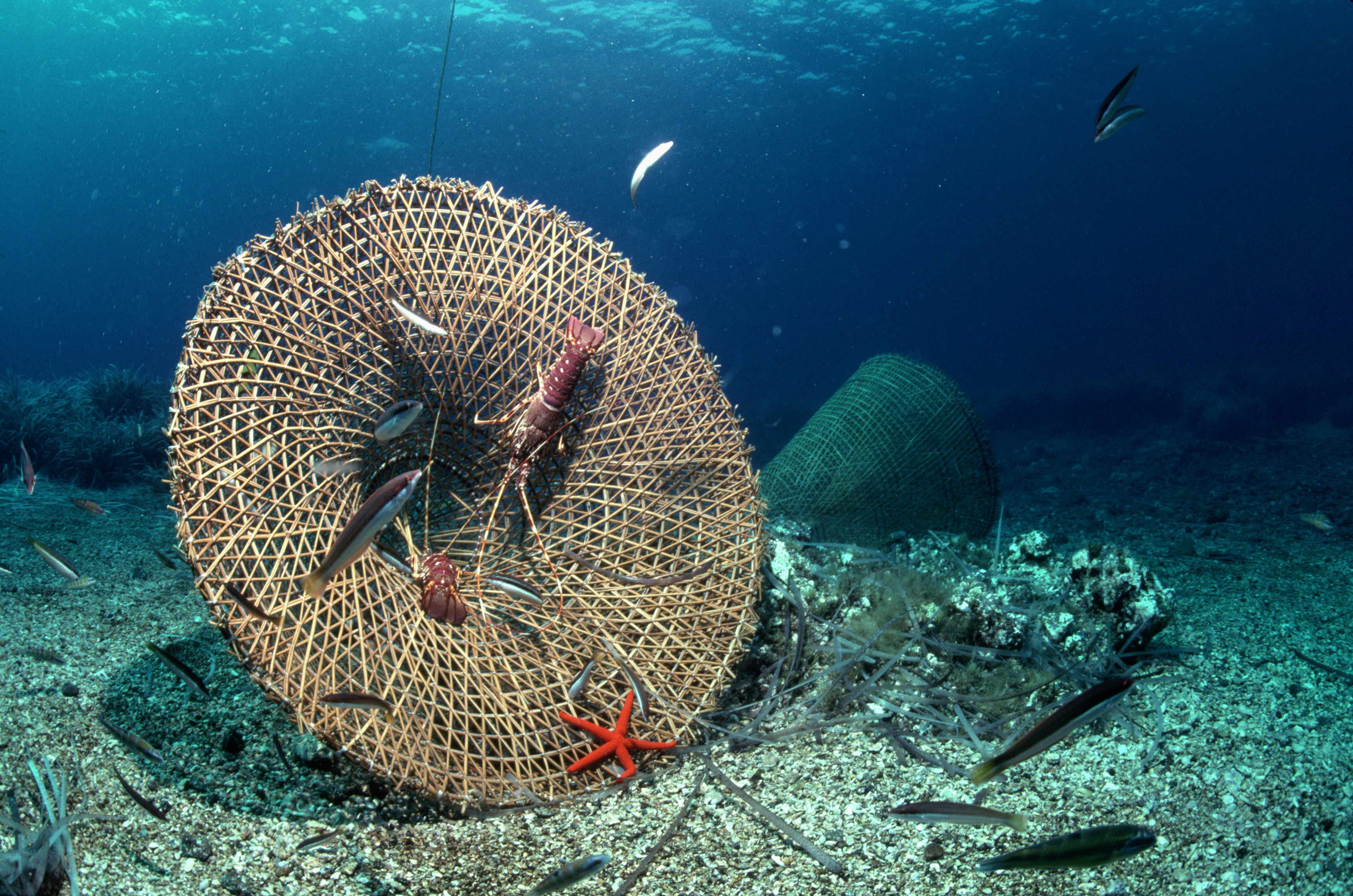
I recently found a short article my father wrote for National Fisherman, in 1988, which reported on a new kind of lobster trap with a “catch escape panel” aimed at reducing bycatch. My dad had a steady freelance gig at the time with National Fisherman, and the article was one of several he wrote while researching “ghost traps” – lobster traps, specifically, but really any lost fishing gear (nets, lines) that disappears underwater for reasons random, accidental, or deliberate.

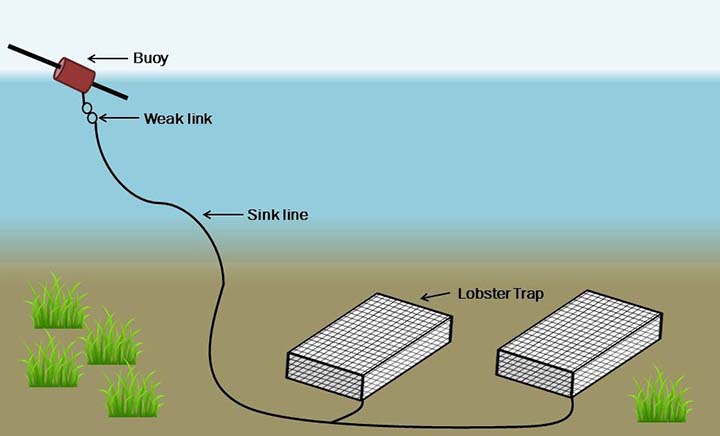
With lobster traps, it’s easy to imagine what happens. To retrieve traps and the lobsters in them, a fisher works her way along from floating buoy to buoy. Each is connected to a heavy “sink line” that is in turn fixed to a trap, which sits on the seabed, catching lobsters. If something – a propeller from a passing boat, for example – parts the sink line, then the buoy drifts off with the current and the trap is lost.

GettyImages-519978966-smaller

{credit}Getty images/Jeff Rotman Photography{/credit}

Continue reading

Your best work might be just around the corner

A recent finding shows that a scientist’s career can peak at any age.

Ever wonder when you’ll publish that big paper that’ll win you the Nobel Prize (or at least a new research grant)? Turns out, it could be your next.

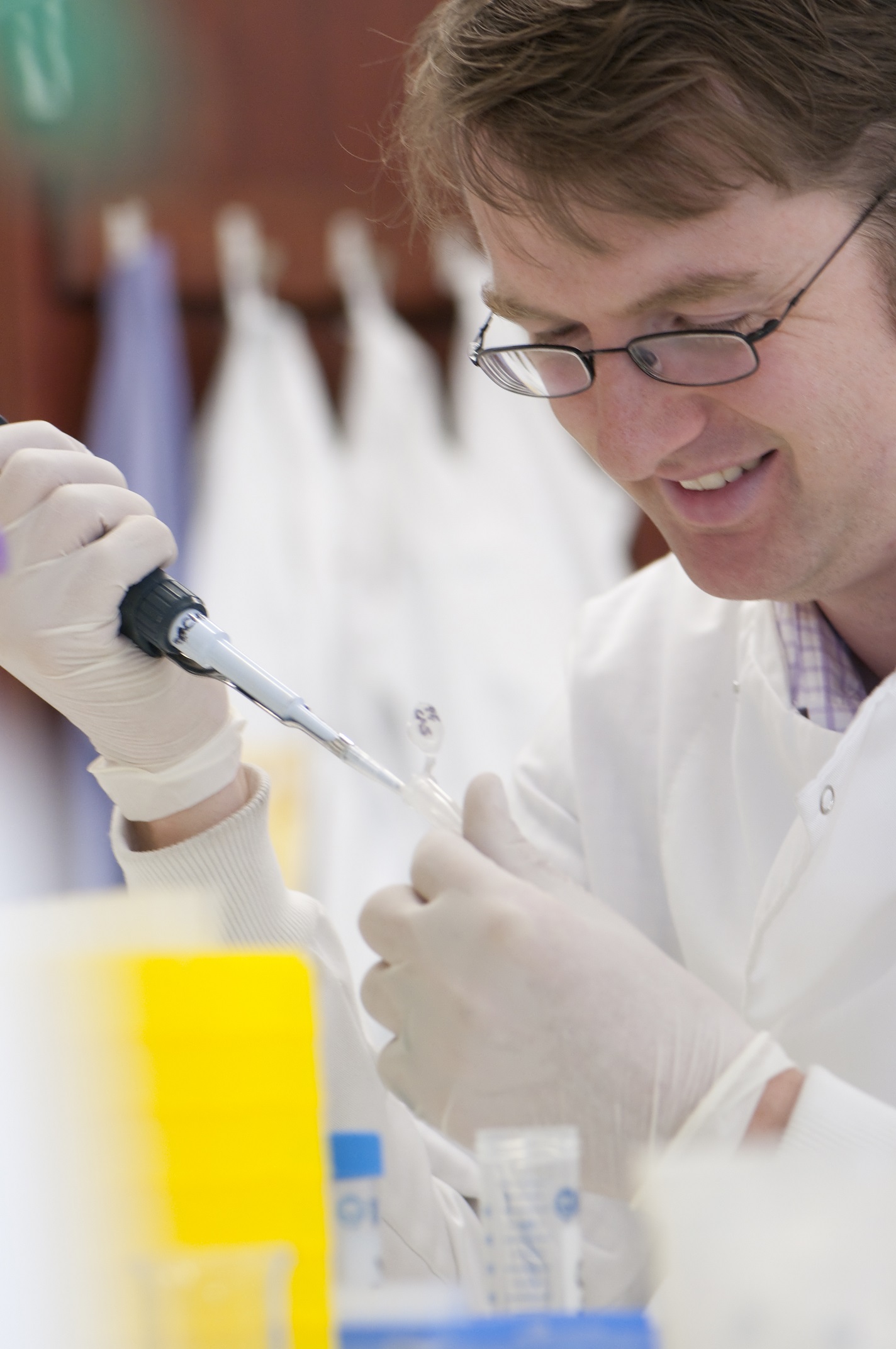
As Nature News reports, a new equation, developed by a team led by Albert-László Barabási at Northeastern University in Boston, Massachusetts, shows that papers published at any point in a scientist’s career have equal chance in becoming their most highly cited work. It might be sensible to keep that in mind the next time you’re struggling through centuries of data analysis, or when your thumb starts to bruise from more and more mindless pipetting.

You can watch a video explainer below, and find the paper here.


Suggested posts

How to get published in high-impact journals: Big research and better writing

Writing for international journals: tips and techniques

Nature Masterclasses: Writing for highly-selective journals


Counting all the ways connections matter

New research shows that the size of a faculty member’s network predicts productivity, promotion, and probability of winning an NIH R01 grant.

Guest contributor Viviane Callier

Connections matter – in terms of productivity, in terms of obtaining grants, in terms of promotion and advancement, and in terms of retention in academic positions, a new Harvard-based study shows. Women and underrepresented minorities (URMs) have a smaller “reach” – a measure of second-order connections – and the discrepancy between the reach of women & URMs and that of white men is greatest at the junior faculty level. This discrepancy may account for differences in productivity, promotion, and retention of women and URMs in academia.

7822101134_6cbcbb435b_o

CREDIT: CC-BY-SA Atos/Flickr

Continue reading

Failing to fail gracefully

Failure is hard, but keep trying, says John Tregoning (who should follow his own advice occasionally).

Guest contributor John Tregoning

Advice: easier to give than to follow

This time last year, I wrote ten strategies to improve mental health in academic life. I think they’re worth reading, if you haven’t already. You’d think that having given all this advice, I would have followed it, and maintained a Zen-like calm. Not so.

John Tregoning

John Tregoning

In the last year I have allowed failure (and the prospect of failure) to define my mood, compared my progress with researchers several leagues above me and found myself wanting, got too obsessed with work to appreciate anything else, taken on more than I can manage, unsuccessfully disguised my jealousy about colleagues’ success, taken criticism as a personal attack, and not spoken to anyone about what was going on in my head.

Whilst reflecting on my inability to follow my own advice, this year I wanted to come up with something that I could follow to improve my own mental health. Then I had (another) grant bounce and realised that, for me, the major contributor to mental health issues in academia is failure. Yes, failure is relative and, yes, there are clearly bigger problems in the world. But in that bitter moment of rejection it’s hard to step back and see that. Continue reading

How to cope when things go wrong in academia

Sometimes, things go wrong in academia. The experiment isn’t working; you can’t find your results; the money is running out and you haven’t got any more. What can you do about it?

At the Naturejobs Career Expo in London this September, a panel of four academics got together to discuss their wildly different careers. Jim Usherwood from the Royal Veterinary College only spends his time doing research. Anita Hall from Imperial College London only does teaching. Lorraine Kerr and Louise Horsfall from the University of Edinburgh split their time (with different percentages) between research, teaching, business and management.

In this short film, Usherwood and Horsfall give some great advice on how to deal with things when they go wrong.

Usherwood recommends building a support network around you that can serve two purposes. One will be a group of friends that will come to the pub with you and commiserate with you. The other will be someone (your partner, perhaps) who can help you see the bigger picture in life.

Horsfall has been forunate and has not had anything go wrong…. yet! Come the end of 2014/beginning of 2015, she will be coming to the end of two grants. At the moment, she’s got two “irons in the fire” but they aren’t confirmed. “Make sure that you’ve always got something,” she advises.

Read more about How to navigate an academic career and about all the other conference sessions and workshops at the Naturejobs Career Expo in London.

Other Q&A videos from the Naturejobs Career Expo, London 2014

How important is having a mentor in your academic career?

How do you achieve work/life balance in academia?

Should I apply for a fellowship or a postdoc after my PhD?

What’s the biggest challenge you’ve faced as a woman in science?

How important is it to move between academic institutions?

US scientists have their say on plans for biomedical workforce

Posted on behalf of Gene Russo, Nature Careers editor

US biomedical scientists recently had a chance to set their field’s priorities. And what was the most pressing problem they reported? The very real possibility that there are too damn many biomedical scientists.

The balance between the supply of biomedical researchers and the demand in terms of available career opportunities should be the biggest priority for reforming the US biomedical workforce, according to a survey response issued by the National Institutes of Health (NIH). Other big priorities that scientists highlighted were PhD characteristics (i.e. PhD curriculum, length of the PhD training period, and lack of preparation for diverse career paths) and postdoctoral-fellow training characteristics (i.e. a bottleneck of jobseekers causing long stints as postdocs and poor mentoring).

Many of the respondents did not mince their words. On the supply and demand issue, some called the current structure of the research workforce a ‘pyramid scheme’ that takes advantage of cheap student and postdoc labour rather than hiring mid-career researchers. Solutions included tenure-model reform, decreasing the number of funded trainees per principal investigator (PI) and using more staff scientists. On the oversupply issue, respondents suggested class-size reductions, raising programme entry requirements and better training for ‘alternative’ careers. Regarding the contraction of research funding, respondents suggested increasing paylines and limiting the number of large grants a single PI is permitted to have.

The survey, part of an NIH working group effort, asked respondents to prioritize future issues for the biomedical workforce. It had 219 respondents — ranging from graduate students to senior scientists — who made a total of 498 ‘quotations’ about various priorities; multiple comments were ranked and the working group then calculated the overall priority of a given issue.

In addition to PhD characteristics and postdoctoral-fellow training characteristics, the working group asked for comment on six other categories: postdoc training, biomedical research career appeal, clinician characteristics, the staff-scientist career track, effects of NIH policies and the training-to-research grant ratio. Based on respondents’ comments, it then added four more categories to its analysis: diversity, mentoring, early educational interventions and industry partnerships.

It’s not a big sample size. But the message is clear: improving satisfaction among early-career biomedical scientists and boosting the efficiency of a system that churns out far more scientists than academia alone can accommodate will require big changes. And these changes will have side effects. Want labs with more full-time staff scientists, and fewer students willing to work 60-hour weeks? Lab productivity and publication rates could suffer (see ‘Mid-career crunch’ for more discussions around changes to NIH grants). Want to curtail tenure? Some argue this would threaten academic freedom and deflate the enthusiasm of academia’s rising biomedical research stars (see ‘The changing face of tenure’ for more).The NIH working group — whose ongoing charge includes developing a “model for a sustainable and diverse US biomedical research workforce” — certainly has its work cut out for it.

How to be a successful scientist

At a recent scientific careers event in London, University of Kent geneticist Darren Griffin – also a career development fellow for the UK’s Biotechnology and Biological Sciences Research Council (BBSRC) – presented his ten commandments for being a successful scientist in academia. We’ve reproduced them below for your reading pleasure along with further advice that Griffin gave at the event. Have a read and tell us what you think – do you agree with the list? Do any ring particularly true for you? Are there any others you would add? Share your views in the comment box.

Darren Griffin’s ten commandments for succeeding in academia

1. The only way to do good research is to get on with it

“There’s no point having really good ideas if you don’t put them into action,” says Griffin. “Write those grants, write those papers.”

2. When opportunity knocks, open the door

Be prepared to take risks with new ventures: “If there’s an opportunity there for you and it’s in your interests to pursue it, then get on and do it.”

3. With good people you can do anything

Griffin says interacting with his team is one of the most rewarding aspects of his work, and he’s not afraid of high achievers. “You should only take someone on if they can do something you can’t,” he says. “Your whole operation will only grow if you’ve got people who are better than you are, and you shouldn’t be ashamed or insecure about that.”

Man in reflective pose - Punchstock4. It’s not about your knowledge – it’s about imagination and ideas

Although a certain level of knowledge is essential, Griffin says you can always look up anything else you need to know – what you should focus on is coming up with new ideas. And as well as drawing on the talent in your team, you should also turn to your peers for inspiration. “Science is very much a social activity – you’ve got to get out there, network and have collaborators,” says Griffin.

5. Always bring something to the party

It takes two to collaborate – if you don’t have something to contribute, your partners will move on.

6. It’s not the size of your gun, it’s when you shoot

“It’s a popular misconception that you just throw money and lots of people at an idea and it will work,” says Griffin. Not always true, he says – you need to shoot at the right time to hit the target.

7. If the system doesn’t work for you, change it, do something else or don’t complain

Fairly self-explanatory, this one – be proactive and decisive, because “nobody likes a whinger”.

8. Don’t ask why, ask why not

“If you’re a scientist, do not take no for an answer, because every no is one step closer to a yes,” says Griffin. Be persistent and find out what you need to do to get that yes.

9. The journey is usually far more rewarding than the destination

So remember to enjoy the ride: “It’s such a wonderful thing, being a scientist, because you’re in the process of discovery, and that’s a lot of fun.”

10. Be nice to people

Of all the commandments, Griffin says this is ultimately the most important – not only because it’s the right thing to do, but also because you never know when someone will have something that you want.