Science Events in New York City: 27 August — 2 September

The New York City science calendar is a little light this week. No doubt everyone wants to make the most of the last weeks of summer; however, with September right around the corner, New York universities, museums, and other organizations are gearing up for a great fall season of science events. For now, however, take the opportunities this week to learn a little bit about the night sky.

Tuesday – On Tuesday, the American Museum of Natural History hosts “Astronomy Live: Sky to Space”. Research scientist Jackie Faherty and astrophysics educator Christina Pease will recreate pivotal astronomical discoveries using the Hayden Planetarium’s projectors to show the key roles astronomical observations have made in advancing science since antiquity.

Thursday – Thursday offers another astronomical event with “Martian Space Oddities” at the Observatory in Brooklyn. Andrew Kessler, author of Martian Summer: Robot Arms, Cowboy Spacemen and My 90 Days with the Phoenix Mars Mission, will talk about his experience with the Mars Phoenix expedition.

That’s all we’ve got for this week, but make sure to check out our Google calendar for other science events around the city, and if there’s an event that you’d like us to add to our calendar, let us know!

Science Mentoring: Does Race Matter?

The latest Soapbox Science mini-series focuses on the role of mentors in science. Tying in with this year’s Lindau Nobel Laureate meeting, where almost 600 young scientists have the opportunity to meet each other and 25 Nobel laureates, we’ll be looking at the importance of supportive relationships and role models. We’ll hear from a mix of mentors, mentees and projects set up to support scientists and we aim to explore not just the positive examples of good mentoring but what can happen when these key relationships are absent or break down. For more discussions around this year’s Lindau meeting, check out the Lindau Nobel Community site.

Stephani Page is a rising 5th year graduate student at The University of North Carolina at Chapel Hill.  She is pursuing her PhD in the Department of Biochemistry & Biophysics and is a member of the Bourret/Silversmith Lab in the Department of Microbiology & Immunology. 

There are many qualities that signify an outstanding mentor:  compassionate, wise, and humble; forthright, patient, and honest; knowledgeable, generous, and genuine. When I think of all of the individuals whom I have called “mentor”, they have demonstrated all of these qualities.  The attributes and qualities of good mentorship cannot be assigned to gender, race, religion, or economic status; I have had many mentors from diverse backgrounds.  Largely due in part to the depth and diversity of the relationships with people who have taken the time to mentor me, I feel equipped to step out into the vast unknown: a career in the sciences. Continue reading

Science Events in New York City: 25 June — 1 July

The summer heat has finally come to New York City. If you’re looking for a place to cool down while learning some cool things about science, check out our list of events for this week.

Tuesday

Take a Grand Tour of the Universe Tuesday night at the American Museum of Natural History. See where Earth sits within the universe as you journey past exoplanets, stars, and galaxies.

Wednesday

On Wednesday, learn about sustainable happiness at the Rubin Museum. Joe Loizzo, a psychotherapist, will discuss his new book about well-being and altruism and what we can learn from Asian cultures about living well-balance lives and handling the stresses of modern society that often lead to depression, obesity, and cancer.

Thursday

Come out to Brooklyn Bridge Park after the heat has gone to check out the night sky. Astronomers from the Amateur Astronomers Association will be out with telescopes to help you identify some night sky objects.

Friday

If you’re still looking for a way to see the night sky, the Columbia Astronomy Outreach program is hosing their biweekly Science Fact vs Fiction event. This Friday, they will be showing the movie Transformers 3, followed by a discussion of science fiction vs science fact and a stargazing session.

Check out our Google calendar below for other science events around the city, and if there’s an event that you’d like us to add to our calendar, let us know!

Science Events in New York City: 18—24 June

Monday

Come out to Genspace on Monday night for PCR and pizza. Anyone and everyone is welcome to bring in a plant sample and learn how to do PCR and DNA barcoding, or to just sit back and watch, learn, and eat pizza. Genspace is a nonprofit organization dedicated to promoting citizen science and access to biotechnology. Check out their weekend classes on synthetic biology and biotechnology.

Tuesday

Looking for some more citizen science opportunities? Head on out to Staten Island this Tuesday for FrogWatch USA, a nationwide, monthly amphibian monitoring program. Continue reading

Can Wine and Chocolate Help You Live Forever?

Too good to be true? A compound that may treat cancer and diabetes, improve cardiovascular function, increase your lifespan…AND it’s found in wine and chocolate!? A quick Google search for resveratrol will unearth pages of companies trying to sell you the “fountain of youth”, a few warnings “not to believe the hype”, and even a few scientific studies thrown in for good measure. So what’s the truth? Resveratrol: wonder drug or over-hyped?

Last Tuesday night, Joseph Bauer from the University of Pennsylvania spoke at the New York Academy of Sciences to help us sort through the sensationalist headlines (my own included) and take a well-balanced look at the science behind these claims. Bauer became interested in resveratrol while trying to mimic the increase in lifespan observed in mice due to calorie restriction, the idea being that perhaps there is a druggable target that could produce the same effects as caloric restriction without, you know, having to eat less. Bauer eventually focused in on a family of proteins called sirtuins, specifically Sirt-1, which controls life expectancy in yeast (Sir2) and mice (Sirt-1). A screen for compounds that activated Sirt-1 by Biomol (now Enzo Life Sciences) turned up resveratrol, a compound found in red wine and chocolate and is now the subject of several preclinical and clinical studies. Continue reading

World Science Fair: What is a Flame?

As an 11-year-old boy, Alan Alda was mesmerized studying a candle flame. Finally, after hours of watching it flicker and dance, a question began to creep up from the back of his mind: What is this thing we call a flame? We can see the light it gives off, we can feel the heat, but what is it?  In an attempt to find an answer to his question, young Alan Alda asked one of his teachers: What is a flame? And the teacher replied, “A flame is oxidation.”

It seemed that he would have to be satisfied with that explanation for the time being, but the question still haunted him, and decades later, Alda asked this same question to the scientific community, and thousands answered. The Flame Challenge was a call for scientists to improve upon “It’s oxidation” and explain to an 11-year-old child just exactly what a flame is. Continue reading

World Science Festival: Science in the Park

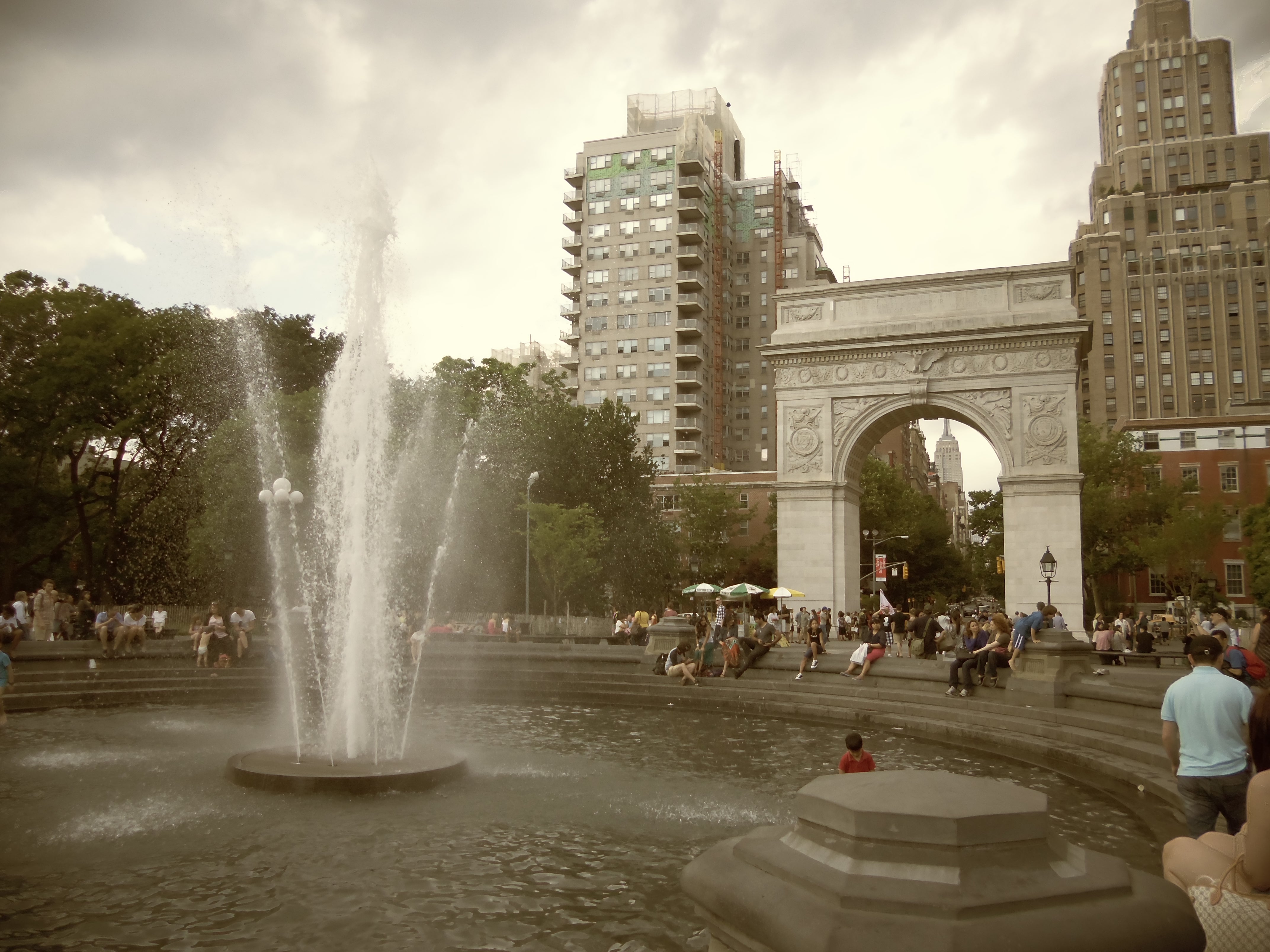
The rain held up last Sunday just enough to let visitors to the World Science Festival’s Ultimate Science Street Fair dance, exercise, and shoot some hoops, all while learning about science. Here are some pictures from the day:

A little bit of rain, but all in all a great day in Washington Square Park

Continue reading

A Baby Picture of the Universe

The World Science Festival is winding down here in New York City. The first event I attended was “Afterglow: Dispatches from the Birth of the Universe”. I wanted to go to this event for two reasons. First, I had always heard about how we were able to detect radiation from the Big Bang, essentially proving the Big Bang theory as describing the origins of the universe, but I couldn’t quite wrap my head around how that was possible. Second, the venue was really close to my apartment.

Lawrence Krauss kicked the evening off with a quick explanation of cosmic microwave background radiation, the all-pervading radiation that emanates from the Big Bang, and how it was discovered. The field of cosmology is really an exercise in cosmic archaeology. Because light takes a certain amount of time to reach our planet, the light that we see shows us not how something looks now, but how it looked in the past. For example:

  • When we look at the sun, we’re looking eight minutes into the past – Okay, I get it
  • When we look at some of the closest stars, we’re looking a few light years into the past – Yep, got that too
  • If we look out far enough, we should be able to see radiation from the big bang – 13.7 billion years ago – and picture what the universe looked like in its early years – Okay, now I’m lost
I don’t know why that jump is so conceptually difficult for me, but after two hours of listening to some of the brightest minds in the field explain how we can visualize the Big Bang itself, sometimes, if I look at the issue from the corner of my eye, I think I almost get it, and then I lose it, and I just have to accept that it’s true and move on. I think there are a lot of things in science that are like this, evolution being the first that comes to mind. Nobody can argue against microevolution. The most common explanation that I’m aware of is the work of  H. B. Kettlewell and peppered moths. But for many, making the leap from microevolution, which has been seen again and again, and macroevolution, the origin of new species, is just too difficult. Which is why it’s so important for scientists to keep trying to explain their research to the public, over and over if necessary.
Anyways, back to the universe and to the reason you all clicked on the link to read this article: a baby picture of the universe:

The top map represents a totally featureless, uniform radiation emanating from the Big Bang, as John Mather said, the cosmic background radiation is “smoother than a billiard ball”, but there are differences and features. Finding those differences was the reason Mather won the Nobel Prize in physics in 2006. Mather helped create the first complete map of the universe, the image in the middle from the COBE satellite. If you’re interested in how the COBE and WMAP maps were generated, check out NASA’s website here and here.

In addition to learning about cosmic radiation and the origins of, well, everything, the evening offered several great lessons about science in general:

Sometimes waiting is a good thing

As Mather was preparing to send the COBE satellite up into space, the project was delayed due to funding issues. The money earmarked for COBE was shuttled over to fund the Hubble telescope, which, as Mather pointed out, turned out okay. In the years that the COBE project lay dormant, receiver technology had advanced considerably so that the receivers that ended up on COBE were much more sensitive than those that were originally planned. That extra sensitivity turned out to be crucial for detecting differences in the background radiation and the field of cosmology could have turned out to be much different.

Sometimes it’s good to be wrong

Before the COBE map came out, theorists were developing various ideas of how structure formed in the universe. Among them was David Spergel, who had written extensively on what he thought was a beautiful, elegant theory called the phase transition. Immediately upon viewing the COBE map for the first time, Spergel knew that the last 4-5 years of his work were utterly wrong. After picking himself up and dusting himself off, Spergel realized that the new COBE results opened a whole new world of questions that needed answering.

No matter how much you plan, always expect the unexpected

When Amber Miller sent part of her telescope from Minnesota to Texas by truck, they took every precaution they could think of to ensure that it arrived safely. However, they didn’t count on the truck going missing. Eventually, the telescope was recovered and transported safely to its destination, with a very relieved Miller, who might be one of the only scientists who can honestly say that she’s had an experiment truck-jacked.



Science Events in New York City: 4—10 June

The World Science Festival may be over, but don’t worry, there are still plenty of events this week to satisfy your scientific curiosity. Here are just a few:

Tuesday

Resveratrol has been getting a lot of hype recently for its health benefits in cardiovascular disease, cancer, and aging, but the research with resveratrol is still in its infancy, and the compound has also promoted its fair share of controversy. Come out to the New York Academy of Sciences to discuss the science behind resveratrol. And if that’s not enough incentive, come out to try resveratrol out for yourself, in the form of red wine and dark chocolate.

Wednesday

On Wednesday evening, the American Museum of Natural History is hosting Sci Cafe. In this final installment for this season, neuroscientist Daniela Schiller will discuss the neural mechanisms of emotional control and flexibility and the possibility of changing fear memories.

Thursday

Thursday night is our monthly SoNYC event. This month, the theme is “Reaching out of the Ivory Tower”. A panel of scientists will discuss the various media that scientists can use to reach out to the public and how they balance a research career with scientific outreach. For more about “Reaching out of the Ivory Tower”, check out our series of posts over at Soapbox Science or follow the Twitter hashtag #reachingoutsci.

Check out our Google calendar below for other science events around the city, and if there’s an event that you’d like us to add to our calendar, let us know!