Leaving’s never easy. Especially when leaving a world as complex and intricate as academia, says Judith Reichel.


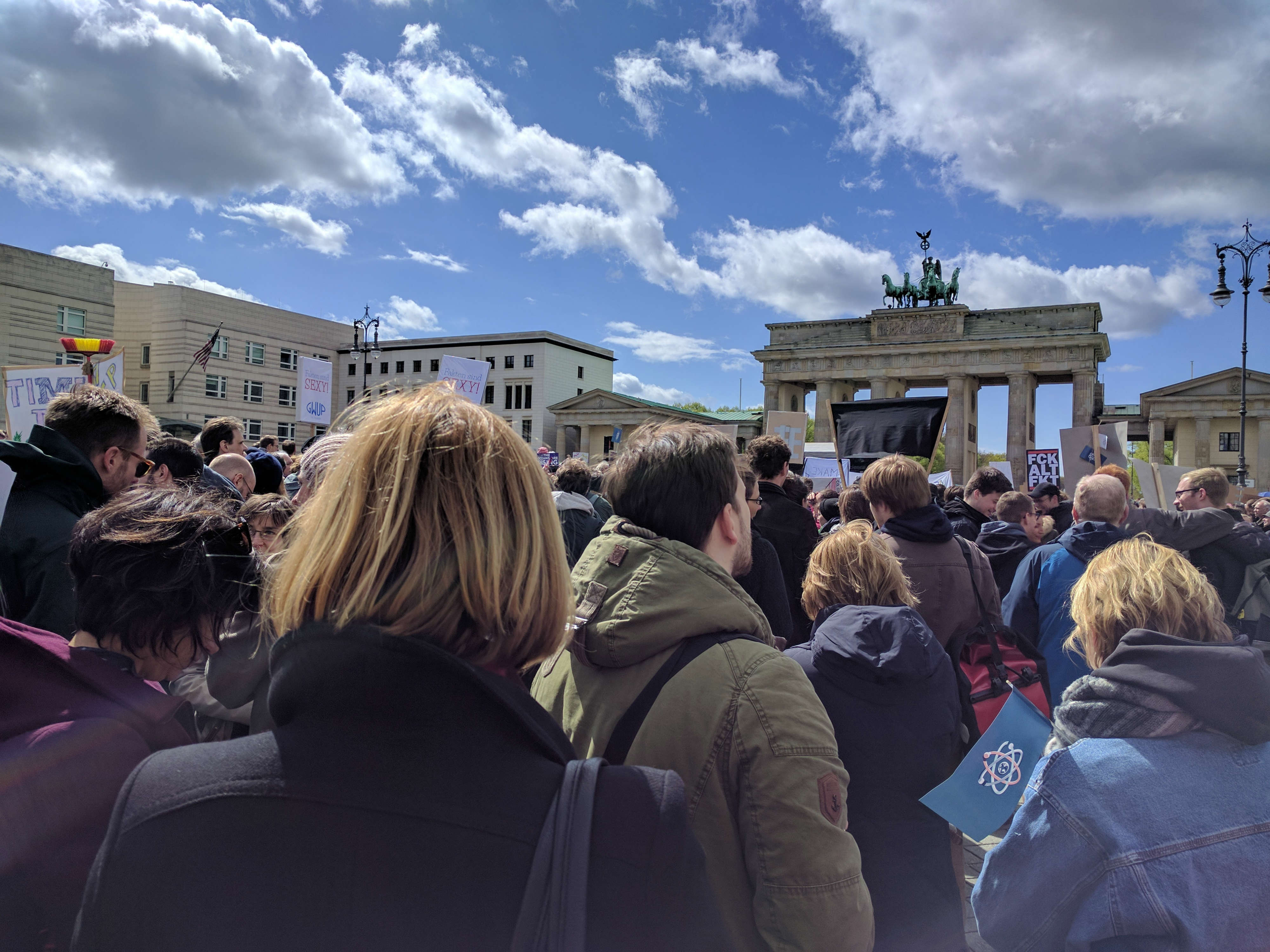
Caroline Weinberg, an organizer for the upcoming march in Washington DC, expects smaller crowds than last year, although she admits her prediction may again be off the mark. “Last we expected 40,000 people, and we got around 100,000,” she says. She adds that most of the marchers in the nation’s capital city were concerned citizens, not practicing researchers.
In Washington DC and elsewhere, organisers envision events with fewer marchers, placards and chants but more advocacy-related activities. Weinberg and others aim to offer hands-on projects for those taking to the streets in Washington DC. In Berlin, Germany, organisers are planning a “local hero” programme where scientists will give public talks at bars, cafes and other venues. March-related activities in Portland, Oregon, will include speeches by local politicians and a science expo with at least 30 presenters, including a juggler who demonstrates the principles of physics.
The election and inauguration of Donald Trump for US president helped to spur marchers last year, and Weinberg says that she suspects that some scientists this year may be motivated to speak out against Trump’s recent budget proposal, which called for drastic cuts to the US Centers for Disease Control and Prevention spending plan . But she adds that the march and other forms of science activism shouldn’t depend on crises to draw interest and participation. “Our challenge is to build up a huge crowd and send a message that galvanizes everyone but to also make it sustainable,” she says. “We can’t allow our advocacy to be tethered to those moments.”
Roughly 15,000 people attended last year’s march in Portland, but that kind of enthusiasm will be hard to replicate, says Denesa Oberbeck, a behavioral neuroscientist at the Oregon Health & Science University in Portland and a member of the steering committee for this year’s march. “There’s some fatigue and some burnout, but we need to keep fighting,” she says. “We have to maintain an activist stance.”
Kristine Wadosky, a cancer researcher at Roswell Park Cancer Institute in Buffalo, New York, marched in Washington DC last year carrying a sign that read “Curing cancer is non-partisan.” This year, she plans to join the march in Chicago, Illinois, where she will give a talk on advanced prostate cancer for the annual meeting of the American Association for Cancer Research. She says that she’s just as energized about science advocacy as ever before, and she thinks that many other young scientists feel the same way.
This time, Wadosky says, she won’t need a sign to send her message, which isn’t especially complicated. “I just want to go to show that I’m a scientists, and I exist,” she says.
Chris Woolston is a freelance writer in Billings, Montana.
Suggested reading:
Growing pains
In support of the March
Reflections on a movement
 Transitioning from academia to industry is a common direction for a career move. But it is possible to move the other way, even as a mother of five children?
In this podcast we share Paula Littlejohn’s story. Paula started her microbiology PhD at the University of British Columbia, Canada, a year ago, after a decade in industry and having five children. We find out how she juggled the demands of an academic career alongside motherhood.
 Members of the Karolinska Institute’s Postdoc Association fear an amendment to Sweden’s Research Bill could create career instability.
In November 2016 the Swedish government announced plans to introduce a tenure track system to make academic careers more secure, to improve mobility and to make research more competitive.
But in July last year an amendment to the Research Bill stipulated that PhD graduates had a maximum of five years (two years less than now) to get an Assistant Professorship (Biträdande Lektor in Swedish). Universities must comply by 1 April 2018.


One study suggests that the concept of “brilliance” in science might discourage some women from following certain career paths or education opportunities. Another found that women are more likely than men to offer “honorary authorships” to scientists who may not or do not deserve it—a courtesy that might obscure the magnitude of their own contributions. Continue reading
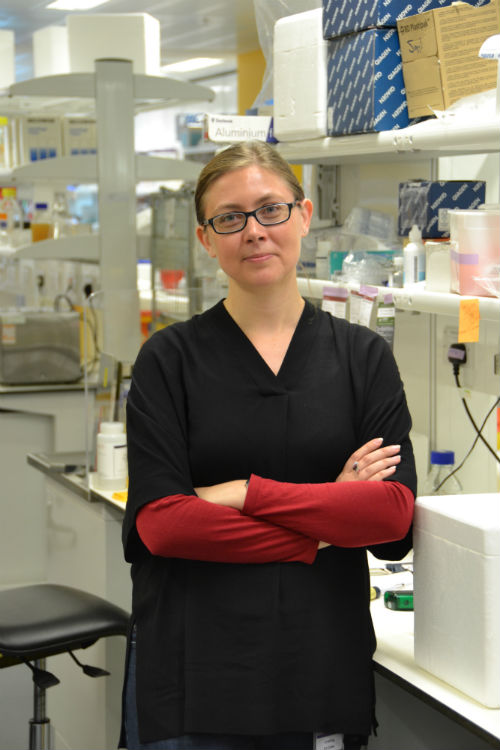 Cristina Lo Celso is the first woman to receive the UK Academy of Medical Sciences Foulkes Foundation Medal since the award was launched in 2007. While a postdoc at Harvard University Lo Celso developed microscopy techniques that allowed blood stem cells to be viewed inside their natural environment for the first time. She describes her career to date, how she chose science over medicine, and her mentors.
Why did you choose a career in academic research rather than medicine?
I did consider medicine. Antonio Lo Celso, my paternal grandfather, was a surgeon in Sicily before retiring to Turin, where I grew up. He got me interested in human health and how the body works. But when I was about 15 I read Dominique Lapierre’s 1991 book Beyond Love. It’s about clinicians and scientists and patients during the early stages of the HIV epidemic and it made me realise that research can make a massive difference. Continue reading
US academic institutions continue to enhance postdoctoral researcher experiences, but there is room for significant improvement, according to a 3 January report from the NPA in Rockville, Maryland. Continue reading
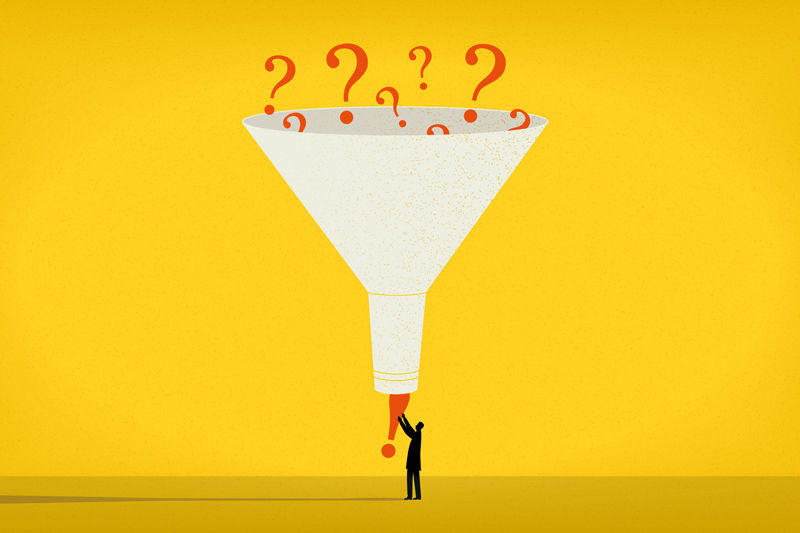
Job stability and a career in research are rarely put together. Science is a windy, grueling, uphill climb that might end abruptly at the edge of a cliff. Halloween is a particularly scary time for Australian scientists, as it signals the release of #NHMRC project grant results. Right now, many laboratories are facing difficult decisions due to rejected funding for next year. It’s not a surprise — we see it everywhere — yet it’s a shock that affects the entire scientific community. For early career researchers across the globe, it’s a timely reminder to carefully consider and plan for the future.
So, what are your options?